
Most of us think of a medical appointment as the fifteen or thirty minutes we spend sitting across from a doctor, specialist, physiotherapist, or other healthcare professional.
But if you live with chronic illness, chronic pain, fatigue, ADHD, autism, brain fog, or complex health issues, you probably know that the appointment starts long before you sit down in that chair.
In many ways, the real work begins beforehand.
Because the challenge isn’t simply getting to the appointment.
The challenge is remembering everything you wanted to say once you’re there.
For years, I would carefully think about my symptoms, questions, concerns, and observations in the days leading up to an appointment.
Then I would walk into the room.
And suddenly?
Gone.
The symptom I’d been worrying about all week disappeared from my mind.
The question I’d promised myself I wouldn’t forget vanished.
The timeline became fuzzy.
The details blurred together.
I’d leave the appointment and remember three more things I wished I’d mentioned while driving home.
Many people assume this is anxiety.
Sometimes it is.
But often it’s simply the reality of managing limited cognitive capacity.
When you’re already using significant energy to navigate pain, fatigue, sensory overload, executive dysfunction, brain fog, sleep disruption, medications, parenting, work, or daily life, there isn’t always much capacity left for organising complex medical information on demand.
Something I’ve come to realise is that medical appointments require a surprising amount of executive function.
Before you even arrive, you’re expected to:
remember symptoms
identify patterns
prioritise concerns
summarise recent changes
recall medications
explain timelines
ask questions
understand answers
make decisions
remember follow-up instructions
That’s a lot.
And it all has to happen within a relatively short conversation.
For people with fluctuating energy or cognitive capacity, this can feel like being asked to sit an exam without warning.
When people hear “appointment preparation,” they often imagine colour-coded binders and perfectly maintained records.
That’s not what I’m talking about.
Preparation isn’t about becoming a highly organised person.
Preparation is about reducing the number of things your brain has to hold at once.
It’s creating external supports so your memory doesn’t have to do all the work.
Sometimes preparation is nothing more than a sticky note with three questions written on it.
Sometimes it’s a symptom tracker.
Sometimes it’s a notebook page.
Sometimes it’s a dedicated appointment preparation sheet.
The tool matters far less than the outcome.
The goal is simple:
Take important information out of your head and put it somewhere you can access when you need it.
Over time I’ve found that three pieces of information are usually enough to dramatically improve an appointment.
This sounds obvious, but it isn’t always.
When you live with multiple symptoms or conditions, it’s easy for conversations to drift.
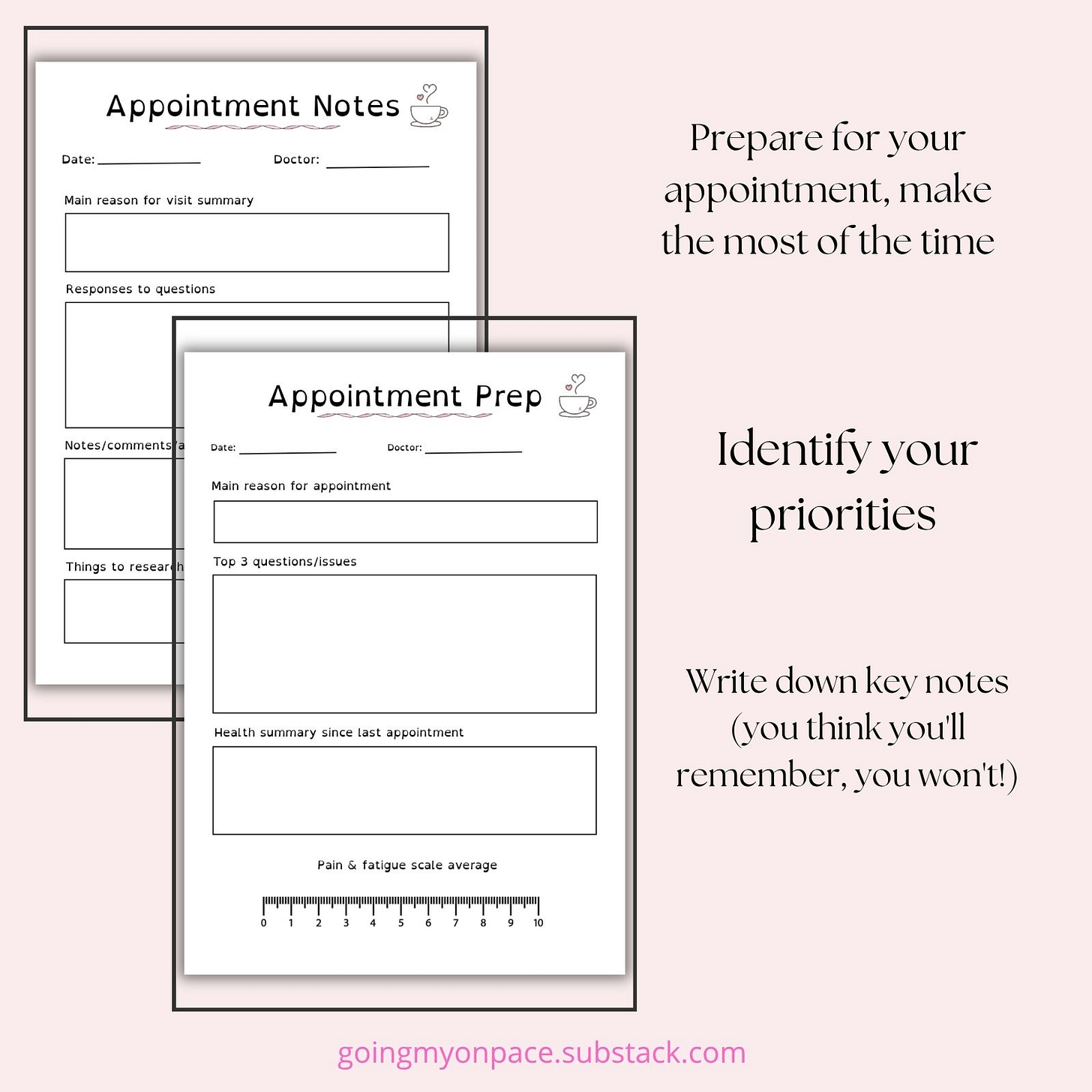
Before an appointment, I try to identify the main reason I’m attending.
Not every concern.
The main one.
If I only manage to discuss one thing today, what needs attention most?
Having that answer written down helps keep the appointment focused.
Questions have a habit of disappearing the moment someone asks, “So what would you like to discuss today?”
I try to write down my most important questions beforehand.
Not twenty questions.
Usually three.
The questions that matter most.
If we get through those, I leave feeling much more confident that the appointment was worthwhile.
Healthcare providers often need context.
What has improved?
What has worsened?
What is new?
What treatments have been tried?
What patterns have emerged?
Having a brief summary prepared can save a surprising amount of energy during the appointment itself.
I’ve also learned that preparation doesn’t stop once the appointment begins.
Taking notes—or having someone with you who can take notes—can be incredibly valuable.
Because processing information takes energy too.
Sometimes we’re hearing new terminology.
Sometimes we’re discussing multiple options.
Sometimes we’re trying to absorb complex information while also managing symptoms.
Writing down key points means you don’t have to rely entirely on memory later.
Future-you will almost always be grateful.
The phrase “self-advocacy” often creates an image of someone confidently challenging doctors and demanding answers.
Sometimes advocacy looks like that.
But often it doesn’t.
Sometimes self-advocacy is quietly arriving with a piece of paper.
A list of questions.
A symptom summary.
A notebook.
A folder.
A record of what you’ve experienced.
Sometimes advocacy is simply creating enough structure that your voice doesn’t get lost when your energy is limited.
One of the most helpful shifts I’ve made is recognising that my brain doesn’t need to remember everything.
In fact, it probably shouldn’t.
When energy is limited, memory becomes a precious resource.
Preparation isn’t about perfection.
It’s about support.
It’s about making the appointment easier on the version of you who will be sitting in that room trying to recall information while managing symptoms.
The appointment starts before you walk into the room.
And a few minutes of preparation beforehand can sometimes make those fifteen minutes inside far more useful.
If appointments often leave you feeling overwhelmed or forgetting important questions, I've created printable Medical Appointment Prep Cards designed to help capture key concerns, questions, and notes before and after your visit. They're available in multiple formats, including a brain fog and dyslexia-friendly version.
Spoonie worksheets
Paced Day Planner
·
Jun 1
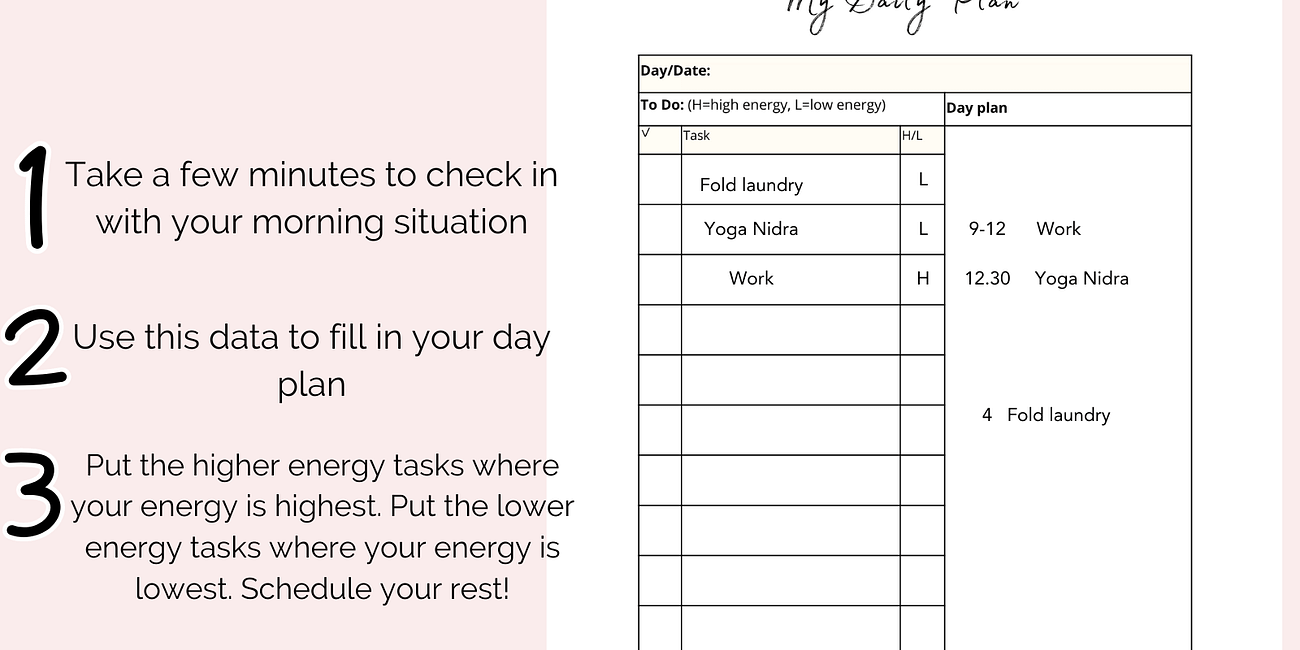
Pacing is one of the best tools in our arsenal to manage our symptoms. This Day Planning Sheet helps you design your day around your energy envelope.
No posts
Comments
Nothing yet. Say the first thing.
Sign in to join the conversation.