
After Trump promised a quick war with Iran, the conflict now has no end in sight. Any hopes for a ceasefire collapsed over the weekend as the two countries exchanged new rounds of strikes. Trump announced the reinstatement of the US military blockade of the Strait of Hormuz, while US forces bombed Iranian port cities. Iran retaliated by targeting US military bases across the region. As the standoff intensified Monday morning, global oil prices soared.
The escalating conflict has reignited a familiar debate in Washington: Can a president take the United States to war without Congress? Lawmakers have challenged whether Trump has the constitutional authority to wage war against Iran without congressional approval. And after berating Republican Senators, Trump narrowly defeated a Congressional bill that would have ordered him to end hostilities.
Trump’s actions may be controversial, but they are not unprecedented. US Presidents have been fighting wars without formal approval from Congress for over two centuries–since the George Washington administration. And it all started with wars with Indigenous nations.
Trump’s actions may be controversial, but they are not unprecedented. US Presidents have been fighting wars without formal approval from Congress for over two centuries–since the George Washington administration. And it all started with wars with Indigenous nations.
On a dark, warm autumn night in 1790, US General Josiah Harmar marched his troops toward the capital of the Myaamia nation–Kiihkayonki. At the time, the US Army was so small that most of the fighting force was from state militias. Their goal was to occupy Kiihkayonki and build a fort there.
When American forces arrived, the village was deserted. Rather than risk civilian lives, most Myaamia people had evacuated. Quickly, the Americans turned to destruction. They burned homes, crops, and food stores — including more than 20,000 bushels of corn. Believing they had won, the Americans relaxed and started looting valuables left behind like jewelry. But the Myaamia warriors were watching from a distance. They saw how easily the Americans were distracted by silver and other fine things. And the Myaamia decided to use their greed against them.
When US soldiers moved a little further north, Myaamia warriors scattered trinkets and other valuables on the ground. When the soldiers stopped to pick them up, Myaamia warriors attacked. Nearly 200 Americans were killed. The rest ran away. The Myaamia remember this as the Battle of Kiihkayonki. But history books call it Harmar’s defeat, because instead of building a fort at Kiihkayonki, General Harmar retreated.
Listen to the full story on this week’s episode of FIRST AMERICA. Wherever you get your podcasts.
For years, US encroachment had been pressing on the edges of Myaamia homelands. With more than half a dozen tribes in the Great Lakes region, the Myaamia formed a military alliance called the Taawaawa Siipiiwi Alliance. Tribes in that region had long seen each other like an extended family, and so when one family member was threatened they all showed up to help. The Alliance was led by a Myaamia, but also included Odawa, Ojibwe, Potawatamie, Lenape, Shawnee, Wyandotte, Haudenosaunee and Cherokee fighters
The Taawaawa Siipiiwi Alliance threatened American plans for expansion. After the Revolution, the young government needed money and Myaamia homelands were some of the most fertile and valuable on the frontier. Those lands were part of what was then known as the Northwest Territory, a vast expanse of land that today extends from Ohio to Minnesota. To break apart the alliance and Myaamia resistance, the Americans decided to build a fort in Kiihkayonki. Their plan, however, would prove hard to implement.
Harmar’s campaign wouldn’t be the last. Instead, the US army and local militias would suffer a series of defeats at the hands of the Taawaawa Siipiiwi Alliance. Those early battles would spur the first major military build-up in the United States and forever change what power the President has to go to war.
There’s this famous painting about the end of the Revolutionary War. Today, it hangs in the Rotunda of the US Capitol. In the painting, George Washington is standing in the middle of an official-looking room. A sword swings from his hip. Members of Congress are seated and watching him. In an outstretched hand, Washington is holding a piece of paper — it’s his resignation letter.
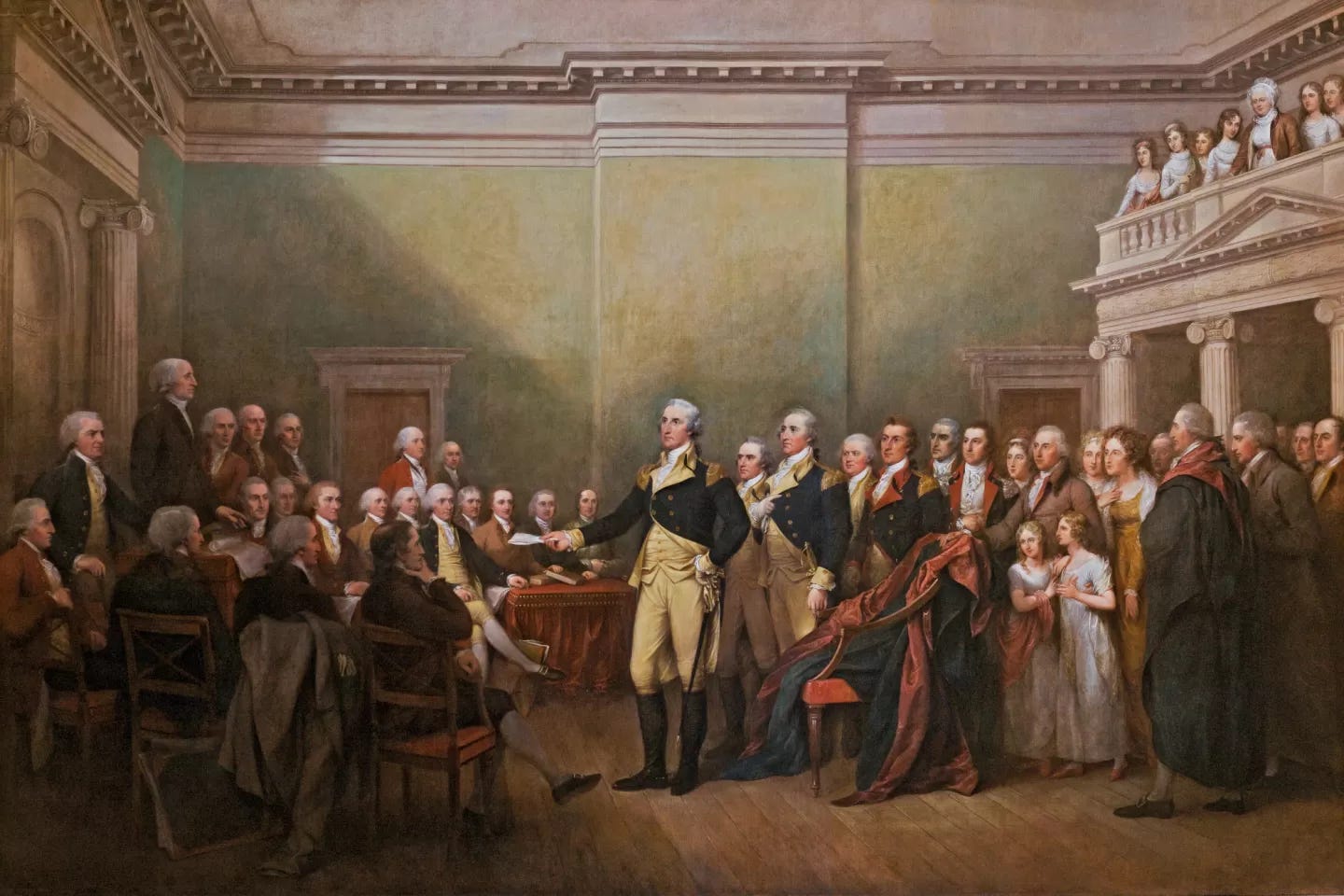
Normally someone quitting their job isn’t the type of thing memorialized in a painting, but this was an important moment. At the end of the Revolutionary War, the Continental Army disbanded. The soldiers that had fought and won the war went home — including Washington.
Our founding fathers didn’t want a big, centralized military. George Washington argued that keeping a large army standing around was “dangerous to the liberties of a Country.” You have to remember, British soldiers had occupied colonial towns. They shot and killed people in the streets. Our founders thought a big military could lead to tyranny, so the army they did keep around was small. At one point, the United States had only 80 enlisted men.
That founding vision feels like a far cry from the military we have today. The US spends more money on its military than any other country — it’s not even close. We have the most military bases, the highest tonnage of naval ships, and the largest air force. How did we go from founders who didn’t want a big military to having the most expensive, most powerful one in the world?
While our founding fathers didn’t want a large military, they had another problem. They wanted to control the land that is now Ohio. And the tribes that lived there were pushing back. And Harmar’s defeat was just the beginning.
About a year after Harmar’s defeat, the United States sent a second general to attack Kiihkayonki — General Arthur St. Clair. For the campaign, Congress created a brand new regiment and gave St. Clair about twice as many regular soldiers. Because the army was still quite small, the fighting force was once again supplemented with men from state militias. This time, roughly 2,000 men marched to Kiihkayonki.
The campaign quickly unraveled. Desertion was rampant. Progress was slow. St. Clair got lost and didn’t know where he was. But the Taawaawa Siipiiwi Alliance knew, and they were ready.
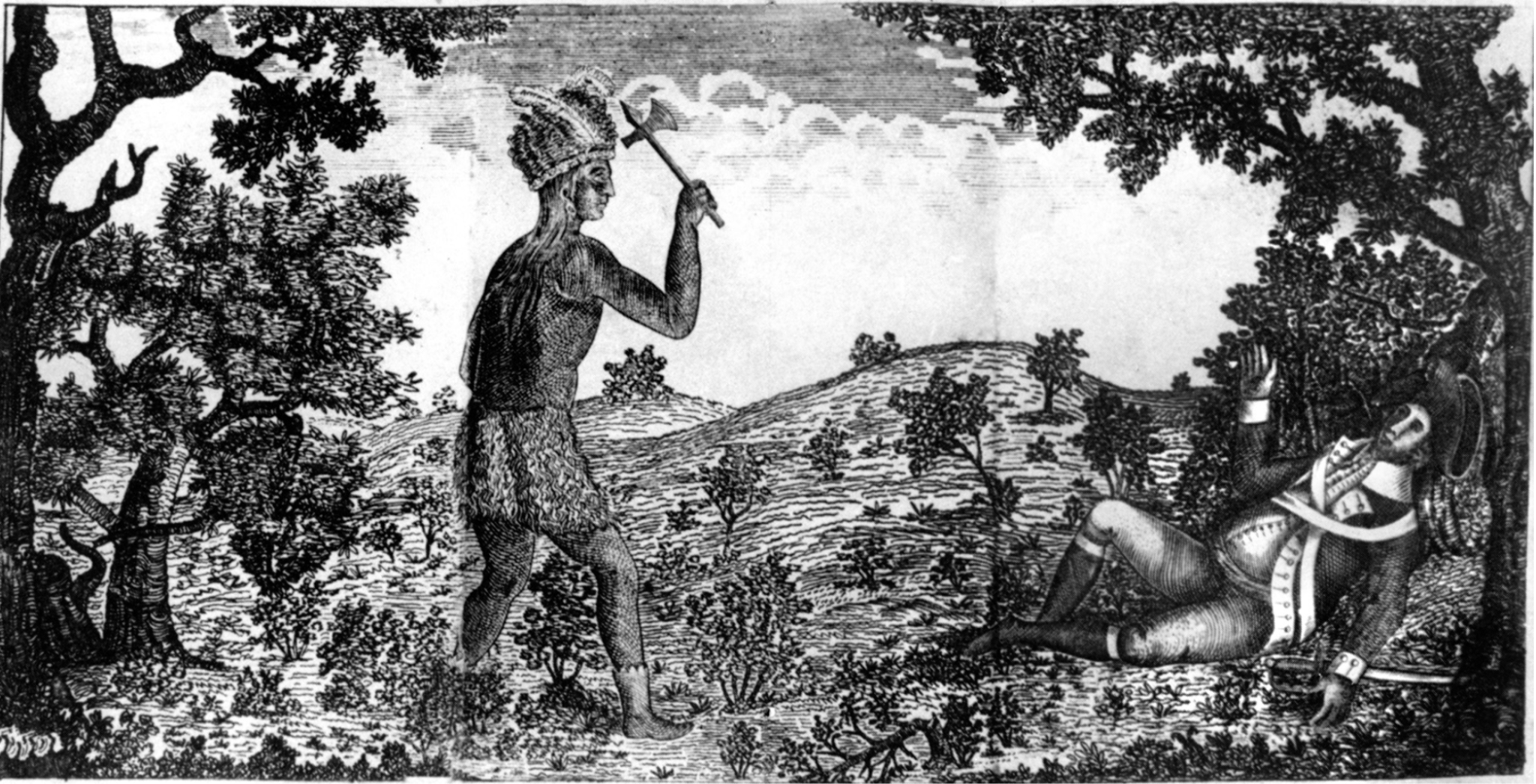
One night, St. Clair’s force camped near the Wabash River. By dawn, over 1,000 warriors from the Taawaawa Siipiiwi Alliance had surrounded them. What followed was one of the worst military disasters in US history. The Indigenous fighters used the terrain to their advantage and attacked from higher ground. The Americans tried to fire back, but many of their bullets only hit the trees — for generations when residents chopped down trees in the small Ohio town they would find lead in the wood.
The Alliance strategically killed the American commanding officers, and from there chaos ensued. Over 80% of the US soldiers were killed or wounded that day during what’s now known as St. Clair’s defeat. It is still one of the highest casualty rates the US has experienced during war — ever.
After St. Clair’s defeat, there was a lot of finger pointing. The militia blamed the US Army. The US Army blamed the Kentucky militia. Congress wanted to investigate what happened but had never done that before. Leaders were unsure of what authority they even had. After some debate, the House created an oversight committee, and it conducted the first ever congressional investigation.
During the political turmoil, Washington convened all his department heads to address the crisis. The group that came together would later be called the presidential Cabinet.
After two crushing defeats at the hands of the Taawaawa Siipiiwi Alliance, George Washington changed his mind about what kind of military the US should have: the man who had resigned his commission at the end of the Revolutionary War and had watched the Continental Army dissolve now argued that the United States needed a larger, professional military. And Congress agreed. Our founders decided they needed an army not so different from the one England had. They needed the army of an empire.
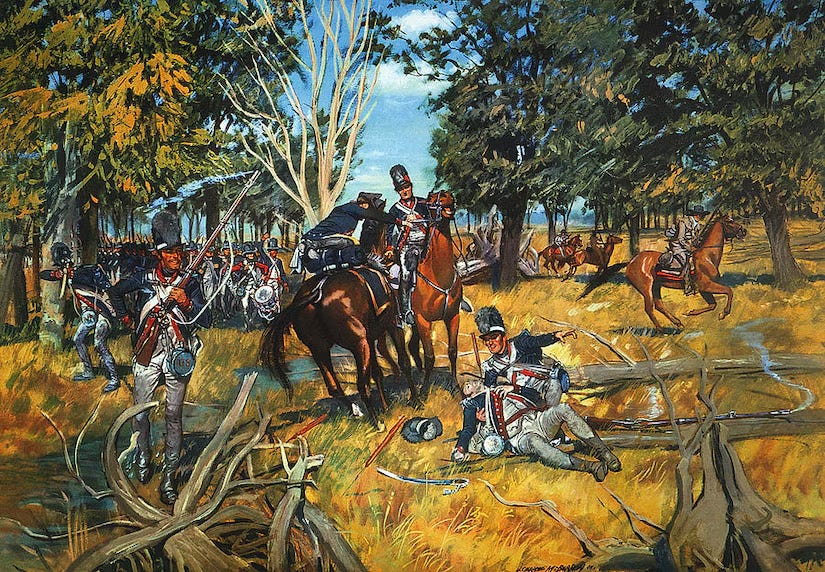
This war also marked another important first. Congress funded this war against the Taawaawa Siipiiwi Alliance, but never formally declared it. Some experts call it the first undeclared war the US ever fought. And it became precedent for all the undeclared wars we’ve fought since. When the Trump administration bombed Syria in 2017, it cited this war from the 1790s.
The US government spent the next year rebuilding. Congress created a new, centralized military — the Legion of the United States. The new army would rely on trained soldiers rather than militia. Congress expanded the military from fewer than 100 enlisted men after the Revolution to more than 5,000 by 1792. New supplies were purchased. War games were held. And to finish the job of building a fort in Kiihkayonki, they recruited another general — a man named Anthony Wayne.
Americans called him “Mad Anthony” Wayne because of his daring exploits during the Revolutionary War. But in this campaign, Wayne proved remarkably patient. Instead of leading a charge straight to Kiihkayonki, he spent years building a series of forts, slowly advancing into Myaamia homelands.
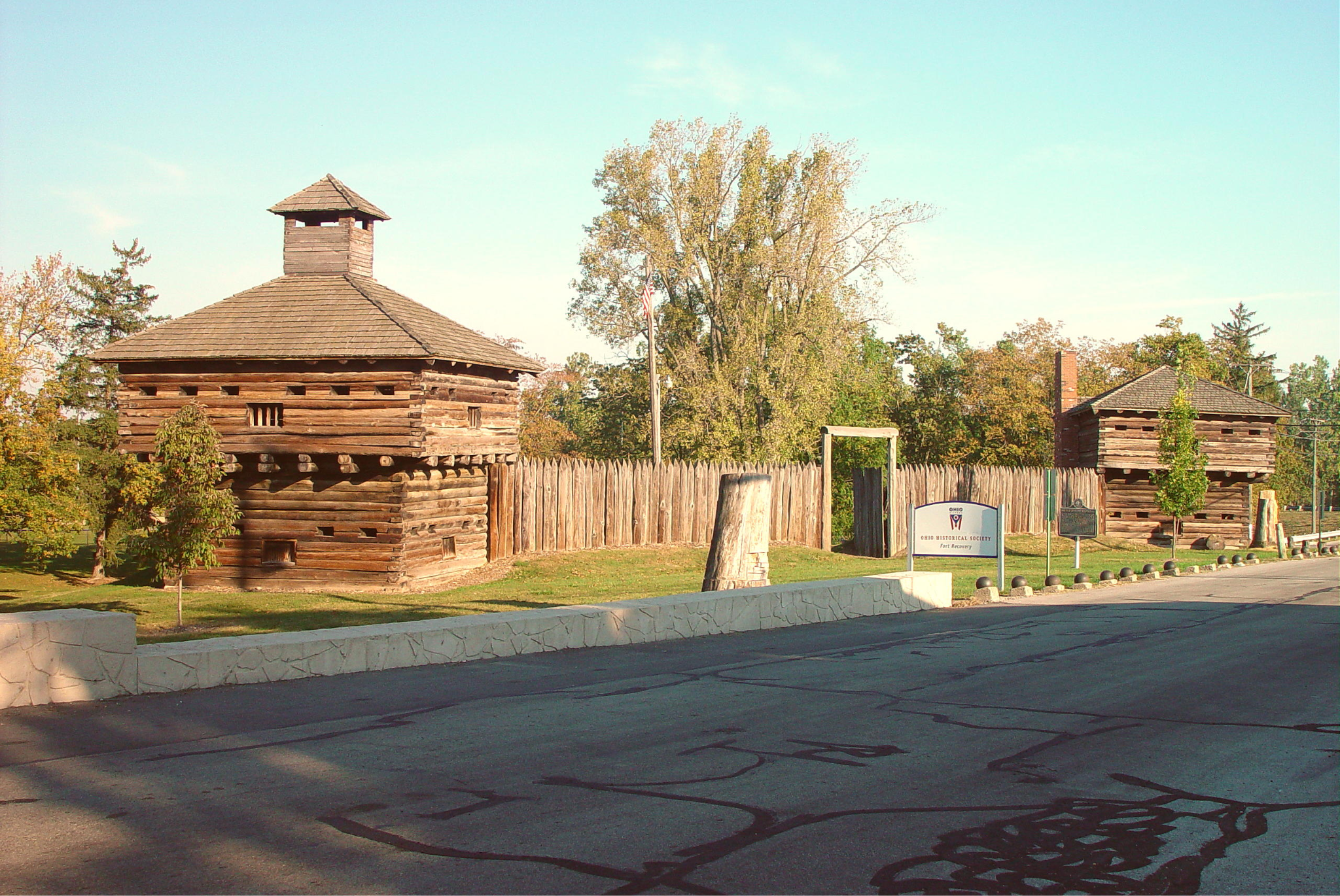
One of those forts was built at the site of St. Clair’s defeat. The ground was still littered with the bones of the soldiers who died there. Symbolically, the army named it Fort Recovery. In the system of US forts, Fort Recovery wasn’t that big — it was just a supply fort. When the US was invading Indigenous territory, it would build these forts 20 miles apart because that’s about how far a pack horse could travel in a day.
The Taawaawa Siipiiwi Alliance attacked the fort but couldn’t take it. The battle was not a decisive American victory — more American soldiers died than Indigenous ones — but it weakened the alliance. Seventeen soldiers from the alliance died, and for Indigenous leaders, those deaths were too many. “Because of the harm done to the community,” says George Ironstrack, historian and citizen of the Miami Tribe of Oklahoma, “that loss of life is too high a price to pay.”
Some Indigenous leaders started reassessing the situation. One of those leaders was a Myaamia War Chief named Little Turtle. After the devastating losses at St.Clair’s defeat, he thought the Americans wouldn’t come back, but then they did. Ironstrack sums up his thinking: “How can we beat them? Who can endure this level of loss and come again?” And who can is the American empire.
The alliance continued to fight but shrank in size. And they lost their final, short battle against the Americans. By that time, the Myaamia had been at war for roughly 15 years. During American military invasions, Myaamia villages and food stores were repeatedly burned. The tribe decided it was time for peace. As Ironstrack puts it “they couldn’t pay the price of total war.”
The resulting Treaty of Greeneville was not a total surrender. In the treaty, the Myaamia kept most of their heartland; most Myaamia villages were able to rebuild and stay put. They ceded a large area of hunting grounds in Ohio.
But the Americans did build a fort in Kiihkayonki. They named it after General Anthony Wayne. And that is how Fort Wayne, IN, got its name.
There are other wars and moments in US history that made our military bigger — World War II and the Civil War among them. But one of the first and most consequential transformations happened during the war against the Taawaawa Siipiiwi Alliance. And our country didn’t build up our military to defend freedom or liberty. We built it so the US could expand.
For the first century of our Republic our country was at war with Indigenous nations. We don’t often teach or talk about these wars, but they forever changed our military and our country.
Wars with Indigenous nations are why we have a central military, why it is so big, and why the President can go to war without Congressional approval.
Listen to the full story on this week’s episode of FIRST AMERICA. Wherever you get your podcasts.
No posts
Comments
Nothing yet. Say the first thing.
Sign in to join the conversation.