
Hello Gobbledeers,
How’s it going?
How’s the summer? A-OK? My wife and I were just discussing whether we have hit “the dog days of August.” We weren’t sure which days, specifically, those are. Whatever.
Before we jump into this week’s Gobbledy Classic (tm), I saw this headline in the NY Times’ Wirecutter (product review) section:
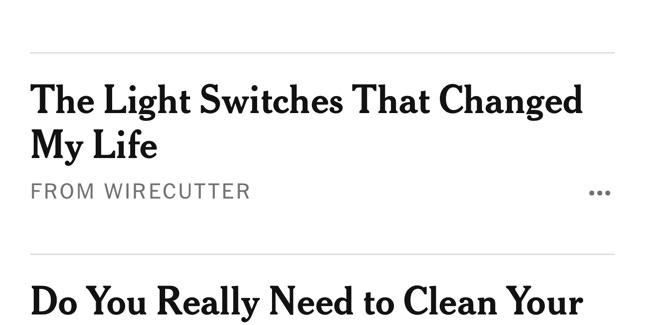
I can’t decide - is it unspeakably sad that this person found not one - multiple! - light switches that changed their life? Like their life was so unbearable - each day was just the darkest imaginable cloud filled with unrelenting sadness - that even the purchase of a light switch made it better? Or is it that they have embraced life’s simple goodness so much that even light switches have brought more joy to them than they could have conceived?
Or am I reading this entirely wrong and actually the light switches are absofreakinglutely horrible and it changed that person’s life for the worse? That just occurred to me now. That their life was popping along swimmingly, and then they bought several light switches, and now she has to somehow find a way to bail herself out of this tsunami of sadness that has engulfed her.
Hard to know.
Enough of that - on with the (Classic) newsletter. Today:
Please don’t fire your housekeeper.
You’re not the only one who doesn’t know what “agentic” means. (It’s been 18 months or so since I wrote this, and I now know what agentic means. Sort of.)
I like to talk here about the marketing strategy of having an enemy that your product can conquer.
One thing I like about using this strategy is that it’s very clear to the buyer - if I purchase this product then I will win, and something - presumably something that annoys me - will lose.
Here’s an example:
If you buy Scrubbing Bubbles Toilet Cleaning Gel (TM, I assume), it will vanquish “lime scale and hard water that cause toilet rings.” Toilet rings - blech - are the enemy, and if you buy this product it will conquer the enemy, and there ya go:
(You don’t need to watch that - I just like how excited that guy is to clean your toilet, which brings up a host of questions I have about his childhood.)
While the “our product conquers the enemy” idea seems simple, we’ve talked here about how that can go awry. My favorite example of it going awry is LinkedIn’s ad where they have a picture of a woman in her 60s with the tagline, “Your mom thinks ‘cloud sales’ is a weather forecast.” Your mom should never be the enemy - the message that “if you buy our product, you won’t be a dumbass like you’re mom” is generally not effective (free advice).
And while I like the “enemy” strategy, you don’t have to employ it. It’s not like you absolutely HAVE to add an enemy. In fact, if your value proposition is clear enough, you don’t have to go down a logical rabbit hole explaining the value.
Walmart has a value proposition around everyday low prices. I guess the enemy could be “high prices” or their suppliers (“we went to Kellogg’s and told those fat cats [Tony the Tiger, the fattest cat of them all…except Garfield, I guess. Garfield is fatter.] that they would just have to have a smaller Christmas bonus this year, because we’re not going to pay that much for Frosted Flakes.”) But there’s really no need - the benefit is “you pay less.”
Nor do you have to explain that - “You pay us less so you can spend more gambling on Draft Kings” isn’t a necessary thing to add. The implication, of course, is that when you save money by shopping at Walmart, you can take that money and do whatever your heart desires. And actually, please don’t tell me what you’re using it for.
Many of you reading these very words right now work in tech, and often in tech we pitch the benefit of the software as being “increased productivity.” Or maybe more specifically, “our chatbot can handle 20x more customer contacts than a human who you hired for very little money.”
But I really can’t think of an example of a tech company that spelled out the next logical part of that:
If you buy our chatbot, you can finally fire those 40 not-particularly-well-paid people in our call center in that part of Florida where you have to fly Allegiant to visit.
We’ve all kind of collectively agreed that there’s no need to spell out that if you are going to bring in a new technology or whatever to help with efficiency that the end result of that is that people are out of jobs.
Which is why this commercial from we’ll-connect-you-with-someone-who-will-clean-your-house company Homeaglow is so strange:
If you didn’t watch that, here’s the script:
INT. APARTMENT - DAY
WE OPEN on newish 1-bedroom apartment in one of those live/work/quasi-mall things that keeps opening in the suburbs of Raleigh and Charlotte and Knoxville. We see CASEY (or possibly MORGAN. Probably MORGAN. Or maybe Casey Morgan. Morgan Casey. K.C. Morgan. Kay C. Morgan. We’ll figure that out later ) - a recent college grad - speaking directly to camera:
“After Homeaglow cleaned our place for $19, WE FIRED OUR OLD HOUSEKEEPER.”
(End Act 1)
Hm.
So, that’s an interesting choice.
Brokerage Charles Schwab is running an ad campaign right now where the joke is that “Carl the Broker” can’t get any business because Schwab’s self-service investment tools are so good that you can fire your broker. That works because “Carl” is presented as a high-class idiot, and if you fire him it’s clear that he won’t be homeless.
That works (inasmuch as you think it works) because you can punch up. If it’s clear you’re punching up, you can probably use “your fat cat* broker who’s living large off of your commissions” as the enemy.
(*less fat than Garfield)
It gets a little less clear in other service businesses. If TurboTax went this route and said, “our $139 tax filing tool is so great that you can finally fire Maury Abromowitz, who has been doing your taxes - and your parents’ taxes - since 1961,” that would be a tougher sell. What did Maury ever do to anyone? He’s just happy he could put his kids through Rutgers and now he and Hindy can get a nice 2 bedroom condo in Delray. You don’t want to make Maury the enemy.
Which is why it’s such an odd choice that Homeaglow, which has a very clear value proposition - we’ll clean your house for $19! - instead chose to go with, “finally, you can fire that woman who comes from, is it Barbados? Bahamas? Bonaire? Barbuda? and instead you can pay someone $19.” Like that’s a weird message? The $19 already made me wonder - how is someone cleaning my house for $19? But let’s put that aside (they make it up in volume?) - why do I now have to fire my housekeeper? It’s kind of presented as a challenge - if you’re willing to fire your housekeeper, we can clean your house for $19.
Well, maybe YOU, Homeaglow, should fire the housekeeper. Why do I have to do your dirty work (ironically)?
If you work for a company selling AI-powered products, someone from the product team may have come up to you recently and started talking to you about how the product is now not just AI-powered (or whatever), but is, in fact, now “agentic.”
And you may have asked what “agentic” meant.
And the product person may have rolled his (his, of course) eyes at you, and said that it’s the next development in how AI tools work and can’t you just put it on the website so our prospects know that we’re “agentic.”
And because nowadays lots of marketing people are losing their jobs, you said, “right away!” and then you did this:
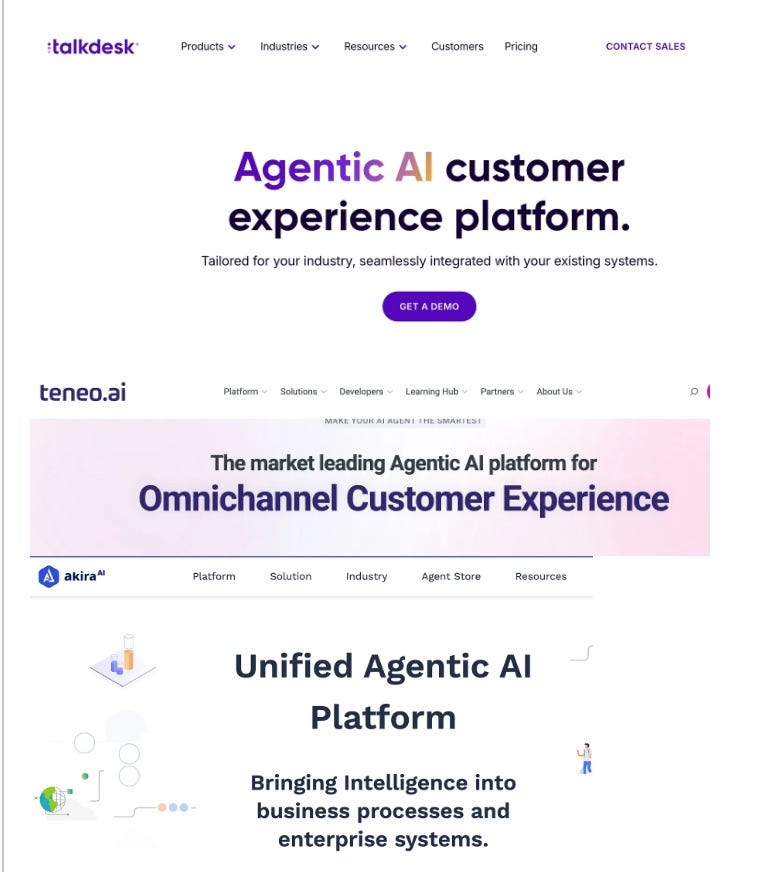
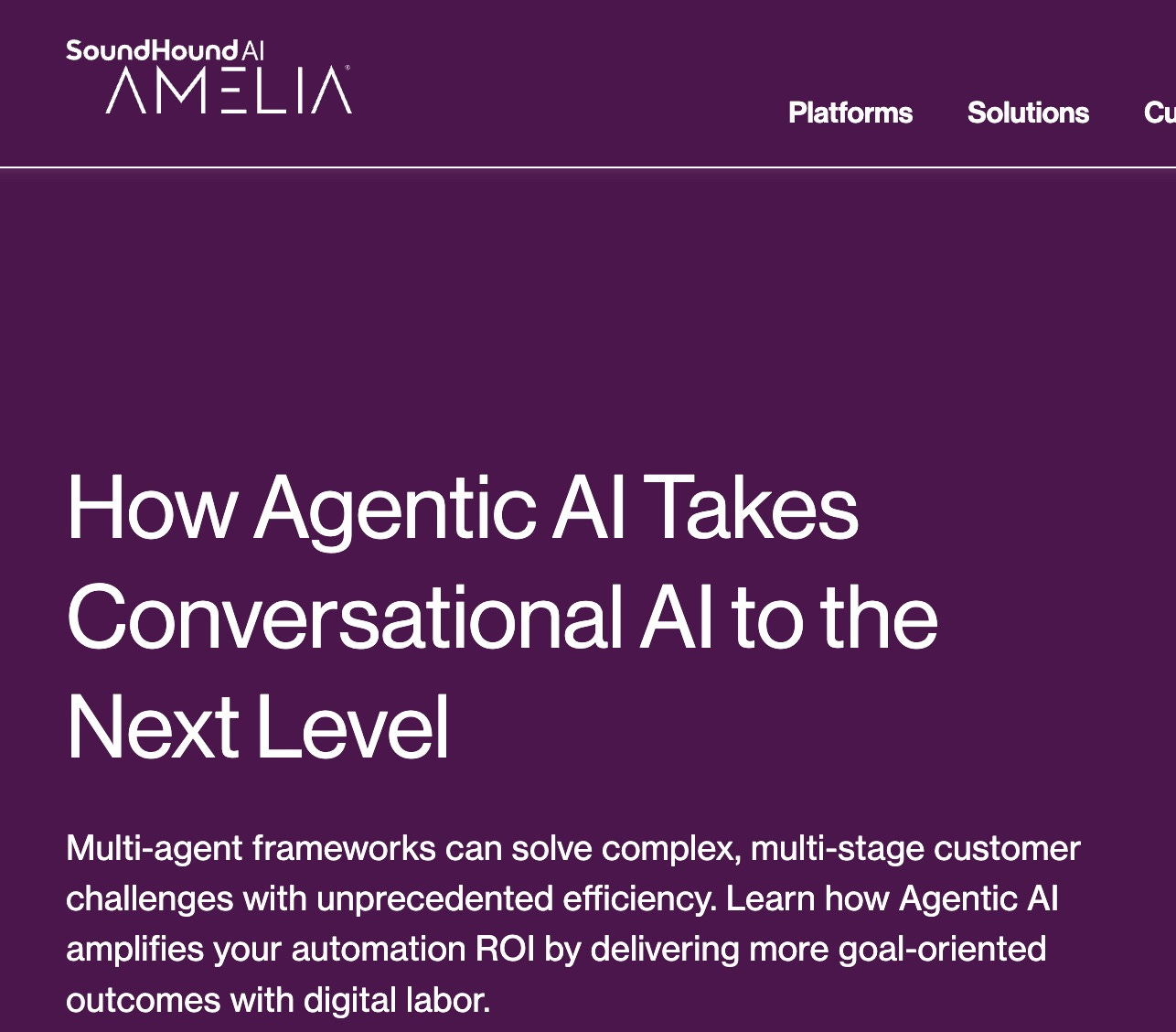
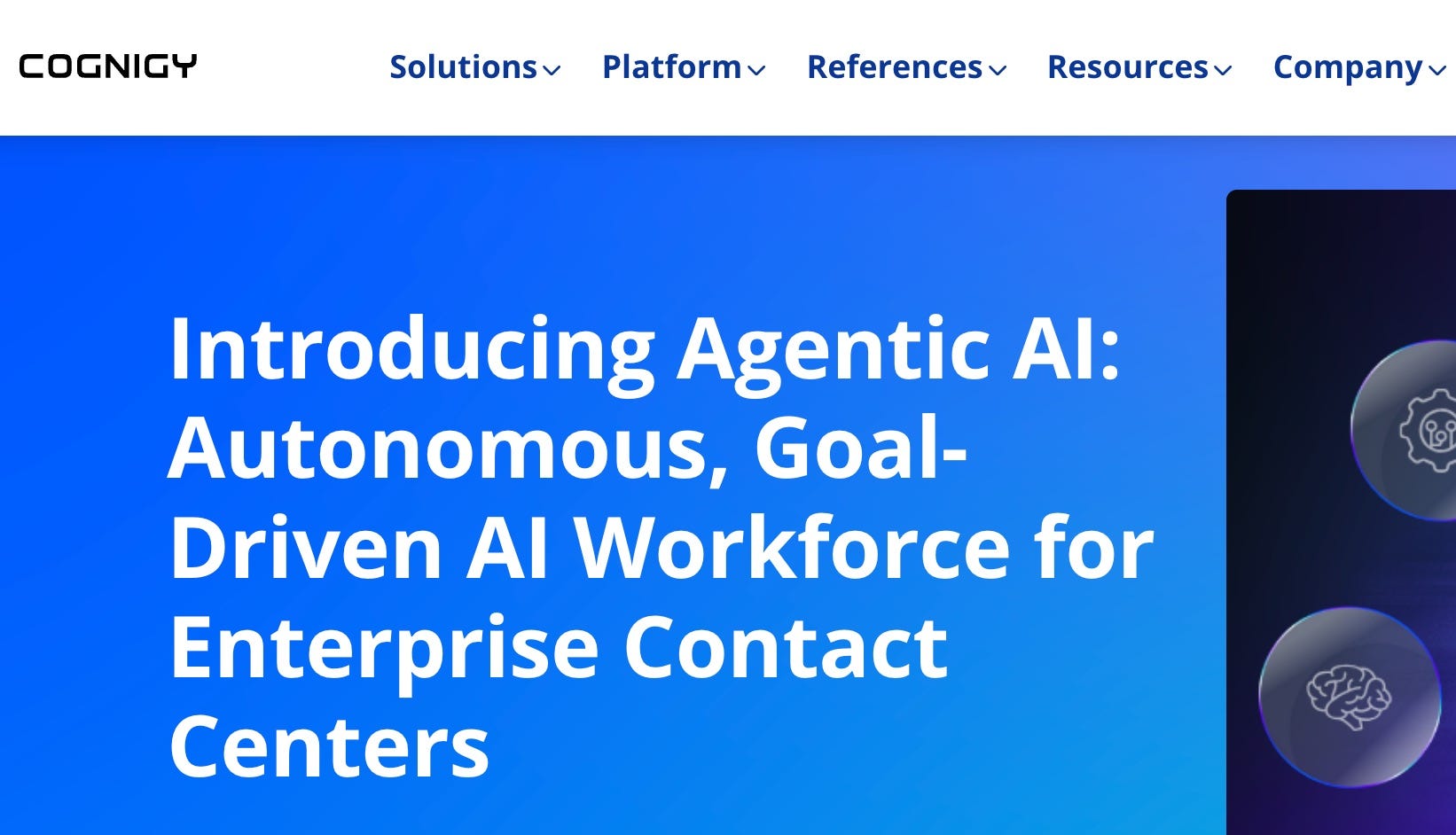
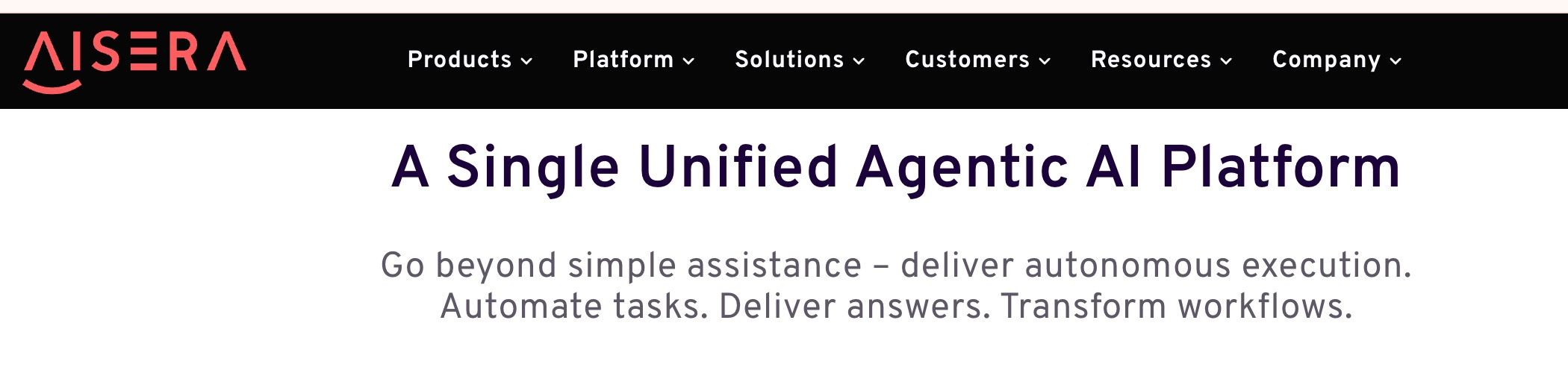

“create operational leverage” (lol)
It’s always amusing when a new word comes into the gobbledy tech lexicon (tm) and you see it thrown around everywhere, willy-nilly style. I just looked (and will not torture you with more screengrabs), but maybe 8 weeks ago, we didn’t see “agentic” anywhere, and then all-of-a-sudden, we see it everywhere.
If you’re tempted to throw “agentic” on your site, it’s worth taking a gander at this Wall Street Journal article (free gift) about how nobody - including the people you’re purportedly selling to - knows what “agentic” means. To wit:
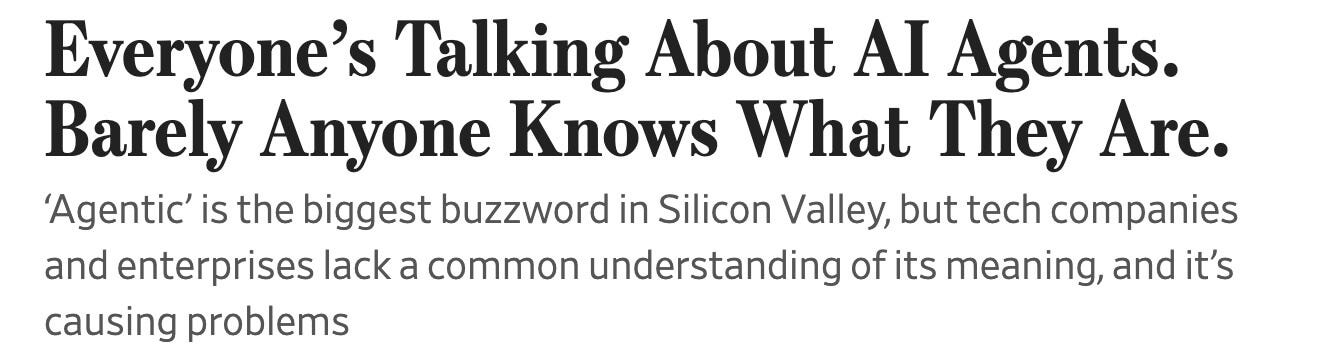
Still, Robert Blumofe, chief technology officer at Akamai Technologies, said many of the use cases he is seeing in the wild resemble “assistive agents,” rather than “autonomous agents, requiring direction from a human user before taking action and narrowly focused on individual use cases.”
“You could argue that ‘assistive agent’ is a bit of an oxymoron,” Blumofe said.
Ori Goshen, co-founder & co-CEO of AI21 Labs said he shies away from the term. “It’s become very, very overloaded,” he said.
I have no idea what that means, other than, “please stop saying ‘agentic’ on your website - even the people you’re selling to have no idea what it means.”
Two additional notes from my agentic research:
Amelia and Aisera’s logos are pretty damn similar:

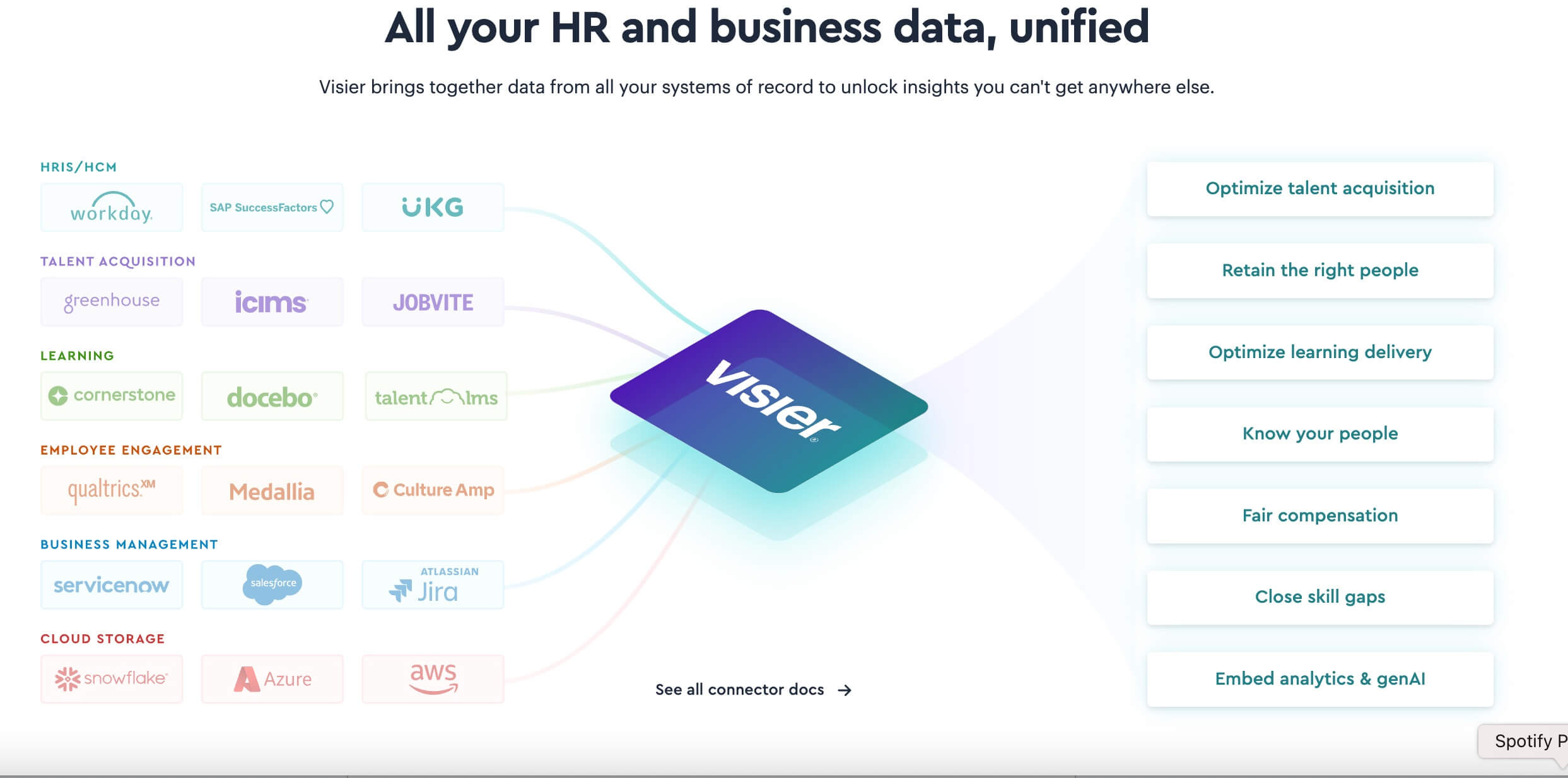
The octopus is alive and well:

Thanks for reading to the end - it’s the best part.
If you’re interested in getting your product in front of thousands of marketers, I’m happy to chat with you about advertising in the Gobbledy Newsletter. I’m at jared@sagelett.com. I’m, of course, also happy to talk to you about other things, too.
No posts
Comments
Nothing yet. Say the first thing.
Sign in to join the conversation.