
Most of the time when we talk about critical thinking, we focus on learning how to reason more effectively, or on remembering tricks to avoid being deceived. These can be useful when applied effectively, but without courage they are redundant. Critical thinking demands a willingness to risk comfort, certainty, and perhaps even one’s sense of self. That is why it is so rare.
Die fröhliche Wissenschaft: Aphorism #323 - Good luck in Fate
“The greatest distinction that fate can bestow on us is to let us fight for a time on the side of our opponents. With that we are predestined for a great victory.”
— Friedrich Nietzsche (1882)
In the sprawling battlefield of the psyche, one army sets itself against the brutality of life, whilst another assails it with primitive fury. Swords clash. Arrows scream. Horses rear and whinny. Both sides fight for the spoils of victory, unaware that they have already been sacked by thieves.
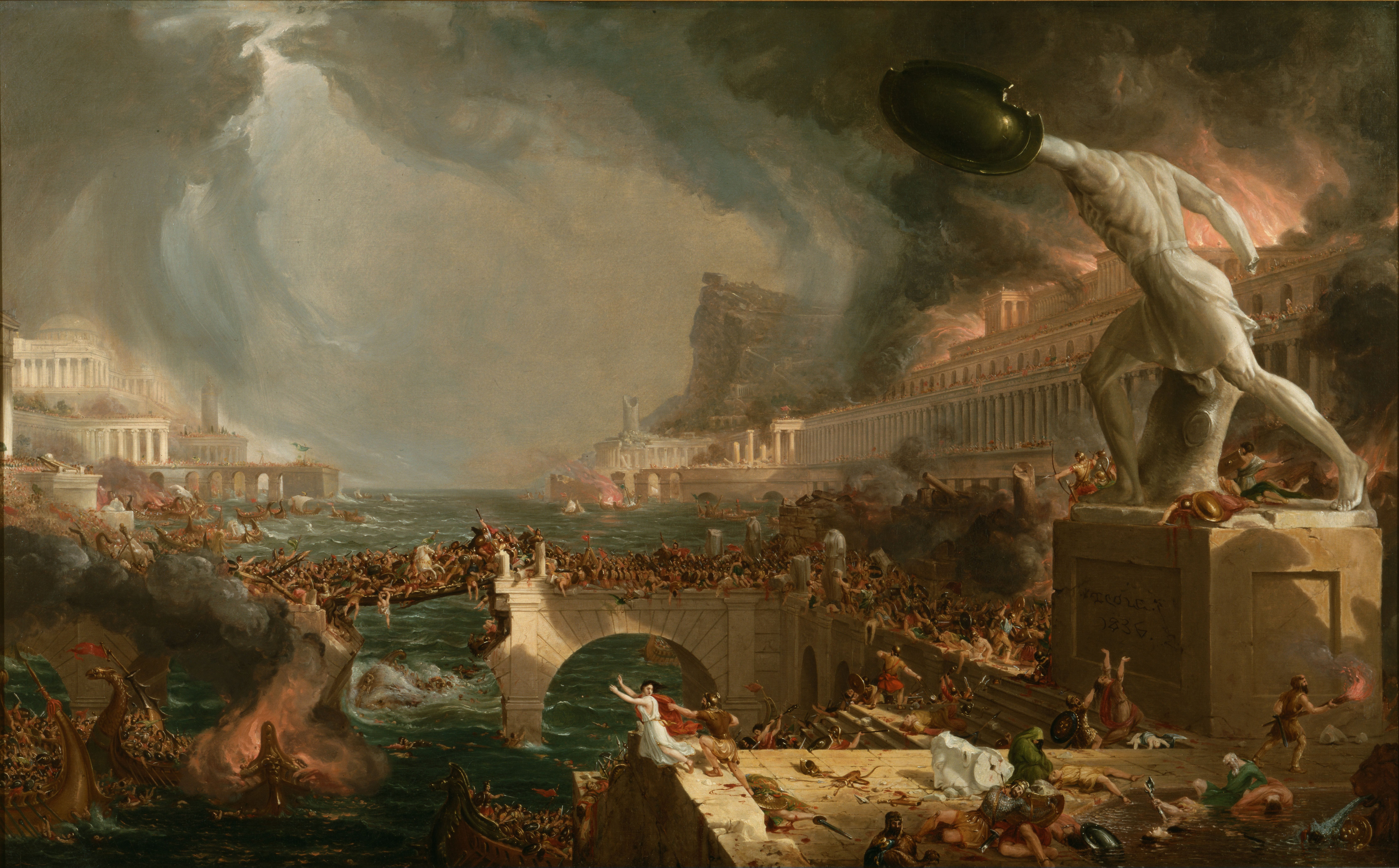
This is the fate of many self-fashioned truth-seekers and philosophers: aimless battles, victories without reward, robbed by life itself. However, there is another path, leading to more profound revelations and transformation… only, it requires a rare type of courage.
All beliefs which radiate warmth and comfort should be regarded with suspicion, for here the psyche has already furnished them for its own advantage. The seeds of ideas and philosophies lurk in the mind long before they are discovered by consciousness, and certainly before rationality—that spinster of propaganda and dogmatism—closes in. If one fails to see that the complete tapestry of existence is severe and unwieldy, a whole host of psychological comforts have likely taken root.
For example, what is really said when one believes the world benevolent, or even this little part of it? In short, that reality has been created to serve us, and the many maladaptive creatures that perished to give way for our species were nothing more than crude material. Suppose instead that the world’s benevolence were reserved only for the lion, whose good it is to sacrifice the gazelle for nourishment. Or for the microbe, so that decay and disease are merely symptoms of the primacy of microbial life. And let us not stop there. If we ourselves are only a bridge to the next evolution, what reason would there be to assume that the universe is designed for us, and not our descendants yet to come?
Verily, so much of what we believe is produced out of a desire for everything to fit neatly in its rightful place; even if it means sanding off rough edges, making incisions here, breaking something there.

To think critically, then, is not only rigid adherence to rational discourse, nor is it a leap into the world of fantasy and intuition, though both may have their place. The essential ingredient is the courage to venture the mountain passes between useful, as-yet-unresolved contradictions—without falling off balance. And that is its grave danger!
For most, when venturing over great heights the instinct is to cling on with both hands, and even the most daring youth can become nervous with age, retreating into the cold grip of death aversion. Thus, we see the instances of those who at one time break away from the social mores of the majority, only to fall into an equally profound slumber.

Without sufficient courage, one seeks only that which is agreeable. Where one does decide to stalk into hostile territory, one remains at a safe distance, so that only the loudest shouts and laughter are audible. But how can one truly hope to understand an enemy until one has spoken in their language, and even dreamed in it?
The preachers of the status quo so often call upon the malleability of the mind to warn against these trespasses into foreign thought. Does this not instead reveal the problem with any appeal to common sense, intuition, or conviction? When one places a ban on this thought or that, whatever the reason, it serves only to rigidify and calcify the mind. Once rushing rivers reduced to stagnant pools.
Rather, to come to terms with becoming one’s own enemy, then becoming an enemy of that enemy… this is what is needful for critical thought. It teaches us to understand nuances; it teaches us new perspectives and new languages; and it teaches us how to flow with reality, rather than gnashing our teeth against it.
Consciousness is our best ally in this project, for it has granted us theory of mind: not only to simulate the minds of others, but to simulate our own minds projected into the future. Through this mechanism, it is possible to prepare for the transformation ahead.

So, for you who are genuine in the pursuit of truth, in spite of its danger: dare to agree with an enemy, dare to become an enemy, and seek courage above all. Naturally along this course, you will fill your satchel with gems and relics, until you are forced to discard those of lesser value. Compare this to those who never wander, and have only a couple of muddy rocks which they found outside their house. Perhaps, a relic or two from a distant ancestor. These may suffice. These may provide comfort. These may even weigh less, letting one move lightly. But ask!
”Is this enough?”
Comments
Nothing yet. Say the first thing.
Sign in to join the conversation.