
I’ve spent the last week in a course on urban sketching at the Lunenburg School of the Arts. I’m a writer, not an artist, but something about drawing and painting has always attracted me, and I very much miss the days in which novels were regularly printed with illustrations. I grew up with the Winnie the Pooh books illustrated by E.H. Shepard and the Narnia books and others illustrated by Pauline Baynes. Illustrated books used to be a regular thing for adult fiction as well. You will find wonderful illustrations in older versions of Austen and Dickens and many other writers.
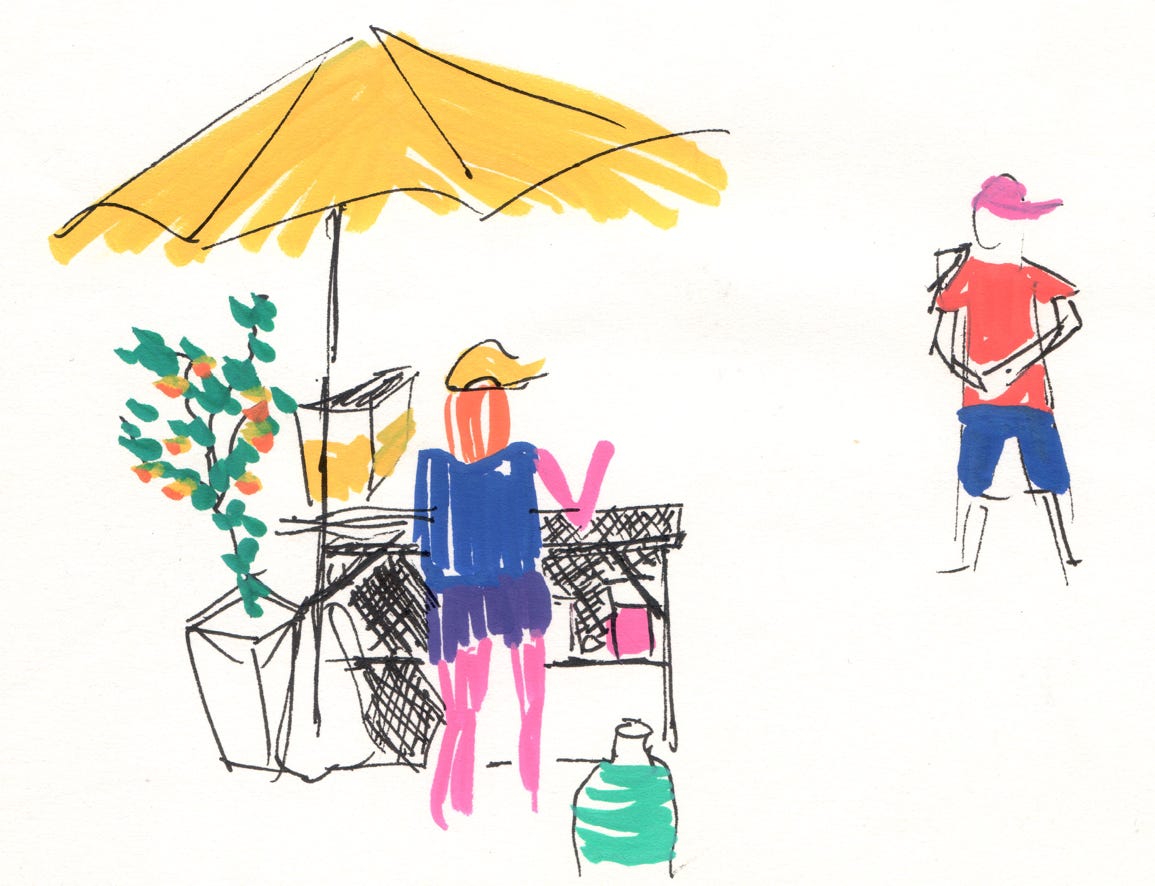
The expense of adding illustrations makes such things prohibitive today, and much as I would like to, I know that I am never going to put in the hours, days, months, and years of practice required to be able to do such illustrations for my own books. Still, from time to time I am moved to pick up a pen, pencil, or paintbrush and take a course or sit and sketch for a bit. And the more I do so, the more I become fascinated by the connection between art and fiction.
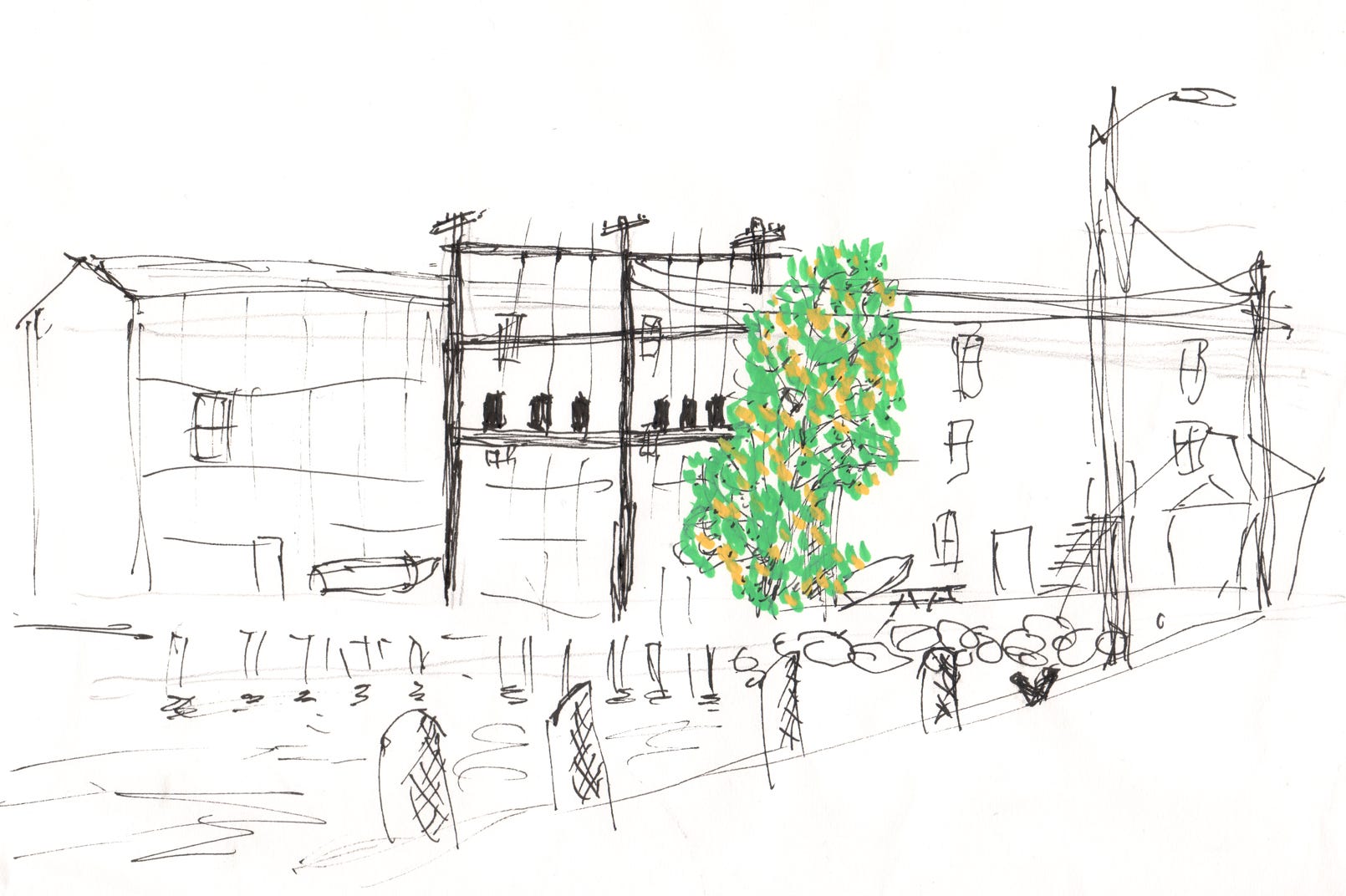
There are some very obvious crossovers between the two, of course. Comics and graphic novels combine words and pictures to tell stories. But I am interested in a more fundamental connection between form and story. The plastic arts examine the forms of things. So much of learning to draw is learning to see the actual shape of things and how to represent those forms on paper. Fiction is the art of human behavior. It is concerned with stories. And yet the instructor in our course this week talked frequently about creating sketches that tell a story. How can an art that is concerned with forms tell stories?
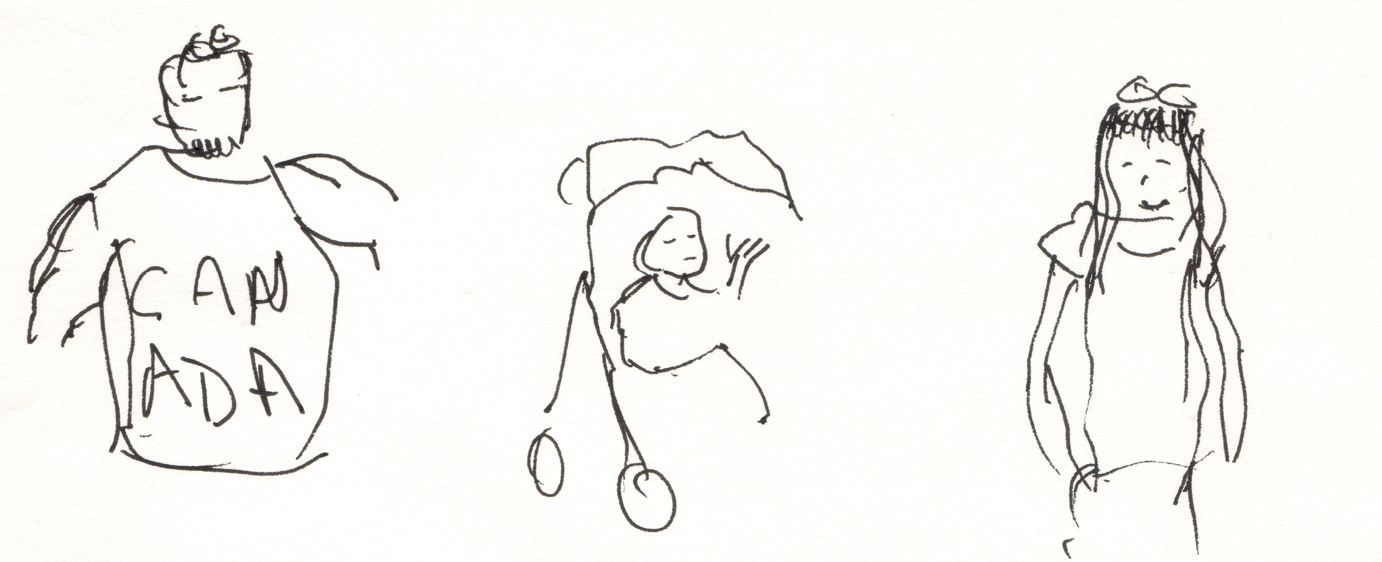
Of course, you can tell a story with drawings. That is what comics and graphic novels do. But they do it with a sequence of pictures that show change and movement, and they use both dialogue and text blocks to fill in the details and complete the story. They are, in other words, a mixed media form. This is a very different thing from a single static image telling a story. And yet we have all seen single images that seem to us to tell a story. So how does that work?
First, an image can work like a symbol. As I have argued before, a symbol in literature is simply an object that reminds you of a story. By itself, a single object may carry reminders of many stories, but if it is placed in combination with other objects, it can remind us of a specific story. Thus, a snake may remind us of many stories, and an apple tree may remind us of many stories, but curl that snake around the trunk of an apple tree and it reminds us singularly and vividly of one particular story: the story of the temptation of Eve in the Garden of Eden. You can do this juxtaposition of objects in text or in a picture with exactly the same effect.
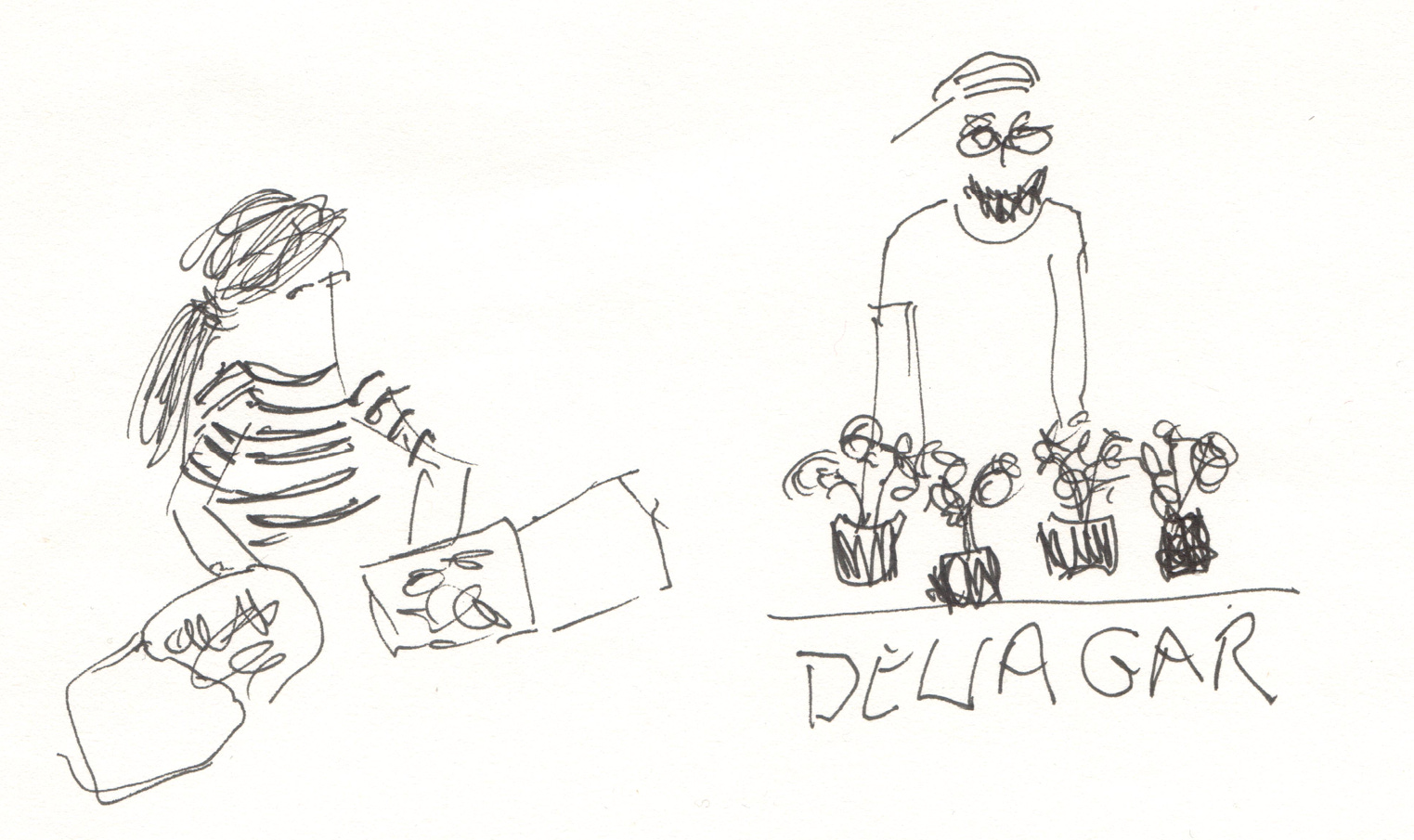
Secondly, a picture can juxtapose forms in a way that makes us ask how they got that way. This image is not actually telling the story. It doesn’t answer the question of how things got that way; it invites us to invent stories for ourselves to explain how the objects got that way. Humans are storytellers. We explain the world to ourselves by telling ourselves stories. We explain everything we see by telling a story about it, and when we can’t find a story to tell about it, we say that we don’t understand it. This is why we are so susceptible to conspiracy theories. They are just stories that explain something that we otherwise can’t understand. A story, however improbable and bizarre, is always preferable to a mystery.
An image, therefore, does not have to spell out a story to tell a story. The viewer’s mind will do the storytelling for itself. The difference between an image that is interesting and one that is boring is that one suggests a story, and the other one does not.
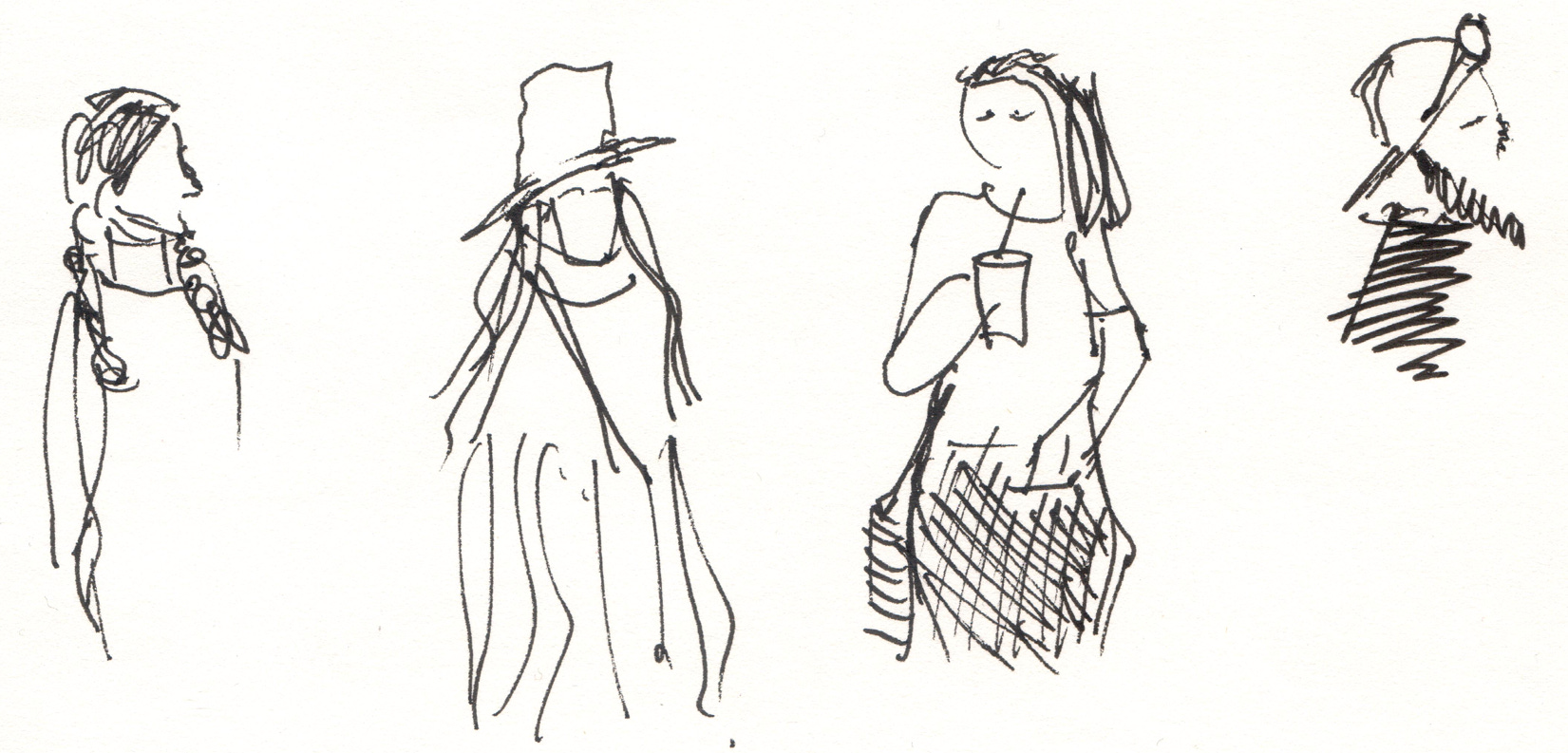
But it is not just about the ability of a form to suggest a story. It is also about the ability of a line or a shadow to suggest a form. The artist does not have to capture every boundary and detail of an image in order for the viewer to recognize the form and to proceed from the form to the story it suggests or provokes.
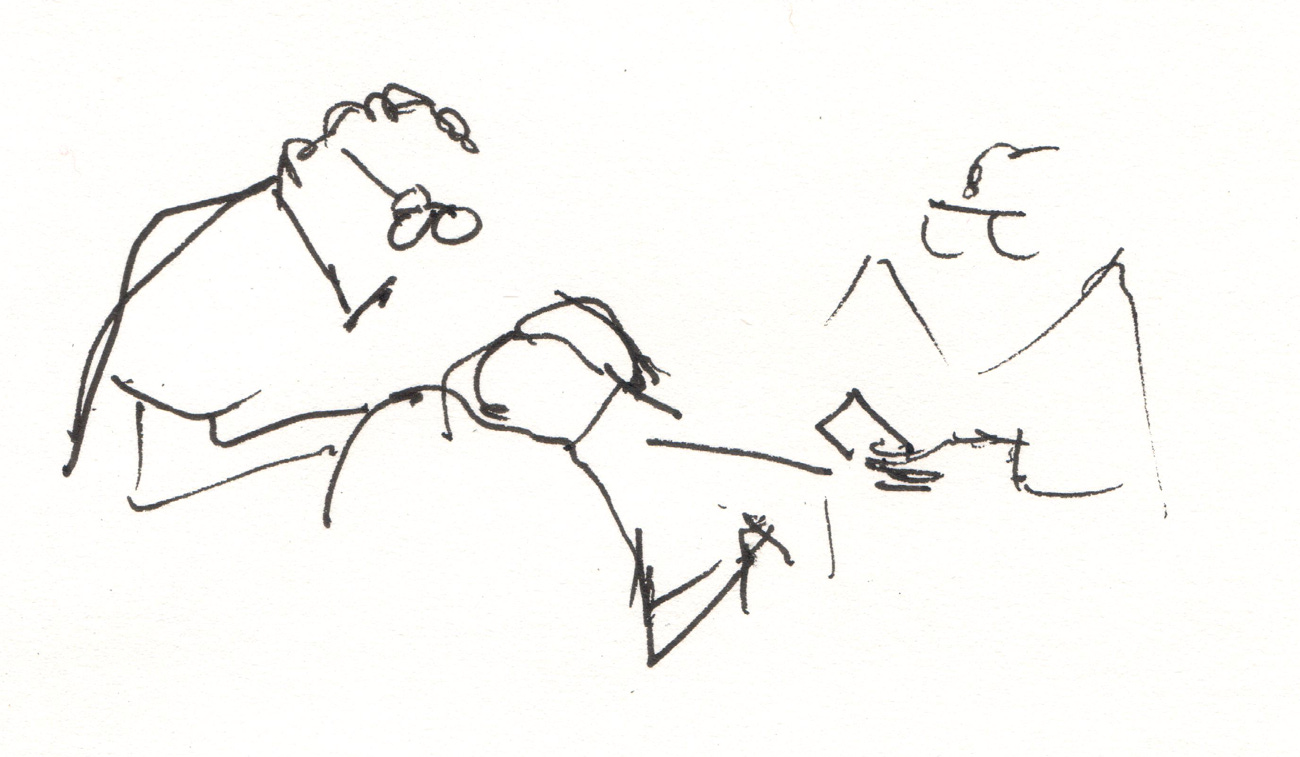
The same is true in fiction. One does not have to set down every detail of a scene or setting. Just as the right line can recall the whole form to the viewer’s eye, so the right words of phrase can recall the whole form from the reader’s mind. This enables both the artist and the writer to proceed with great economy. Precisely because we use stories to explain everything in our lives, our brains can receive and interpret stories with great economy, even from a few words or lines, if they are the right lines or the right words.
There are times, of course, when we do value great detail in both art and literature, but no matter how much detail such works include, they cannot include it all, and there is always a point at which the mind of the viewer or the reader must take over. Indeed, because our brains work by telling stories to explain what we see, the mind of the reader or the viewer will always take over and will always interpret the lines and words set before them in their own ways. This explains why viewers sometimes miss the details of paintings and readers overlook the details of written description and even action. The brain has galloped ahead to create closure, to build a story that explains what it has seen, and anything superfluous or contrary to the story it has constructed will be ignored.
This means that there is, for the artist and for the writer alike, the risk of going too far, or putting too much in. Our real task is not to fill in every detail. The reader’s and viewer’s minds will make up their own stories anyway. Our real task is to supply just the right line, just the right form, just the right word or phrase or story to guide the brain’s storytelling mechanisms along the desired track.
Not even the best of us can do this with perfect effect. Our readers and our viewers are far too varied for that, and what illuminates for one will fall dead for another. But somewhere hopefully within our grasp, if we have sufficient command of our craft, is the ability to choose the right line to suggest the form, the right juxtaposition of forms to suggest a story, the right words, the right symbols, the right details, the right motions, to lead the minds of some of our viewers and readers at least, to see the world just a little bit anew.
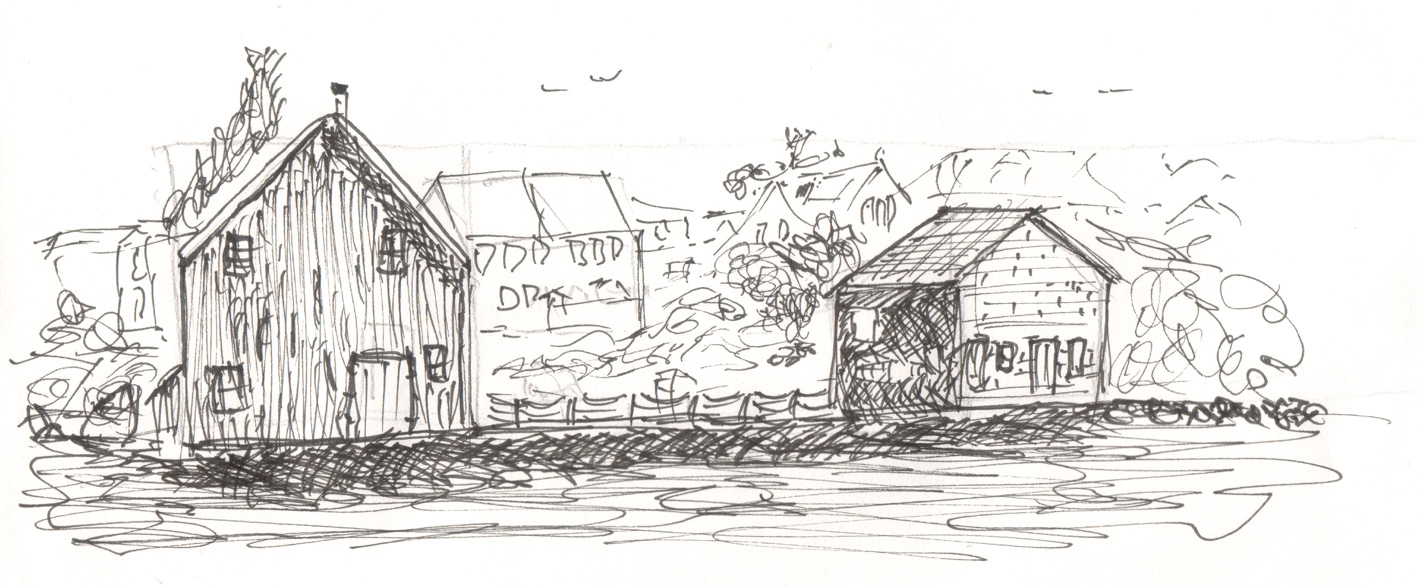
Form shapes story. If story is the art of human behavior, human behavior is shaped at every turn by the form of things. It is the form of things that shapes human love, human desire, human fear, and human ambition — the very things that motivate the actions that build stories. The form of things constrains the possibilities of action and shapes its outcomes.
A story taking place on a limitless plain would be formless, lacking either goal or constraint. Stories exist only because of the forms of things. In this sense, the fascination of the artist with form and that of the writer with action are simply two poles of the same fascination, and to be obsessively concerned with one is to be at least interested in the other, even if the mastery of both is beyond most of our talents.
But even if full mastery of the other pole of this continuum is beyond us, there is great value for the writer to study and to practice drawing and painting, and for the artist to study and practice storytelling. In the end, form matters to us because it shapes our lives, and the stories that we tell to explain our lives are fundamentally shaped and constrained by the forms of things. Form and story are inseparable, and the study of one will always inform the study of the other.
Comments
Nothing yet. Say the first thing.
Sign in to join the conversation.