
For my recovery, I used a peptide stack consisting of:
BPC-157: 0.5 mg daily
TB-500: 0.5 mg daily
KPV: 0.5 mg daily
GHK-Cu: 2 mg daily
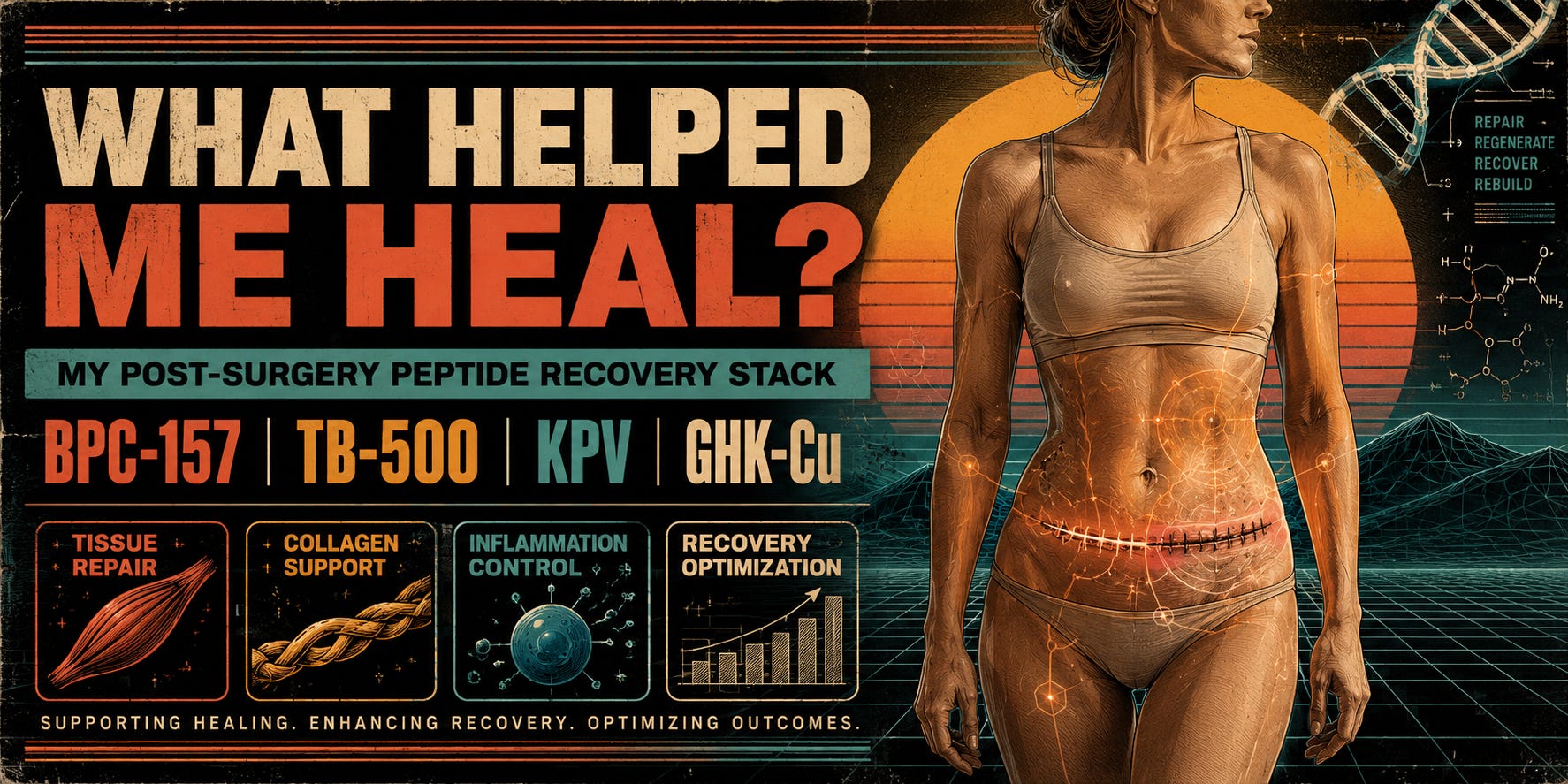
This wasn’t intended to replace proper surgical care, wound care, nutrition, or medical advice. Instead, my goal was to support tissue repair, control excessive inflammation, and optimize the conditions required for healing.
When surgeons repair tissue, the body immediately begins a complex process involving:
Inflammation
Tissue regeneration
Blood vessel formation
Collagen remodeling
Scar maturation
Problems can occur when inflammation becomes excessive, blood flow is inadequate, or collagen remodeling becomes disorganized.
Each peptide in my stack targets a different aspect of that process.
BPC-157 (Body Protection Compound-157) is one of the most popular recovery peptides in the biohacking world.
Animal studies suggest it may:
Support angiogenesis (formation of new blood vessels)
Accelerate wound healing
Improve tendon and ligament repair
Support muscle recovery
Enhance blood flow to injured tissue
For surgical recovery, blood supply is critical. Every cell involved in rebuilding tissue requires oxygen and nutrients. One reason BPC has become so popular is its potential ability to support this healing environment.
Many users report that incisions appear to heal more rapidly and that soreness decreases sooner than expected.
TB-500 is a synthetic version of a portion of thymosin beta-4, a naturally occurring protein involved in healing and regeneration.
Research suggests thymosin beta-4 may:
Promote cell migration to injured tissue
Support blood vessel growth
Reduce inflammatory signaling
Improve tissue remodeling
Enhance flexibility during recovery
One reason TB-500 is often paired with BPC-157 is that the two appear to work through different pathways.
While BPC is often discussed as a localized healing peptide, TB-500 is frequently described as producing more systemic effects throughout the body.
Following surgery, stiffness can be almost as frustrating as pain. TB-500’s potential ability to support tissue remodeling is one reason many people include it in a recovery protocol.
KPV is a small peptide fragment derived from alpha-MSH, a naturally occurring anti-inflammatory hormone.
Unlike many compounds that simply suppress the immune system, KPV appears to help regulate inflammatory signaling.
Potential benefits include:
Reduced inflammatory cytokines
Improved skin healing
Support for gut barrier function
Reduced irritation and redness
Better recovery from inflammatory stress
Inflammation is necessary for healing.
Too much inflammation is not.
The goal isn’t to eliminate inflammation. The goal is to keep it from becoming excessive and interfering with tissue repair.
This is where KPV may shine.
During recovery, I viewed KPV as the “calm things down” component of the stack.
If I had to choose the most fascinating peptide in this stack, it would probably be GHK-Cu.
GHK-Cu is a naturally occurring copper-binding peptide discovered in human plasma.
Research has shown it may:
Activate genes involved in tissue repair
Increase collagen production
Improve skin regeneration
Support wound healing
Enhance blood vessel formation
Reduce scar formation
Improve skin quality and elasticity
GHK-Cu is often discussed in anti-aging circles because of its effects on skin appearance.
However, its real value may be deeper than cosmetics.
GHK-Cu appears to act as a signal that tells the body a repair process is needed.
For surgical wounds, that signaling could potentially support healthier collagen organization and tissue remodeling during recovery.
I viewed the stack as addressing four different aspects of healing:
BPC-157
Blood flow
Tissue repair
Recovery support
TB-500
Cell migration
Systemic healing support
Tissue remodeling
KPV
Inflammation control
Immune regulation
Reduced tissue irritation
GHK-Cu
Collagen production
Regeneration signaling
Skin and scar quality
Together, the goal was not to force healing.
The goal was to create an environment where healing could happen more efficiently.
Peptides get a lot of attention, but the basics still matter most.
My non-peptide recovery priorities included:
Adequate protein intake
Hydration
Sleep
Compression garments
Following surgical instructions
Walking and mobility as tolerated
Avoiding activities that stress healing tissue
No peptide can overcome poor recovery habits.
One of the most interesting things about peptide therapy is that different peptides appear to influence different stages of the healing process.
For my recovery, BPC-157, TB-500, KPV, and GHK-Cu formed a stack aimed at supporting tissue repair, collagen formation, blood flow, and inflammatory balance.
While much of the excitement surrounding these peptides comes from animal studies, laboratory research, and anecdotal reports rather than large human surgical trials, their potential role in regenerative medicine continues to generate significant interest.
As always, more human research is needed.
But from a biohacker’s perspective, this combination represented my attempt to support the biology of healing rather than simply waiting for time to do all the work.
Join the Biohacking Peptide Skool Group
Friday’s Telehealth code KELLY for $100 off
Biocare Protein Shake for GLP-1 Users 20% off with Code JUSTLOSEIT
Comments
Nothing yet. Say the first thing.
Sign in to join the conversation.