
By Lilia Yapparova
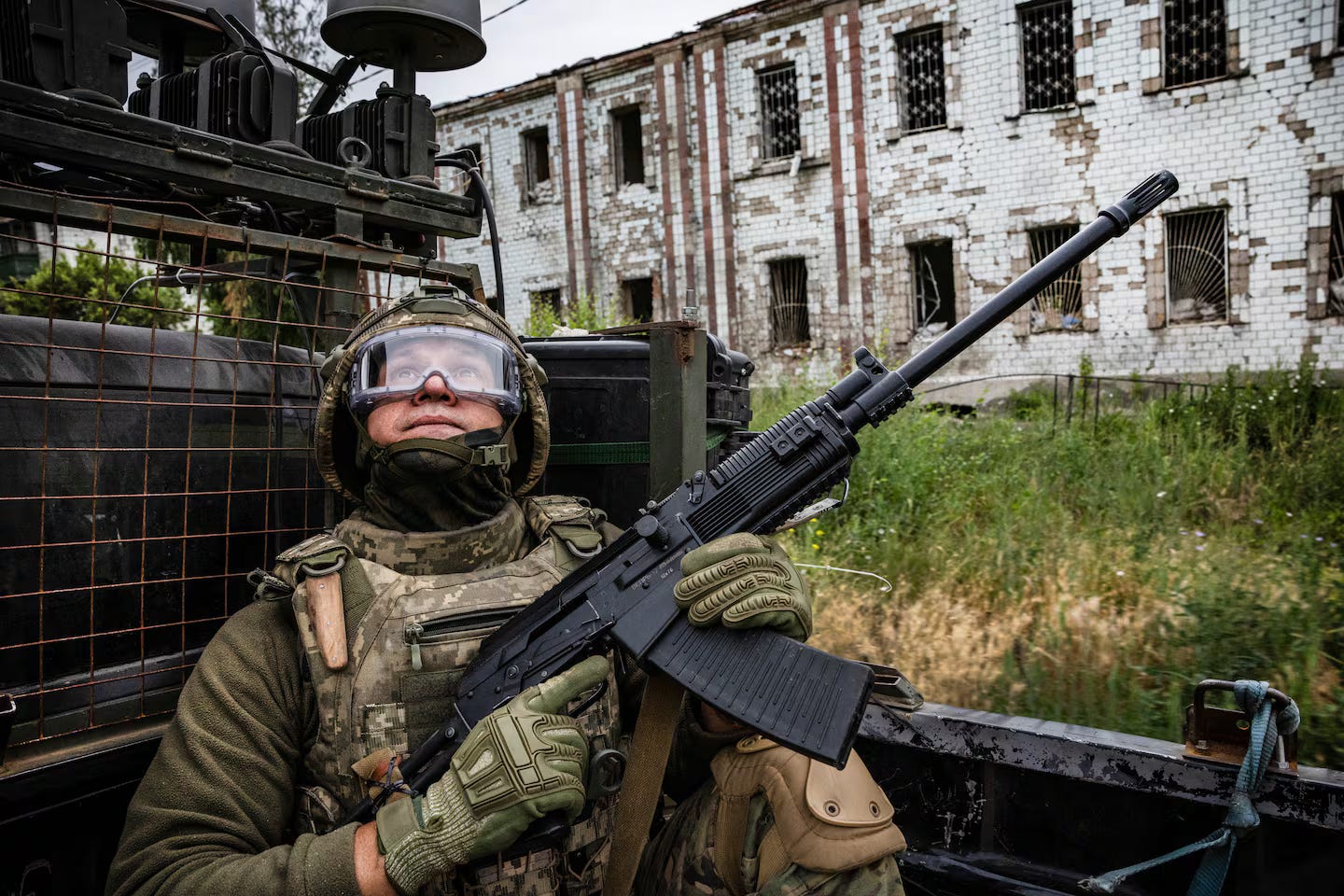
In the autumn of 2025, a Ukrainian psychotherapist realized that when she was working with clients traumatized by war, certain therapeutic approaches simply didn’t work. She had been counseling a couple living in the Odesa region via video sessions. The wife wanted to rebuild emotional intimacy with her husband, a soldier recently released from Russian captivity who had sealed himself in silence about the experience. The psychotherapist — who asked that her name not be used for fear she could be targeted by Russian soldiers — braced for familiar symptoms of trauma like dissociation or panic attacks. Yet during four months of therapy, the man stayed silent while his wife talked, and never showed his face.
“Revealing oneself is a real challenge for someone who has been held captive,” the psychotherapist told me in a phone interview from her home in Lviv. ”I could have said, ‘You know, that’s not how I work.’ I could have insisted on a textbook approach. But who sets the rules? This man simply didn’t have the strength to work ‘by the book.’”
Stigma around mental health care still runs deep in Ukraine. This is the case even though the scale of trauma in Ukraine is extraordinary. Soldiers are dying by suicide; parents do not know how to comfort children during shelling; refugees have repressed memories of months under occupation.
If the country’s mental health crisis goes untreated, overlooked grief and loss could become indelible parts of Ukraine’s social fabric, with cascading effects on future generations, Nathalie Robelot Timtchenko, a mental health professional, says. “You cannot rebuild a country with people who are internally shattered,” says Timtchenko, who worked in Ukraine as a clinician and now divides her time between Washington, D.C., and Kyiv.
In 2022, Timtchenko founded First Aid of the Soul, a nonprofit that has since reached more than 23,500 Ukrainians who would otherwise have gone untreated. “The nation feels like it’s not okay to ask for help specifically related to mental health,” Timtchenko says. “And it won’t just resolve itself with victory.”
Timtchenko has spent years trying to convince soldiers to seek help, only to collide with the same barrier: The mindset that therapy is for “weak” people. “One defender [soldier] told me, ‘I’m so tired of being a guest in my own home when I’m on leave,’” she says. “The challenge is that they feel so alone in their experience, even though they’re not.”
To address their clients’ alienation, mental health professionals are creating military peer support programs and tailored therapeutic spaces for veterans and active-duty troops.
It is not only soldiers who continue to live in a nightmare of ongoing trauma. I talked to another psychotherapist from Kyiv who works with survivors of Mariupol’s occupation, which began in 2022 and is ongoing. His clients spent weeks in basement shelters, listening to the shelling above them. For them, post traumatic stress disorder manifests as a hair-trigger hypersensitivity to sounds as trivial as a cup falling from a table, along with memory lapses, flashbacks, and outbursts of rage.
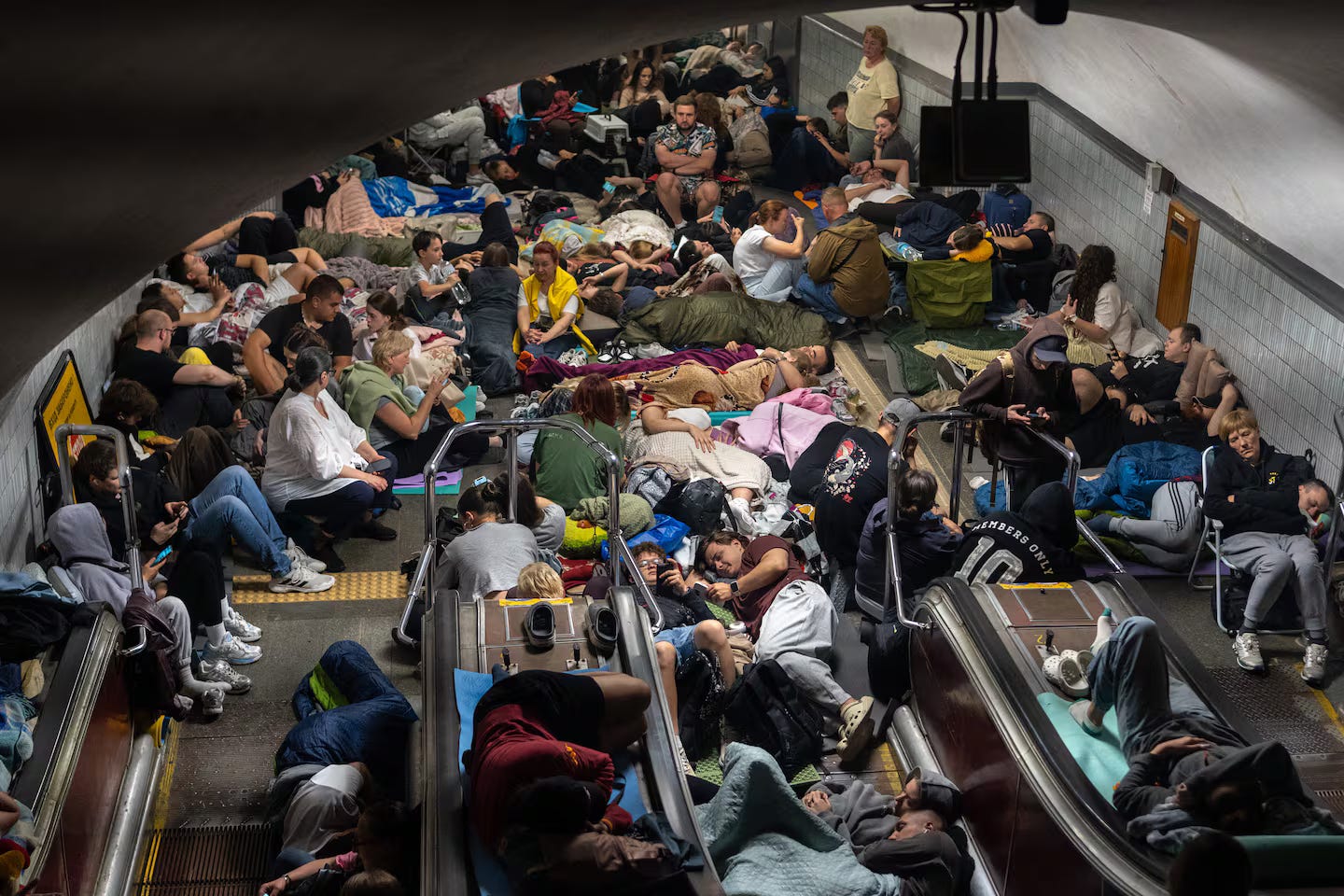
During one session with this psychotherapist, a woman began reciting the names of neighbors in her apartment building who had perished. “These memories washed over her, and she just spaced out. Went pale and started breathing rapidly,” says the psychotherapist, who asked to be identified only by her first name, Natalia. “The only thing that snapped her out of her stupor was when her pet walked into the kitchen. It jolted her back to reality.”
Another of her clients — a 60-year-old woman who lived in Mariupol under the Russian occupation before eventually escaping — managed, while there, to keep feeding the dogs living beneath her half-bombed home. “For her, it was therapy, a connection proving that life still went on,” Natalia tells me.
At one point, a young Russian soldier interrupted her in the act of feeding the dogs, and a rapport developed between them. “This young guy — who initially spouted the Russian propaganda talking points about ‘Ukrainian fascists’ — began bringing her food from his own rations,” Natalia says. “And then he jumped from the third floor to break his legs, just so he wouldn’t have to take part in this war anymore.”
First Aid of the Soul launched “respite camps” to provide spaces for families to grieve and heal. One 2023 camp participant said she hadn’t cried after losing her husband to the war. “She felt so ashamed,” Timtchenko says. “She didn’t have permission to grieve or permission to actually feel the weight of what’s happening, because she’s been in survival mode ever since.”
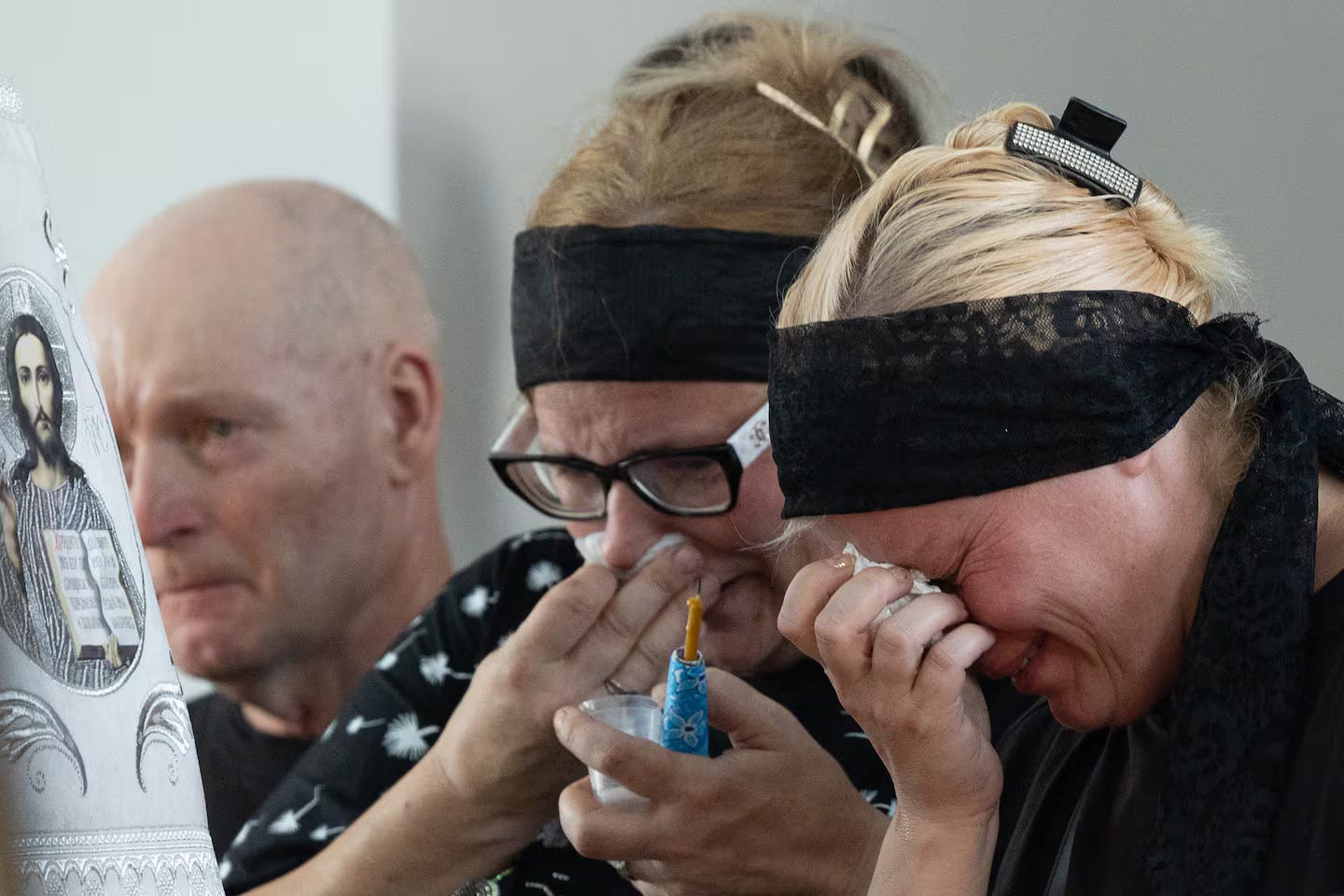
Ukrainian therapists try to help families of the dead, missing, and captured understand that there is no right way to grieve. In 2024, Timtchenko worked with families from northern Ukraine who had experienced such losses. One woman learned that her husband and father had been rescued after being missing for a year and a half. “The amount of joy they experienced at that time, her and her daughter, was so beautiful to witness in real time,” Timtchenko recalls. But other families who were still grieving distanced themselves from the women.
“They started cutting the two women off in conversations or stopped sitting with them at meals,” Timtchenko says. “The sentiment was, ‘Well, you don’t even deserve to be here if your husband’s alive.’”
Children are not immune from trauma. “We had this five-year-old boy whose father went missing as a defender for several years, but they hadn’t found his body yet,” Timtchenko said. “The boy was energetic but hypervigilant — constantly checking on his mom, making sure his three-year-old sister was okay. Our clinician told him, ‘You know, you don’t have to be brave all the time. It’s okay to have fun and not worry about your mom and sister.’ His response was immediate: ‘Well, dad’s not around. I got to do it. It’s my job.’”
Psychologists note that young people trapped in survival mode often struggle to envision a future at all. One girl found her father after he had killed himself. “She’s studying, and she’s working part-time at a cafe, just because that’s what’s expected.,” Timtchenko says. “But there’s no passion, no inspiration. She can’t see a bigger vision for her life.”
Despite numerous individual programs and clinicians, there is no systematic, streamlined approach to mental health support in Ukraine, and preventive measures remain fragmented. “Fundraising is challenging, especially with USAID cuts,” Timtchenko says. “You might secure a six-month or twelve-month project, but once funding ends, there’s no guarantee of continuation.”
The mental health professionals I interviewed struggle to answer what progress in therapy looks like under wartime conditions. “It’s hard to speak of a breakthrough when you’re having Zoom calls with clients being shelled by Shaheds [Russian drones] while you work by candlelight,” the psychotherapist from Lviv told me. “A breakthrough is when a person manages to attend a session and recount how they survived the night.”
Natalia measures success differently: She says it’s when people start to imagine an ordinary future that she knows they are capable of healing. “It’s cheesy to say, but it’s true: Life persists regardless. We keep living, breathing, noticing spring has arrived. Healing has already begun.”
Lilia Yapparova is a Russian journalist.
This article originally appeared on BostonGlobe.com on August 19, 2026.
Comments
Nothing yet. Say the first thing.
Sign in to join the conversation.