
Dear Readers - welcome to the Global Corridor newsletter. Given the world transforming reverberations of the illegal US/Israeli war on Iran, I’m continuing my focus on the infrastructural geographies of the conflict.
The failure of the US/Israel assassination campaign and other military tactics has meant an increasing focus on bombing Iran’s infrastructure in the apparent hope this might collapse the regime. Reports of the bombing of electricity infrastructure and widespread black-outs in Tehran, the destruction of the twin powerhouses of Mobarakeh Steel in Isfahan and Khuzestan Steel in Ahvaz, align with Trump’s threat to ‘Bomb Iran Back to the Stone Age’ and the growing list of war crimes being committed.
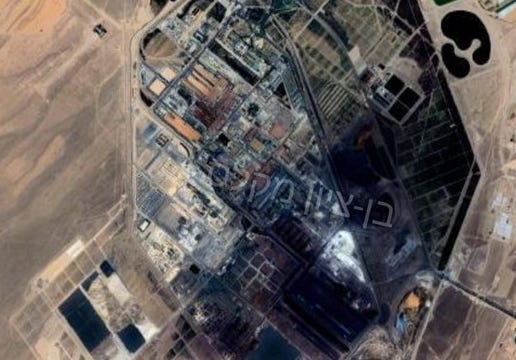
There are some excellent reports documenting the bombing of these civilian infrastructures from Al Jazeera, CNN and others. Such purposeful targeting of these infrastructures proceeds while Trump’s deadline to “obliterate” Iran’s energy and water infrastructure continues to count down (after his extension last weekend). However, it is not this aspect of the infrastructure war (and the killing of innocent civilians) I want to focus on today. Rather I want to explore another critical feature of the infrastructure war: the emerging geographies of the infrastructural blockade and attempts at establishing bypass infrastructures.
To understand how the Iranian blockade is effective we’ve seen lots of resources being developed in recent weeks. I found the Strait of Hormuz Trade Tracker, developed jointly by AXSMarine (Signal Group) and the World Trade Organization (WTO), to be really effective. It “offers a range of indicators for shipments of key commodities - crude oil, natural gas, fertiliser related products including sulphur and ammonia, and agricultural products - through the Strait of Hormuz, one of the world’s most critical maritime channels. Leveraging AXSMarine (Signal Group)’s comprehensive vessel-tracking and cross-commodity cargo intelligence, this dashboard is updated daily, offering near-real-time insights into the volume and pattern of trade in products transiting or affected by developments in the Strait of Hormuz.” View it here.
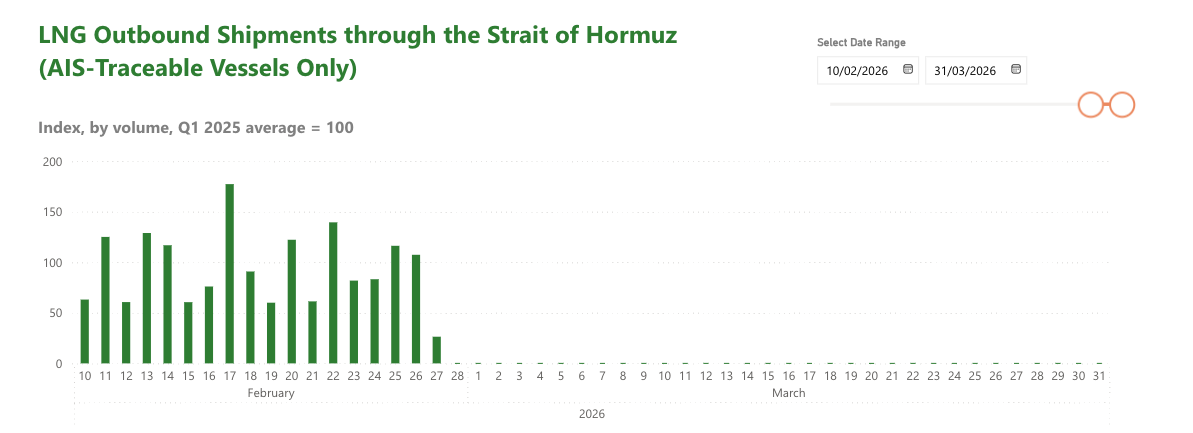
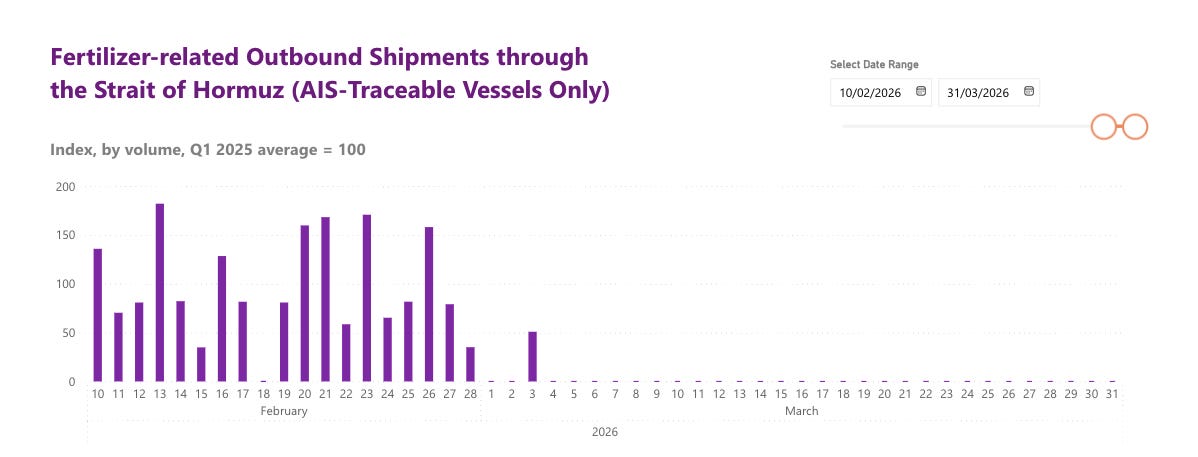
Like all infrastructure blockades, this doesn’t mean the Strait is closed to everyone. As Lloyds List report:
Iran’s IRGC has imposed a de facto ‘toll booth’ regime in the Strait of Hormuz, requiring vessels to submit full documentation, obtain clearance codes and accept IRGC-escorted passage through a single controlled corridor
It goes on to outline the process through which this occurs, stating:
According to three separate sources with direct knowledge of the new system, vessel operators are being asked to contact approved intermediaries with IRGC connections prior to moving. They are then instructed to submit full documentation, including IMO number, ownership chain, cargo manifest, destination and a full crew list. The intermediaries then forward the package to the IRGC Navy’s Hormozgan Provincial Command for sanctions screening, cargo alignment checks that currently prioritises oil over all other commodities, and for what is described as “geopolitical vetting”. While not all ships are paying a direct toll at least two vessels have and the payment is settled in yuan. If the vessel passes the Iranian screening, the IRGC issues a clearance code and route instructions. Upon approach, the vessel will be hailed over VHF radio for verification of the codes, and a pilot boat is despatched to escort the ship through Iranian territorial waters, around Larak Island.
Bab al-Manda as a new infrastructural blockade?
The entry of Yemen’s Ansar Allah movement into the Iran war threatens to open up a second infrastructural blockade. With Tehran already exerting the blockage on the Strait of Hormuz, attention has shifted to the Bab al-Mandeb, the narrow “Gate of Tears” linking the Red Sea to the Indian Ocean.
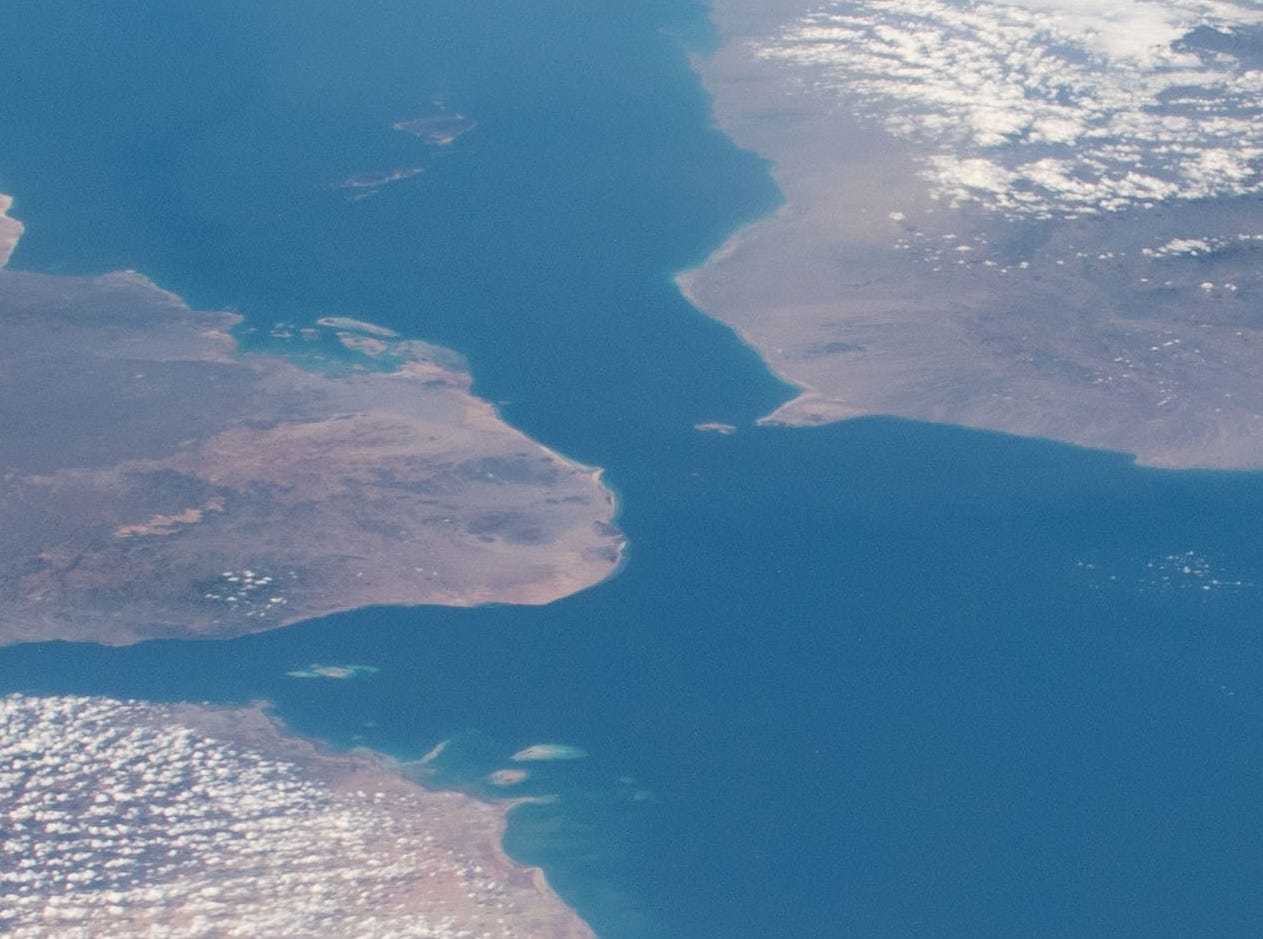
Control of this route offers Ansar Allah asymmetric leverage. Up to a tenth of global trade and significant oil flows transit the strait, making even limited disruption highly consequential. By deploying drones, antiship missiles and fast boats, as demonstrated in Red Sea attacks on 178 vessels during the genocide in Gaza, Ansar Allah can raise insurance costs, deter shipping and force rerouting around Africa, amplifying economic pressure without conventional naval power. Ansar Allah have indicated readiness to intervene directly in support of Iran, potentially opening a maritime front if hostilities intensify. This would create a “double blockade” dynamic alongside Hormuz, compounding energy shocks and fragmenting global supply chains. For Tehran, the strategy is indirect but effective: outsource disruption to an ally positioned astride another critical artery. For markets (and the US war machine), the risk is clear. A prolonged blockade at Bab al-Mandeb would not merely echo Hormuz, it would multiply its impact, intensifying the war’s economic fallout and having a massive impact on the series of bypass infrastructures currently being deployed by Gulf states in response to the blockade, as I explore below.
In response to the infrastructural blockade has been a series of shorter term, and long established bypass infrastructures being developed and operationalised by various actors. These include…
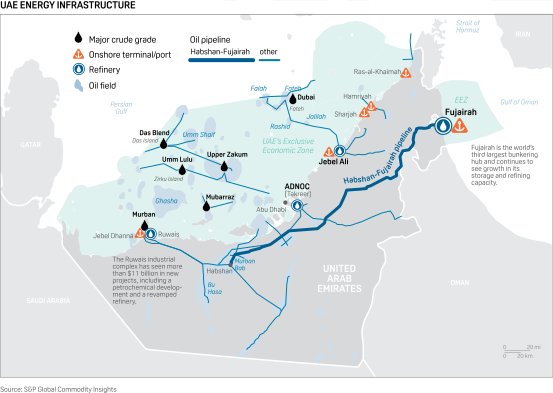
The Habshan–Fujairah pipeline, which was conceived as a piece of geopolitical insurance. Running roughly 360km from Abu Dhabi’s inland fields to the Gulf of Oman, it provides a bypass infrastructure that was designed to navigate any conflict with Iran. In wartime, it looks partial. The conflict has exposed both the logic and the limits of the project. With Tehran effectively choking off Hormuz, Abu Dhabi has ramped flows through the line to near capacity. Yet that capacity, at around 1.5m barrels per day, is a fraction of the volumes typically transiting the strait. The pipeline mitigates risk; it does not eliminate it More problematically, this war has demonstrated that a bypass infrastructure alone cannot guarantee security. Reports of fires and suspected attacks along the route, as well as strikes on Fujairah itself, suggest that Iran is willing to target the very infrastructure designed to neutralise its leverage.
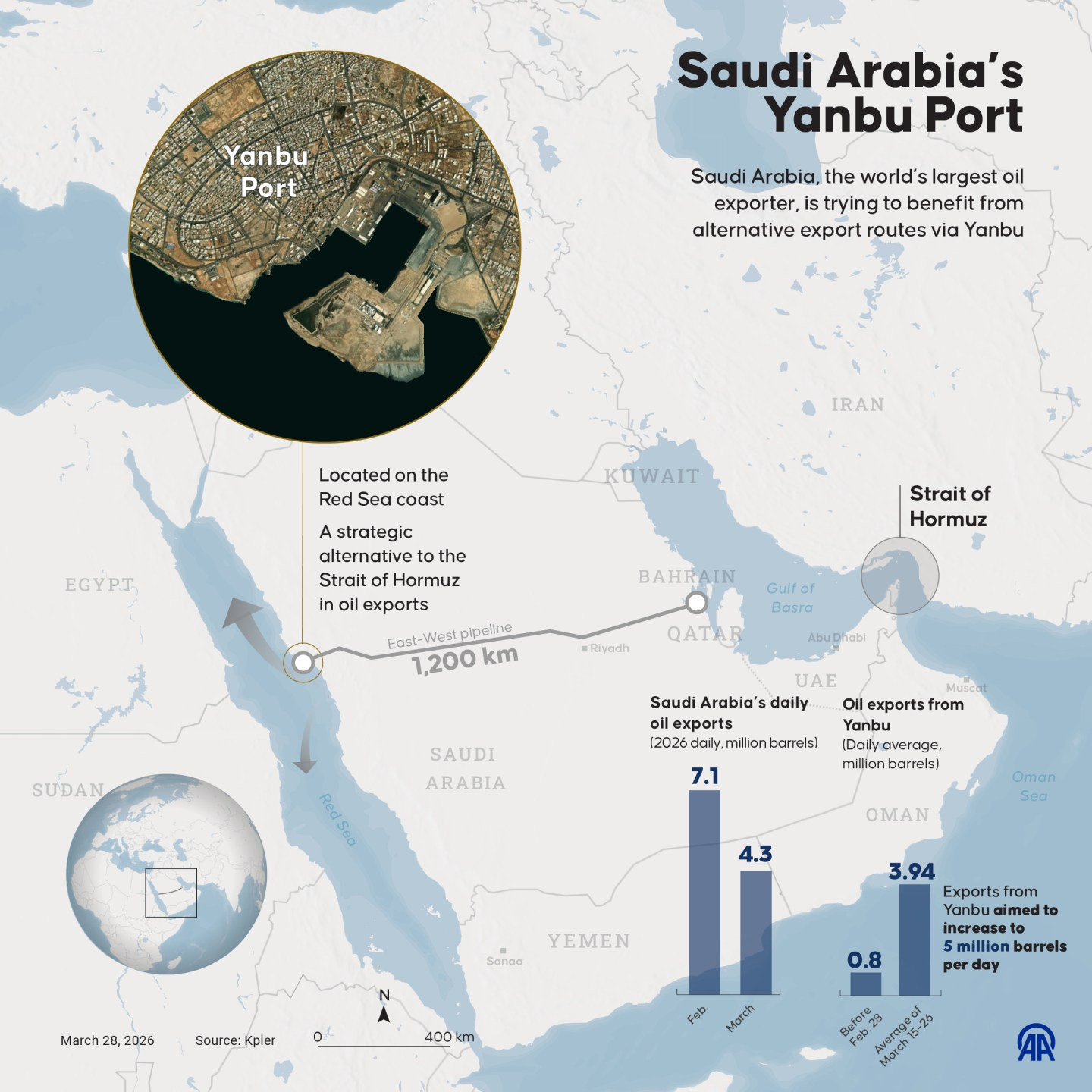
Saudi Arabia’s East–West pipeline, known as Petroline, reflects a similar strategic impulse to the Habshan-Fujairah pipeline by routing oil exports beyond the Strait of Hormuz. Stretching from the kingdom’s eastern oilfields to the Red Sea port of Yanbu, the pipeline was purposefully designed as a bypass infrastructure to ensure that crude could reach global markets in such a situation as now presents itself. And as Forbes reports this has been successful as:
Crude exports via Yanbu have now reached about 5 million barrels a day and the kingdom is also exporting 700,000 to 900,000 barrels a day of refined products, according to the person familiar with the Saudi oil industry. Of the 7 million barrels a day that go through the pipeline, 2 million are destined for Saudi refineries.
However, as with the UAE’s bypass infrastructure, this is not a full substitute for Hormuz. Export logistics on the Red Sea side are more constrained, and rerouting flows at scale introduces both cost and delay. More critically, the conflict has shown that bypassing a chokepoint does not remove it from the battlefield.
The pipeline itself has proven vulnerable with past drone strikes (in 2019) claimed by Iran-aligned Ansar Allah temporarily disrupting flows, highlighting yet again how fixed infrastructure can be targeted with relative ease. What was intended as a back up strategy becomes, in wartime, both critical and incredibly vulnerable. The broader lesson is uncomfortable. Like its Emirati counterpart, Petroline embodies a belief by Gulf powers that bypass infrastructures can navigate their enemies war strategy. The actions of Iran suggests otherwise. Diversification of routes through bypass infrastructure may reduce dependence on Hormuz, but they cannot insulate oil producers from a conflict that has become an infrastructure war, especially if the Bab al-Manda is blockaded.
A pipeline from the Arabian Gulf straight to Israeli ports
Newsmax reported Netanyahu outlining another potential bypass infrastructure. The Prime Minister of Israel, wanted for war crimes by the International Criminal Court (ICC) argued that, “Long-term solutions include rerouting energy pipelines westward, across Saudi Arabia to the Red Sea and Mediterranean, bypassing Iran’s geographic choke point.” The Financial Times has also picked up on this reporting that:
One option is the revival of US-led plans for an ambitious corridor that would run from India through the Gulf and then to Europe, called IMEC, one Gulf official said, although part of this project originally included a politically tricky pipeline that ran to the Israeli port of Haifa. Yossi Abu, the chief executive of Israeli company NewMed Energy, said he was confident that pipelines to the Mediterranean Sea would be built, whether they terminated at Israeli or Egyptian ports. “People need to control their own destinies, with their friends,” he said. “You need oil pipelines, railway connectivity, throughout the region, onshore, without giving others bottlenecks to choke us.”
While this seems incredibly unlikely at this stage it does show how attention is increasingly turning to the need for bypass infrastructures across the region.
China’s Bypass Infrastructure Strategy
China has already been thinking ahead (no surprise) but it’s push to establish a grand bypass infrastructure strategy has taken on new urgency as the war exposes the fragility its Gulf-based oil/gas flows. For China, the world’s largest crude importer, the risks are acute even as it holds the world's largest strategic oil reserve, estimated at over 1.13 billion barrels (including commercial storage). Asian buyers dominate shipments from the Gulf, and Beijing alone relies on millions of barrels per day transiting the route.
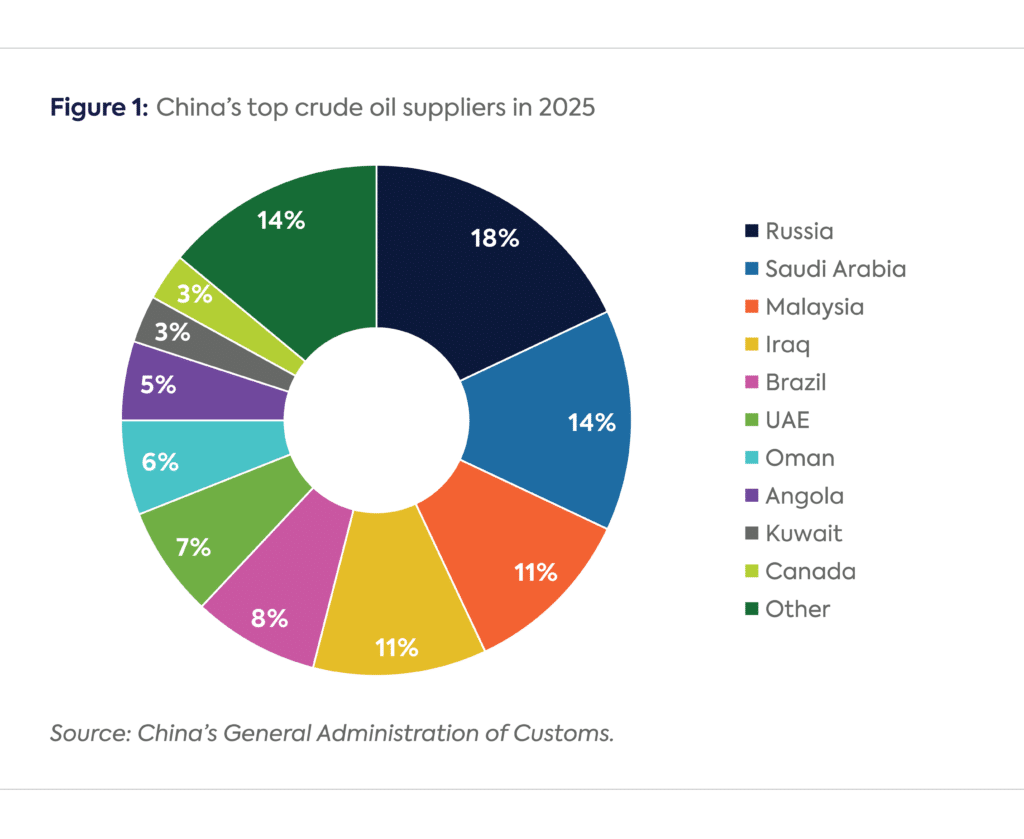
Against that backdrop, Beijing is accelerating a structural shift built on a bypass infrastructure strategy that seeks to reduce reliance on seaborne Gulf imports by expanding overland gas supply corridors across Eurasia. At the centre is the Power of Siberia pipeline, operational since 2019, which delivers Russian gas directly into north-east China. With capacity expected to reach roughly 38bn cubic metres annually, the link is already a significant contributor to China’s gas mix and underpins a deepening energy relationship with Moscow. The proposed Power of Siberia 2 (which I’ve previously covered) would significantly expand these Russian flows, potentially delivering up to 50bn cubic metres annually via Mongolia, although pricing and demand negotiations remain unresolved.Complementing this northern route is the Central Asia–China pipeline system, transporting Turkmen gas across Kazakhstan and Uzbekistan into western China. This corridor has been operational for over a decade, providing a relatively stable, land-based alternative to LNG imports. A third bypass infrastructure is the Sino-Myanmar pipeline, linking the Bay of Bengal to Yunnan province and allowing shipments to bypass the Strait of Malacca, another strategic chokepoint. Crucially, these projects reflect a decade long effort by Beijing to construct inland energy distribution insulated from maritime disruption. These are supply routes or bypass infrastructures that are far less exposed to the blockade.
The success of bypass infrastructures
There seems to be a broader Gulf/US miscalculation at play, that engineering a series of bypass infrastructures can some how outmanoeuvre Iran’s military capacity and calculated, strategic embracing of an infrastructure blockade. While the Abu Dhabi and Saudi pipelines offer some capacity and flexibility, these are likely to be targeted more purposefully as the war continues becoming another front line in the struggle between the blockade and the bypass.
Extra Note: The role of ports in the emerging geography of bypass infrastructures
The need to establish new bypass infrastructures for global trade is having effects far across the Indian Ocean as ports and other facilities become new hot spots of global logistics and flow/circulations seeking to avoid the war. It’s been interesting to watch as various ports have become inundated with cargo and shipping. For instance, in Karachi DataMar News reports:
The Port of Karachi in Pakistan is experiencing a sharp increase in transshipment volumes due to disruptions in the Strait of Hormuz, prompting shipping lines to reroute their services. In addition, discounts on port fees offered by Islamabad have encouraged carriers to use the Arabian Sea port.
According to Federal Minister for Maritime Affairs Muhammad Junaid Anwar Chaudhry, around 8,300 containers were handled for transshipment throughout 2025, while in just the past 24 days, the volume has reached 8,313.
Whether these trends are likely to continue in the long term remains to be seen but the need for the global logistics trade to find alternatives such as Karachi Port will remain long after the bombs have finished dropping.
No posts
Comments
Nothing yet. Say the first thing.
Sign in to join the conversation.