
The troubles we’re experiencing here in the United States these days is the result of having run our government into the ground. And, in spite of what it may seem, there is really no one to blame for this. Rather, it’s the result of our attempting to do things the way we always have and expecting it all to keep working.
We are not bad people for attempting to do this, we have just become overwhelmed by a situation that we weren’t prepared for. Specifically, the scale of world population, coupled with rapid developments in technology have swamped our minds.
Consider that democracy, which means “the people hold the power” can’t work if “the people” are immersed in a world that’s incomprehensible to most of them. How can someone decide how to vote if the issues on which they’re voting are so vast and complex that there’s no way to cover all the background to make a reasonable choice? There aren’t enough hours in the day, especially if you work full time or have to raise kids!
And this is not primarily due to a lack of intelligence on our parts. It’s due to the challenge of wrapping our minds around the scope and complexity of what we’re supposed to be managing. Yet our desire to understand is so intense that we end up grasping for simple answers to complex questions, because it feels better than to sit with no answers at all.
Most of us went through school where the questions and answers were all prepared ahead of time. It was a game of “Guess what the teacher [or the textbook writers] were thinking.” The authorities (school system) told us to trust them and either we did, and got ahead, or didn’t, and were blamed for doing poorly.
Now, we live in a world that has shot way ahead of any such arrangement. This desire to have simple answers has made us vulnerable to accepting information from people who either don’t know what they’re talking about, or people who have an agenda to secure their own power, and to hell with everyone else (or both!)
Let’s start with Congress as an example. Most people who run for office do so with good intentions. But the job of representing their districts has become nearly impossible.
Right now, we have 342 million people in the US, but only 435 representatives in the House. Divide 342 million by 435 and you get 786,000 people, on average. Each representative is supposed to represent 3/4 of a million people? That’s an incomprehensible number.
Perhaps I can provide a way to get a grasp on this. Here is a picture of Michigan Stadium, the largest in the US (and 4th largest in the world). it has an official seating capacity of 107,000 people.
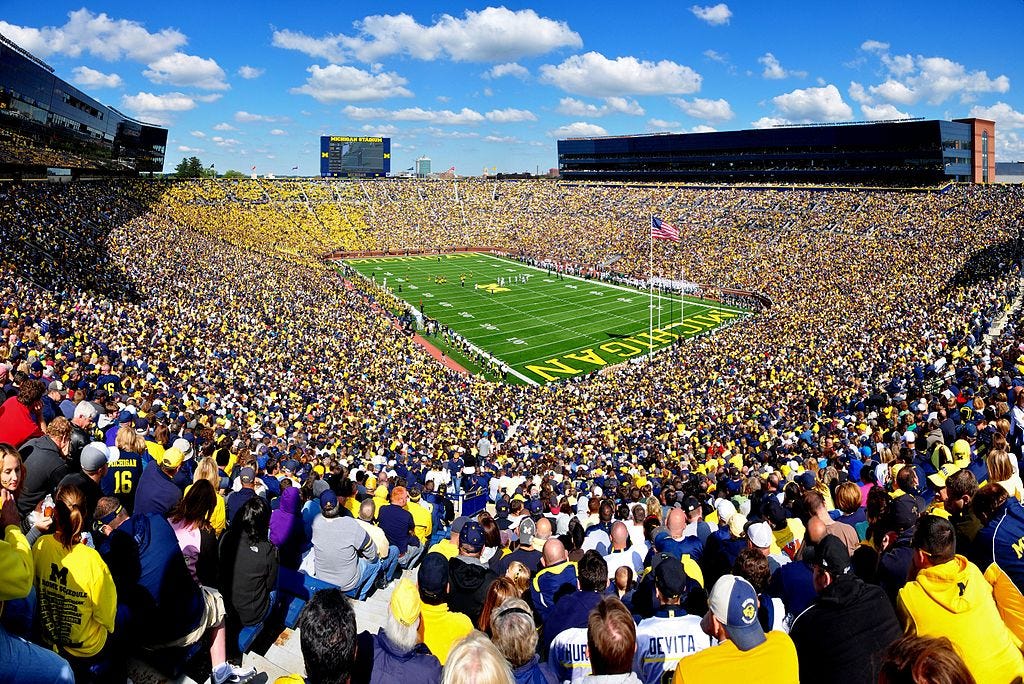
If we do one more bit of arithmetic, divide 786,000 by 107,000, it turns out that each representative in Congress represents over 7 Michigan stadiums full of people! How can one person, a representative in Congress, represent that many people? They have to reach out to that many to understand their needs? They have to set up a campaign to reach that many, every two years, to get reelected?
This ratio has become way beyond anything practical. I say, it’s impossible. We have unintentionally broken democracy, regardless of which party is in power.
We have scaled up many other things in life, well beyond comprehension. This container ship, for example, holds over 24,000 twenty-foot containers, able to carry an incomprehensible number of items within them. And that’s just one of many such ships!

Or this computer chip with its microscopic transistors.

And that’s just the first microprocessor, the Intel 4004 introduced in 1971! At least you can still make out the details. The Motorola 68000, which was used in the very first Macintosh Computer in 1984, already had too many transistors on it to identify individually in this photograph. Instead they form regions where they blend together into a gray blur.

I can’t even show you an image of today’s super processor chips (used in A.I. data centers) that would give you any idea of their immense scale because they just look like a shiny multicolored surface with no discernible features. Some of the most dense chips now have over 208 billion transistors, definitely an incomprehensible number!
Closer to daily life, there are 3 billion monthly active users on Facebook. Three billion? How can anyone conceive of that many? That’s nearly half the world’s population!
My contention is that our government, institutions, and other organizations have become Too Big To Manage (TBTM) and Too Complex To Comprehend (TCTC).
So, if we’ve become overwhelmed with the immense scale of these things (and many others) where do we go from here? We can’t just shift into reverse and have fewer people on the planet or forget what we’ve already invented, right?
Part of the answer is to let go of trying to fix the biggest organizations, such as central governments, corporations, etc. We are already finding new ways to live without them. As we divert our spending away from them, their power will subside because their life blood is money. How we spend our funds and resources is ultimately more powerful than any government regulation or stockholder revolt. For example, generosity, in the form of volunteering, does not require a subscription fee and is not taxable.
We are already shifting our focus and daily lives to a more human scale. If the federal government is broken, we’re thinking more about relying upon smaller groupings. The various states are starting to fend for themselves and collaborate with other nearby states to take care of their populations. They don’t have to secede from the union officially, just do what they need to do in ways that are perfectly legal.
Meanwhile, we are participating more and more in local volunteer efforts and in-person gatherings to support each other through these trying times. It’s not just the basics, such as food, clothing, shelter, or transportation. This is also for our social needs and mental health.
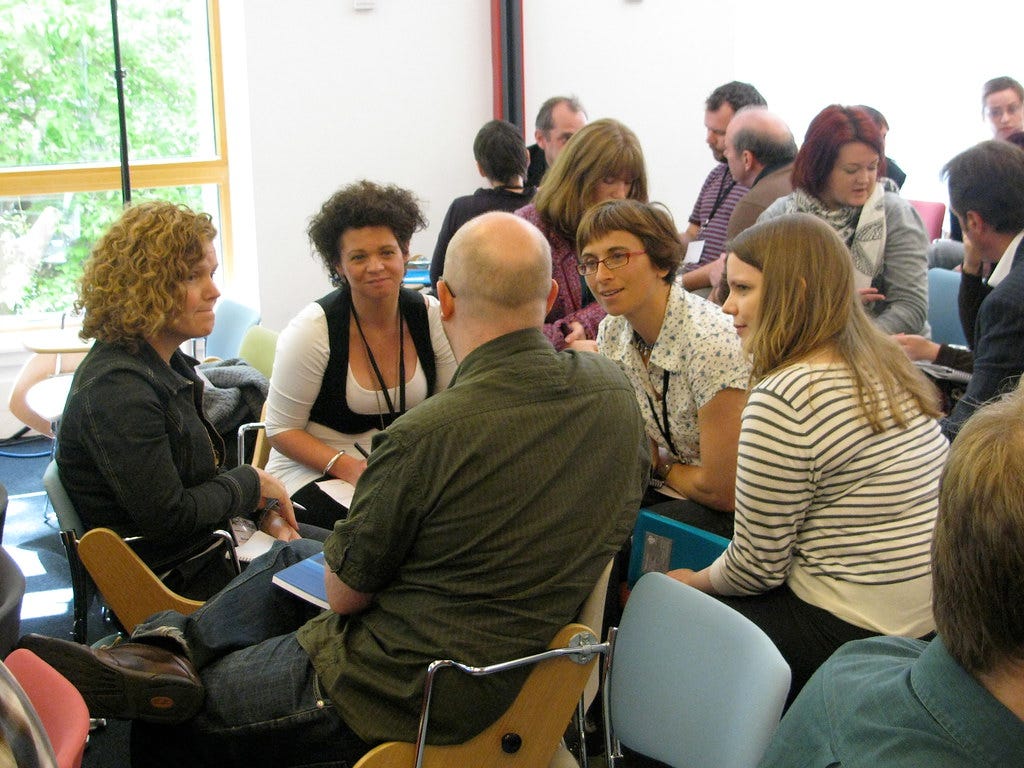
More people are starting to close out their online accounts and shop locally, even though there may not be quite as many products to choose from. Others are scrolling down web pages to find a specific vendor to buy from, rather than order from the few giant “general store” vendors, such as Amazon or Walmart. Still others are attending more local entertainment events instead of streaming movies and TV shows.
There’s an old quote, “If things go wrong, you don’t have to go with them.” At the moment, it may seem impossible to avoid news of things going wrong or scary prospects for the future. But let’s remember that prospects for the future can change in an instant. Surprises are always coming at us, but once they happen, we easily forget how much they have changed our lives. It’s easy to say, “Phew, glad that’s over!” or just stop worrying about something that’s no longer a threat.
Now is the time to build our relationships on a personal and small group level as much as we can, through whatever means we can find. In my previous essays, starting with the very first one, “Surviving the Flood,” I wrote more about finding peace within ourselves and calming the fears that the surrounding information environment keeps throwing at us.
Go down to the river and watch the water flowing. Look up at the sky for just a little while. Find someone with whom you can share a hug. Sit for awhile in a natural environment if you can find a good place to do that. Take as good care of yourself as you can. Nurture your spirit. There are plenty of people with whom to share love, we just have to open ourselves up to it.
No posts
Comments
Nothing yet. Say the first thing.
Sign in to join the conversation.