
If you’ve ever watched a movie, play, or TV show (or read a book or story) that spoke so deeply to your emotional side it left you drained, you’ll recognize some of the feelings I felt upon discovering a particular anime series I discuss in this entry.
This post may be too long for email. If so, be sure to choose the option to “View entire message” (or something similar) at the end of this message to read it in its entirety.
Excerpted from my Raymond Waites Morning Pages journal on December 19, 2016
One thought captured my attention just before I went to bed last night. After watching an amazing and emotionally wrenching anime for nearly ten episodes straight, Your Lie In April, I retired, emotionally taxed and spent, thinking about the passage in Philippians 3:13–14.
Here, the Apostle Paul talks about having not yet attained (or apprehended) his goal of winning Christ in the power of His resurrection. But in the light of the anime, I began to compare this to my desire to be creative.
Your Lie in April (I’m still unsure of the title’s significance) is about the power of our past to hold us back and the power of music and creativity to help us move forward and realize our true potential. The writing is superb, the music and virtuosity are astounding, and the visuals are stunning. I was hooked after the very first episode.
The main character, Kōsei, is a piano prodigy who has been the puppet of his mother’s abusive instruction in music. She’s a dying dictator who still dictates to Kōsei long after her death (two years, to be exact) through the musical scores he reads. As a result, Kōsei has no musical voice of his own, and each time he plays piano, the notes disappear, leaving him feeling as if he’s playing at the bottom of a deep sea all alone.
Enter Kaori Miyazono, an equally virtuosic violinist who also happens to be a stunningly beautiful young lady. When Kōsei first meets her, he sees something special in her when she plays, something alive. Throughout the series, Kaori teaches/coaches Kōsei on how to let go of the music and let the notes play him, instead of the other way around.
She is the epitome of creative freedom itself, and as I continued watching the show, I realized how much Kaori resembles one of my own main characters, Gypsy Gullespie, in my current novel.1 They both possess the same air of beauty, musicality, and passion all rolled up into one.

Just before I went to bed, my emotions were drained with feelings of inadequacy and self-denal, much like those Kōsei felt himself. I find myself continually coming back to questions of whether what I want to convey through my own creative outlets—music and writing—is strong enough to make a difference in the world. I long to reach out to others who share my feelings and interests, and create something that will touch them as much as I’ve been touched by Your Lie in April.
And so, after watching my final episode for the evening, I was stuck with the concept in Phil. 3:13–14. The idea of striving for the goal for its own sake and knowing that I haven’t attained it—and may never truly attain it, creatively—but pressing toward the prize anyway.
I’m sure many, if not all, world-renowned artists, athletes, and the like feel as if they haven’t yet reached their full potential; that they haven’t “apprehended.” Still, they press on, eager to extract that surge of passion that lies within and longs to escape, to be born into existence.
The struggle will always be there—the spirit of creation warring with the fleshly mindset of resistance. But, as I mentioned in yesterday’s MPs, we’re to endure the struggle as the winepress of God, where the grapes are crushed, and the very soul is born in the wine of refreshing, both to ourselves and to others. As Jesus himself noted: A grain of wheat cannot grow until it first dies.
If we are to truly birth our own creative vision, we must die each time in the struggle. It is human nature to want to live and fight for survival, but the winning is in the dying, not the living; it is in fighting for our art’s survival, not our own. Just as a mother would gladly sacrifice herself for her child, so we, too, must sacrifice ourselves for our art, our truest voice.
If we are to truly birth our own creative vision, we must die each time in the struggle.


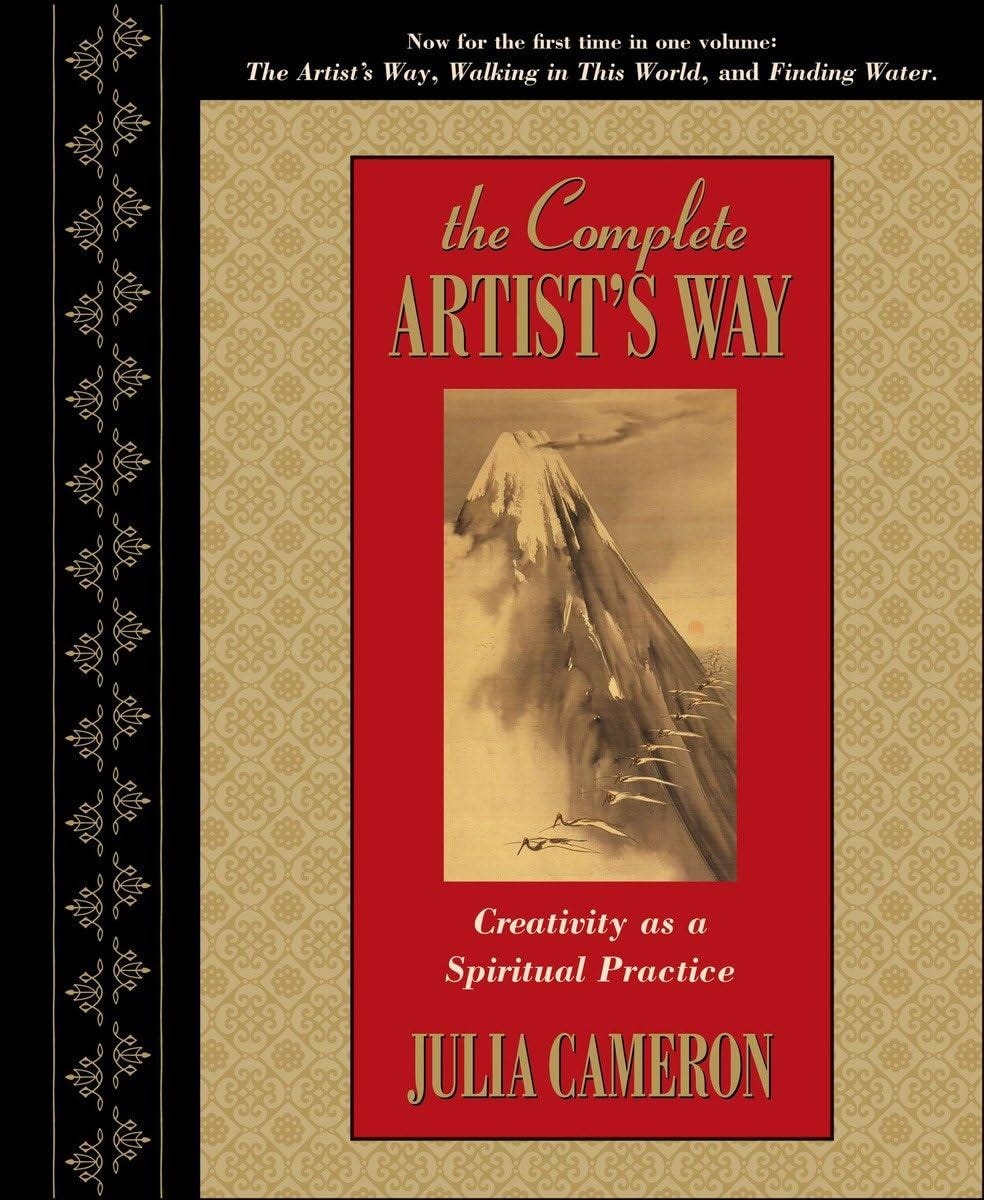
These and many other books and resources can be accessed via my official Writing Resources page by clicking the button below.
Browse Eric’s Writing Recommendations
Disclaimer: Some of the links on the page may be affiliate links. These links allow me a small commission on every sale at no extra cost to you. So if you'd like to show your support for my work, feel free to use the links on this page.
This novel, Missing in Metro City, is in the final proofreading stages and is soon on its way to publication. To stay informed about it, join my fiction newsletter 🦁 The Fiction Tamer.
Comments
Nothing yet. Say the first thing.
Sign in to join the conversation.