
This is the 4th weekly issue of GLASS’s Substack, which examines how new technologies are impacting food & beverage, with a focus on the $1.6 trillion alcohol industry.
Zero-knowledge proofs: one of the hottest topics in blockchain going into 2024.
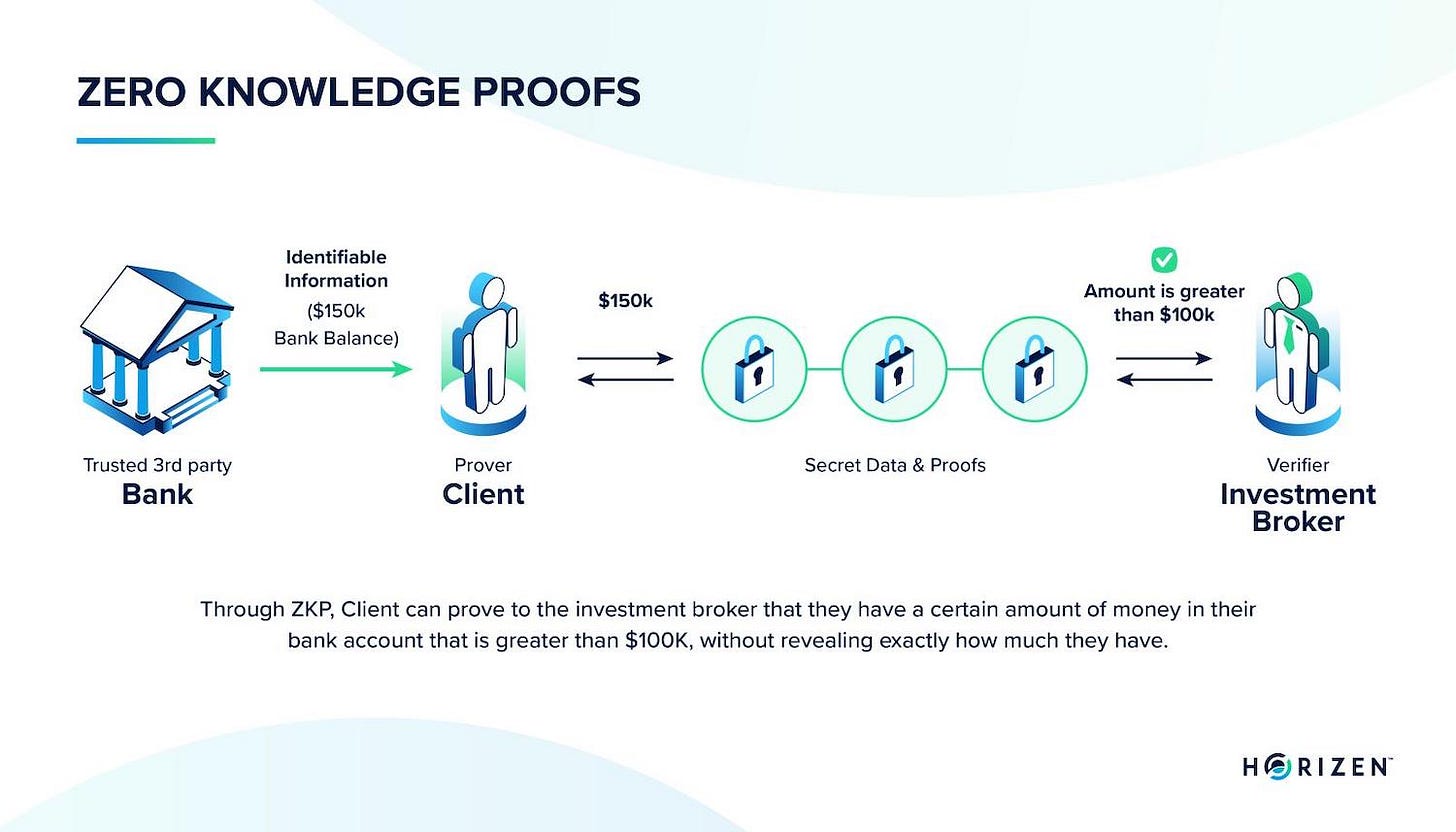
What are they? Zero-knowledge proofs are a way for one party to prove to another party that a thing is true, without revealing any specific details about that thing. For example, zero-knowledge proofs could enable you to:
Prove that you meet requirements to hold at least $10k in a bank account, without revealing the amount of money you actually have
Prove you live in a certain neighborhood, without revealing your address
Prove you’re over 21 without revealing your exact age
Decades of cryptographic research have gone into zero-knowledge proofs. Now, growing focus on consumer privacy and data protection - not to mention that this is the year Google will finally be phasing out cookies - mean that the technology’s reaching an inflection point to break into the mainstream.
Like many segments of crypto, zero-knowledge proofs are more advanced on the technical side than they are in mainstream markets. (And here’s a good technical rundown, if you want one).
This was, for example, one of the most consumer-friendly diagrams of zero-knowledge proofs that I could find:
This is a shame, because zero-knowledge proofs have massive implications for brands - particularly for the $1.6 trillion alcohol industry.
In beer, wine, and spirits:
Consumers need to verify their age before purchasing. Most commonly, this looks like showing your ID at a bar or liquor store - which requires you to reveal to the bouncer, bartender, or cashier not only your exact birth date, but also your name and address. Online (still only ~5% of drink sales) you similarly have to enter your exact birth date, or upload a photo of your ID.
Each US state regulates brand loyalty & rewards differently. Massachusetts doesn’t allow happy hours. California limits the value of rewards. Brands can distribute free t-shirts and hats in New York, but other items fall into a grey area. In order to distribute loyalty rewards, brands need to verify consumer locations to ensure they’re eligible within their local compliance frameworks.
Brands hold their advertising partners to standards. Alcohol brands only advertise on platforms where at least 73.8% of viewers can be “reasonably expected to be above the legal purchasing age,” according to industry standards.
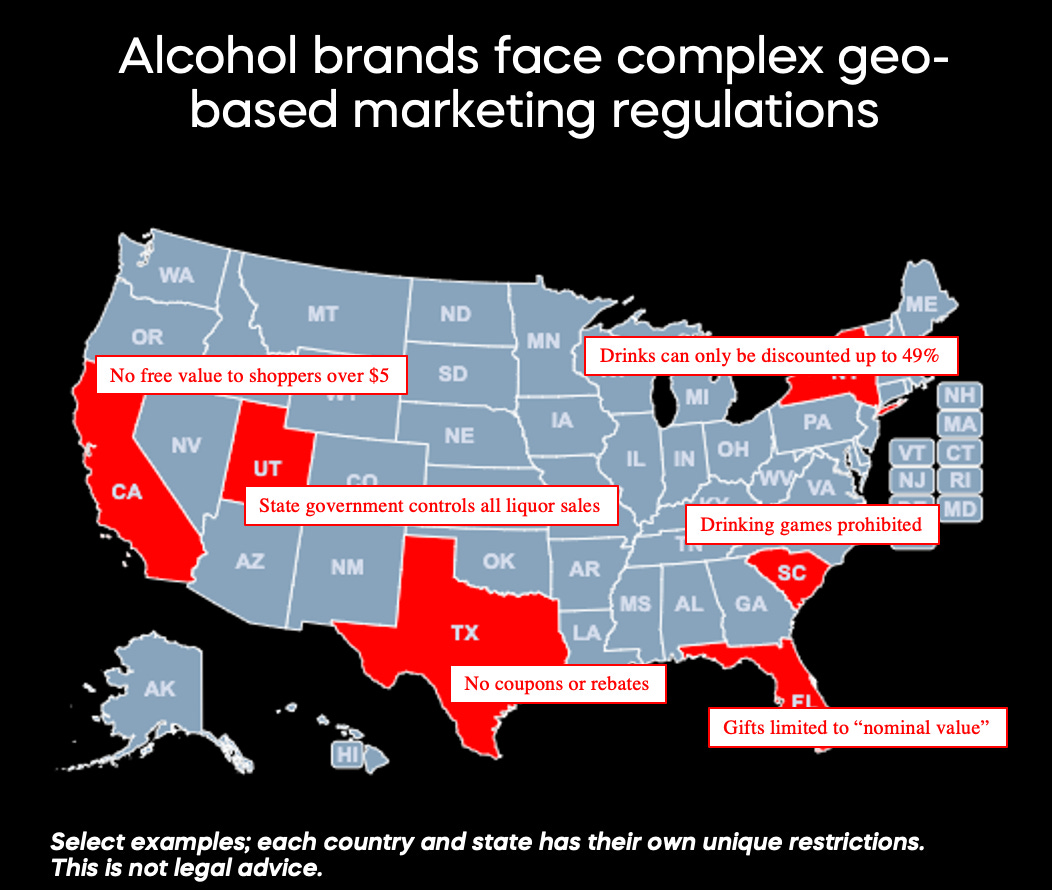
Clearly, zero-knowledge proofs could significantly improve safety, efficiency, and consumer privacy across these areas. For example:
Age: consumers can use zero-knowledge proofs to verify they’re over 21 without sharing their birth date or other personally identifiable information.
Personal data: consumers can securely validate that they purchased a drink without revealing where; that they visited three bars without revealing which ones; and other proofs of activity that can help them unlock brand rewards without feeling uncomfortably exposed. (And it’s worth noting here that Uber’s decision to shutter Drizly - last week’s biggest alcohol industry news - has been attributed by many to Drizly’s massive data breach).
Legal compliance: consumers can validate that they meet the legal requirements to receive perks or rewards from beverage brands without revealing personal details. Florida residents, for example, may be able to unlock higher-value rewards than residents of Utah.
Sales & marketing partnerships: social media platforms can prove to brands that more than 73.8% of their audience is, in fact, over 21, without revealing the actual age breakdown of their users, which may be proprietary information.
It’s not just alcohol. Similar frameworks - age- and geo-restrictions, particularly sensitive personal data - apply to gaming and other regulated consumer industries.
The opportunity for zero-knowledge proofs is massive. The potential for alcohol marketing to become not just more efficient, but safer than existing methods, is huge.
Want to learn more about GLASS, where our blockchain-based platform powers community engagement for food & beverage brands? Check out our site or send me a note at zoe@glass.fun!
Did you like this post? Share it with a friend!
No posts
Comments
Nothing yet. Say the first thing.
Sign in to join the conversation.