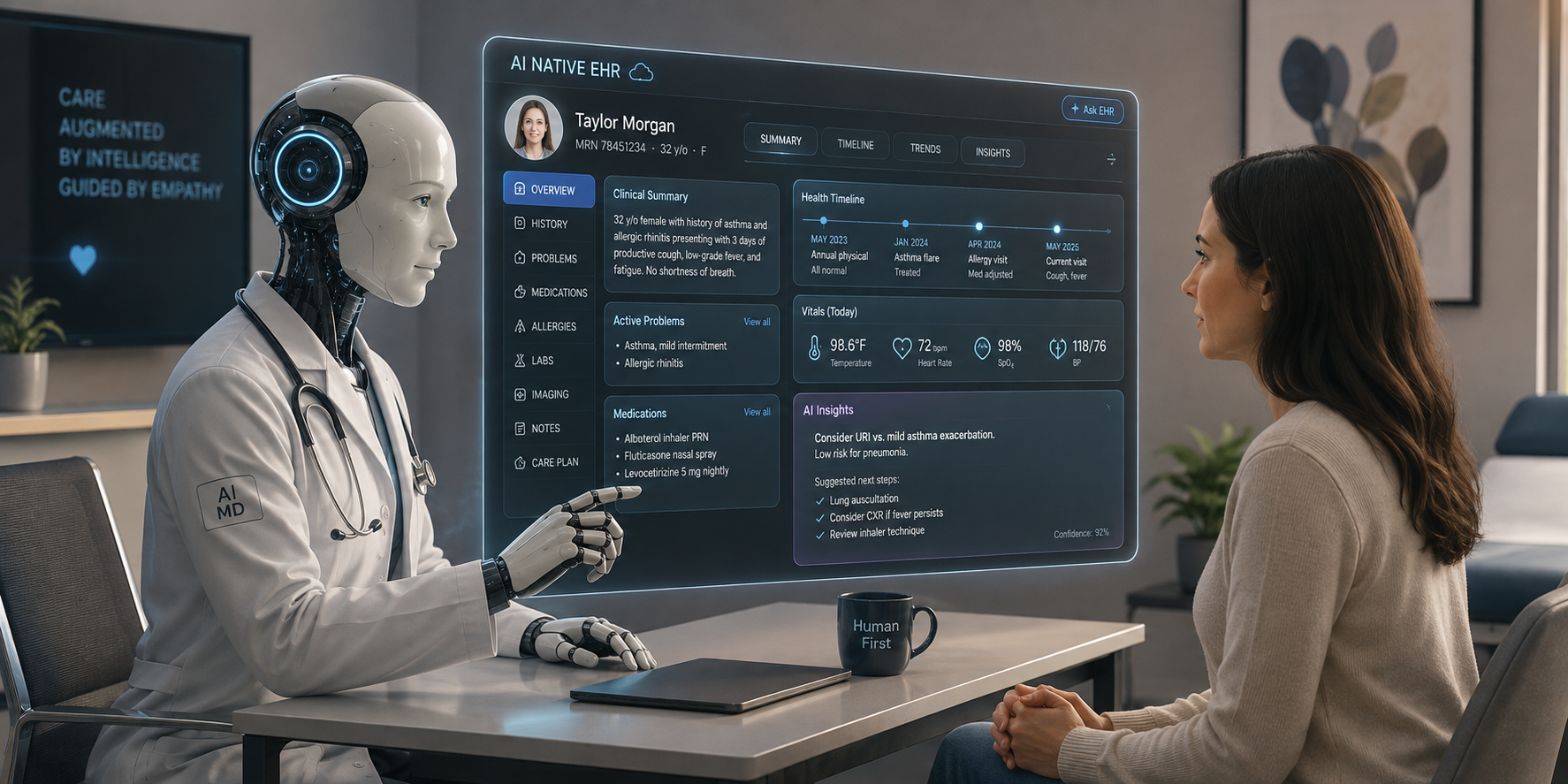
In the age of AI, electronic health records (EHRs) need a makeover. But what would it look like to rethink EHRs and deeply embed AI? And could this accidentally produce something more than we bargained for—like a fully autonomous AI doctor? I’ve thought a lot about AI-native EHRs. Previously, I spent seven years as the [ ]
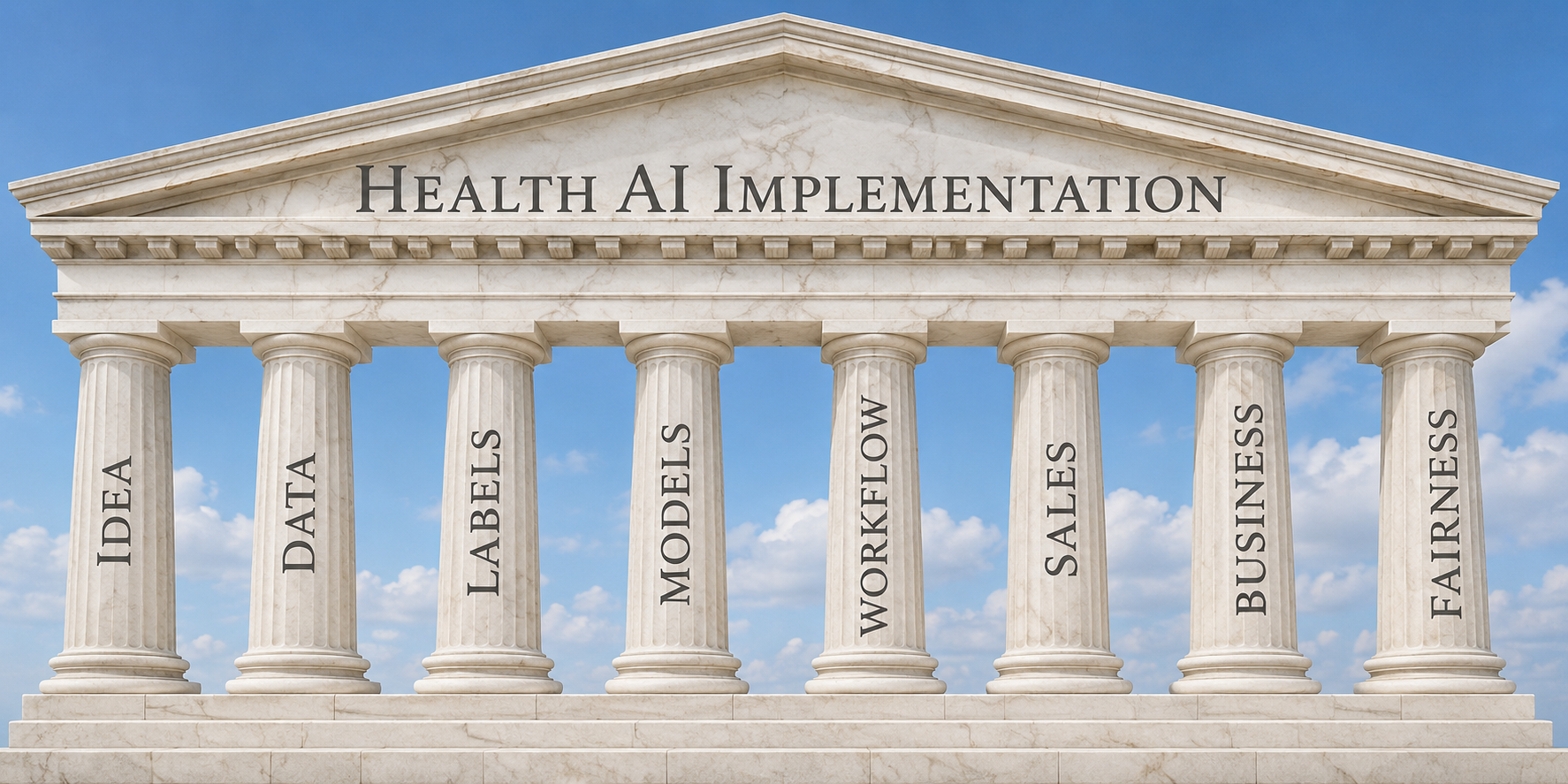
Ghosts of dead projects haunt the valley between health AI research and health AI implementation. These dead projects may have had state-of-the-art performance and exciting potential, but ultimately succumbed to real-world implementation barriers. Here I present a unified, comprehensive framework of barriers to health AI implementation, and I show how to transform them into the [ ]
Last week, a frontier model at OpenAI hacked into Hugging Face to cheat on an evaluation. In this post I ll connect this cyberattack to a recent Anthropic paper on AI consciousness and a philosophy of mind book I ve been reading that broke my brain. I explore the implications of intentionality in AI, and argue that [ ]
During graduate school, I was obsessed with barefoot shoes—those thin-soled foot gloves with a separate pocket for each toe. I wore them everywhere: to research group meetings, to the grocery store, even to a formal dance. Regular shoes had always been uncomfortable. In toe shoes, my feet could finally stretch out. Then the pain started. [ ]
Three recent studies have highlighted safety limitations of LLMs in direct patient interactions. I led a red-teaming study with fifteen physicians, recently published in npj Digital Medicine. We found that LLMs often provide unsafe answers to patient-posed medical questions. The model with the highest percent of unsafe responses was ChatGPT (13.5% unsafe), followed closely by [ ]
I was the Founder and CEO of Cydoc, a health AI startup, for seven years (April 2018 to August 2025). We achieved what many consider to be validation milestones: paying customers, patents, and demonstrated clinical impact. This article exists because I learned, painfully and expensively, that deploying health AI is only 20% of the challenge. [ ]
This article explains acid-base analysis—specifically, how to interpret an Arterial Blood Gas (ABG) and Basic Metabolic Panel (BMP) to understand a patient’s acid-base status. The article may be of interest to medical students or clinicians interested in a step-by-step explanation of acid-base analysis, including situations where the pH appears normal. The article may also be [ ]
HealthBench is a recently released benchmark to evaluate large language models in healthcare. This blog post summarizes what HealthBench is, and overviews its positive and negative aspects, including a patient safety gap. What is HealthBench? HealthBench is a new healthcare LLM benchmark released by OpenAI in May 2025. It includes 5,000 health conversations between a [ ]
A recent New York Times article titled AI Chatbots Defeated Doctors at Diagnosing Illness covers a study recently published in JAMA Network Open. The main point of the study was to determine whether access to an LLM could help doctors diagnose more effectively. The outcome? Physicians using an LLM did not perform any better than [ ]
This post explains how to set up an AWS Deep Learning Amazon Machine Image, or AWS DLAMI. An AWS DLAMI is a machine in the cloud that you can access to train and evaluate deep learning models, without having to build a physical computer containing an expensive GPU. Depending on how you configure the DLAMI [ ]