

“I love your work so much. I guess I have a fascination with death,” Adeline tells the famed photographer Weegee as she sits across from him at a restaurant in Netflix’s Monster: The Ed Gein Story.
Weegee—whose photographs would later hang in The Met— began as a crime scene photographer, often arriving before the police. His flashbulb captured New York’s most brutal moments, and his images appeared in tabloid papers before finding their way into galleries.
“I think your images have made me braver and more bold just…just more myself,” Adeline enthuses about his images before she asks for his job as an assistant.
Weegee tells her his former assistant couldn’t hack it. He’d thrown up at a crime scene.
“Well, that wouldn’t be me,” Adeline assures him. “I love things like that, like that one the one photo of the head smashed in with a pumpkin or the man with his jaw blown off. It’s beautiful, the images almost, it’s incredible. The work you do is work that really matters.”
There’s a lot to digest in Monster: The Ed Gein Story. In this week’s episode of She Goes by Jane, I take a deep dive into the disappearance of Evelyn Hartley, whose likely murder is attributed to Gein in the series. Viewers may be caught off guard by what feels like inaccurate information—details and events presented as fact but seemingly invented or misplaced. As I say in the episode, the film isn’t meant to be the facts of Ed Gein’s life, but the endless stories we have created about him. The Ed Gein story is his mythology, the way he has been imbedded into our culture.
But what do we make of Adeline? Based on a real woman who likely only went on one date with Gein, the series transforms her into a principal character whose life we follow almost as closely as his. If most of her story is fictional, then what function does she serve?
The filmmakers have said they want to turn the camera back on the viewer—to ask who the real monster is: the person committing the crimes, or the audience hungry to see more. Adeline isn’t Gein’s romantic interest. She’s us, the watchers, the voyeurs, the ones who turn our heads eagerly toward darkness.
Watching Adeline gaze at Weegee’s crime scenes, I recognized something uncomfortably familiar: the world I grew up in. Like many pre-teens and teens of the ’90s, I spent countless hours home alone or with my older brother while our parents worked. If he was there, he’d sometimes invite friends—a rotating cast of flannel-clad boys who smelled of cigarettes who blur together in memory. They’d sprawl across the living room furniture and jam an unlabeled VHS into the VCR.
For the rest of the day, between forays outside to smoke pot, they’d watch Faces of Death. For any teen from the 80s and 90s the name is familiar as bootlegged copies made their way through rural American high schools.
The Faces of Death series promised viewers the chance to watch compilations of real deaths from the comfort of your own home. While the majority of the clips were later acknowledge to be recreations, that mattered little to those wanting to see death on display.
By the age of the internet, people began searching for images like these online ending up at sites like Rotten.com as death images crawled slowly across dialup connections, each pixel downloading like a dare. For many, it wasn’t about cruelty so much as transgression—the sense that to see what others couldn’t stomach made you braver, more adult, more in control of the unknowable.
In Monster, Adeline said “I think if a human can do it, it’s fascinating,” as Gein tells her of his penchant for robbing graves. That sentiment, curiosity dressed as courage, defined those early online spaces. And now, decades later, still echoes across our feeds.
What was once traded on VHS or buried in dial-up forums now scrolls past us on TikTok. It’s faster, easier, and its viewers are just as hungry.
On November 13, 2022, Xana Kernodle, Ethan Chapin, Madison Mogen, and Kaylee Goncalves were murdered in a brutal attack at their off-campus home in Moscow, Idaho.
Within twenty-four hours, details of the crime were everywhere — blasted across the internet, filling TikTok “For You” pages with speculation and self-appointed sleuths. Soon, Xana, Ethan, Madison, and Kaylee were no longer remembered as four bright and beautiful individuals whose lives had been taken. They became the Idaho 4, their names collapsed into a shorthand reference, their social media pages mined for clues, their humanity flattened beneath the weight of other people’s curiosity.
Now, three years later, the cycle has repeated. Newly released crime scene photos have sparked a fresh wave of TikToks and posts, as though these images themselves were breaking news. Each claim of “awareness” or “education” is covered in the language of care as if consuming images of someone’s final moments were an act of empathy.
But as someone whose work firmly rests in the true crime space, I assure you: we don’t need to see those images.
Standing witness to a person’s blood-soaked home does nothing to honor them. It does not make us safer, wiser, or more compassionate. What it makes us is complicit, participants in a spectacle disguised as care.
If consuming images of someone’s death offers no care, then what does? What does it mean to tell these stories responsibly? How can we bear witness without consumption.

In 1981, a young woman was found strangled to death and left on the side of a rural Ohio road. For years, she was known only as “Buckskin Girl,” named for the fringed leather jacket she wore when her body was discovered. For decades, images of her in death—her long red hair tied in braids, her face battered—circulated across the internet as people tried to place a face to a name.
When investigative genetic genealogy finally identified her as Marcia King, a 21-year-old from Arkansas, the story shifted. It became about how science and genealogy could make incredible breakthroughs in unidentified persons cases. And for the first time, we saw images of Marcia in life: her red hair loose around her shoulders, her lips caught in a broad smile.
We now know fragments of her life that her family has chosen to share, and she no longer has to be known by her Doe name. Yet despite this, one weekend morning while scrolling Facebook, I found those death images again, this time posted on a massive true crime page with hundreds of thousands of followers. The caption noted her identification but omitted the details of her disappearance, prompting dozens of horrifying comments speculating whether her family had been responsible for her death.
Marcia King was never able to consent to her image being used after death. Those photos were once an important tool in identifying her. Now, they exist only as true crime voyeurism—images consumed casually, like content, over morning coffee.
Seeing those images again forces me to think about my own work—what I choose to show and what I refuse to. Writing about true crime means constantly standing at the line between illumination and exploitation, and deciding, again and again, which side you’re on.
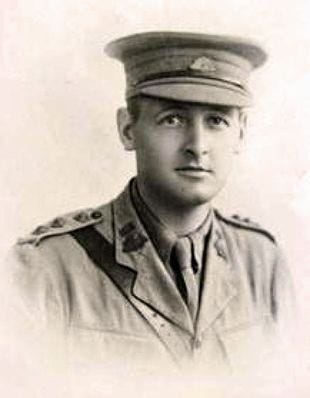
Recently I wrote about the murder of Claude Tozer, a doctor in early 20th century Australia who was killed by his lover and patient Dorothy Mort. I was drawn to the story first by her mugshots, part of a large collection from the Sydney police archives. In them, Dorothy’s bobbed hair is mussed, pulled across her face, almost obscuring the sharp turn of her nose and the grim set of her jaw. These images can feel both like works of art and like something suspended outside of time. But it shouldn’t escape anyone that they were taken after Dorothy shot Claude Tozer to death in the sitting room of her tidy suburban house, after he tried to end their affair.
![State Reformatory for Women, Long Bay, NSW / Dorothy Mort, criminal record number 773LB, 16 October 1929. [***] ... – @silezukuk on Tumblr](https://substackcdn.com/image/fetch/$s_!IiGX!,f_auto,q_auto:good,fl_progressive:steep/https%3A%2F%2Fsubstack-post-media.s3.amazonaws.com%2Fpublic%2Fimages%2F36b77d83-5dd0-40a9-82e5-8fd39f303eb8_753x1105.jpeg "State Reformatory for Women, Long Bay, NSW / Dorothy Mort, criminal record number 773LB, 16 October 1929. [***] ... – @silezukuk on Tumblr")
What might surprise many is that the crime scene photos from that day are also easily found online. Claude Tozer—known as much for his good looks as his athletic talent—lies sprawled on Dorothy’s sofa. Even in black and white, the blood covering the room is unmistakable. When I sat down to write what happened that December day in 1920, I could have easily dropped that image into my newsletter. If I had, it likely would have doubled my views.
Choosing not to include it was easy. That photograph circulates widely now—used, even, as the header image for another large true crime Facebook group. The creator didn’t know who he was, nor did she seem to care enough to find out. However complicated a figure I believe Claude Tozer was—taking advantage of a woman he knew to be mentally ill—his death was unwarranted. We reduce who he was by casually consuming images of that scene.
While watching Monster, I came to understand the creators’ desire to turn the camera around on the viewer, but I don’t think the series goes far enough in critiquing itself. I won’t pretend I always get it right. The line between care and exploitation is necessarily thin. But at times, when the characters break the fourth wall, it feels like the some of the most honest moments in the series—a mirror held up to the audience.
“You shouldn’t be watching this,” Charlie Hunnam says directly to the camera, sounding more like himself than the character he’s playing as he asks us to look away.
Coming soon at Girlhunt: a true crime haunting, a dive into murder ballads, the stories behind true crime comics, and your winter round-up of new book releases.
No posts
Comments
Nothing yet. Say the first thing.
Sign in to join the conversation.