
In January 1982, Bruce Springsteen sat down in a bedroom of a rented farmhouse in Colts Neck, New Jersey. Surrounded by orange shag carpet, he recorded fifteen songs in that cramped room. Later, he mixed them on a broken boombox and carried the tape around in his pocket for weeks before bringing it to the E Street Band. The intent had been to go over the songs together and record them for the next album.
That never happened. After each attempt, Springsteen kept returning to the original recording he had done. Stripped down, raw, and—in all the ways you could think— unfinished, those songs still, to his ear, captured the sound he was trying to produce. As author Warren Zales says, “It’s an album that shouldn’t work.” But Springsteen released it anyway, keeping ten tracks on the album. The remainder, like “Born in the U.S.A.” would find life on other albums.
The creation of the Nebraska album was anything but easy. Despite Springsteen’s commercial success, he didn’t feel fulfilled. Success was one thing, but as Springsteen would later say, “I was just interested in more, in more than that.”
So he sat in his rented house that winter and wrote song after song trying to find the right words.
It wasn’t until Springsteen saw Terrance Malick’s 1973 film Badlands that the album started to come together. The movie tells the story of a teenage couple that goes on a killing spree across South Dakota. Martin Sheen, who had starred as one of the young killers, said in 1999 that it was the best script he ever read and that, “It was mesmerizing. It disarmed you. It was a period piece, and yet of all time. It was extremely American, it caught the spirit of the people, of the culture, in a way that was immediately identifiable.”
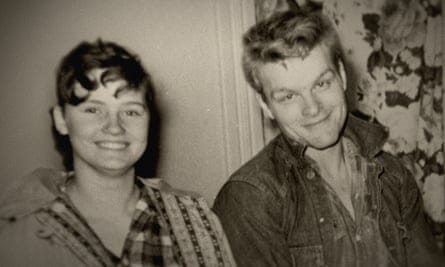
It was the same spirit that Springsteen was chasing. But Badlands wasn’t a wholly fictional tale. It was based on the 1958 spree killings committed by 19-year-old Charles Starkweather who was accompanied by his 14-year-old girlfriend Caril Ann Fugate. By the time the pair were caught, they’d traveled across Nebraska and into Wyoming, leaving a trail of victims behind.
Springsteen set out to write his own version of the story, even calling a reporter at a Nebraska newspaper who had covered Starkweather and Fugate’s tale as it unfolded. By the time he was done, Springsteen would write and record the song “Nebraska,” and from it, find inspiration for the rest of the album.
I often return to Springsteen’s song, sometimes playing it on loop to catch the mournful wail of his harmonica. But it’s always the lyrics that bring me back. In the song, Springsteen takes on the persona of Starkweather, that teenage killer who saw no freedom or promise as he gazed into the long stretch of his future. “They want to know why I did what I did. And sir, I guess there’s just a meanness in this world,” Springsteen sings.
Since its release, the Nebraska album has not been without its detractors. While critics tended to like it, an audience hungry for more of the big E Street Band sound didn’t necessarily know what to make of it. And, perhaps, they still don’t despite the songs having a timelessness some of Springsteen’s biggest hits don’t. In fact, I recently started a personal journey in an attempt to fall in love with music again by listening to an album a day. Twenty-six weeks, 185 albums. Nebraska was my comfort listen and I should have known posting about the still controversial album would summon at least one music bro to my comments. Predictably, one arrived to tell me both that I picked the wrong album and that I know nothing about Springsteen.
But detractors aside, both the song and album solidified Springsteen as one of America’s best musicians. Love him or don’t, there’s no denying his work has had a profound influence on American music.
What isn’t often talked about is how the song “Nebraska” is also in conversation with hundreds of years of true crime storytelling through music. When modern critics clutch pearls about the investment women have in true crime storytelling, they ignore the rich history of the genre, much of which comes in the form of song.
Music history is filled with songs of murder and betrayal. For some, the origin of the song is lost. “The Two Sisters,” which tells the story of a woman murdering her sister in a fit of jealousy, can be traced back to at least the 17th century and counts over 125 different variants across Europe. Its deep history means its hard to pinpoint if there ever was a specific crime that spurred a retelling through song. That’s not true for a song like “Omie Wise” which is based on the 1808 murder of Omie or Naomi Wise. Now, typing her name into Spotify yields dozens of variations on the song.
Taking stock of any personal music collection will likely yield their own rich histories. From Lead Belly to Eminem, Dolly Parton to Nirvana, countless musicians have found inspiration in tales of murder—real or imagined.
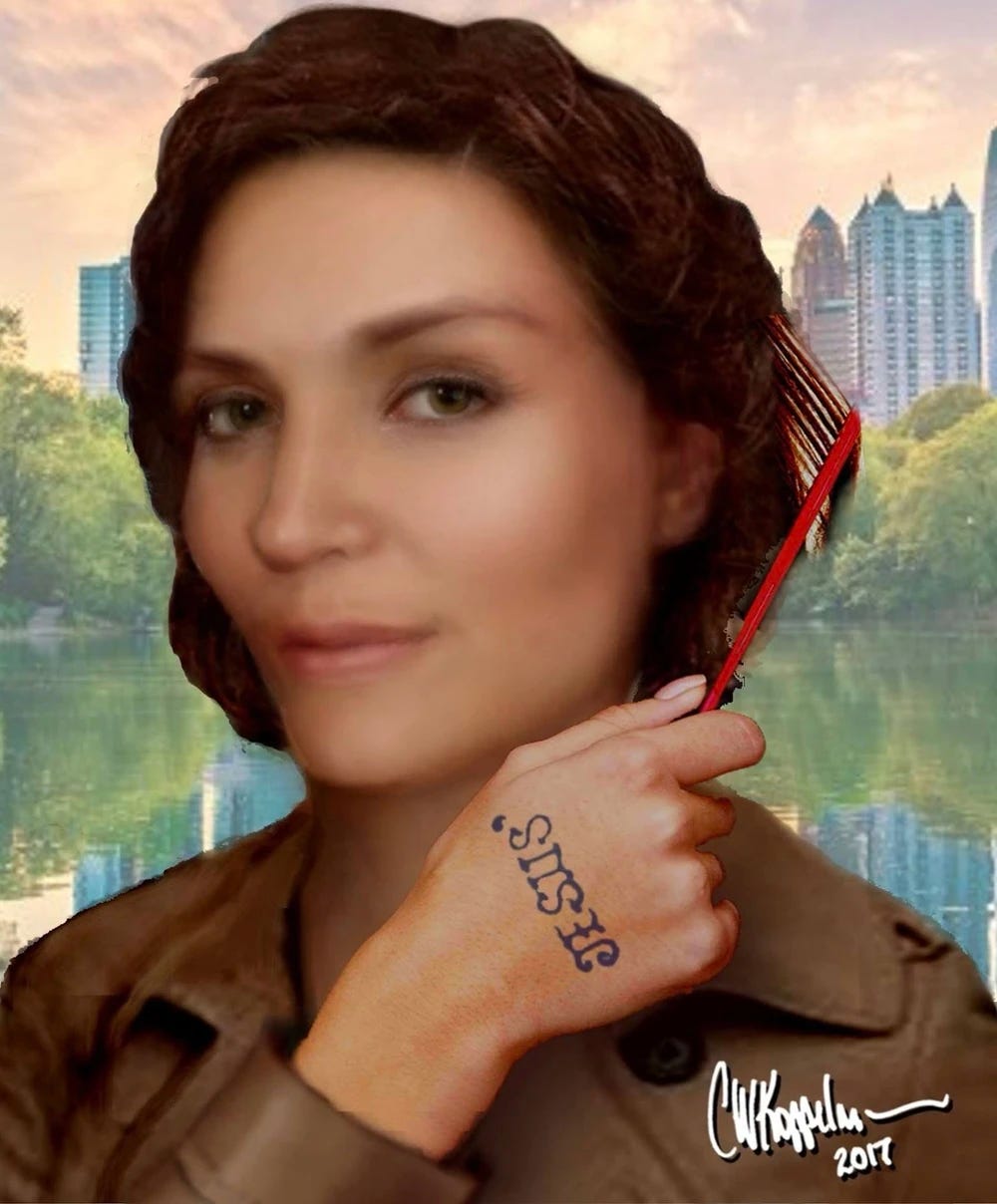
In fact, “Nebraska” was not the only murder ballad playing through my headphones in a week that also saw me pick up Brandi Carlile’s album By the Way, I Forgive You. Where Springsteen seeks to find the humanity inside a killer, Carlile’s “Fulton County Jane” attempts to do the same for an unidentified victim who was found in a field in Fulton County, Georgia in 1988. “God, the whole world’s gone crazy, and there’s only God to blame. Your mother calls you something sweet once, it was more than Fulton County Jane,” Carlile sings.
In the weeks ahead, I’ll be digging deeper into this world of songs—how murder ballads bend, reshape, and sometimes outright distort the cases they claim to remember. I’m planning a whole section of my GIRLHUNT newsletter devoted to them: the stories behind the lyrics, the women at the center of these narratives, and the ways these songs still echo into the present.
If you’re curious, I’ve also built a very extensive Murder Ballad playlist on Spotify—more than nine hours of songs that span Appalachian standards, British folk, gospel, blues, alt-country, and modern retellings. It’s a living collection, which means I’m always adding, refining, and re-thinking what belongs there.
And I’d genuinely love your help with that. If you have a favorite murder ballad, a lesser-known version, or a song you think deserves a place on the playlist—or one you want me to feature in the newsletter—comment below. The stranger, sadder, and more complicated, the better.
And don’t forget to listen to this week’s episode of She Goes by Jane. This week we cover the story of Paige Renkoski who mysteriously vanished from a busy highway in the middle of the day.
No posts
Comments
Nothing yet. Say the first thing.
Sign in to join the conversation.