
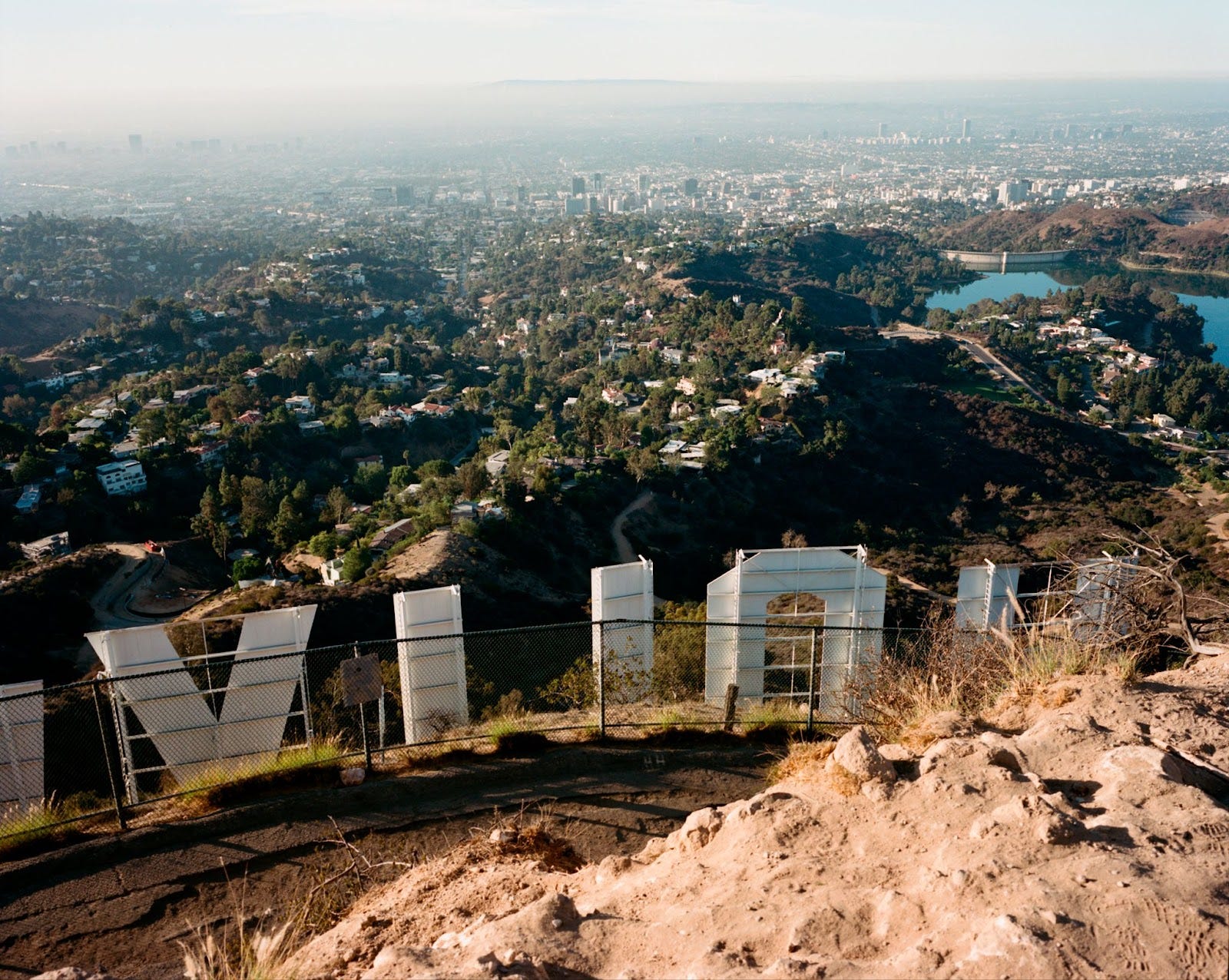
Have you ever seen a dog chained up and restrained but fighting ravenously to be free? Inelegant strings of saliva dangling from its mouth, its face a rictus mound of slobbering, teeth exposed seething and barking, its body in fits and spasms, just willing itself loose? This is what I’ve felt watching my favorite city burn and not being able to rush to its aide. I’ve spent the last week rocking back and forth with anxiety pressed against my breast like a newborn child. The news spins a not so thin web of stupefying grief all around me. The coverage from publications like The New York Times, a swirling carousel of turmoil, then hope, then disgust, then rage, then optimism, then despair, then turmoil… How perverse it feels to see these institutions continue in the inhumane tradition of seeking out the most cinematic images of rib splitting agony and bone chilling loss. We must see. We cannot afford to look away. Why, then, must there be this incessant need for romance in these photographs?
Working within these institutions, Black people are routinely told to strip their work of sentimentality, fearing its proximity to melodrama. Black people’s stories have to be framed in just the right way, be told from just the right vantage point. Not too much crying, for example, but the subject definitely needs to be broken down and destroyed by the system just enough to appeal to their readers. I once had a white woman editor at a major publication urge me to remove a section of a profile I was writing because it mentioned me being brought to tears by the love one Black woman poured onto the name of another. She reasoned that she often steered writers away from noting when something made them cry because she felt “like the strong sentiments that were felt in the moment don't always translate easily to the reader.” Every time that I think about this— this cold, dry, inherently anti-Black logic—it produces a fire in me. So too do these tasteless short videos of photographers driving cautiously through neighborhoods, panning the wreckage from car windows in slow motion. What are the sensationalized images of firefighters lit by obnoxious flash, battling endless flames, if not their own kind of twisted visual sentimentality, propped up by the belief that only these kinds of images will elicit empathy and translate to the viewer. I can already envision many of these photographers, scurrying home stinking of smoke, submitting these images gleefully to all of the festivals and awards that salivate at dramatic images of tremendous human suffering.
On the ground, I’ve been texting my friends several times per day, likely with a frustrating persistence. It’s terribly selfish to expect them to respond to these messages, to make the time to reassure me that they’re safe when they are at the center of an apocalyptic event. Dart tells me that some of the Black people who have made themselves available for assisting in the many cleanup efforts, missing people searches, and localized fire patrol, have been harassed and even arrested by police accusing them of being looters in places like Malibu and the Palisades. This bit of information does something to my brain, molting away a layer of whichever section controls my rage. I am (so far) lucky enough to be at least one degree removed from any person I love losing their home. The very concept of this, losing everything you own in a fire, lifts my blood pressure to the very top of my skull. As a photographer whose primary medium is film photography, the thought of my negatives, small slips of cellulose acetate, or my hard drives, gathered together into highly flammable plastic bins, being destroyed in a fire breaks something within me. The agony of putting your life force, your grit, your love, your community’s love into creating something, and in an instant, it being reduced to ash makes you wonder, truly, what is it all for?
I had a conversation with another friend about some nuclear safe bunkers being engineered for the world’s most important art in the case of war, yes, but also in the case of just this kind of climate disaster. This thought encourages me for one millisecond before I think about who would have access to it, whose work would be thought of as precious enough to save and preserve at the end of the world. The racism of it all, of even this idea as a possibility, gives way to a searing headache.
I read this devastating piece by Colm Tóibín and climbed even further down my tunnel of despair. Specifically regarding his writing about Gary Indiana’s library. Indiana, a prolific, gay, machete mouthed writer and intellectual powerhouse, died last October. At the time, I’d never had the pleasure of reading his work but was very fond of his interview in Butt Magazine. His death and the resounding tremor it caused across my particular slice of the internet moved me to purchase a few of his books. The first that I cracked open, during last month’s trip to Los Angeles, was Fire Season. In Tóibín's essay, he writes about Indiana’s library being posthumously packed up, carried down the six flights of his New York walk up, and shipped across the country, destined for Altadena where it would serve as the core library for an artist’s residency. The books arrived at the residency. That residency has burned to the ground. This too killed a small part of me, stoked the flames of my own fear around what will happen to the things we leave behind.
In my will, I incisively allocate what I want to happen to my books in the case of my death. This type of consideration is a gruesome task but for folks who spend as much time thinking about death and dying as I do, you had better be prepared.
I’ve spent so much of my life over the past ten years consciously constructing a library, thinking about the second life of my books. Ultimately, I believe a writer is 50% the books they read, the remaining percentages being divided between craft, imagination, and lived experience. Imagine dedicating your entire life to books, leaving behind a library filled with signed first editions, marked up margins, rare art books, books “three-deep on the shelves,” and this most unthinkable atrocity happens.
I don’t know if shipping his library to Altadena was Indiana’s final wish for his books, or if his community decided on this as the most honorific course of action, but this outcome, this horror is a writer dying a second time.
And thinking of the deaths, deaths caused by the indiscriminate nature of the fires, two incidents in particular have offered me very little sleep. The death of Victor Shaw, a 66 year old man from Atladena who suffered from diabetes, like me, and chronic kidney issues. His sister Shari tried to wake him, repeatedly shaking him from his sleep and urging him to evacuate their home before the flames took hold. His response, “OK, let me just sit here for a few minutes.” His sister ran for her life and survived. He did not. And the deaths of Anthony and Justin Mitchell, a father and son who were wheelchair bound. Anthony, Justin’s father, had one of his legs amputated due to his diabetes. Justin was living with Cerebral Palsy. Anthony’s last words to his daughter were, “Baby, I got to go. The fire just came in the yard.” There is the indisputable agony of losing the remnants of a life, and then there are stories like these, stories of seismic, incalculable loss.
I’ve cried a lot this week, feeling helpless, feeling deterred. Yesterday I cried from a headache so astounding, so absolutely mind-numbing that I nearly called an ambulance, only hanging up the phone once I remembered my $300 co-pay for going to the ER. I spent the entire day in bed, entertaining my very worst thoughts about life and death. Grief has a way of compounding, layer by layer, heartbreak by heartbreak, failure by failure. Each layer, survivable on its own, before you know can become hundreds of unprocessed traumas, so deep they become unreachable, so thick they become impenetrable. Suffocating you. Killing you.
In the first week of 2025, two of my long-term friendships ended. Friendships that had, in many ways, simply burned out. Another friendship, mangled by the residual shock, is on life support, likely on its way out as well. I’m tired of fighting for people to stay in my life. In this same window, I welcomed someone back into my life, a relationship fraught with complications that have muddied the water of my heart in ways both big and small. This landslide of instability and upheavals has pummeled me into submission, making me question, again, what’s it all for? What’s the point of investing in anybody, in truly loving anyone, if those relationships just end with you dispossessed and burned to a cinder?
The other night, while on a call with my brainy, sweet friend Casey Gerald, I spoke about how each of these losses, all of these little fires made me feel: useless, unlovable, invisible, insurmountable, hardened, and disposable. Casey chuckled, telling me that this line of thinking and self flagellating reminded him of a line from Frank O’Hara’s, Mayakovsky,
“Now I am quietly waiting for
the catastrophe of my personality
to seem beautiful again,
and interesting, and modern.”
Waiting indeed.
I spent the entirety of yesterday in bed with a crippling migraine, feeling every bit the literal embodiment of a red flag, a modern-day scarlet letter. My head, a throbbing cacophony, a conga line of hammers and drums. When I wasn’t sleeping, I was weeping. When I wasn’t sleeping and weeping, I was reading. I kept refreshing the news and pissing myself off at the sight of the sensationalism. I thought about returning to Indiana’s book, but that thought only made me cry harder. I picked up my phone to dial a friend, someone adept enough, present enough, and loving enough to trudge once more into my endless melancholy and to help me make sense of what it all means. But I had no one to call, both of the people I would normally dial have run for the hills. I thought about running too. My emotional contingency plan for just such a spiritual disaster has always been to sell half of my camera gear and immediately relocate to Los Angeles, a city that I’ve spent the last three years desperate to flee to but have felt too chained to the East Coast by the fierce love of my friends, to run toward. And now, that plan has gone up in flames.
As the sun began to fall from the sky, a loose ember in my periphery, I did what I always do in moments that feel ravaged by both the agonizing prospect of living and the overly enticing prospect of dying: I returned to my books. Reaching for Joan Didion’s The White Album and flipping through its pages, desperate for company and eager to read, I landed on her essay, “In Bed,” my eyes arriving at this line,
“Almost anything can trigger a specific attack of migraine: stress… A flashing light. A fire drill.”
No posts
Comments
Nothing yet. Say the first thing.
Sign in to join the conversation.