
The older I get the more I realize that the best way to judge how well your life went is by the friends you made along the way. Some of that is merely fortuitous - the block you grew up on, who happened to be in your dorm, what your coworkers were like, is just the luck of the draw, as was who was in your Kaiser-based baby group when you panicked over having had one. It’s such an intense and scary time in your life, having produced a tiny human being that you have to take care of for the rest of your life. I think the friends you make at that particular juncture have a very special place in your heart because of that shared experience of trauma. I was so lucky to make many great friends during that period but especially lucky because one of them was from Spain.
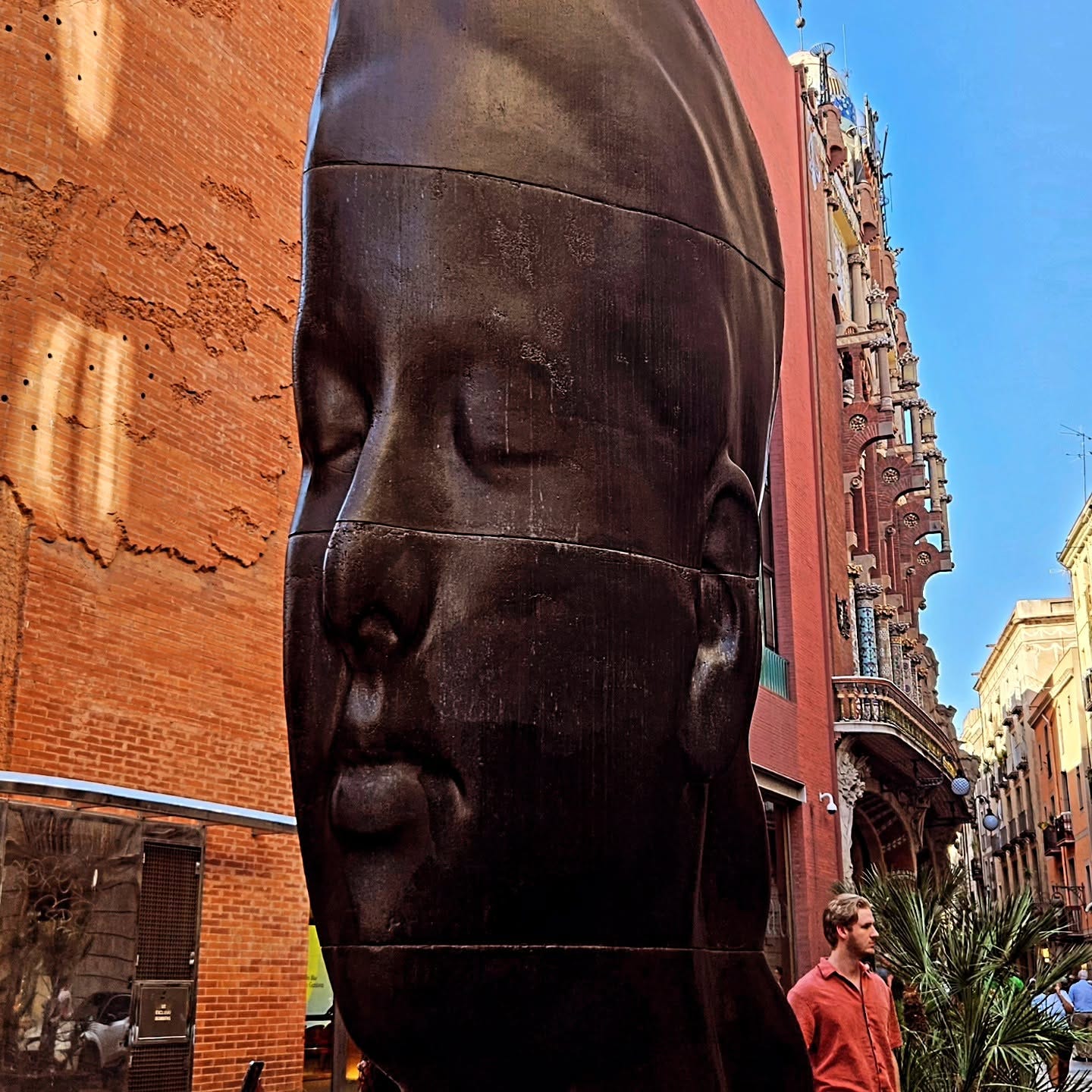
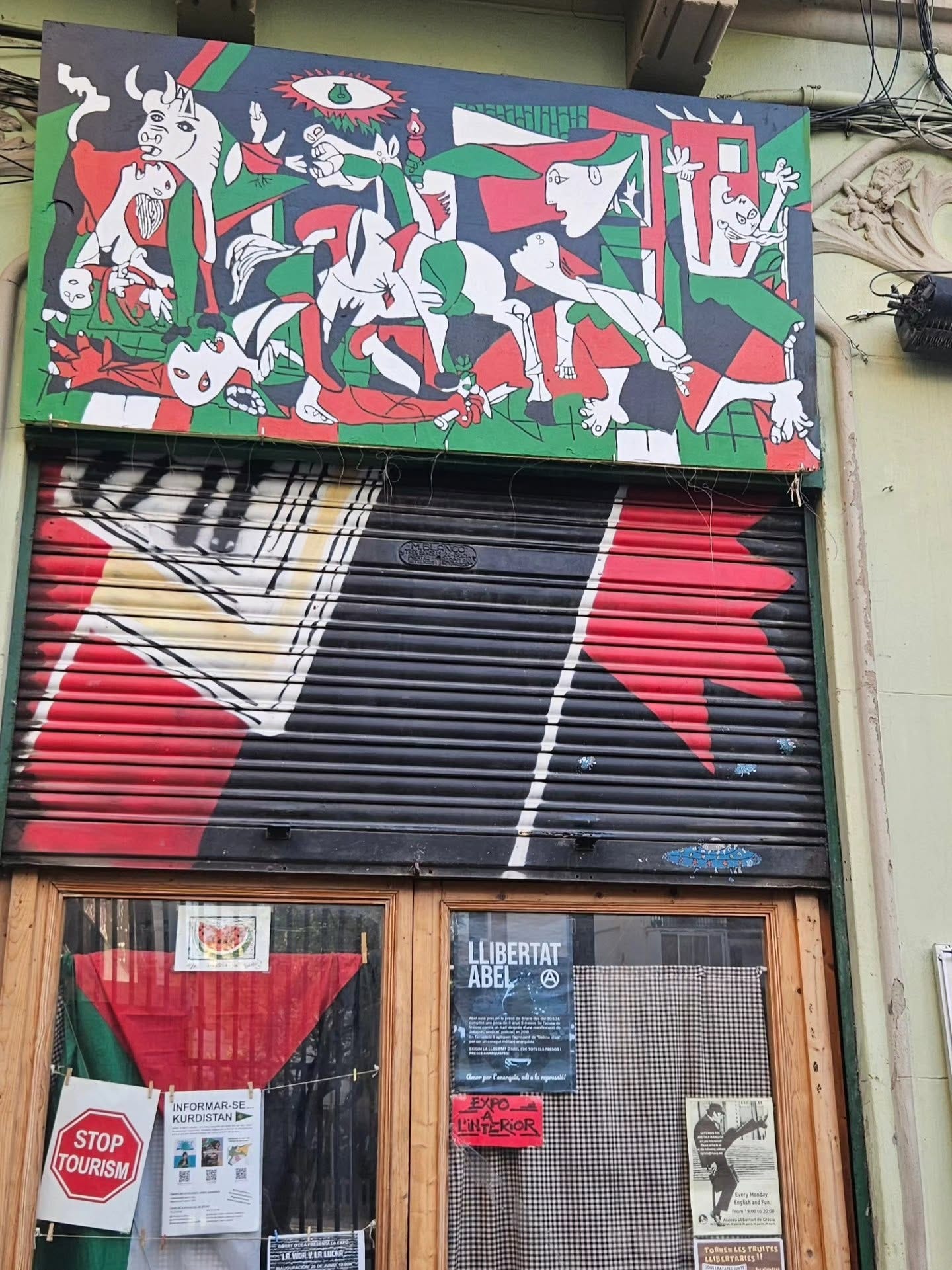
Since she moved back to Barcelona I have visited her several times, and although it was fun to visit and take our kids to all the kid-places together, it’s also fun to be able to do our own things. Pilar lives in a neighborhood called Vila de Gràcia which has a long history of radical leftwing politics. As far back as the 1930s, the citizens of this village resisted fascism, formed collectives, and established rules based on communist principles - well, they’d say anarchist ones — and it still feels like that there, from the tin-plated store fronts painted with pro-Catalunyan independence slogans, to the crazy number of Palestinians flags that fly in everyone’s windows. There are social clubs, artists’ ateliers, and vacant lots that have been turned into public gardens by the collectives of each block, and on summer evenings, many of these blocks have places where the neighbors sit around outside drinking wine and making decorations - paper mache roses, mushrooms, mermaids, or what have you for the annual august street fair. It goes without saying that everyone stays up ‘til all hours.
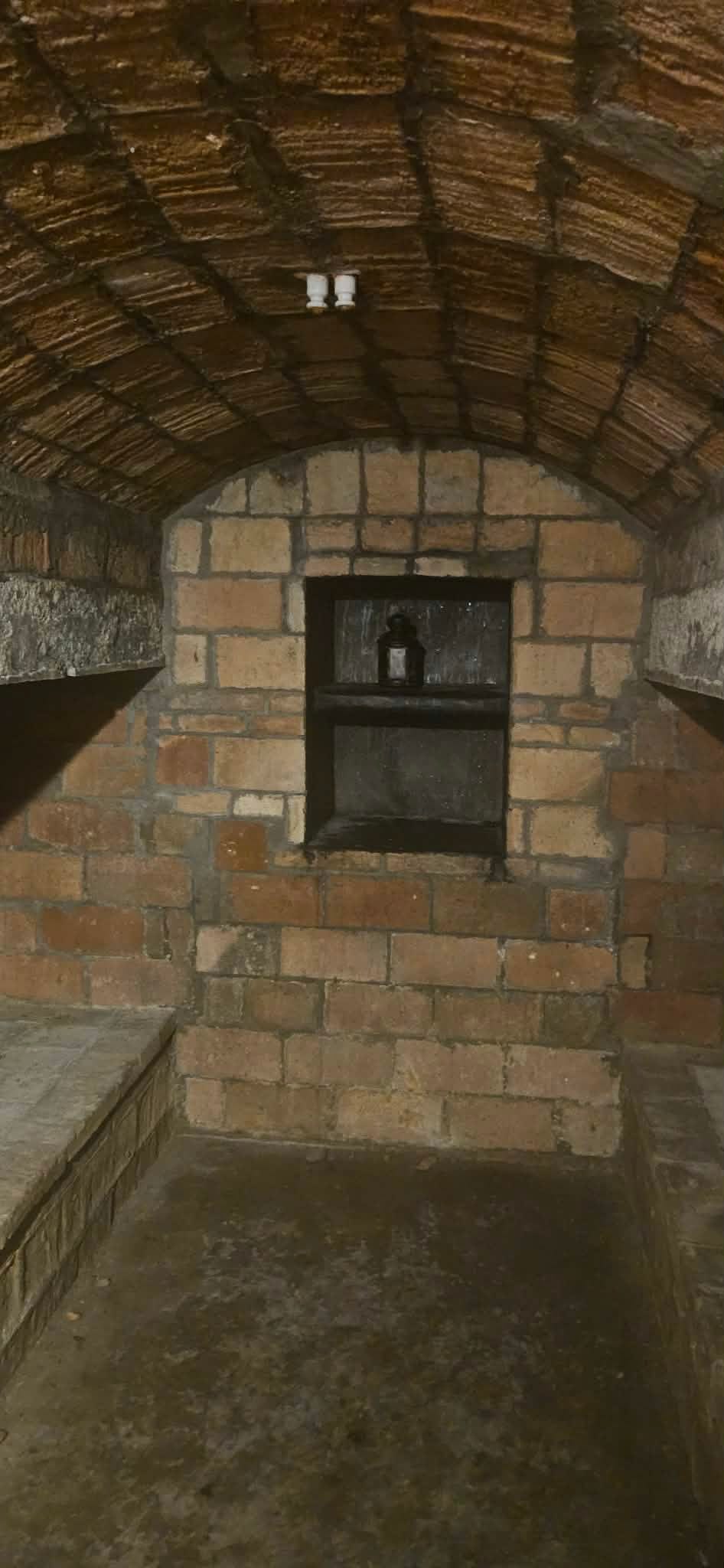
So Sundays are slow to get started in Spain and especially in Gràcia but every Sunday at eleven o clock, in the Placa del Diamant, an anti-fascist group has organized a public tour of one of the city’s 1300 bomb shelters (refuge) left over from the Civil War. (Barcelona suffered a civil aerial bombardment during the Civil War, predating the Blitz in London by several years.) The tour began with a history of the rise of Franco, which I won’t go into except to say he was an unpopular leader so he had to take control by force (a circumstance that feels worth thinking about at this exact moment). Because they were too poor to be in the first World War, the guide said, the Civil War was the first time in Spain where the civilian population had to be involved, rather than it occurring on a battlefield far away from them: you can imagine the shock when bombs began raining down on them.
By the end of the war there were 1300 of them, but at the time it began, the city only had four official shelters so neighborhoods like Gràcia organized within their communities to make their own, and the process was not painless. For example, the shelters only held 300 people, and so the neighbors who’d helped to construct it, or had contributed money for it had priority for who got to go down first when bombs fell, just like in the story of the Little Red Hen.
Some people simply chose not to go in them, either because they’d be separated from their family, or because it was so scary in there. Even now, eighty years later and well-lit, I thought it was sad and scary. The shelter was twelve meters deep and pitch black inside, and you weren’t allowed to bring food in for fear of rats. Political discussion was also forbidden, since the population was polarized between the two sides - much like our society today - although of course the bombs that were raining down were unable to distinguish between Republicans and Nationalists.
Basically, a bad time was had by all, and when the war was over World War II in full swing.
Franco was in power until the mid-1970s, which is when he passed away, and I wonder if that accounts for the way Spain is now - well, the Spain that I know, which is full of the children of Franco’s victims and their children, and the children of their children. Maybe Spain was always this lively and fun and exciting all the time, even down in the bomb shelters, or maybe that experience just taught them all to live every moment like it is your last. All I know is, every time I’ve been to Spain, I do the same.
I have a lot of happy memories from being here and the soundtrack to those memories is the song “Get Down On it” by Kool and the Gang, because of the time I drove from Madrid to Bilbao with some people who were playing it in the car. I saw Nirvana here - twice - and I recall hearing “Wonderwall” for the first time in Spain, though I can’t remember the circumstances, just that I was floored by it. Three of the times I’ve been here, I or one of my friends was robbed, and it says how I feel about it that last time I had my wallet lifted on the tram up to Montjuic, it was still the best day of my whole damn year.
Not going to bore you with my personal adventures, but on my last night in Spain - after our trip to the bomb shelter - we went to a club called Razzmatazz for a disco dance night called Common People that featured music from the 1990s. Because she only knows me as a mom and not as a writer, Pilar said, “I don’t know if you will know the music,” and I didn’t even bother to correct this impression because where do you start? Did I know this music? I AM this music.
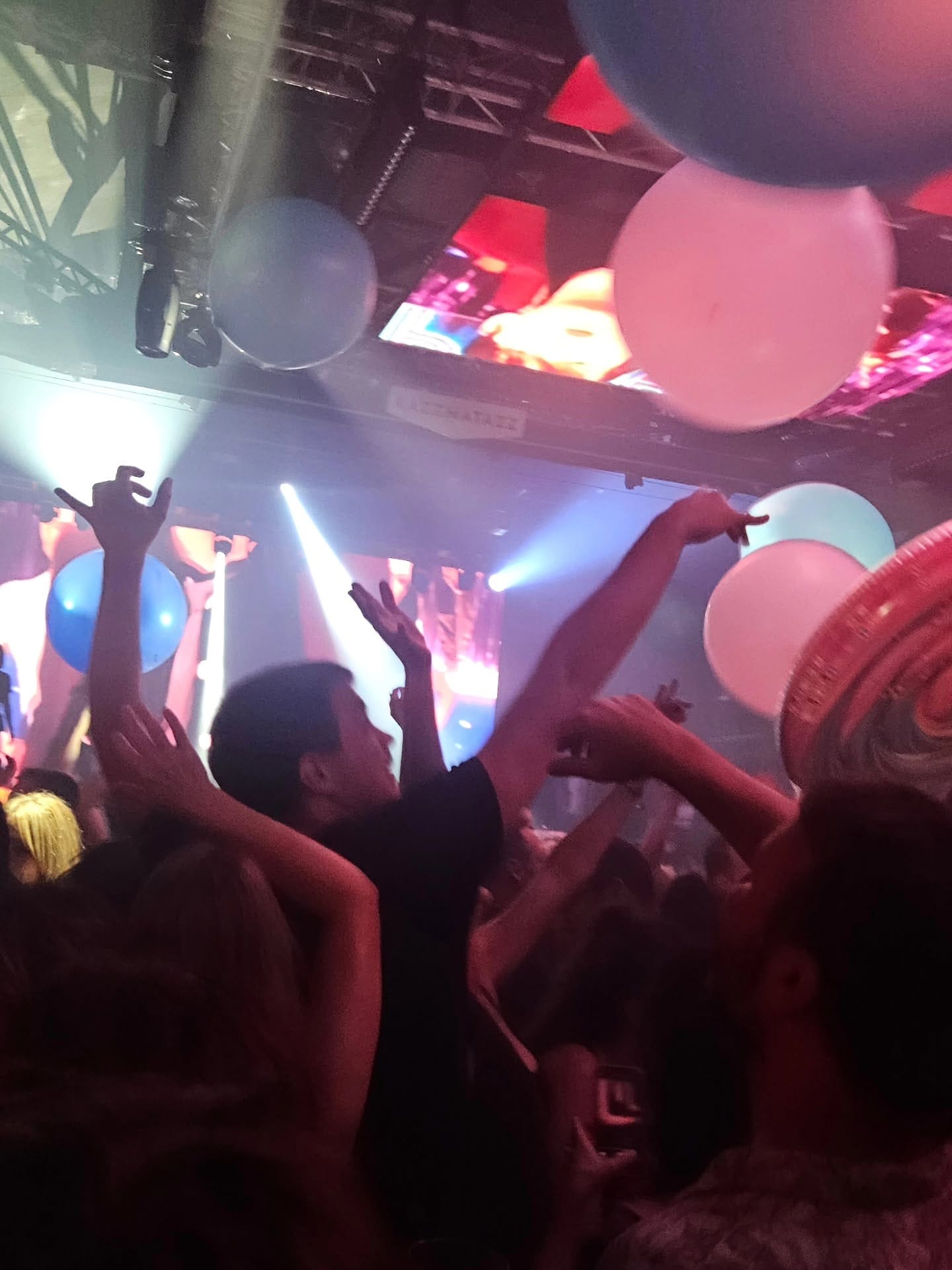
Inside, Razzmatazz reminded me of a club in Tijuana called Iguanas, which also had several levels and no guard rails on the balconies and from which people used sometimes to leap onto the dance floor. Like Iguanas, there were three floors, all open, and all of them rocking in addition to a ton of people smoking real cigarettes on the roof top terrace. Down on the dance floor, it looked like something was on fire and smoke was emanating from it, but it was just mist being sprayed on everyone, and the system was blasting the song Girls and Boys by Blur, only with that dance club beat pounding beneath it obliterating its lyrics, and the whole dance floor was in a melee, fists pumping, feet jumping, all hearts beating as one.
Next up New Order’s Blue Monday, who sounded equally great, and it occurred to me that while New Order are one of the worst live bands I have ever seen - well of the ones I actually like - that this experience of their music was so much truer to its use-value. It’s terrible to realize that, while I think that it wouldn’t be going too far to say that I and my friends invented not only it, but a way of thinking and talking about it, at Razzmatazz it was also like I was hearing it for the first time, in a new context and habitat that is probably the one it belongs in best.
And then, as if on cue, there was the Common People moment, as Pilar put it, when that song began and the entire rushed onto the dance floor. A raft of beach balls and inflatable animals were thrown over everyone’s head and cannons of confetti went off and everyone went berserker.
And so it went. The Pixies, the Dandy Warhols, the Smiths, the Cure, the Arctic Monkeys, the Sundays, REM ...I can’t name all the songs they played down there, and with that thumping beat they all bled together anyway but it was the soundtrack to my 20s and 30s. Many were by people I knew personally or had met, and as I danced, I kept remembering all the things we said and did together, and I realized too that for me, that world was my Gracia, my community, my own private idaho, and like the neighborhood watch during the Civil War, which in the end was so necessary, we too worked for the common good - for the common people, as it were.
It was nice to think of all that music we made back then ending up here, in this room, covered in mist and confetti, shouted out by everyonein our generation, motivating this group of people to scream in unison on a sunday night, to reconnect and rejoin, to ignite and empower, to continue the fight for meaning and unity and happiness,all those things that are really in short supply today. It reminded me of a line in Simon Reynolds book on rave culture: I fell. I was void.
Meanwhile, back in England (where I am right now), they’re about to get a new Prime Minister, Andy Burnham. He used to d-jay in Manchester in the 1990s, and perhaps that is why the things he is fighting for feel more like what would happen in Gracia than what would happen in Whitehall. Recently, I read someone on Facebook - I’m sorry I can’t remember who - saying that ours is the last generation that can remember playing outside until the lights went out, and while that may be a sentimental way of putting it, it is true that my friends and I come from a very different world than the one we find ourselves in now…one closer to the time when the bomb shelter was made - and closer now, to a time when it might need to be used again.
On the other hand, now is nice too, especially since in some ways I am living my life backwards. I thought that at Razzmatazz and I thought it earlier, on a day when Pilar and I were flying down Avenida de Diagonal on our bikes, like little kids breaking all the rules, because we weren’t even wearing helmets. At one point, I had to get off my bike to throw out my trash, and I lost her for a bit and I shouted out for her to wait up and she shouted back, “I can’t! My bike doesn’t have any brakes!”
That’s a bit like life, I think. You can’t wait up. You have no brakes. Deal.
No posts
Comments
Nothing yet. Say the first thing.
Sign in to join the conversation.