
There’s a question I ask at the start of every project that no client ever expects:
What story are you tired of living in?
Not “what’s your style.” Not “show me your Pinterest board.” Not “how do you want to feel when you walk through the door.”
What story are you tired of. Because that’s where we start.
Most interiors are predictable stories. Not because the people who live in them lack imagination — but because the entire design industry is structured to produce familiar outcomes. The sourcing networks, the vendor relationships, the “approved” finish palettes, the client presentation formats — all of it is built to generate variations on a known story.
Warm neutrals. Statement lighting. “Organic” texture. Layered rugs.
It reads like a sentence that finishes itself.
I’m not interested in that sentence.
I’m interested in the moment a room stops you. When you walk in and something shifts — a pressure change, almost. The air in the room has mass. You look around and you cannot reverse-engineer it. You cannot trace it back to a trend report or a mood board category. You just know you’re somewhere that was made for someone.
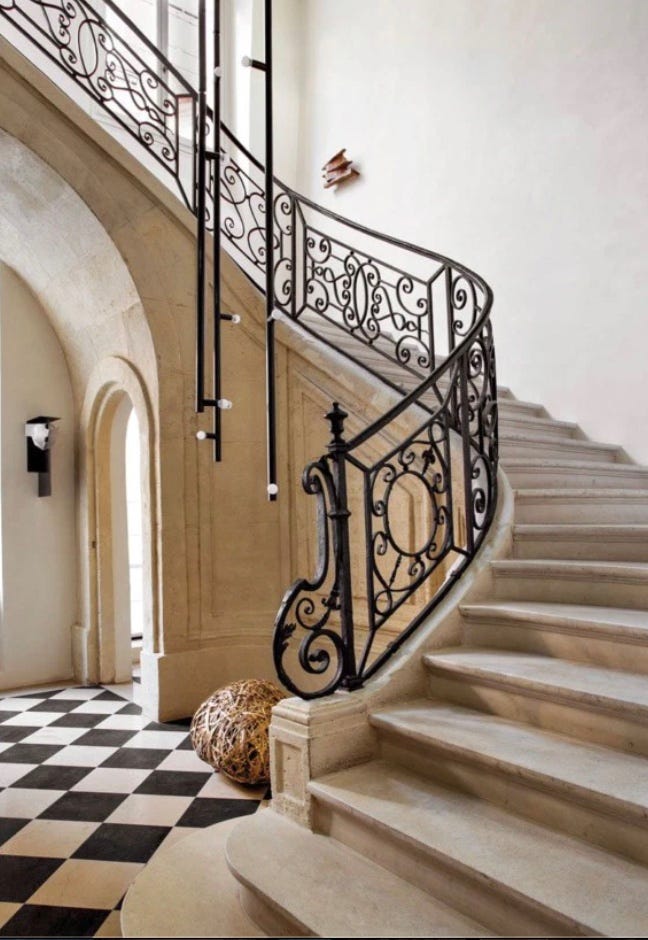
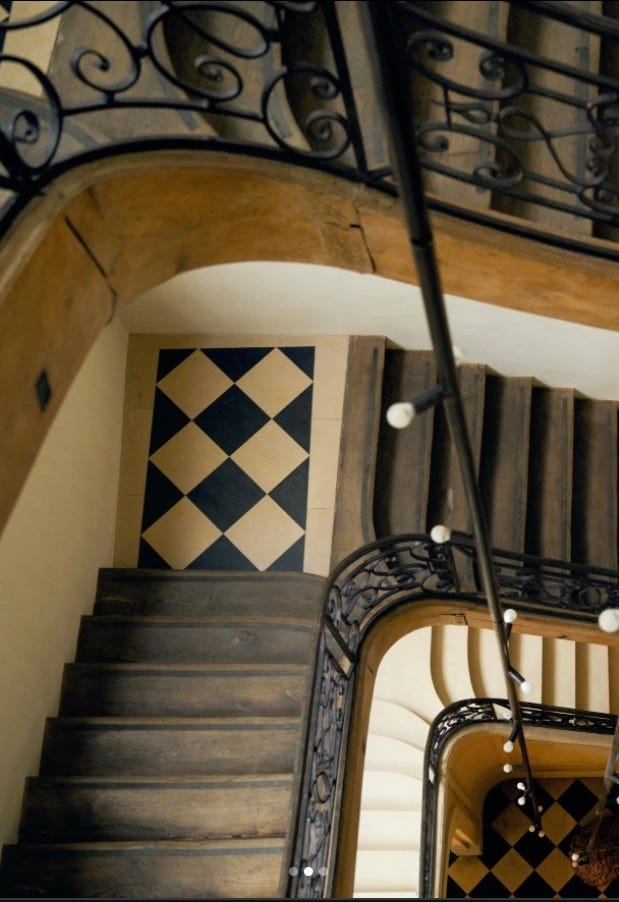
That’s a plot twist room.
Every memorable story has a structure. So does every room worth remembering. When I'm building a space that refuses predictability, I work through three plot points — not as a formula, but as a framework for authorship.
The thing in the room that doesn't belong — and owns it.
Every plot twist room has one element that breaks the expected logic of the space. Not chaotically. Intentionally. A material that shouldn’t work in this context but does. A scale that feels wrong on paper and inevitable in person. A reference so specific to the client’s life that no one else could have commissioned it.
This is the inciting incident. It’s the moment the room announces that something different is happening here. It sets the story in motion. Without it, the space is just well-executed. With it, the space has a point of view.
Ask yourself: what is the one thing in this room that a stranger could not have chosen?
The deliberate friction that makes the room feel alive.
Predictable spaces are comfortable in the wrong way. Everything agrees. Every finish defers to every other finish. The result is a room that feels resolved before you’ve even sat down in it — nothing left to discover, nothing to push against.
Plot twist rooms have tension built into them. A rough surface next to a polished one. A dark corner that the light doesn’t reach. A piece of furniture that asks something of you before you use it. This isn’t discomfort — it’s the feeling of a story still unfolding.
The tension is what makes you want to stay. Because a room without friction is a room without depth.
Ask yourself: where does this room resist you — and does that resistance feel intentional?
The detail so quiet it almost disappears — until it doesn’t.
The best plot twists don’t announce themselves. They arrive at the end of a sentence you thought you already understood. In a room, the resolution is the detail that rewards the person paying attention. The hardware that references something from the client’s past. The ceiling treatment you only notice when the afternoon light hits it. The fabric that looks one color in photographs and becomes something else entirely when you’re standing in front of it.
This is the detail that makes the room personal rather than merely beautiful. It’s the thing that tells the person living there: this was made for you specifically. It’s the sentence no one else could finish.
Ask yourself: what does this room say to the person who actually lives here — that it says to no one else?
When all three plot points land — the inciting incident, the rising tension, the resolution — the room becomes something a client cannot find anywhere else. Not because it’s expensive. Not because it’s rare. Because it’s authored.
That’s the difference between a space that was designed and a space that was written.
Design Alchemy exists because I believe that luxury isn’t a price point or a finish. It’s a story that only you could live in.
Born to be a plot twist.
Homes as heritage. Not performance.
xG
AUTHOR NOTE
Gil Melott is the founder and principal of Gil Melott Studio, a luxury residential and boutique hospitality interior design practice based in Chicago, with presence in New York and select national markets. The studio has received an Interior Design Magazine Best of Year Award, international press recognition in WSJ, AD España, Elle Decor, Veranda, Galerie, and Luxe Interiors, and produces the Bespoke Collections product line including the award-winning LUZ lighting series.
Design Alchemy is his ongoing editorial practice — a publication about spaces with authorship, interiors with intention, and the design conversation that the industry mostly avoids having.
If this essay landed — share it with someone building something worth living in.
No posts
Comments
Nothing yet. Say the first thing.
Sign in to join the conversation.