
Since Day One of our Substack journey, we have raced through the first 800 years of the history of gin in our seven short chapters. At this pace, we will soon be in Madame Jojo’s having a French 75. But dear reader, there is so much to cover before we get to such a happy place1.
So, we land back in London. It is the beginning of the 17th Century and the first major centres of grain spirit distillation are established in Europe. Most of these are in the coastal cities of the Low Countries, which were the European home of the Dutch East and West India Companies. England is developing an industry though, and there are about 200 distillers in London. Europe is going to war again, and in 1618 the Thirty Years War starts in earnest.
In London, we might go to the inn, and order a dram of ‘strong waters’, or if you had pretensions, ‘aqua vitae’. There is still no concept of a standardised drink in society. There are juniper-forward spirits, and lots of other botanicals have fleeting moments of popularity. It’s 80 years still to go before anybody writes the word ‘gin’ in an English document.
Distillers in London have a universally horrific reputation for the ingredients they are using. Nobody has even considered regulations yet. The market has separated into a few large, influential, seriously profitable companies that are distilling grain into alcohol and selling it, and a huge number of smaller rectifiers2 that are compounding with botanicals to produce the finished product. This is pretty much exactly how the spirits market in the UK is still organised today,
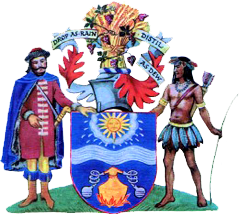
In 1638, professionalism arrives. A group of very rich, very well connected people make a play for ownership of the new market, and they make it stick. The people concerned are just who you would imagine - a few sirs, the Queen’s doctor, and so on. They elbow the Society of Apothecaries aside (ending their highly lucrative sideline in distillation) and show off their new royal charter - they are the Worshipful Company of Distillers. They have their charter, a monopoly on distilling within 21 miles of London, and a new crest, which is in itself amazing. The Worshipful Company of Distillers is still around now, and you can visit them at 45 Fetter Lane in London.
With this step, a new chapter has started. That chapte is about a revolution in drinking habits, stretching across all of Europe. Serious hard headed commerce has uncovered the recreational potential of a medicine, and a major new industry was on its way. At this point, drinking culture was pretty much the same in each country in Europe - ale in the country, hopped beer in the towns and villages, and wine (plain or fortified) for the ruling classes. Spirits slotted in, but they weren’t displacing anything.
But spirits were different, and that difference was extremely noticeable. Spirits brought on a wilder and significantly more socially destructive drunkenness than beer and wine ever had. There were stories about it in all of the books and papers of the time - and this is still 150 years before the Gin Craze.
People generally talk about this time as spirits marking a moment of a broader revolution in European life, and the beginnings of a definitive urban culture. Ale had always been the cornerstone of medieval village life. It was based around the rhythms of the season and the Christian festivals. It was made in the parish, from parish grain, and parishioners drank it to celebrate marriages and births and a harvest.
Spirits were nothing like that. They were the product of trade. Of empire. Of industry. They represented upheaval. It was an exciting, or terrifying, time, and spirits were part of the package. Those ur-gins that everyone was making embodied the feeling that Europe was feeling everywhere in the 17th Century - everything was changing fast, and it was good.
Society was transforming at pace, and one of the big changes that spirits forced was a reinvention of the relationship between governments and individuals. The church told you how to live your life, but now the rapid rise of ur-gin was leading to the government making decisions and suggestions about personal responsibility and intervention. There was a rash of new laws about licensing, about punishments for public drunkenness and violence, and most of all - you’ve guessed it - the need for excise duties to be paid.
The initial response to the rise in problems caused by drunkenness was prohibition. Germany and France had both banned brandy during the preceding years, but the Chancellor of the Exchequer had noticed that huge amounts of revenue could be collected, and everybody decided that prohibition wasn’t the answer, Society had to find a way to make things work.
That combination of a financial imperative, personal responsibility and the need for intervention has puzzled us as a society for the whole 500 years since spirits arrived on the scene, and it is unclear how much we have ever really figured out.
Every great story deserves a lovely companion. This post is public, and I would be grateful if you would share it with someone you know who might enjoy their own sidecar of discovery.
As we get further into our story, and London becomes more recognisable, we will spend a fair bit of time on the history of the venues that make this story what it is. The venues are everything. The closure of Jojo’s is a bookend on Soho being an interesting place to visit.
A rectifier was then and is now essentially a secondary distiller - someone who is in the business of buying base spirits produced by the large distilleries and then:
Redistilling it with botanicals to create flavoured spirits
Filter and purify it to create cleaner, more refined products
Compound it (mix it) with flavours and botanicals without necessarily redistilling
The term ‘rectification’ literally means ‘to make right’ or ‘to purify’, and in distillation terms, it referred to the process of taking a rough spirit and refining it into something more palatable that was easier to sell.
This system created a two-tier market structure that still exists today:
Large distillers focusing on producing the base alcohol at scale
Smaller rectifiers who would take that base spirit and turn it into finished products
This was particularly important in the development of gin, as many of the early gin makers were actually rectifiers who would buy neutral spirit and then add their own botanical blends through various methods.
Comments
Nothing yet. Say the first thing.
Sign in to join the conversation.