
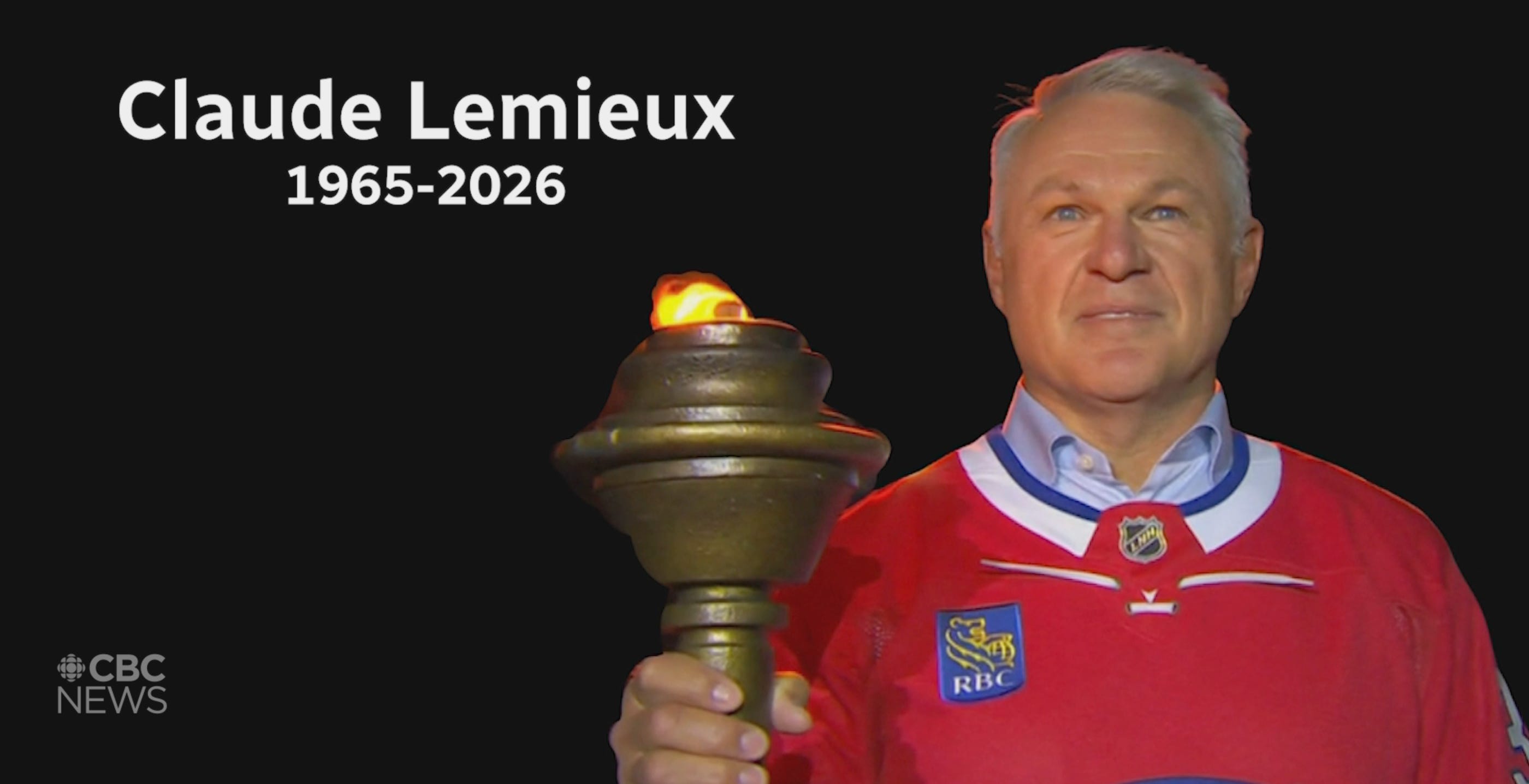
Just days before his death, Claude Lemieux — four-time Stanley Cup champion and one of the most celebrated players in NHL history — carried the torch onto the ice at Bell Centre in Montreal, before a roaring crowd of adoring fans. He was 60 years old, beloved, and accomplished beyond measure. And then, days later, he was gone — found by his own son in the early hours of the morning. The hockey world is still absorbing the shock. The rest of us are left with the question that always follows: How? How does someone carry a torch in front of thousands — luminous, present, alive — and then, in only a matter of days, arrive at that terrible edge?
The answer, as painful as it is, is that we often cannot see it. That is precisely the point. The smiling face at the celebration, the accomplished athlete at the podium, the devoted colleague at the office party — they have learned, as we all have, to perform wellness. To save the darkness for the hours when no one is watching.
The initial report said he died unexpectedly. They always do.
He died unexpectedly.
She passed away suddenly.
The family requests privacy during this difficult time.
There are phrases you have seen a hundred times. In newspaper obituaries. In carefully worded emails from HR departments. In the hushed announcements that ripple through a community before anyone knows quite what to say.
We have developed, over generations, an entire vocabulary of careful omission — a language designed not to illuminate but to obscure. To allow the people left behind to absorb the unthinkable at a pace the rest of us find more comfortable.
In other words: someone took their own life. And we, as a society, still cannot quite bring ourselves to say so plainly.
I know this language well. I have received these calls. I have read these obituaries. I’ve cried along with friends whose children stepped in front of train or a bullet from their own hand. I lost my best man to suicide. He jumped off the Golden Gate Bridge — that magnificent, terrible monument to both human aspiration and human despair. I lost my step-grandfather. I lost my doctor. Friends who were veterans who grappled with stressors that overwhelm the VA. I have sat with friends as they searched for words to describe the unimaginable: their own children, gone.
And every time, the world responded with the same polished, impenetrable veneer.
Died unexpectedly. Code for suicide. As if that explains anything at all.
What it doesn’t explain — what no euphemism can contain — is the devastation that radiates outward in concentric circles. There is the immediate family, shattered. There are the friends, who grieve and simultaneously wonder what they missed. There are the colleagues, the neighbors, the acquaintances who knew the person well enough to be stunned and not well enough to be fully comforted. And then, rippling further still, there are the children — the ones old enough to understand that something irreplaceable has been torn from the world, who grow up quietly shaped by an absence they cannot fully name, carrying it into their own lives, their own relationships, their own darkest moments. Grief after suicide doesn’t pass cleanly through a generation. It travels.
Died unexpectedly touches none of this. It is a door, gently closed.
We need to open it.
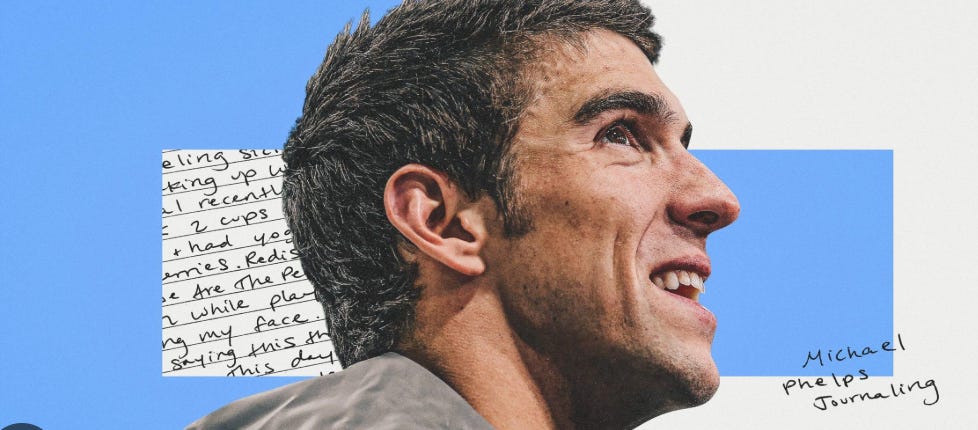
Michael Phelps — the most decorated Olympian in history, winner of 28 medals, 23 of them gold — has spoken openly about a period when his depression was so severe that he no longer wanted to live. He is, by any external measure, a man who had everything. He has described experiencing severe depression particularly after major competitions, when the adrenaline and singular focus of elite sport suddenly disappeared, leaving behind a silence he did not know how to fill. Today he credits therapy with saving his life. He has also spoken about journaling as a core part of managing his depression — writing down negative feelings, the dark internal monologue, the things he was going through mentally — as a way of keeping the darkness from becoming shapeless and total.
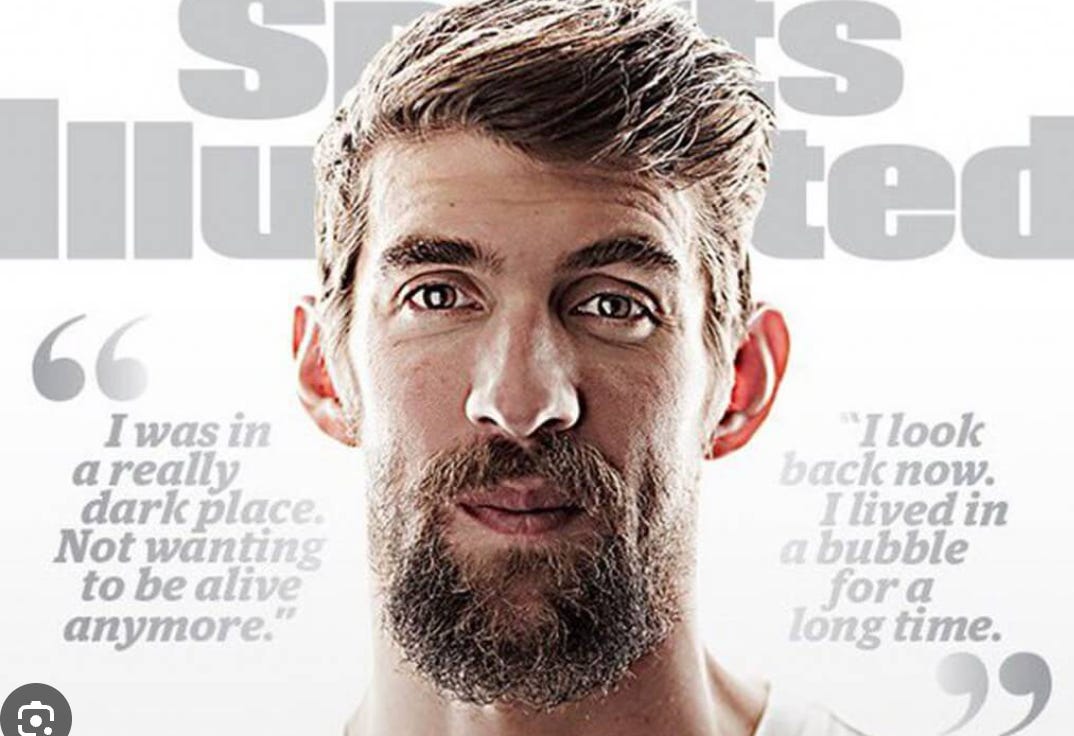
That detail matters more than it might seem. Phelps is not describing a quaint self-help technique. He is describing something ancient and fundamental about how human beings stay tethered to themselves.
A buried emotion never dies.
A buried emotion will always find a way out. The deeper we bury it, the more insidious its eventual resurfacing — emerging not as the thing it actually was, but as something harder to name and harder to treat. As numbness. As rage. As a slow, structural collapse that the people who love us can see coming and cannot stop.
This is why expression matters — not polished expression, not carefully curated expression, but the raw, imperfect, sometimes barely legible kind. The journal entry that makes no grammatical sense. The letter you write and never send. The voice memo recorded at midnight that you will never listen to again. The point is not the quality of the output. The point is the act of getting it out — of giving the buried thing air, before it finds its own way to the surface in a form no one can manage.
Long before there were therapists, there were journals. Diaries. Letters written to no one in particular, or to everyone. The act of putting inner turbulence into language — imperfect, inadequate, sometimes barely coherent language — has always been one of humanity’s most instinctive forms of self-rescue. Not because the words solve anything, but because the act of finding them forces a kind of reckoning. To write I am not okay is already different from merely feeling it. The page doesn’t flinch. It doesn’t rush to fix you. It holds what you give it — and in that holding, something shifts.
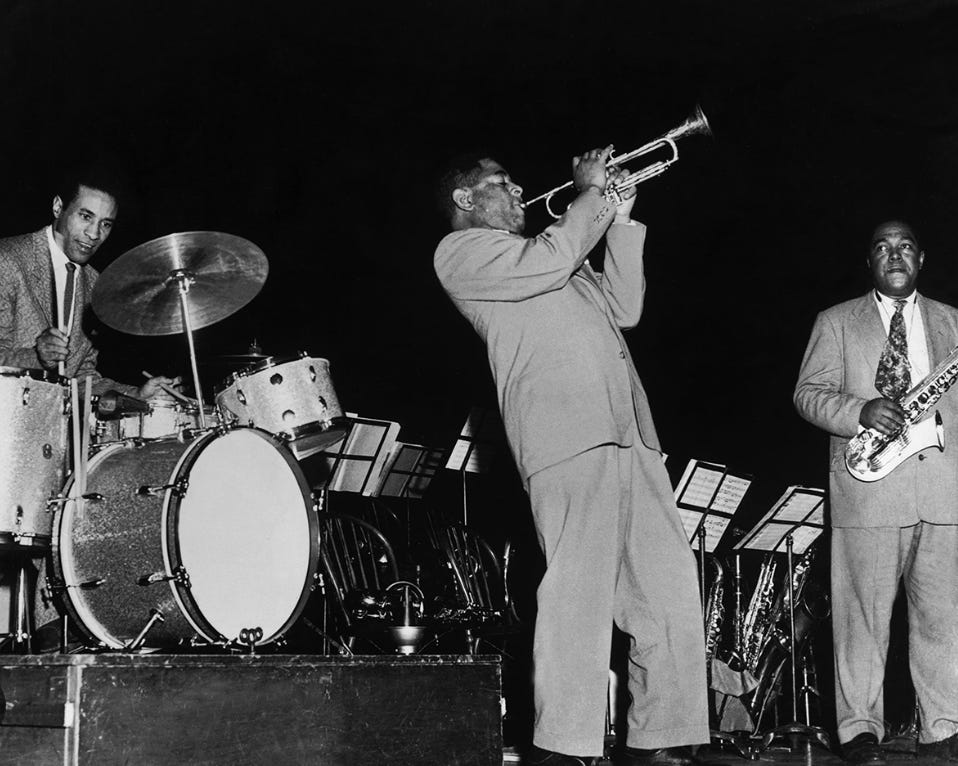
Think of what happens when a jazz musician misplays a note. The impulse, for anyone trained in precision, is to wince and move on — to treat the deviation as a failure, something to be corrected or forgotten. But the great jazz musicians do something else entirely. They follow the misplayed note. They lean into the unexpected sound and discover, in real time, something they would never have composed intentionally. The mistake, once out in the world and breathing, becomes the beginning of something new. Had it never been played — had it been suppressed, swallowed, kept safely inside — the inspiration it carries would never have existed at all.
An unexpressed emotion has no such opportunity to evolve. It cannot become anything. It sits in the dark, growing heavier, until the weight becomes unbearable.
This is why the pursuit of perfect expression is misguided – and actually counterproductive. Waiting until you have the right words, the right framing, the right emotional clarity, is just another form of burial. Messiness is not a bug in the process of emotional expression. It is the process. Just get it out. Let it exist. Let it breathe.
I’m not preaching from some lofty perch. I’ve been guilty of this for years. Fearful of vulnerability, being exposed as a fraud, not being good enough. Age and the perspective from the wounds of life have illuminated my folly. When my best man jumped off the bridge, I quietly wondered if I would follow. There but for God’s grace?
What you do with expression afterward is secondary; the mere act of externalizing it is the real work. Pablo Picasso often preferred versions of a work he painted over, but it was the process that he found most rewarding – not the final version.
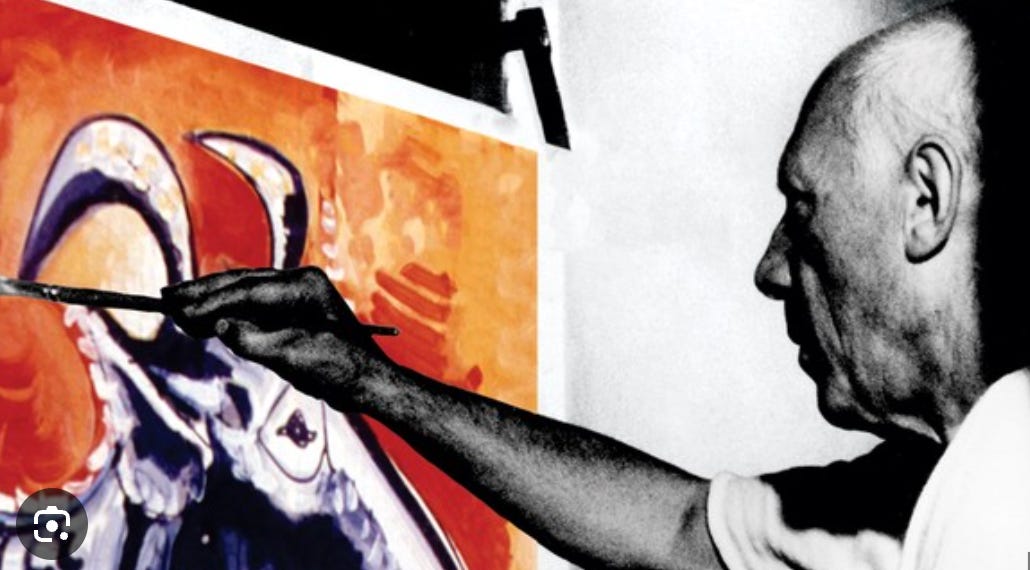
Artists find their way through paint, or clay, or music. But most of us find our way through words. Always have. And for the people who are suffering most, the last thing they need is to be handed a standard to meet before their feelings are permitted to exist.
The world has grown more complicated and more isolating in ways that are genuinely, historically new.
Social media offers the appearance of connection while delivering, for many, only a heightened awareness of inadequacy. We are surrounded by the curated highlights of other people’s lives — the polished, the achieved, the effortlessly well — and left alone with the unedited footage of our own. The old structures that once provided community — religious institutions, neighborhood bonds, extended families in proximity — have steadily eroded. We move more. We know our neighbors less. We are, by virtually every measure, lonelier than at any point in recent memory.
Nearly half of Americans report feeling consistently alone or left out. Young people are struggling in numbers that alarm every researcher who studies them, carrying the weight of a world that moves too fast, demands too much, and pauses for nothing.
And the tragic irony is that in this loneliest of ages, we have also developed the most elaborate cultural apparatus for performing the opposite. We perform happiness on social media. We perform competence at work. We perform normalcy for our families. The performance is so constant, and so exhausting, that the private self — the one that is frightened, or grieving, or simply overwhelmed — gets less and less airtime. Less and less room to breathe. Less and less language.
Into this landscape has arrived Artificial Intelligence — available around the clock, endlessly patient in appearance, capable of holding a conversation with anyone who reaches for it in the dark. For someone struggling at 2 a.m., the temptation to type into a chat window rather than lie awake alone is entirely understandable.
But it’s become painfully clear that AI is not designed to help you process your own thoughts. It is designed to respond to them. Immediately. Helpfully. Often with information or suggestions that are partially true, sometimes irrelevant, and occasionally — for someone in genuine crisis — misleading. And dangerous.
The irony is that what people in distress most need is not a faster answer. It is space to find their own. A good therapist knows this instinctively. They ask a question and then go quiet. They let the silence work. They understand that the thinking a person does between the question and the answer is often where the real work happens. Generic AI, by design, fills that silence. It cannot help itself. Responding is what it does. And in filling that silence — however helpfully, however fluently — it robs the struggling person of the very space in which expression, messy and imperfect and lifesaving, might otherwise have occurred.
Optimized is not the goal. Out is the goal.
Which brings me to why I recently joined the board of directors of OnThisDay.ai — and why I believe what they are building matters in ways that extend far beyond any business model.

Here is a fact that should give us all pause: therapy, for those fortunate enough to have access to it at all, is one hour a week. That leaves 167 hours — unsupervised, unmonitored, unaccompanied — in which clinical risk quietly builds, in which the distance between a person and their breaking point either widens or dangerously narrows, and in which the buried thing grows heavier with each passing day.
OnThisDay.ai was built for those 167 hours.
It is not a chatbot in the way we have come to understand chatbots. It is a guided reflection platform — a clinical layer built around the act of daily journaling, designed not to answer people but to accompany them. To ask the right question. To create the space that generic AI, in its eagerness to help, invariably collapses. It does not demand eloquence. It does not require that you know what you’re feeling before you begin. It asks only that you try — that you find whatever words are available, in whatever condition they arrive. The misplayed note is welcome here.
What emerges from that quiet, guided reflection is then translated into something a therapist can actually use: patterns, signals, a richer clinical picture assembled from a patient’s own words, in their own voice, in their own time. And crucially — when those words signal danger, when the tone shifts in ways that trained eyes recognize as warning — the system does not generate a list of resources and close the chat. It escalates. To a human. Every time.
Because there are moments when the only right response to human despair is another human being.
Consider what happens in the aftermath of every suicide. Among the wreckage left behind — the shattered families, the bewildered friends, the colleagues who replay every conversation looking for the signal they missed — something quietly, almost universally occurs. People begin to write. Journals filled with grief and confusion and the unanswerable question of why. Letters addressed to someone who can no longer read them. Pages of rage and tenderness and desperate, searching love. The survivors turn to words because words are the only vessel large enough to hold what they are carrying, and because the alternative — burying it — is something they have already seen the cost of.
They are doing, in their grief, exactly what might have saved the person they are grieving.
That is not an indictment. It is simply the saddest possible argument for starting sooner. For creating the conditions — the habit, the practice, the safe and quiet space — in which the people who are struggling can begin to find their words before the weight becomes unbearable. Before their loved ones need to find theirs.
Somewhere right now, someone is performing fine. They are answering emails, and attending games, and carrying torches in front of crowds. And somewhere underneath that performance, something is buried — getting heavier, finding no language, waiting for an exit.
We want to give it one.
The next person who “dies unexpectedly” is right now in a moment that might still be reached. They are not yet a euphemism. They are someone’s best man. Someone’s grandfather. Someone’s doctor. Someone’s champion.
All we want to do is help them find their words — before the words run out.
— — —
If you or someone you know is struggling, help is available now. Call or text 988 — the Suicide and Crisis Lifeline — any time, day or night. You don’t have to have the right words. Just reach.
For entrepreneurs and business leaders determined to get a great night’s sleep while pretending to read great business literature, my latest book will surely satisfy.
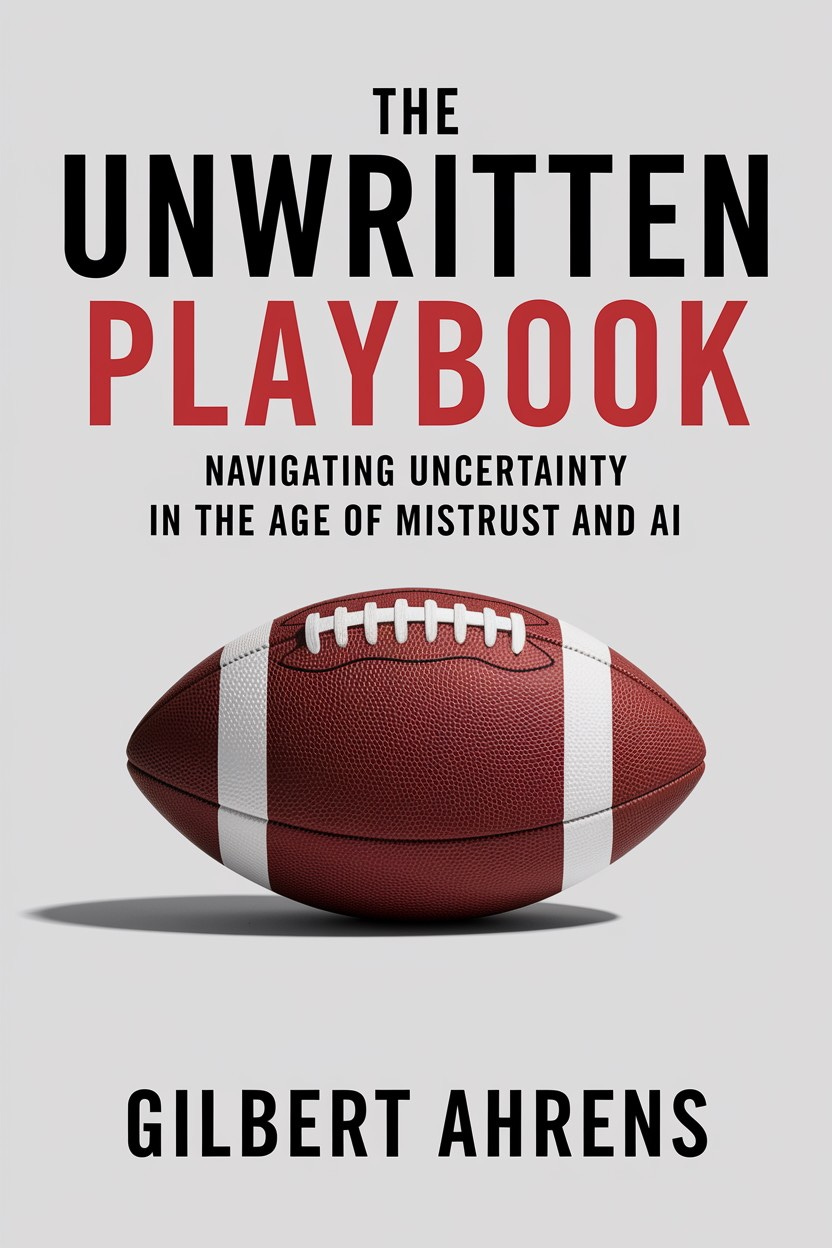
For a unique perspective on the tumultuous period of Great War of 1914-18 through World War II, please check my recent book, A Delicate Dance: A Noble Family’s Journey Through Legacy, War, and a Broken World.

Comments
Nothing yet. Say the first thing.
Sign in to join the conversation.