
Special thanks to GigaClimate Advisor and our A&R Series author, Chris Mangieri
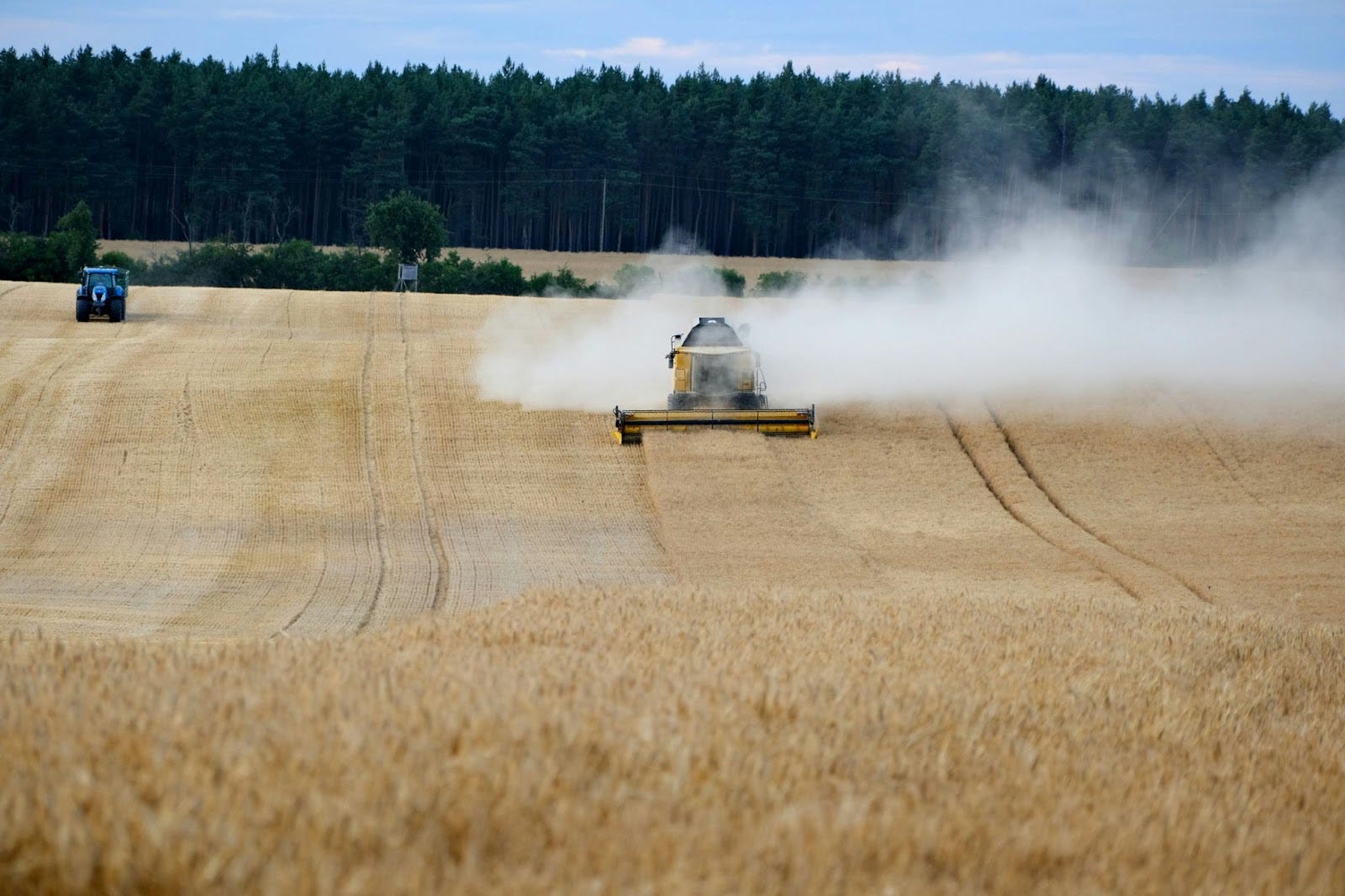
Climate change is upending agriculture at the root: traditional growing seasons are slipping out of sync, pests and pathogens are migrating, and droughts and floods are erasing years of yield gains overnight. By mid-century, the world could see up to 30% reductions in staple crop productivity in some regions. Crop and livestock adaptation isn’t a niche play — it’s a central pillar of food system resilience. With weather-driven food price increases putting pressure on our wallets, we need an agricultural portfolio that can survive extremes, thrive in marginal conditions, and deliver nutritional value.
The Scope of the Problem: Climate volatility is rapidly outpacing the stability of our global food systems. In 2022 and 2023, extreme weather and droughts pushed global food prices to near-record highs, contributing to food insecurity in over 50 countries and an estimated $21 billion in losses for the US agricultural sector. Rising nighttime temperatures—often overlooked—are especially damaging to key crops like rice, disrupting flowering and grain fill. Meanwhile, climate-driven pest migration is expanding the range and lifecycle of destructive species, putting an additional 50 million hectares of cropland at risk annually.
The Current Adaptation and Resilience Gap: Despite rising climate threats, most agricultural R&D still focuses on boosting yields under ideal conditions rather than resilience under stress. Less than 4% of global climate finance targets food and land systems, and climate traits remain underrepresented in mainstream breeding pipelines. The opportunity lies in rebalancing R&D toward stress tolerance, especially in developed markets where capital and infrastructure can accelerate scaled deployment.
Demand Signals: Adoption of climate-resilient seed and livestock systems is gaining traction, but still significantly lags the level of concern. Fewer than 40% of major US farms have adopted drought-resilient seed, forage, or herd management practices despite clear yield and profitability advantages. Farmers acknowledge the threat, but hesitate without clear technical and market pathways. Insurance can backstop losses, but it’s an additional burden to bear. Key market trends we’re seeing include:
Adoption Gap: Only 35% of large-scale farmers in the US report having adopted any climate-resilient cropping practices, despite widespread awareness of climate risks. However, the USDA hasn’t updated this data since 2016.
Risk-Driven Transition: One-quarter of global crops are grown in regions with highly stressed and/or unreliable water. As water rights tighten and irrigation costs rise, some farms are switching to lower-input grains to protect margins.
Limited Data and Insights: Farmers cite a lack of trusted, region-specific data on crop and livestock performance under stress, slowing adoption of new varieties and systems.
Tech Trust Gap: Concerns around regulation, export access, and consumer acceptance are limiting farmer confidence in gene-edited traits.
System Opportunity: Retailers and processors are exploring how to integrate climate-resilient crops into supply chains, but market access and infrastructure remain fragmented.
These signals reflect a sector at a crossroads, where rising awareness and risk are beginning to shift behavior, but unlocking mass adoption will depend on strong economic signals, aligned incentives, local proof points, and robust support systems.
Industry Maturity: The crop adaptation and resilience sector is no longer a research experiment, but it hasn’t yet reached commercial fluency. The science is moving fast, with breakthroughs in gene editing, stress tolerance, and trait stacking hitting field trials at an accelerating pace. But commercialization remains fragmented. There's no true climate-resilient “stack” yet that brings seeds, genetics, insights, and insurance together in a coherent package.
It’s a bit like the early electric car era: the core technology is powerful, the promise is real, but without enough charging stations and trusted brands, most people are still just kicking the tires.
The immediate opportunity is to build integrated, farmer-facing platforms that deliver bundled crop and livestock solutions—combining climate-smart genetics, agronomic guidance, and financial tools—with clear ROI and risk reduction.
Despite strong momentum, real-world adoption of crop and livestock adaptation tools continues to face structural and behavioral headwinds. These challenges must be addressed to unlock the next phase of growth and resilience.
Limited Incentives: With crop insurance backstopping losses and the government paying farms for not growing in bad years, there's little incentive to pay for resilience, unless the economics of risk-sharing change.
Yield Tradeoff: Despite years of R&D, drought resistance remains one of the least adopted traits in US agriculture. Most farmers still chase yield maximization, and drought traits often carry a performance tradeoff in normal years.
Regulatory Uncertainty: In the US, gene-edited crops are often (but not always) exempt from USDA oversight if they don’t contain foreign DNA. Canada has adopted a similar approach, while the EU is considering reforms to ease restrictions. Globally, a lack of harmonized rules continues to complicate commercialization, given that staple crops are traded globally and need global deregulation to fully scale in any country.
Inconsistent Funding: The USDA’s suspension of over $3 billion in climate-smart projects has shaken confidence, highlighting how adaptation and resilience R&D remain underfunded and vulnerable to policy shifts.
IP Concentration: Bayer and Corteva account for 90% of US corn germplasm ownership, making it challenging for new entrants to compete on yield without partnering. Some IP is beginning to open up, with patents on key traits like Herculex I (a robust insect resistance strain) set to expire in 2025. But trade secrets, licensing restrictions, and regulatory exclusivities still pose meaningful barriers.
Limited Local Validation: Centralized breeding often overlooks regional climate variation, leaving farmers without local trial data to guide adoption decisions.
Fragmented Value Chains: Without buyer signals or insurance support, farmers bear the upfront cost with an unclear opportunity to recover it downstream.
Cultural Resistance and Trust Barriers: Skepticism, complexity, and lack of local guidance continue to slow the adoption of climate-smart practices among farmers.
Lack of Bundled Solutions: Disconnected offerings force farmers to cobble together adaptation tools, raising friction and lowering perceived value.
A wave of innovation is reshaping how agriculture responds to climate stress. While adaptation and resilience remain fragmented, promising technologies and approaches are gaining ground across both crop and livestock systems.
Next-Gen Trait Stacks: Combining drought, heat, yield, and disease resistance into a single variety using CRISPR, RNA, and AI-accelerated breeding platforms. Inari is developing multiplex gene editing platforms for row crops, and Corteva Agriscience is integrating climate-resilient traits into its seed portfolio.
Heat-Tolerant Livestock Genetics: Driven by genomic selection and gene editing. Acceligen is pioneering gene editing for heat-tolerant cattle, while Topigs Norsvin uses advanced genomics to breed pigs with greater resilience to stresses.
Climate-Resilient Forage Systems: Deep-rooted perennials and water-efficient feed grains like teff and forage millet. Innovators like Nuseed are developing drought-resilient crop varieties, and Alforex Seeds focuses on next-gen alfalfa performance under stress.
Decision Support Platforms: Integrating remote sensing, microclimate modeling, and real-time advisory to help farmers time interventions and select appropriate seed or animal systems. CIBO Technologies and InnerPlant are developing sensor-enabled crops and AI-driven insights that detect stress signals—drought, pathogens, or nutrient deficiency—providing farmers with early, in-field intelligence to guide their decisions.
Rotational Diversification: Using sorghum, camelina, and dryland legumes to reduce risk exposure and improve soil moisture retention. Vayda is helping farmers diversify with regenerative rotations, while Sustainable Oils leads in camelina seed commercialization.
Next-Gen Commodity Crops: Introducing a new large-scale crop to rival corn or soy could unlock resilience and new markets, but it’s a heavy lift. It requires full value chain alignment and early demand strong enough to justify switching costs, equipment changes, and farmer risk.
Mobile Breeding Hubs and Rapid Phenotyping: Tools that reduce multi-year cycles to months, unlocking faster regional adaptation. PhenoMobile and ListenField are working on scalable, field-based phenotyping and accelerated breeding approaches.
Pharma-Driven Crop Innovation: Pharmaceutical companies could emerge as powerful players, leveraging genetics expertise, capital, regulatory know-how, and global reach to accelerate climate-resilient crop adoption.
While adaptation remains fragmented, promising technologies and approaches are gaining ground across both crop and livestock systems.
GigaClimate’s POV: The next few years will be a breakout chapter for crop and livestock adaptation and resilience. Breakthroughs in trait stacking, breeding platforms, and integrated agronomic support are converging with market demand, but commercialization will require bold execution. We’re watching for:
Climate Resiliency + Yield: The holy grail is to develop solutions that boost yield performance broadly while making the system climate resilient. Solutions exist in small use cases; we need broadly beneficial systems.
Stacked Solutions: Bundled climate-resilient seeds, heat-tolerant genetics, agronomic support, and financial tools into farmer-ready platforms.
AI-Powered Platforms: Accelerating breeding cycles, enabling localized trials, and delivering predictive insights for crop and animal performance.
Retail-Led Distribution: Agricultural retailers and co-ops evolving into service hubs for adaptation and resilience, offering bundled solutions at the last mile.
The innovators who rise will be those who move beyond the input to reimagine the whole system.
Crop and livestock adaptation and resilience are no longer experimental; they are urgent imperatives for agriculture. The threats are visible, the tools are maturing, and the capital is forming, but execution still lags.
At GigaClimate, we work directly with founders to turn resilience technologies into market-ready businesses, accelerating from concept to commercial traction with an eye toward scale and exit.
If you’re building in crop and livestock adaptation, ask yourself:
Will my solution protect productivity under stress without penalizing normal-year yields?
Can farmers adopt it without overhauling their existing equipment or workflows?
Does it deliver a payback that’s fast and visible within a couple of harvests or herd cycles?
Does it reduce risk by bundling genetics, management, and financing together?
Can it prove performance in the local conditions where adoption matters most?
Is it built to withstand shifting regulations, export markets, and consumer acceptance debates?
Being able to answer “yes” to these means you’re building toward adaptation and resilience solutions that farmers will actually buy, and that supply chains will reward.
We’d love to hear from innovators tackling these problems. This piece is part of our Adaptation and Resilience series. Follow along as we highlight where climate’s toughest challenges meet its most investable opportunities.
Comments
Nothing yet. Say the first thing.
Sign in to join the conversation.