
When our culture assigns “worth” to a person, idea, or endeavor, it risks overlooking its inherent value and its significance over the long term. The folks behind determining the value also create a whole class of “worthlessness” by establishing a higher value—based solely on their economic, religious or social benchmarks. Measuring worth often reflects the desire for certainty (of the one deciding) rather than a genuine effort to understand something on its own terms.
Defining worth also creates a hierarchy of values that can distort what is truly important to a multivalent society. Once something is labeled as more or less worthy, we are less likely to question that judgment or consider the consequences of failing to recognize its deeper value. Too often the “judgers” just do not want to bother thinking about a deeper value—they only want confirmation of their own self-worth.
This way of calculating worth often excludes forms of value that cannot be easily measured or publicly defended. As a result, the perspectives and experiences of those without influence, status, or a public voice are usually left out of the conversation, even though they may possess forms of value that are more meaningful to the greater society.
The dominant economic imagination of the United States has long understood the world primarily through the language of transaction. Within this framework, people, places, institutions, and even ideas are assigned a calculable worth, their value determined by exchange rather than by their intrinsic significance. The question ceases to be What is this? and becomes What is it worth to us?
Such a worldview is inherently short-sighted. Transactions are concerned with immediate utility, while enduring value often reveals itself only across generations. A society that measures everything by exchange gradually loses the capacity to recognize those forms of worth that cannot be priced: dignity, beauty, wisdom, stewardship, belonging, and the common good.
If we are willing to undertake a more honest and expansive examination of long-term value, we may begin to move beyond a transactional culture toward a transformative one. Transformation asks not what can be extracted, but what can be cultivated; not what something costs, but what it makes possible. It invites us to understand our relationships—with one another, with our institutions, and with the natural world—as reciprocal responsibilities rather than negotiated exchanges.
Such a shift requires confronting, rather than avoiding, the dominant capitalist narrative that equates value with market price and success with accumulation. Only by questioning these assumptions can we imagine an economy that serves human flourishing instead of requiring human flourishing to justify itself.
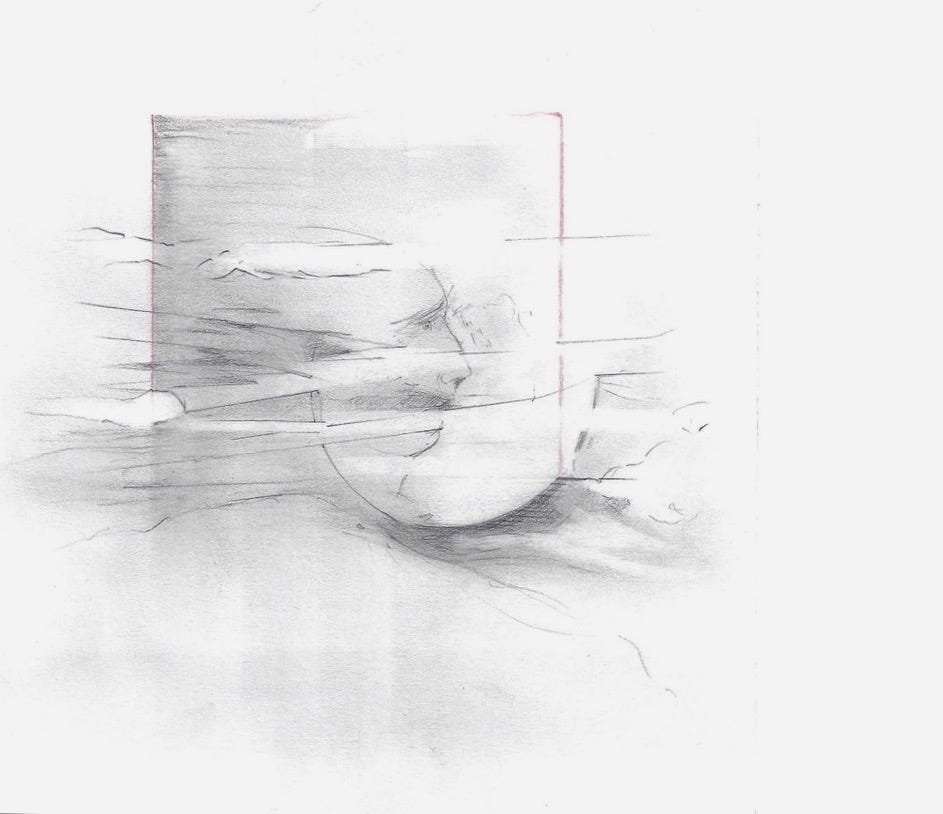
Literature, music and art operate primarily from the transformative perspective. While an artist creates a work of art that is shaped by their own vision and inner beliefs, they cannot control the social, emotional and intellectual value to the viewer. Art is not foremost created to be a transaction; it is created to transform. Art is a defensible necessity in an ever-fractured and transactional society. Even though the behavior of auctioneers and gallery owners are governed by the transactional nature of their business, art lives beyond this transaction and continues to be transformative.
The transactional society will always seek to define something’s worth by how useful it is. Employing market logic to everything can destroy everything that is transformative. We see this in the elimination of art, music, theater, languages and humanities from the curricula of all levels of education. This elimination is geared to ensuring that the only worth assigned to anything transformational is measured in economic terms with a very short time frame. Through this economic logic we are numbing our citizens to be loyal and unquestioning customers willing to sustain the short-term loop of earn-spend-consume-borrow-spend-earn-consume.
I have witnessed first-hand the “social transaction” of museum goers—people who “speed-walk” a gallery to get their social-media selfie in front of the works of art that are assigned “worthiness” by the marketplace. These selfies, created in less than 60 seconds, are then converted to currency to be used as a transaction on social media. Once, at the Uffizi Gallery (I was studying art for a year in Florence), I was asked to move away from a Botticelli painting so that a person could snap their picture. I refused—and purposely did not move until I had studied what I came to see. Once I moved, the “line” of selfie takers was 12 deep.

The dark side of a transactional world is underinvestment in public infrastructure and the use of market logic to determine the value of education and the teaching of the arts. The even greater dark side is entropy. We will wake up one day and realize that we have lost our ability to question, create art that reveals, and live peaceably amongst and learn from those who have been “discarded” by the worth definers. The arrogance of the market place will justify actions that in hindsight we will view as illegal, immoral and the reason our society has died off.
It will be the artist that will hold up the mirror to all of it. It will be the artist that creates real worth—and values the “valueless” by exposing inner truths. It will be the artist that will reveal the short-sidedness of the marketplace determining the worth of anything.
No posts
Comments
Nothing yet. Say the first thing.
Sign in to join the conversation.