
You’ve reached Ghetto Gastro. Jon, Les, and P can’t come to the phone right now but subscribe and they’ll get back to you as soon as possible.
Boutta a year or two ago, the Ghetto Gastro team flew to Italy to witness olive oil production firsthand. We watched olives being harvested, pressed, and bottled to creature Pressure, our limited-edition extra virgin olive oil in collaboration with Gustiamo. It was a pro bono project with 100 percent of profits donated to Food for Soul, a vital organization founded by chef Massimo Bottura. Each bottle sold provided fifteen neighbors in our community with a weekly selection of fresh produce and a multi-course meal at Refettorio Harlem. Watch the video at the top of this newsletter for the full story. (Important interruption that SNAP benefits aren’t being dispersed. We put together a guide on how to help.)
Fine dining usually implies one of two cuisines: French and Italian. Especially Italian. Which is funny, because so many of the dishes we love, pasta, risotto, olive oil, were born out of scarcity. Pasta is a poor man’s food. Simple ingredients, humble origins, the definition of doing more with less. And yet, ask most diners their favorite cuisine, and the answer is almost always Italian. Understandably. No country has elevated the act of eating into an art form quite like Italy.
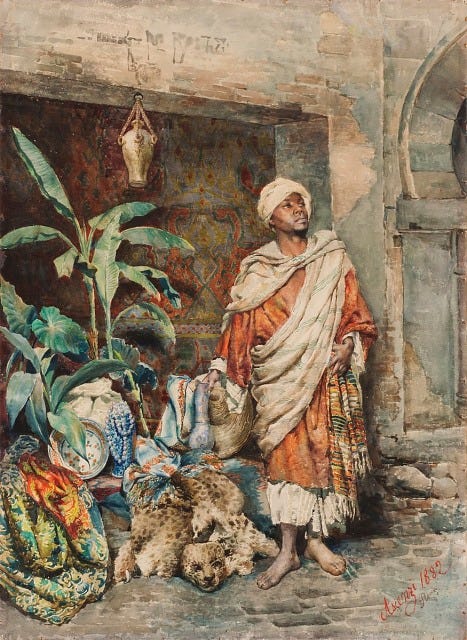
The Moors reshaped the entire Mediterranean table. From 827 to 1091, North African Muslims ruled Sicily, and in two centuries, they turned it into one of the most advanced societies in Europe. Their arrival brought innovation in mathematics, astronomy, irrigation, architecture. This was a time of abundance.
Before their rule, much of southern Italy was arid and underdeveloped. The Moors built aqueducts and engineered systems of irrigation that transformed the land into a productive paradise. They cultivated citrus groves, planted almond and pistachio trees, and introduced sugarcane, rice, saffron, spinach, and eggplant, ingredients that would later become cornerstones of Italian economy and culture. Even the cannoli has Moorish fingerprints all over it.
Their influence wasn’t limited to food. You can trace it through language, architecture, and culture. You’ll notice the Moor’s influence through the shops by way of Sicilian clay: the Moor’s Head.
Legend says a Moor fell in love with a Sicilian woman, and when he betrayed her, she cut off his head and planted basil in it. That myth turned into art: ceramic heads glazed in cobalt, emerald, and gold. Now you see these statues standing proudly on Sicilian terraces.
Add the domes of Palermo’s churches, the distinct cadences of Sicilian dialects, the communal ethos of the marketplace. When the Normans eventually took power, they didn’t erase what the Moors built, they just built on top of it.
So when we talk about “authentic” Italian food, it’s worth remembering that authenticity itself is layered. It’s trade, conquest, migration, adaptation. It’s the story of people carrying seeds, spices, and ideas across borders. The Moors may have left Sicily nearly a thousand years ago but their legacy is a reminder that food is never static.
Tell a friend to tell a friend.
SNAP BENEFITS
·
October 29, 2025

“SNAP is good for local economies – each dollar in federally funded SNAP benefits generates $1.79 in economic activity. Census Bureau data also show the crucial importance of federal nutrition programs and other supports for low-income families. When looking at the Census Bureau’s Supplemental Poverty Measure, which serves as an indicator of economic we…
LES LASAGNA
·
October 10, 2025
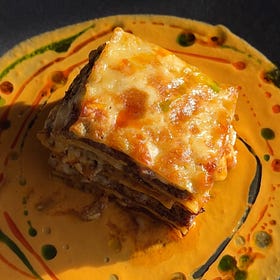
For us, lasagna can sometimes lean too heavy on the meat flavor profile. You’ll build this one in the traditional way but it’s the finishing touches that set it apart. So instead of stopping at melted cheese, this lasagna gets plated over a roasted pepper cream sauce, finished with basil oil and a hint of chili. It brightens up the whole dish. The plating looks elevated too.
Eating through Chinatown's history
·
September 4, 2025
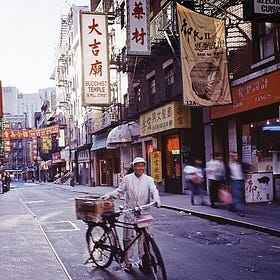
Chinatown was born out of exclusion. In the late 1800s, Chinese immigrants came to New York after building railroads and mining in California, and then faced the 1882 Chinese Exclusion Act. It was the first U.S. law to ban immigration by race. Forced to turn inward, they built a world of their own, one that took root on the narrow streets of lower Manha…
Comments
Nothing yet. Say the first thing.
Sign in to join the conversation.