
Dear reader,
A Visionary Who Carried Indigenous Modernism Onto the World Stage
From Froehlich Gallery — a home for museum‑grade storytelling, cultural clarity, and the art that shapes our collective memory. Each edition brings you deeper into the lives, legacies, and creative revolutions of the artists who changed the world. Today, we turn to a visionary whose work continues to ignite collectors, scholars, and nations.
George Froehlich
Editor - Froehlich Gallery, Northwest Coast Art
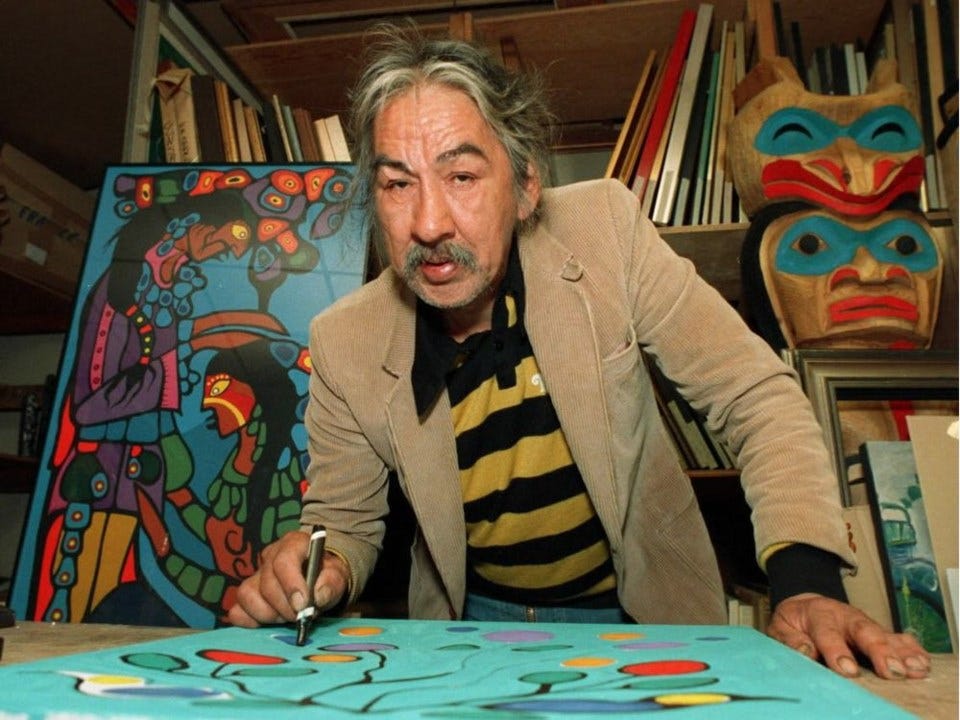
Before Canada understood the magnitude of Indigenous artistic power, Norval Morrisseau was already commanding attention in Paris, London, New York, and beyond. His work didn’t just cross borders — it rewired global perceptions of Indigenous visual language. Critics abroad compared him to Picasso. Chagall admired him. The French press embraced him. And Canada, eventually, caught up.
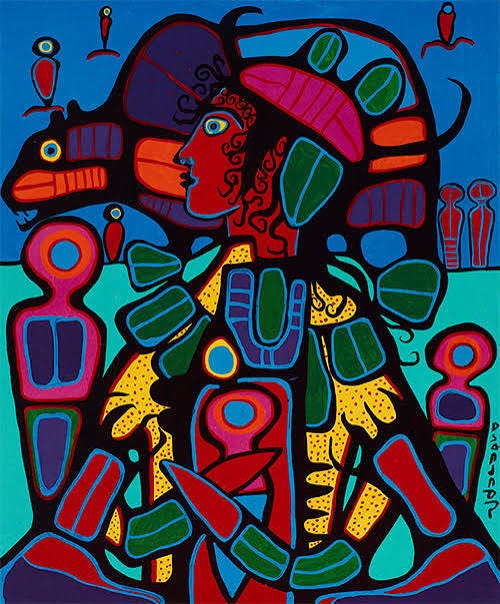
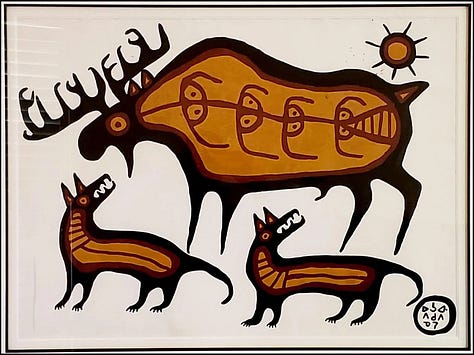
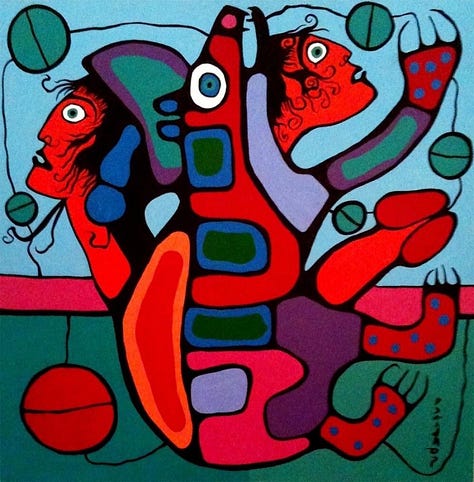
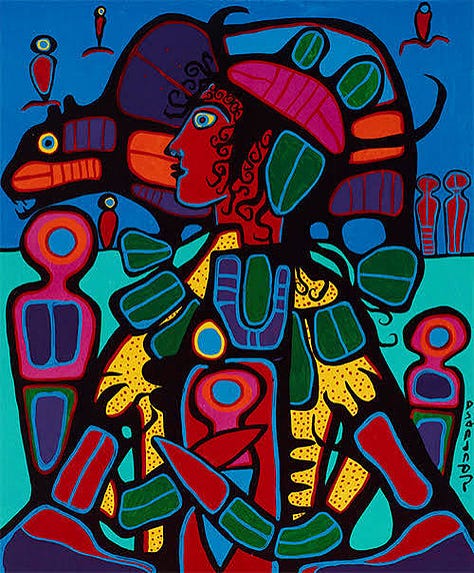
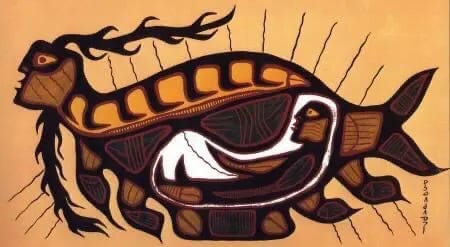
Morrisseau didn’t simply create art. He created a visual cosmology — a world where animals, spirits, ancestors, and the land itself spoke in lines of fire. To many, he remains the grandfather of contemporary Indigenous Canadian art, a title earned not through sentiment but through seismic impact.
It’s 1962 in Toronto.
A quiet, self‑taught Anishinaabe painter walks into the Canadian art world — and detonates it.
His first solo exhibition wasn’t just a success; it was a rupture. Critics scrambled for language. Collectors hovered. Artists stared. Nothing in Canadian painting looked like this.
The press reached for the only comparison they could find:
“The Picasso of the North.”
It wasn’t hyperbole. It was recognition of a force they couldn’t categorize.
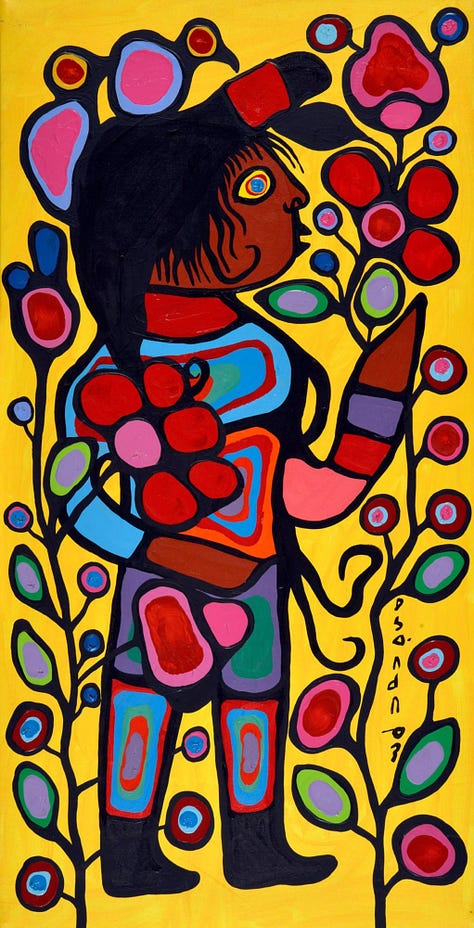
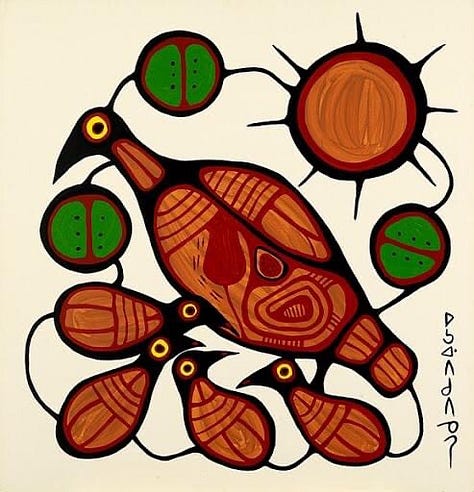
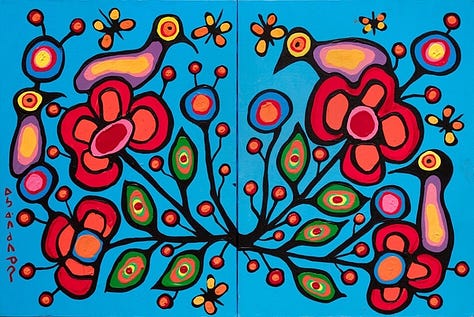
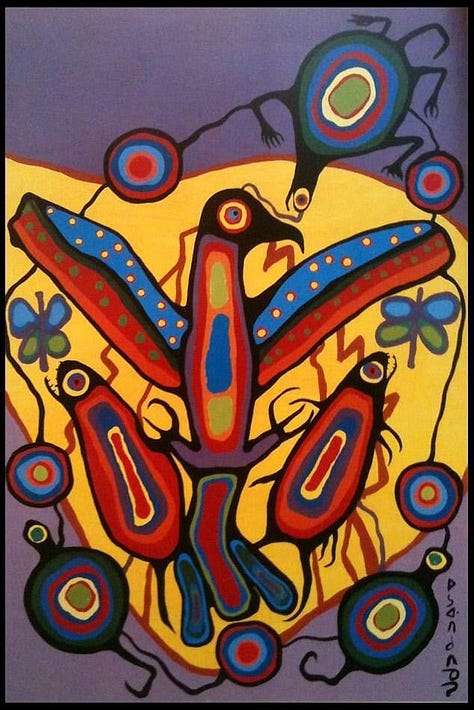
Morrisseau didn’t slip into the art world. He barged in and changed the rules.
First Indigenous artist with a solo show in a Canadian commercial gallery
First Indigenous artist granted a full retrospective at the National Gallery of Canada
First to fuse traditional Anishinaabe imagery with modernist form — and succeed on both fronts
His influence reached Paris, where Marc Chagall and Pablo Picasso themselves acknowledged the originality of his work. The French press embraced the comparison instantly, cementing the legend.
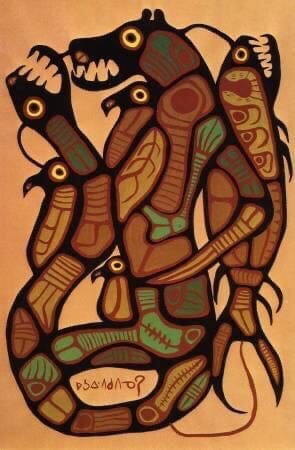
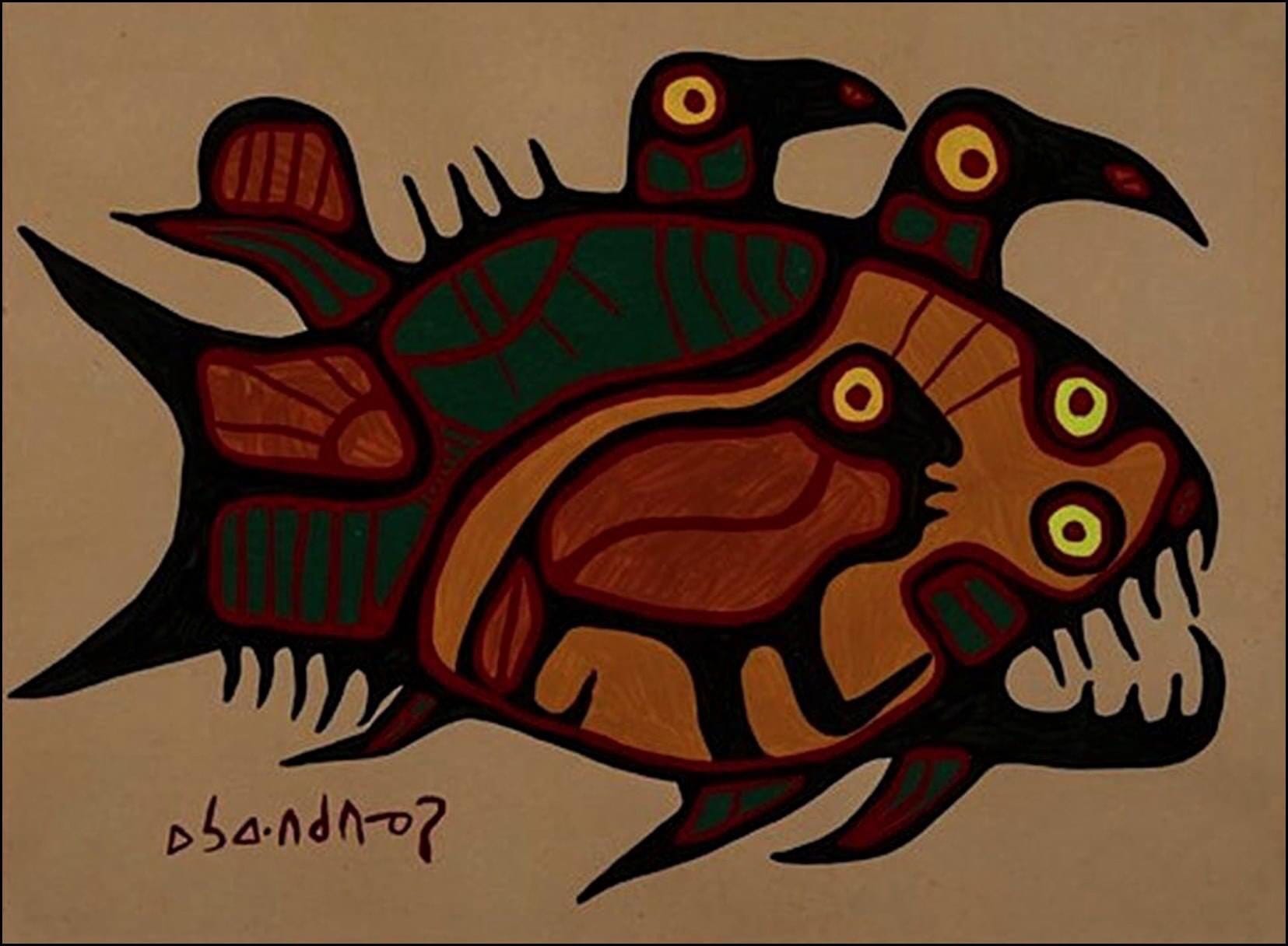
His early palette whispered — browns, earth tones, quiet beginnings.
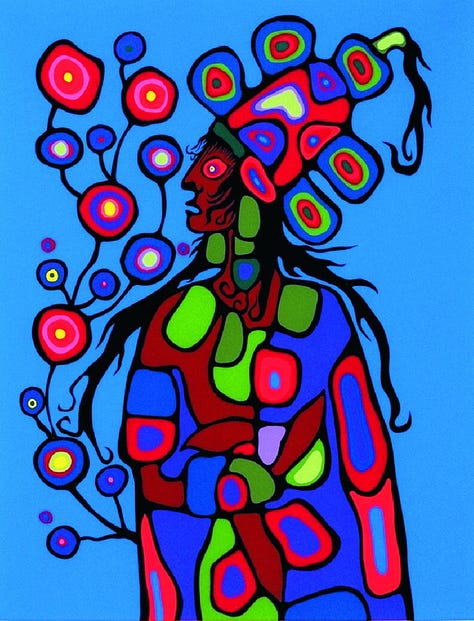
His later palette roared — electric blues, volcanic reds, radiant yellows.
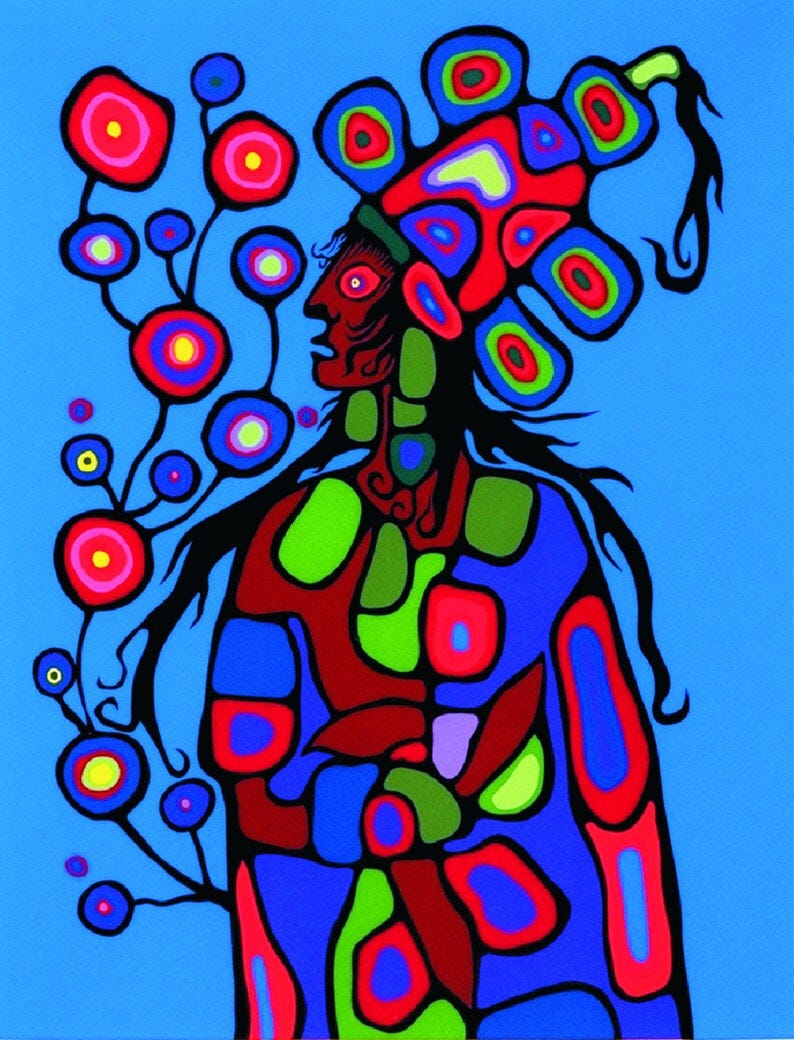
This wasn’t just colour. It was cosmology made visible.
Recognition followed:
Order of Canada
Royal Canadian Academy of Arts
International exhibitions and critical acclaim
The New York Times captured his essence with rare clarity:
“His style… evoked ancient etchings from birch-bark scrolls and often used X-ray-like motifs: skeletal elements and internal organs visible within the forms of animals and people, and black spirit lines emanating from them.”
A perfect description of a man who painted the seen and the unseen at once.
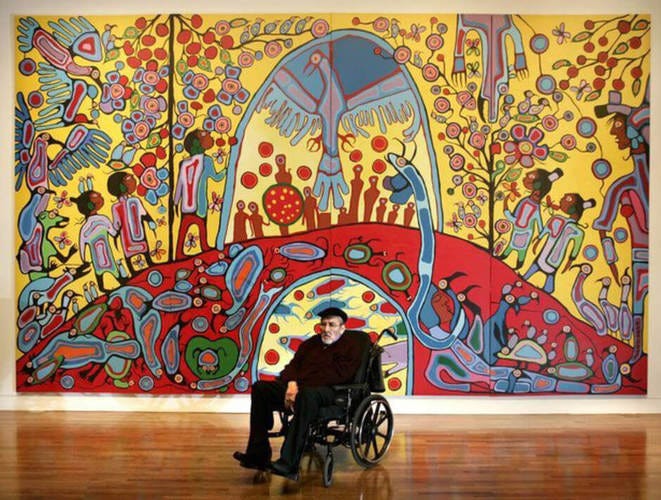
I met Morrisseau several times at his Toronto shows. He carried himself with a quiet dignity — reserved, almost reluctant — as if public events were a necessary inconvenience, not a joy. But the moment you looked at his work, the silence broke. His paintings spoke with thunder.
My wife and I spent countless Saturdays wandering Toronto’s galleries. One weekend, after choosing a Calder lithograph, we paused. Something tugged at us. Before buying it, we decided to visit Brian Marion, Morrisseau’s assistant, who had advertised Morrisseau paintings in the Toronto Star.
Marion’s apartment was filled with them.
We chose two.
I spent the weekend verifying his legitimacy — a wise move, as the market was already filling with forgeries. Ours were authenticated. They remain among the most meaningful works we’ve ever acquired.
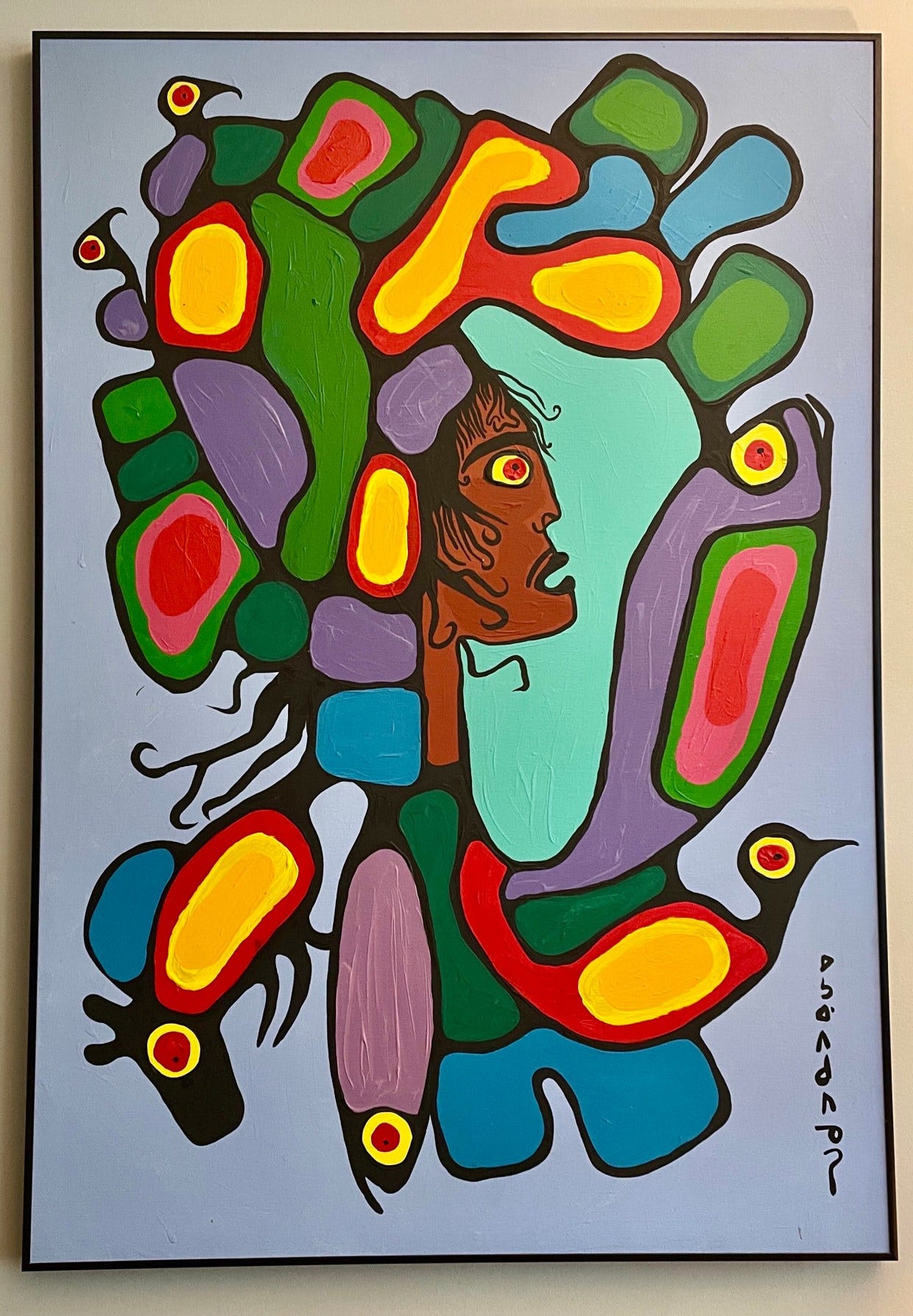
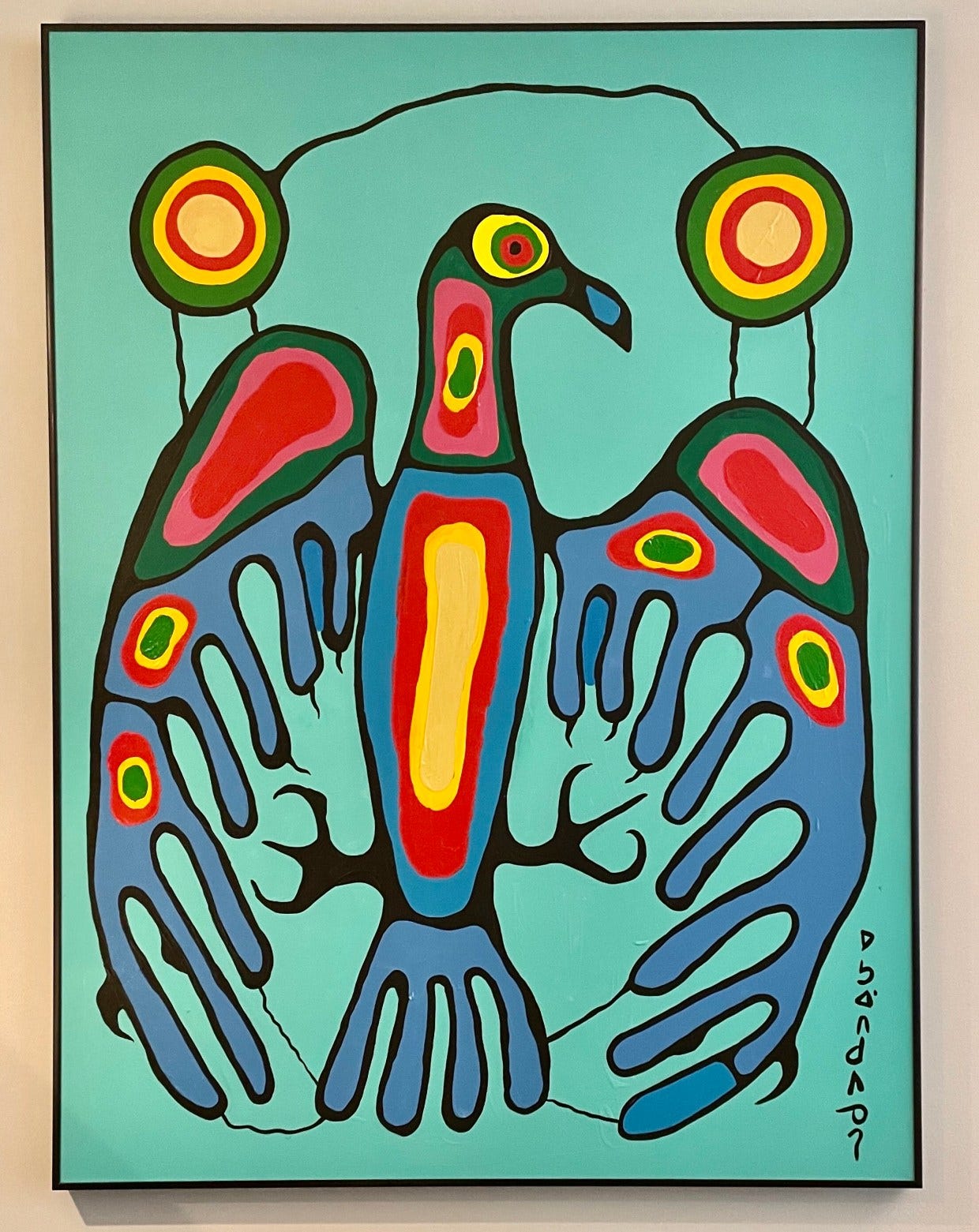
These paintings are more than acquisitions. They are encounters — with a man, a movement, and a moment when Canadian art changed forever.
Stories like this one don’t write themselves — and they don’t survive without readers who believe they matter. Froehlich Gallery exists to bring the artists who changed the world to the people who want to understand why. If this edition moved you, a paid subscription is how you keep this work alive.
Sharing this edition is like a gift. You are putting Norval Morrisseau’s name and legacy in front of someone who may be encountering it for the first time. In a world that moves fast and forgets faster, that matters more than you know. Please share it today.
Have you ever stood in front of a Morrisseau? Seen his work stop you cold in a gallery, a book, a home? Tell me below. And if this is your first encounter with him — tell me what this edition made you feel. The conversation here is part of the story.
Comments
Nothing yet. Say the first thing.
Sign in to join the conversation.