
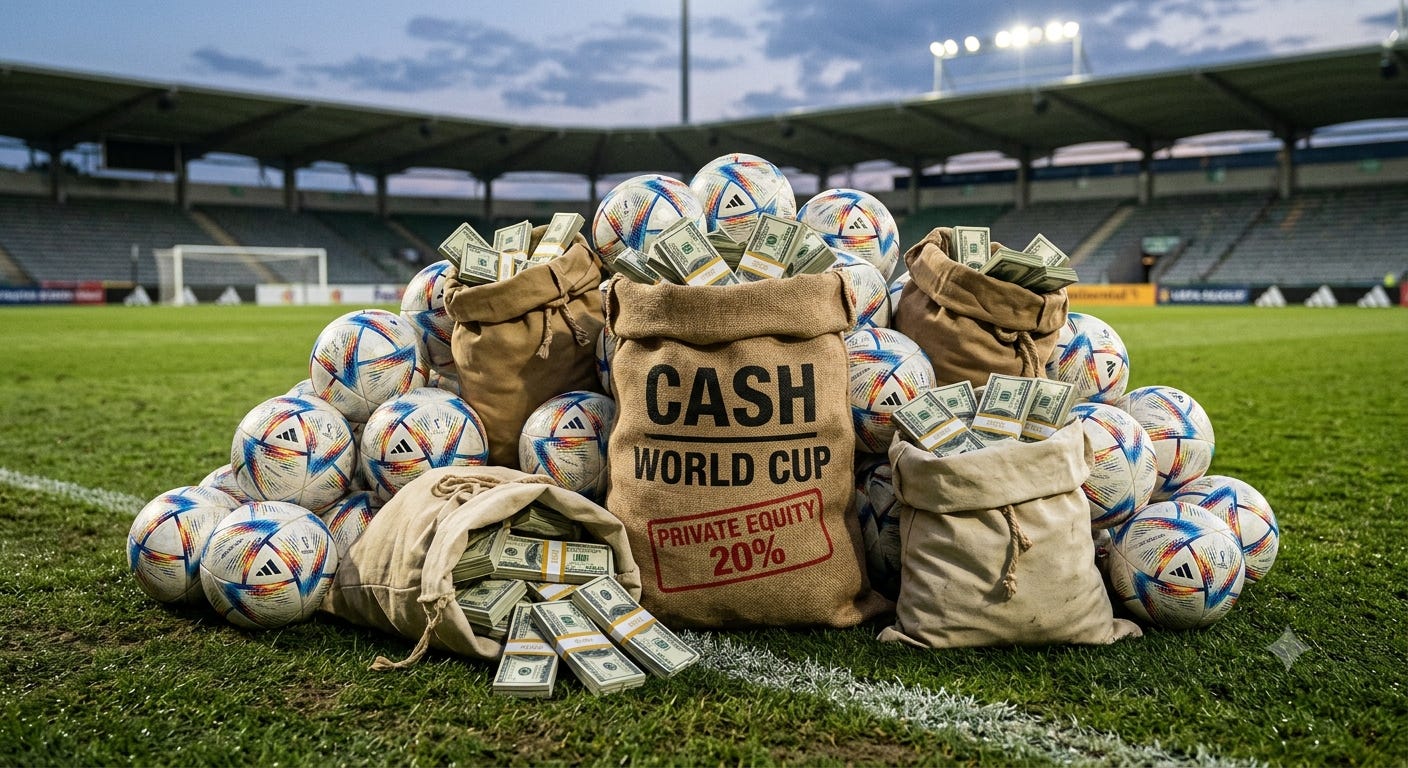
In one of the most swift and humiliating U-turns of his presidency, FIFA President Gianni Infantino officially abandoned a controversial scheme to sell off a stake in world football’s crown jewel—the FIFA World Cup—to private investors.
The sudden retreat came after a fierce, global rebellion from football governing bodies, intense internal dissent within FIFA’s own ranks, and explicit threats of a widespread tournament boycott led by European soccer’s governing body, UEFA.
“Having listened carefully to all the views, it has become clear that the project has created divisions of a nature that, regardless of the level of support, are no longer in the interest of the objective set out in the first place,” Infantino said in an official statement. “Our purpose has always been—and will always be—to unite and improve. As a result, this proposal will not proceed.”
The blueprint, unveiled just days prior, proposed spinning off FIFA’s commercial operations—including the men’s and women’s World Cups and Club World Cups—into a newly created subsidiary valued at $20 billion, tentatively dubbed FIFA Forward Enterprise.
FIFA aimed to raise up to $4.2 billion by selling roughly a 20% equity stake to a group of private equity investors. The primary investor group was led by Thrive Capital (founded by Joshua Kushner) alongside other private venture capital entities.
To win over FIFA’s 211 national member associations ahead of a scheduled vote, the governing body offered tempting financial sweetners:
$20 million upfront cash payouts to each member association.
Doubling annual stipends from $2.5 million to $5 million.
While these guaranteed windfalls held appeal for smaller, cash-strapped federations, the prospect of commercializing governance rights triggered an immediate, unified revolt across the sport’s powerhouse confederations.
The resistance moved with unprecedented speed. UEFA, representing Europe’s 55 member associations, issued a blunt rebuke and pledged that its member nations would boycott all future FIFA competitions if the plan moved forward.
“Some things are simply too important to sell,” UEFA stated. “The FIFA World Cup belongs to football. It always will. And so long as Europe has a voice, it will never be for sale.”
The opposition quickly expanded beyond Europe:
CONCACAF (North & Central America) and the Asian Football Confederation (AFC) voiced firm opposition to selling off public governance to private capital.
Carlos Cordeiro, Infantino’s senior adviser and former U.S. Soccer president, resigned in protest. “I cannot stand by while FIFA considers selling a stake in the World Cup,” Cordeiro declared.
Kevin Lamour, FIFA Chief Operating Officer, publicly slammed the proposal as “the project of one person,” accusing leadership of deceiving staff and operating without proper consultation.
While dropping the plan avoids an immediate structural crisis and potential tournament boycotts, the episode has inflicted political damage on Infantino.
UEFA and several member associations have signaled that simply shelving the proposal will not be enough to restore trust, calling for greater accountability and transparency regarding how the secret negotiations were handled. With FIFA presidential elections on the horizon, world football’s leadership faces a difficult period of rebuilding credibility among its core stakeholders.
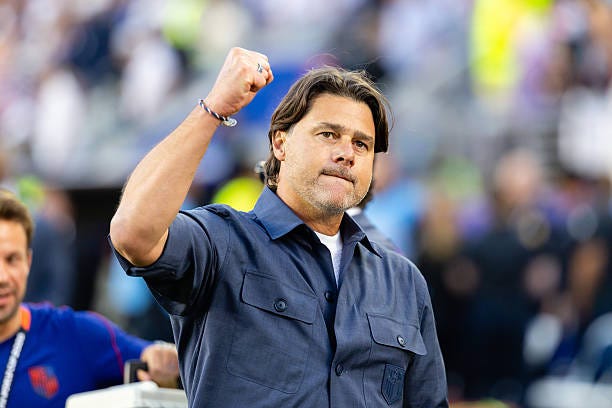
The U.S. Soccer Federation has officially announced that Mauricio Pochettino will remain head coach of the U.S. Men’s National Team after signing a new four-year contract extension through the 2030 FIFA World Cup.
The decision provides crucial continuity for a program coming off an emotional, whirlwind home World Cup campaign during the summer of 2026.
When Pochettino took the helm in October 2024, he inherited a squad with immense potential but facing immense pressure ahead of hosting the expanded 48-team tournament. Despite having under two years to instill his tactical philosophy and establish squad standards, Pochettino led the USMNT through a memorable group stage performance:
Group Stage Breakthrough: The U.S. secured early advancement with a game to spare, opening with a dominant performance against Paraguay and victories over Australia and Bosnia & Herzegovina.
Historic Milestones: The team captured three victories in a single World Cup for the first time in program history.
Knockout Stage Exit: The campaign ultimately came to an end in the Round of 16 following a 4–1 defeat to a elite Belgium side.
Rather than seeking another managerial change—a path that plagued previous post-World Cup cycles—U.S. Soccer leadership stood firmly behind the 54-year-old manager. Discussions for an extension had been underway well before the summer tournament and accelerated in recent weeks.
“What we learned is that we can compete, that we have the quality and we have the talent,” Pochettino stated following the agreement. “We were so close. That gap with the best teams in the world is not too big.”
A Full Four-Year Process: Pochettino noted that his initial 20-month stint was primarily spent evaluating personnel and setting cultural baselines. A complete four-year cycle gives his coaching staff the runway to build tactical consistency.
Support & Financial Backing: Lead philanthropic supporter Ken Griffin, along with key commercial partners, backed the extension to keep world-class managerial talent at the helm.
Youth Integration & Roster Overhaul: Pochettino will have an expanded advisory role across U.S. Soccer to help identify and develop the next generation of American talent, particularly addressing defensive depth and goalkeeper development.
With the contract finalized, Pochettino and his staff shift their focus to the next four years. Armed with deep insights from their initial campaign, the USMNT will now aim to refine its high-pressing system, transition young talents into core international players, and push beyond the Round of 16 ceiling when the world stage returns in 2030.
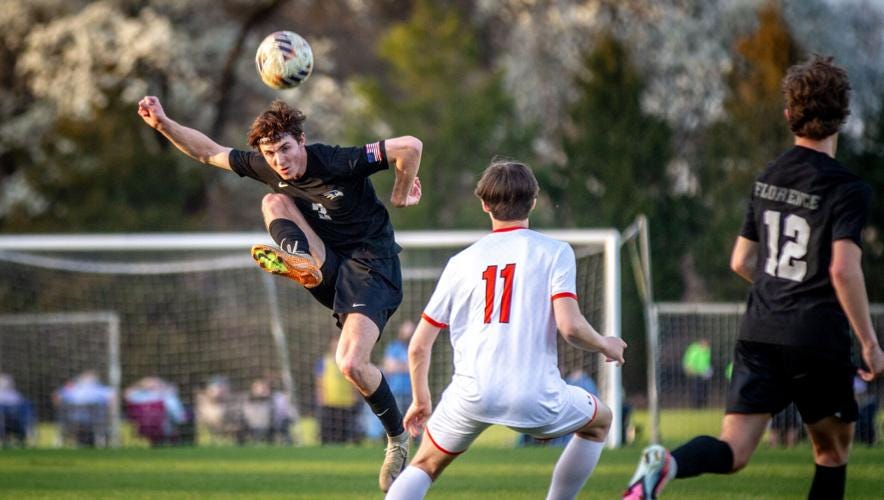
Skill, speed, and tactical intelligence can take a young athlete a long way, but mental toughness is what keeps them in the game when things get difficult. Whether it’s bouncing back from a bad referee call, shaking off a costly turnover, or staying composed in the final minutes of a tight match, emotional resilience is a trainable skill—not just an innate trait.
For youth coaches, parents, and mentors, fostering mental toughness isn’t about telling kids to “suck it up” or “rub dirt in it.” Modern mental toughness is about teaching self-awareness, emotional control, and a relentless focus on the process over the outcome.
Here is a practical framework for building resilient, high-performing young athletes.
The biggest barrier to mental toughness in young sports is the fear of making mistakes. When athletes play scared, they hesitate, play stiff, and lose their enjoyment of the game.
Shift to a Growth Mindset: Help athletes realize that errors aren’t personal flaws—they are data points. A missed shot or a misplaced pass simply provides information on what to adjust next time.
Praise the Effort, Not Just the Result: Instead of praising an outcome (“Great job scoring three goals!”), highlight the mental focus and effort (“I loved how you kept pressing even after you lost the ball”). This teaches kids that their value lies in their attitude and work ethic, which are always within their control.
In fast-paced competitive environments, dwelling on a past mistake guarantees a second one. Mentally tough athletes learn to reset instantly.
Implement a Physical Reset Cue: Teach players a quick physical action to trigger a mental reset after a mistake—like clapping their hands twice, snapping a wristband, or taking a deep breath while looking at their shoes.
The 3-Second Rule: Allow athletes three seconds to feel frustrated, and then demand a transition to the next action. The phrase “Next Play” or “Reset” serves as a powerful reminder to bring focus back to the immediate present.
Young athletes often overload themselves with pressure by focusing on variables they can’t control: the final score, the weather, playing time, or the referee’s decisions.
By channeling 100% of their energy into controllable factors, athletes build a sense of agency and calm, reducing game-day anxiety significantly.
Resilience isn’t built in a vacuum—it develops through exposure to challenge. Training environments should deliberately introduce small doses of adversity so that game-day pressure feels familiar.
Gamify Drills with Stakes: Add mild pressure to practice drills (e.g., setting a strict timer, requiring a minimum streak of successful passes, or assigning a quick physical challenge for the losing side).
Embrace Bad Calls in Scrimmages: Occasionally make an intentionally poor call during practice matches. Teach players to accept the decision, control their body language, and immediately get back into position without arguing.
What an athlete says to themselves when they are exhausted or struggling dictates their performance.
Replace Negative Self-Talk: Help players spot self-limiting statements like “I can’t do this” or “We’re going to lose.” Teach them to swap those with actionable, instruction-based self-talk: “Deep breath, execute the technique,” or “Focus on the next five minutes.”
Model Calm Leadership: Young athletes mirror the adults around them. If coaches and parents panic, yell, or react emotionally on the sidelines, players learn that stress demands a frantic response. Calm, composed adult leadership is the ultimate blueprint for athlete composure.
Building mental toughness doesn’t happen overnight, and it certainly doesn’t come from heavy-handed criticism. It grows in a positive, high-standards environment where young athletes feel safe enough to fail, supported enough to try again, and equipped with the mental tools to handle whatever the game throws at them.
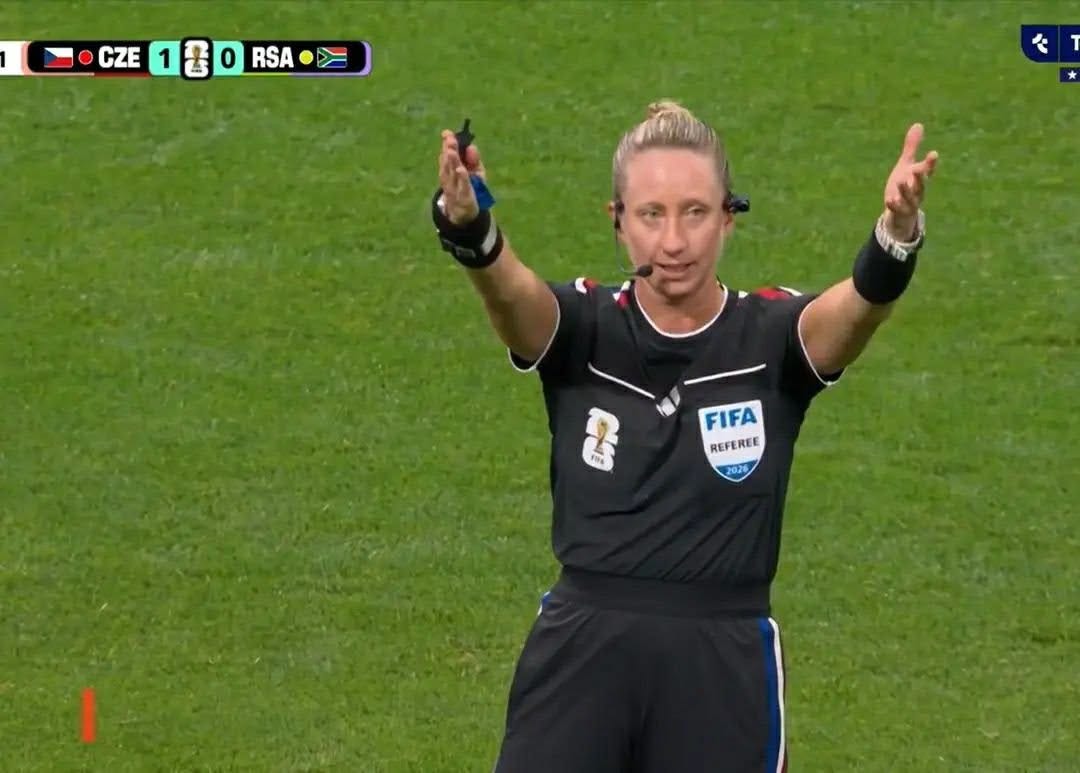
The Alabama Referee Program (Alabama State Referee Committee) has scheduled a slate of entry-level field clinics and online education webinars for the upcoming season.
For prospective referees looking to earn their entry-level certification, statewide field sessions are scheduled for Saturday, August 22, 2026, from 8:45 AM to 12:00 PM across multiple regions:
Birmingham
Huntsville
Auburn
Daphne
Gadsden
Florence
Dothan
Important: All online modules—including the Laws of the Game coursework, SafeSport (for 18+), and safety background checks—must be completed in the U.S. Soccer Learning Center before attending the in-person field session. Registration typically closes 3 days prior to the course date.
For current referees and advanced officials, the state committee is hosting several online population meetings and specialized instruction sessions:
August 23, 2026 (7:00 PM CT): Advanced Clinic: Game Management & De-escalation (Esse Baharmast)
September 13, 2026 (7:00 PM CT): General Population Meeting: Management of Free Kicks (Barry Towbin)
September 27, 2026 (7:00 PM CT): Advanced Clinic: Challenges (John Collins)
October 18, 2026 (7:00 PM CT): General Population Meeting: Handball (Frank Jones)
November 8, 2026 (7:00 PM CT): Advanced Clinic: Fall Season Lessons Learned (Paul Scott)
Create or log into a account on the U.S. Soccer Learning Center.
Navigate to Courses > Available Courses > Grassroots First-Time Referees.
Filter the Host dropdown to Alabama State Referee Committee to locate and register for your local session.

In Alabama youth soccer, regional growth often depends on surrounding communities joining forces to build sustainable competitive pathways. Rather than competing against one another for limited field space and player pools, neighboring clubs in eastern Jefferson County and St. Clair County chose collaboration over competition.
That shared vision led to the establishment of Revolution Soccer Club (Revolution SC), a competitive branch created through a multi-club strategic alliance serving players across Trussville, Springville, and surrounding communities.
The foundation of Revolution SC rests on a cooperative agreement designed to provide high-level competitive soccer (U11 through U19) while allowing local parks to retain their grassroots recreational and academy foundations.
┌─────────────────────────────────────────────────────────────┐
│                 REVOLUTION SOCCER CLUB                      │
│                (Competitive U11 – U19)                      │
└──────────────────────────────┬──────────────────────────────┘
                               │
       ┌───────────────────────┼───────────────────────┐
       ▼                       ▼                       ▼
┌──────────────┐        ┌──────────────┐        ┌──────────────┐
│  Trussville  │        │ Springville  │        │ Total Futbol │
│  United SC   │        │   Youth SA   │        │  Club (TFC)  │
│   (TUSC)     │        │   (SYSA)     │        │              │
└──────────────┘        └──────────────┘        └──────────────┘
As one of the largest soccer organizations in eastern Jefferson County, TUSC provides expansive facility infrastructure—including the Trussville United Soccer Complex—along with established U4–U10 developmental and intramural programs. Partnering with Revolution SC allowed TUSC to offer its graduating academy players a structured, elite path into Division I and II state competition without leaving their home community.
Serving northern St. Clair County, SYSA brought a strong grassroots base and passionate player pool from Springville and nearby rural communities. By aligning with Revolution SC, SYSA ensured that talented local players had immediate access to premier competitive rosters while continuing to train close to home.
Local select and competitive operators integrated their talent pools into the Revolution SC network, consolidating coaching talent and technical direction under a single unified banner.
Prior to the formation of Revolution SC, families in the northeast Birmingham suburbs seeking high-tier competitive soccer often faced long commutes to larger clubs in the Birmingham Metro Area.
By standardizing player development across its partner associations, Revolution FC established a clear pyramid:
Grassroots & Intramurals (U4–U8): Local entry-level play hosted directly at home park associations like TUSC and SYSA.
Developmental Academy (U8–U10): Focus on core technical skills, spatial awareness, and small-sided games.
Revolution SC Competitive (U11–U19): Unified select teams competing in Alabama Soccer Association (ASA) state leagues and regional tournaments.
Through this collaborative model, Revolution SC stands as a template for regional soccer growth in Alabama—proving that when community clubs join forces, young athletes gain the platform they need to excel without sacrificing local community ties.
The NCAA Division II Executive Board adopted emergency legislation to establish an age-based eligibility model as recommended by the Management Council in July.
The NCAA Division II age-based eligibility rules mirror the legislation adopted by Division I and establish a five-year period of eligibility. Under this model, a student-athlete’s period of eligibility begins at the earlier of these two events: full-time enrollment at any college or university — domestic or international, including junior colleges; or the beginning of the regular academic year immediately after the student’s 19th birthday.
This shifts the Division II eligibility rules from a seasons-of-competition and semester/quarter model that included multiple waivers and exceptions to a five-year period of eligibility tied to age and college enrollment.
The rule change is effective immediately for the 2026-27 academic year.
Student-athletes whose eligibility is exhausted under previous rules ― four seasons of competition within 10 semesters/15 quarters ― will not have additional eligibility.
No posts
Comments
Nothing yet. Say the first thing.
Sign in to join the conversation.