
10th Grade Key Action Items:
Research schools and soccer programs online and create a list of schools you are interested in.
Discuss your college interest with your parents and your clubs’ college liaison
Attend ID clinics or camps (optional)
Build a resume/profile to send out to college coaches
Begin to email coaches your game/tournament/id camp schedules
Compile highlight video and upload to Youtube or something similar.
11th Grade Key Action Items:
Continue following all of the 10th grade key action items
Take the ACT and/or SAT and continue taking until satisfied with scores
Attend ID clinics or camps (optional)
12th Grade Key Action Items:
Email coaches at target schools before and after tournaments
Compile highlight video and upload to Youtube or something similar
Play in front of college coaches; high level games, Showcase Events, ID Camps
Persist! Don’t choose the first/easiest option. Work to find the right school/program for you.
The club season has begun. Preseason practice, friendly games, and tournaments are all happening around the state. League play will begin soon for most clubs. Here are a few tips to help make the season a success for you and your player.
Show up on time for all practices and games. Life happens, you will get stuck in traffic or just forget what time the game starts. But this should be the exception. There are few times in life where a group of 20 people rely on you. Soccer is one of the few. Don’t waste the time of 20 families.
Make sure your child brings everything they might need to every practice and every game. Shinguards, cleats, warm clothes on cold nights, a water bottle, all make your child’s experience what it should be. Even pro teams have a “kit man” to make sure every player has everything they need. Take 2 minutes before you leave home to make sure your player has what they need.
If you have questions about playing time or playing position, ask your coach what your child needs to improve on in order to get what they want. Send your questions by email. This allows the coach to take time and provide a thoughtful response. In-person questions are stressful and don’t allow time for thought. Right after a game is NEVER the right time to ask. Wait 24 hours and then ask your questions. The only questions that can’t wait 24 hours are those involving health and safety.
Practice is for learning. You don’t watch your child study in school. Don’t watch them practice. Let them learn with out the fear of judgement. Enjoy 90 minutes of free babysitting and go get a cup of coffee or go shopping. If you have to be there, watch quietly. Don’t cheer, don’t instruct, let your child participate with out you.
The soccer season is a marathon not a sprint. Where the team or your child is at the start of the season isn’t the goal. Where you end up at the end is. Focus on learning and development. Enjoy the journey and enjoy watching your player grow.
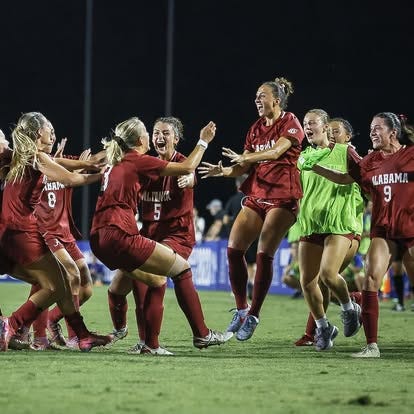
The opening week of the women’s college soccer season delivered strong early statement performances across Alabama. Highlighted by defensive structure, clutch playmaking, and poise under pressure against top-tier national competition, the state’s Division I programs hit the ground running.
The SoCon preseason favorites made immediate national waves on opening night. Heading on the road to face national powerhouse No. 2 Notre Dame, Samford put together a disciplined defensive masterclass to hold the Fighting Irish to a 0-0 draw.
The Bulldogs followed up that high-profile result by returning home to Shauna Yelton Field, securing a convincing 2-0 victory over Belmont in their home opener. With two clean sheets to open the campaign, Todd Yelton’s squad looks primed to control the SoCon once again.
In Tuscaloosa, the Crimson Tide kicked off their fall schedule with intent, securing a pair of victories on the road to launch to a 2-0 record.
Key Result: A gritty 2-1 road win against Memphis highlighted the Tide’s attacking persistence and game management in tight situations.
Next Focus: The Tide gear up for a heavy home slate at the Alabama Soccer Stadium, featuring upcoming matchups against TCU and Nebraska.
Auburn kicked off its non-conference calendar facing high-level competition right out of the gate at home.
Opening Draw: The Tigers fought to a 0-0 tie against No. 25 Clemson, showcasing compact defensive organization against an ACC attack.
Offensive Surge: Auburn followed that up with a dominant offensive victory over Jacksonville State, ensuring an undefeated opening homestand before road trips to Kennesaw State and UAB.
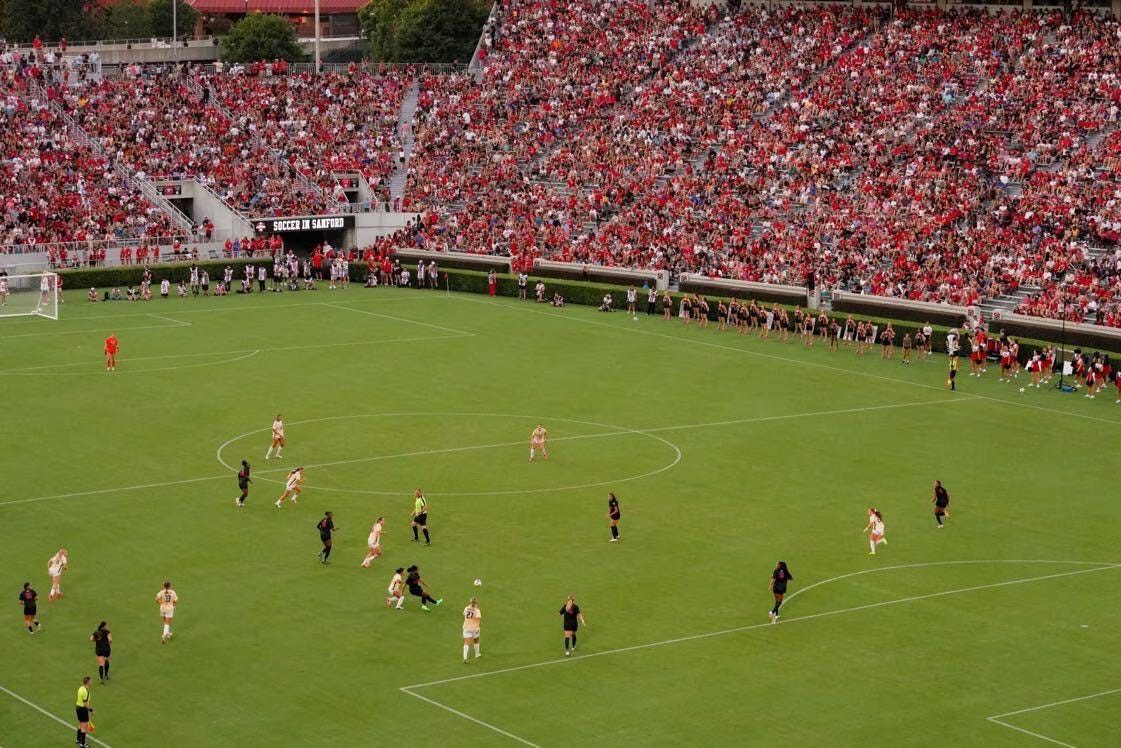
No. 25 Georgia shut out James Madison, 6-0, in its season opener.
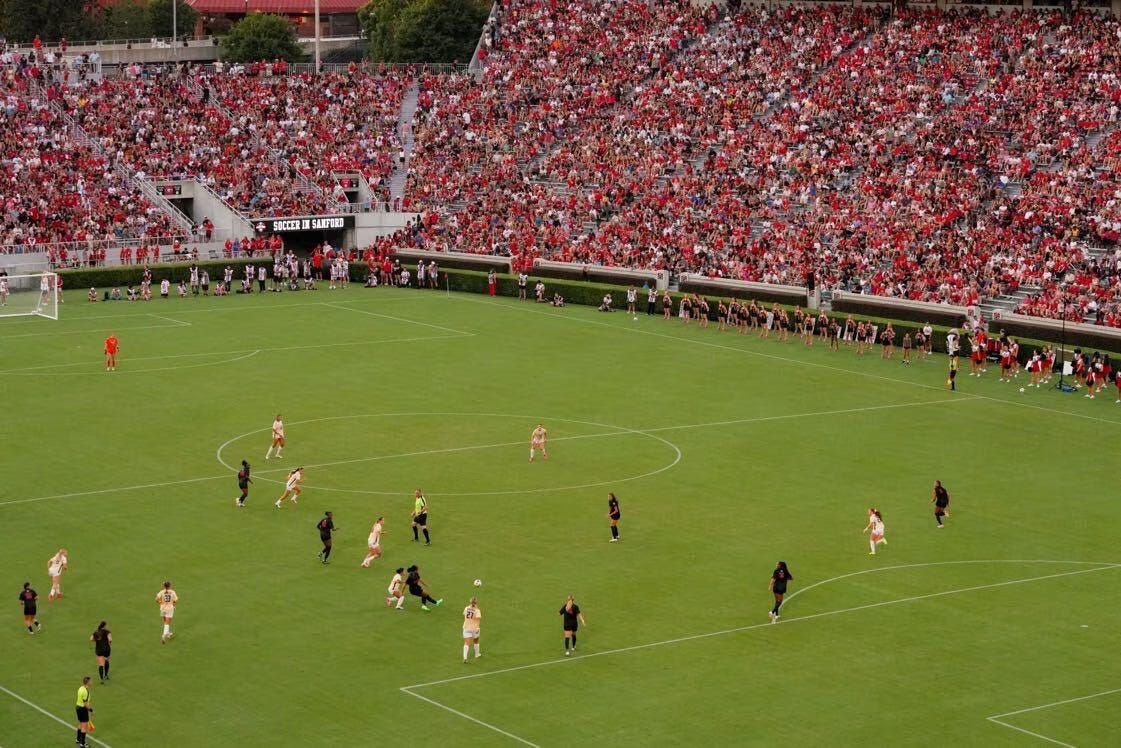
The Bulldogs set a new NCAA attendance record for soccer with 25,433 fans packed into Sanford Stadium to watch them take down the Dukes.
Honaka Hamano paved the way with scoring, finishing one goal shy of a hat trick. She scored in the first half off an assist by Emma Pettersen, and then again after an assist from Grayson Rogers.
The Bulldog attack put up an astonishing 24 shots on goal while allowing the Dukes only two shots.
Mental toughness in soccer is often mistaken for stoicism or aggression, but in reality, it is a psychological skill set. At its core, mental toughness is the ability to maintain optimal performance, decision-making, and emotional control regardless of internal stress or external pressure.
In a fluid game where mistakes are frequent, fatigue is guaranteed, and refereeing decisions can feel unfair, mental toughness dictates how a player reacts when reality deviates from the game plan.
The Four Core Pillars of Mental Resilience
Resilience to Errors (”Next Play” Mentality): Soccer is a game of high error rates. A mentally tough player processes a misplaced pass or missed shot instantly, shifts focus to the defensive transition, and remains willing to demand the ball on the next possession without fear of failing again.
Emotional Regulation under Pressure: High-stakes moments—such as trailing late in a match, facing hostile away crowds, or taking a penalty kick—trigger physiological stress. Mental toughness allows players to regulate their heart rate, suppress panic, and execute technical movements with calm precision.
Sustained Tactical Focus: Physical fatigue directly attacks mental clarity. As the match enters the final 15 minutes, mental toughness manifests as sharp spatial awareness, discipline in maintaining defensive shape, and concise communication when the body wants to slow down.
Controlling the Controllables: Matches feature variables outside a player’s power—bad pitch conditions, poor officiating, or tactical tweaks from opponents. Mentally tough athletes channel 100% of their energy into their effort, tactical assignment, and attitude rather than wasting energy arguing or sulking.
Coaching and Cultivating the Mindset
Mental toughness isn’t an innate, static trait; it functions like a muscle built through intentional environment design. Coaches cultivate it by introducing deliberate constraints during training: putting teams down a goal with five minutes remaining in small-sided games, enforcing strict refereeing decisions to test emotional composure, or demanding high-level technical execution under maximum physical fatigue.
Ultimately, talent gets a player onto the pitch, but mental toughness dictates whether they can deliver when the pressure peaks.
Thanks for reading Get Soccer! This post is public so feel free to share it.
No posts
Comments
Nothing yet. Say the first thing.
Sign in to join the conversation.