
I keep saying, writing, and communicating that I want to help business owners make more durable decisions and build more durable businesses. I want to move the needle from that 50% small business failure rate at 5 years, a statistic as reliable as a 1992 Honda Civic.
Durable. Durable. Durable.
Eventually, someone has every right to ask: “Dawn, what the actual fuck does that mean?”
Fair question.
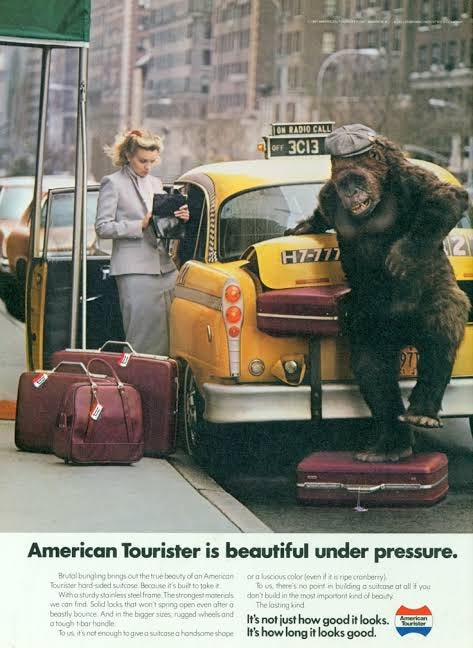
Are we talking about a suitcase being thrown around by a gorilla in an old commercial? (Gen X reference) Or some business equivalent of a kitchen container that survives 40 years, three houses, two divorces, and being permanently stained orange by spaghetti sauce?
Not exactly.
When I talk about a durable business, I am not talking about one that remains unchanged forever. I am also not talking about a business that never struggles, never loses a customer, never experiences a supply-chain disruption, and never has an owner sitting alone after midnight wondering whether any of this was a terrible idea.
That business does not exist. Anywhere.
A durable business is one that can continue operating, absorb disruption, adapt when meaningful evidence requires it, and preserve the promise customers trust without destabilizing the financial, operational, human, and decision systems that allow it to function.
That is a mouthful.
So, let’s break it down.
A viable business has proven that a workable exchange exists.
Someone wants what you sell, they are willing to pay for it, and you can provide it. And, at least under some set of conditions, the numbers can work.
That matters enormously.
But viability is only the beginning.
A customer buying once does not establish repeatable demand, nor does one profitable month does not establish financial endurance. A successful launch, a track record of customer delivery, or even some repeat business signals viability.
Viability proves that the business can work.
Durability asks whether it can keep working when several things do not go according to plan.
That is a different question.
We often think a business is durable because it has been around for a while. However, a business may have operated for 25 years because the owner continually absorbed every weakness personally.
They remembered the undocumented process, maintained every customer relationship, and perhaps made payroll from personal savings.
Even with a team, that “knew” which machine needed to be kicked, which customer needed to be called, and which supplier would quietly solve a problem after hours, the business may never have become durable.
The business survived, so longevity is evidence that deserves consideration, but it not, by itself proof that the company can survive the loss of a customer, the absence of the founder, a change in customer behavior, a delayed supplier, a new generation of leadership, or a significant change in the market.
A business can be old and brittle.
It can also be relatively young and already developing the systems required to endure.
Profit matters, I will never tell you otherwise. A business that repeatedly fails to recover its real costs is not becoming more durable by remaining cheerful about it. But financial statements only report what happened.
They do not always reveal everything that had to go right for it to happen.
A product may have an excellent margin and still be unavailable because a supplier failed. A service may be profitable and still consume so much of the founder’s cognitive capacity that it cannot be repeated at the projected volume.
A durable business needs more than profitable units. It does however need enough financial endurance for those units to become a stable operating reality.
I currently see seven. These seven overlap, affect one another, and a weakness in one may create apparent problems in several others.
The point of these markers is not to create a spreadsheet and grade each independently. The goal for durability is not to give every business area a perfect score.
The point to seeing and understanding these markers is what they can reveal. Where the business is strong, where it is fragile, and which weakness could become existential if circumstances change.
Can the business remain financially capable long enough for its decisions to produce results?
That includes profitability, but it also includes:
cash reserves;
timing of cash in and cash out;
debt obligations;
fixed expenses;
working capital;
payment terms;
inventory commitments;
and the gap between investment and return.
Traditional financial advice often asks whether the numbers work. Durability asks whether the business can survive the time required for them to work.
A business does not need unlimited cash. It needs visibility into how much time its cash actually buys.
Will customers come back? Will they reorder, renew, refer, or continue using the service after the first burst of attention disappears?
One sale proves that one person purchased under one set of circumstances. Repeatable demand requires more evidence.
A durable business understands:
who repeatedly buys;
why they return;
how long adoption takes;
what causes someone to refer another customer;
which offers create continued relationships;
and how dependent revenue is on constantly replacing everyone who leaves.
The company also knows the difference between customer demand and general market noise.
Can the work be completed in an organized, predictable, and repeatable way?
For example, a recurring task does not depend on one employee remembering an invisible step. Or the equipment works, or at least everyone knows what happens when it does not.
This marker demonstrates whether each process can absorb an ordinary interruption without the entire week collapsing.
Operational repeatability does not require removing all human judgment. It means human judgment is used for the situations that actually require it instead of repeatedly compensating for preventable friction.
A system that functions only because one person refuses to let it fall is not a functioning system. That person is functioning. And they are probably tired.
Every business depends on something. Consider:
Suppliers
Employees
Equipment
Software
Licenses
Customer approvals
Utilities
Freight
Credit
A particular sales channel
The owner’s personal relationships
Durability does not mean eliminating dependencies. It means knowing where they are. These dependencies are visible and the ecosystem relying on them understands how they fit.
What happens if a supplier discontinues a component or if a platform changes its rules? A dependency is not automatically a problem.
An invisible dependency is.
Can the people inside the business tell the truth soon enough for the information to matter? Trust is an operating asset.
It is not a promise that everyone will always be comfortable, every request will be granted, or no difficult personnel decision will ever occur.
It is the accumulated evidence that people can provide important information without being humiliated, diagnosed, punished for speaking, or reduced to their worst moment.
When people are afraid to report problems, the problems do not disappear. Leadership merely loses visibility.
Human capacity also includes the owner.
A company is not durable if the person making every major decision is too exhausted, frightened, or overwhelmed to assess the field clearly.
In my experience, this marker is more relevant to durability than financial markers or operational repeatability. When things are hidden or a vulnerability is only discovered after something bad happens, well, you can read the business news frequently and see the consequences at scale.
At scale, the Board can step in, but in SMBs, there is almost always a harder path to recovery. If the company survives.
Can the business make a choice and hold it stable long enough to learn something? Or does every uncomfortable signal create a new direction?
The offer launches slowly: Discount it.
A customer asks a question: Rewrite the entire website.
A competitor announces artificial intelligence: Buy software.
A team member struggles: Create a new policy.
Sales decline for two weeks: Rebrand.
No.
A durable decision is not one that can never change.
BUT it is one made with clear assumptions, evidence, constraints, review points, and thresholds for adaptation.
The operator knows:
what they believe;
why they believe it;
what must be true;
what would prove the assumption wrong;
how reversible the decision is;
when it will be reviewed;
and what the business can afford while waiting for the answer.
That is the pre-execution layer.
Before Profit First allocates the cash. Before EOS assigns the Rock. Before ANY operations system designs the workflow.
It forces the business to confront three often very uncomfortable questions:
What is actually true?
What matters?
And what can the business sustainably carry?
A durable business knows the difference between what it currently sells and what customers actually trust it to provide. Those are not always the same thing.
Sometimes the product needs to change, the delivery needs to change, the audience expands, and the process that worked at one stage becomes the constraint at the next.
Durability is not refusing to change.
It is knowing what may change without destroying what must remain recognizable.
A business may change its product while preserving the customer outcome.
That is different from burning the business down because the owner became anxious.
This may hurt some feels, but I am being direct with love:
Rebranding is not evolution.
Buying a funnel is not strategy.
Installing software is not transformation.
Those things may support a real transition. They do not create one.
Durable evolution begins with evidence that something meaningful has changed and a clear understanding of what must remain stable while the business responds.
Durability becomes something larger when the owner recognizes that the business is not only an income-producing asset.
It is something temporarily entrusted to them.
A founder can practice stewardship. So can a second-generation owner, an employee-owner, a successor, or someone preparing the business for sale.
Stewardship asks:
What am I responsible for preserving?
What must I strengthen before passing this forward?
What has been inherited that should not continue?
Which customer promise deserves protection?
Which family, cultural, or operating patterns have become harmful?
Will the next person inherit a functioning organization—or merely a collection of unresolved dependencies?
What am I building that can outlast my direct involvement?
Legacy is not preserving everything.
Some products should end and some processes should be replaced. Some beliefs should stop with the current generation because family patterns should not be handed forward merely because they are old.
Stewardship is the responsibility to decide what deserves to continue, what must evolve, and what should end with you.
That is the final marker because durability without stewardship can become preservation for its own sake.
The goal is not merely to keep the business alive. It is to leave it more capable, more visible, more honest, and more prepared for what comes next.
A durable business can still close.
A market can disappear and a disaster can exceed every reasonable reserve. A founder can decide the responsible choice is to sell, contract, pause, or end the company.
Sometimes durability means recognizing early enough that the original form of the business should not continue.
The objective is not immortality.
It is agency.
Can the operator see what is happening early enough to make a choice?
Can the business respond without panic?
Can it preserve what remains valuable?
Can it avoid turning an ordinary disruption into an existential crisis?
Can it protect the humans attached to the decision?
A durable business is not one that cannot be harmed. It is one that is difficult to surprise, capable of learning, and prepared to respond.
Large corporations already protect consequential decisions through layers of financial planning, market intelligence, risk analysis, legal review, operational planning, scenario analysis, and executive decision support.
Main Street usually has an owner or two, a spreadsheet, several unanswered messages, and a deadline.
Strategic Intelligence for Main Street is my translation of that missing pre-execution layer.
The patterns are not mine. Businesses have been demonstrating them for generations. Enterprise organizations have long used specialists and departments to examine pieces of them.
My work is the translation.
What does the small and medium sized business need to know before choosing the operating system, financial framework, software, adviser, loan, hire, expansion, or next major move?
My existing tools each examine part of durability:
the Breakthrough Number establishes the financial floor;
ADFP examines Audience, Delivery, Focus, and Process;
CLARITY organizes the evidence and timing;
the Capacity Planner tests whether execution is possible;
the High Trust Operating System protects the human flow of information;
quarterly strategic planning turns intelligence into action and review;
and stewardship asks what should remain after the current operator is no longer holding everything together.
These tools do not replace Profit First, EOS, Stage 3, Lean, or another legitimate execution system.
They help determine what those systems should be executing. We do not replace your operating system. We help make sure it is solving the right problem.
It means the business can continue without pretending conditions will always be ideal.
It has enough financial endurance to wait for results, enough repeatable demand to justify continuing, enough operational discipline to deliver without chronic heroics, and enough visibility into dependencies to respond when one fails.
It also has enough trust for people to surface the truth.
Plus, enough decision discipline to resist changing direction every time the owner gets nervous with enough adaptability to change the vehicle while preserving the promise.
And finally, enough stewardship to leave the business stronger than it was received.
Not the gorilla suitcase. Not indestructible.
Durable.
Capable of taking the hit, learning from what happened, protecting what matters, and remaining able to make the next decision.
The Operator Guide, the implementation companion of Before You Decide will be available in the fall of 2026. This volume will include all of the Strategic Intelligence for Main Street durability tools, with explanations, and case studies. For more information, or to learn more, please visit https://dawnkkennedy.com
No posts
Comments
Nothing yet. Say the first thing.
Sign in to join the conversation.