
Every Sunday we go a bit deeper on one topic and this one keeps surfacing, and it matters for how mis- and disinformation plays out in a country like Canada.
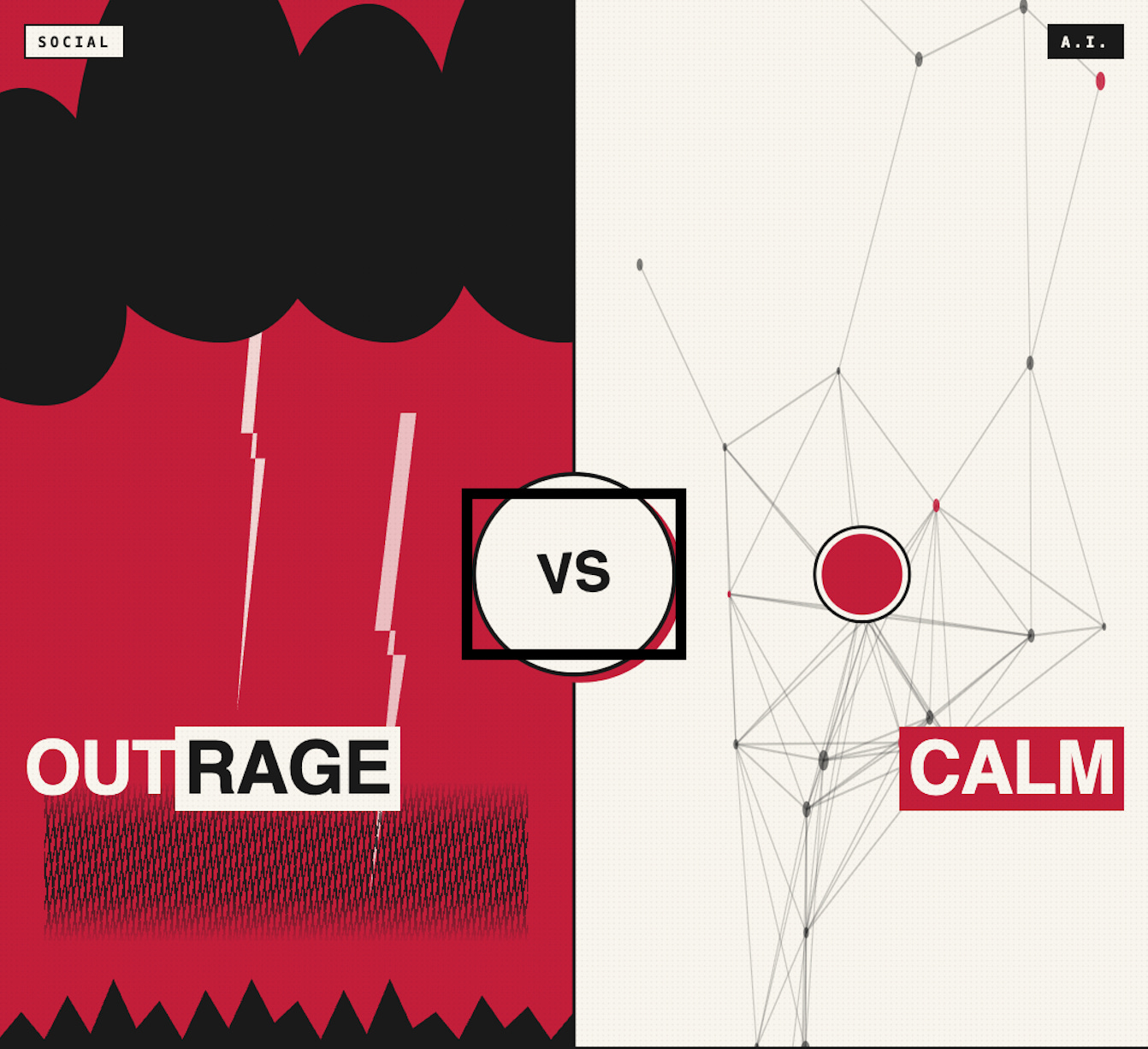
A growing consensus says social media is dying, and that artificial intelligence will save us from the mess it made. The argument sounds right. Large language models synthesize expert knowledge, returning measured, moderate answers. It does not reward outrage or amplify fringe voices. After two decades of algorithmic chaos, maybe AI is a welcomed solution.
A compelling story but also dangerously wrong.
Large language models are not neutral, as they are trained on enormous volumes of human-generated text. We know that carries bias, whether that is ideological, cultural or just any form of structural bias. So that does not vanish when the model produces an answer. It only shapes the answer in a way that determines what gets emphasized, and what gets buried. The user almost never notices because the output reads like calm, reasoned synthesis.
That would be troubling enough as a theory. It is worse as a fact, pointing to something deeper. When every answer arrives pre-synthesized, framed and settled, it does not just inform us but narrows the discussion. It quietly removes the friction that forces us to weigh competing views, sit with uncertainty, and form our own conclusions. The answer does the thinking for us and do we just stop noticing?
This would be a minister of propaganda's dream.
There is now peer-reviewed research confirming this problem. Yale researchers published a study (link below) demonstrating that simply asking a chatbot factual questions about historical events shifted people’s political opinions, even when the answers were accurate, even when no one had prompted the tool to persuade.
Here is what is amazing, or frightening. The bias was not injected after the fact but baked in during training, surfacing through subtle framing choices that most users would never catch. As the study’s senior author, Yale sociologist Daniel Karell, noted, the effects are modest on any single query but they compound with every return visit.
Stanford tested this from the other direction. Researchers took thirty political questions and ran them through twenty-four large language models built by eight different companies. They then asked more than ten thousand Americans a simple question. Did the AI’s answers lean left, lean right, or sit in the middle?
The results were striking. On more than half the questions, respondents said the answers leaned left. What made this finding hard to dismiss is that it was not one side complaining. Self-identified Democrats and Republicans both reached the same conclusion. The AI was not neutral, even when it was designed to be. OpenAI’s models were rated the most slanted. Elon Musk’s xAI, which markets itself specifically on unbiased output, came in second.
Together, these studies reveal a problem that works from both directions. The Yale research shows the bias is real and measurable. The Stanford research shows that even where bias is debatable, the perception of it is not. One undermines accuracy and the other undermines trust.
Here is what makes all this more damaging than social media. The algorithm served you rage and you knew it because you could feel it. Dig a little deeper and you could see the bot accounts, the engagement bait, the pile-ons. That visibility gave us a fighting chance to push back, to build media literacy, to demand regulation.
AI’s distortions work differently. They arrive in calm, authoritative prose, can cite sources and present themselves as synthesis rather than opinion. And because the tone is measured, and the interface feels more like a consultation than a confrontation, we are far less likely to question what we are being told. A calm tone is not the same thing as an accurate answer. But it can sure feel like one.
Now consider the scale. AI-generated content no longer lives only inside a chatbot window. It powers the copilots drafting emails, the tools summarizing meetings, the search engines replacing browsers. It is embedded in workflows across government, education, healthcare, and media. Every layer of integration adds another layer where bias compounds silently, shaping decisions that millions of people never think to second-guess.
Who verifies the AI? Where is the audit trail? Who checks whether the model’s confident synthesis actually reflects the weight of evidence, or whether it reflects the weight of its training data? Right now, nobody does. There is no independent, transparent, ongoing audit of how these systems frame contested questions. That is not a minor gap. It is a foundational flaw in the information architecture we are building to replace the last one.
Social media did not just change how we talked to each other. It changed whether we could. And now AI is training on every word of it.
Yale Study. Chatbots can influence opinions without trying LINK & PNAS Nexus LINK
Stanford Study
Toward Political Neutrality in AI | Stanford HAI
Study finds perceived political bias in popular AI models | Stanford Report
Stanford HAI Policy Brief (PDF)
Let us know if you see anything worth sharing, Canadians pushing back against attacks, misinformation, or disinformation.
Did we got something wrong? Tell us. It happens. We correct it.
Hello@asklaura.ai
Get Fact. Verification, information integrity, misinformation and the threats worth understanding, direct to your inbox.
No posts
Comments
Nothing yet. Say the first thing.
Sign in to join the conversation.