
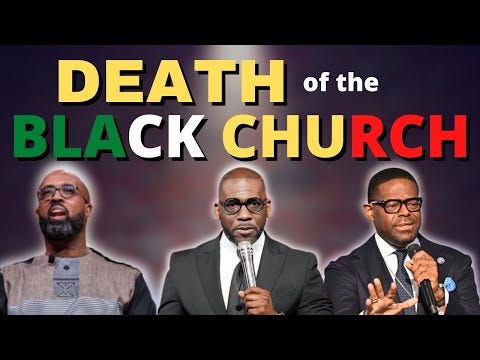
For generations, the Black church has been one of the most influential institutions in African American life. It has been a place of worship, refuge, education, civil rights leadership, and community empowerment. It has inspired hope during slavery, segregation, and injustice. Yet with great influence comes great responsibility. When spiritual leaders betray that trust, the damage extends far beyond one congregation— it can shake entire families and communities.
The issue is not the Black church itself. The issue is the growing number of leaders who use the authority of the pulpit to serve themselves rather than God. Scripture repeatedly warns that false shepherds would arise, not from outside the faith, but from within it. "Woe to the shepherds who destroy and scatter the sheep of my pasture!" (Jeremiah 23:1)
One of the gravest betrayals occurs when pastors exploit women who have come seeking spiritual guidance. Throughout history, numerous ministers across denominations have been exposed for manipulating vulnerable women through emotional dependency, spiritual intimidation, or abuse of authority.
Victims often remain silent because they fear being labeled rebellious or "touching God's anointed." This misuse of spiritual authority creates an environment where predators can continue unchecked while congregations defend the very individuals causing harm. Jesus condemned religious leaders who used their positions to exploit others rather than serve them (Matthew 23). A shepherd's calling is to protect the flock—not prey upon it.
Another troubling pattern involves ministers who publicly preach biblical standards for marriage while privately fathering children outside of marriage or engaging in secret relationships. Such hypocrisy damages more than personal reputations. It weakens the credibility of the gospel, discourages young believers, and contributes to cycles of broken families and distrust. The Apostle Paul instructed church leaders to be "above reproach" (1 Timothy 3:2). Leadership is not merely about preaching eloquent sermons but living a life worthy of imitation.
Many churches have become reluctant to teach biblical sexual ethics with clarity and compassion. Instead of carefully explaining Scripture, some avoid difficult subjects altogether, while others speak inconsistently depending on cultural pressure. Historic Christian teaching has understood sexual intimacy to belong within the covenant of marriage between a man and a woman. Churches should teach these convictions with both truth and love, recognizing the dignity of every person while avoiding hatred or mistreatment. 1 When churches replace biblical teaching with popularity, confusion often follows. Congregations deserve pastors who teach Scripture faithfully rather than tailoring messages solely to satisfy audiences.
Financial integrity remains another serious concern. Many faithful members sacrificially give tithes and offerings believing they are supporting ministry, missions, community outreach, and care for those in need.
Yet scandals involving lavish lifestyles, luxury vehicles, expensive homes, designer clothing, and a lack of financial transparency have led many to question whether donations are always being stewarded responsibly. The Bible consistently teaches that church leaders must be trustworthy stewards.
Jesus warned: "You cannot serve both God and money." (Matthew 6:24) Likewise, 1 Peter 5:2 instructs elders to shepherd God's flock "not pursuing dishonest gain, but eager to serve."
Churches should welcome accountability through transparent financial reporting, independent oversight, and responsible stewardship of donated funds.
When church leaders abuse their authority, entire communities suffer. Young people become skeptical of Christianity. Victims lose trust in spiritual leadership. Families leave churches. Unbelievers see hypocrisy instead of hope. The consequences extend beyond one congregation; they affect future generations.
The solution is not abandoning the church but reforming it. Healthy churches cultivate transparency, shared leadership, independent financial oversight, and clear procedures for reporting misconduct. Congregations should never confuse accountability with rebellion. Even the Apostle Paul publicly confronted the Apostle Peter when his conduct contradicted the gospel (Galatians 2:11–14). 2 Faithful leadership welcomes correction because integrity strengthens, rather than weakens, ministry.
The Black church has played an extraordinary role in American history and continues to serve millions with compassion, education, charity, and spiritual guidance. That legacy deserves protection. The greatest threat to that legacy is not criticism from outside the church but corruption within it. Communities deserve pastors whose private lives reflect their public sermons, whose finances withstand scrutiny, whose treatment of women demonstrates Christlike respect, whose care for children reflects genuine compassion, and whose leadership is marked by humility rather than self-enrichment. The church flourishes not when leaders become celebrities, but when they become servants. As Jesus taught: "Whoever wants to become great among you must be your servant." (Matthew 20:26) The future of the church depends not on larger buildings or louder sermons but on leaders whose character matches their calling.
Thanks for reading EMPOWER with Yashua! This post is public so feel free to share it.
Comments
Nothing yet. Say the first thing.
Sign in to join the conversation.