
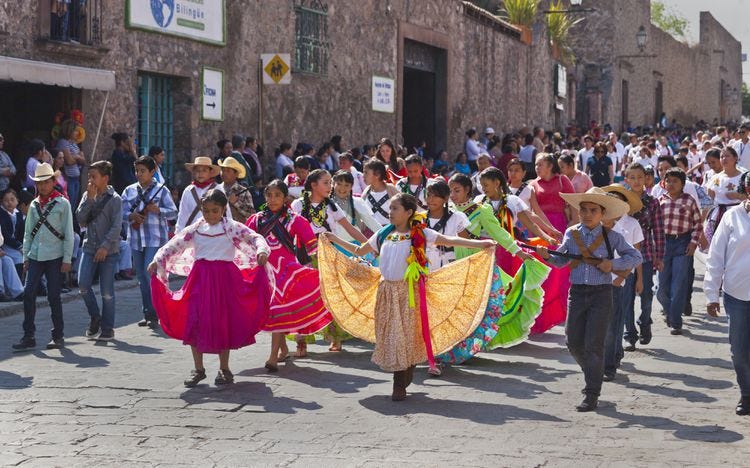
November 20th, long recognized as one of Mexico’s most significant dates, serves as a powerful reminder of the nation’s revolutionary past. It marks the anniversary of the 1910 to 1917 Revolution, sparked by Francisco Madero’s call to arms against the dictator Porfirio Díaz. For the revolutionaries, the war represented more than the overthrow of an archaic class system; it was a chance for Mexico to recommit itself to the people, especially Indigenous communities and the poor. The 2026 celebration will mark more than one hundred and twenty-six years since the uprising that reshaped Mexican history.
Less widely recognized is the role of Mexican women in the Revolution. Their contributions extended far beyond traditional expectations such as cooking or nursing. Women fought on the front lines, served as political thinkers, acted as couriers and spies, and became known collectively as Soldaderas. Most were in their late teens or early twenties, and they represented a wide range of backgrounds, including Indigenous, Afro-Mexican, and Spanish descent. From camp followers who provided essential support to nurses, activists, and combatants, women carried multifaceted responsibilities across the Revolution’s turbulent campaigns.
Soldaderas were more than soldiers. They literally fed the army by preparing fires and grinding corn for tortillas. They managed the daily order of camp life, packed belongings for long marches, tended pack animals, and stood guard over supplies. They were, in many ways, the organizers and managers of the war camps. Yet their critical roles did not protect them from misogynistic attitudes. Traditional gender norms positioned Soldaderas as servants and burdens, yet their contributions made them indispensable.
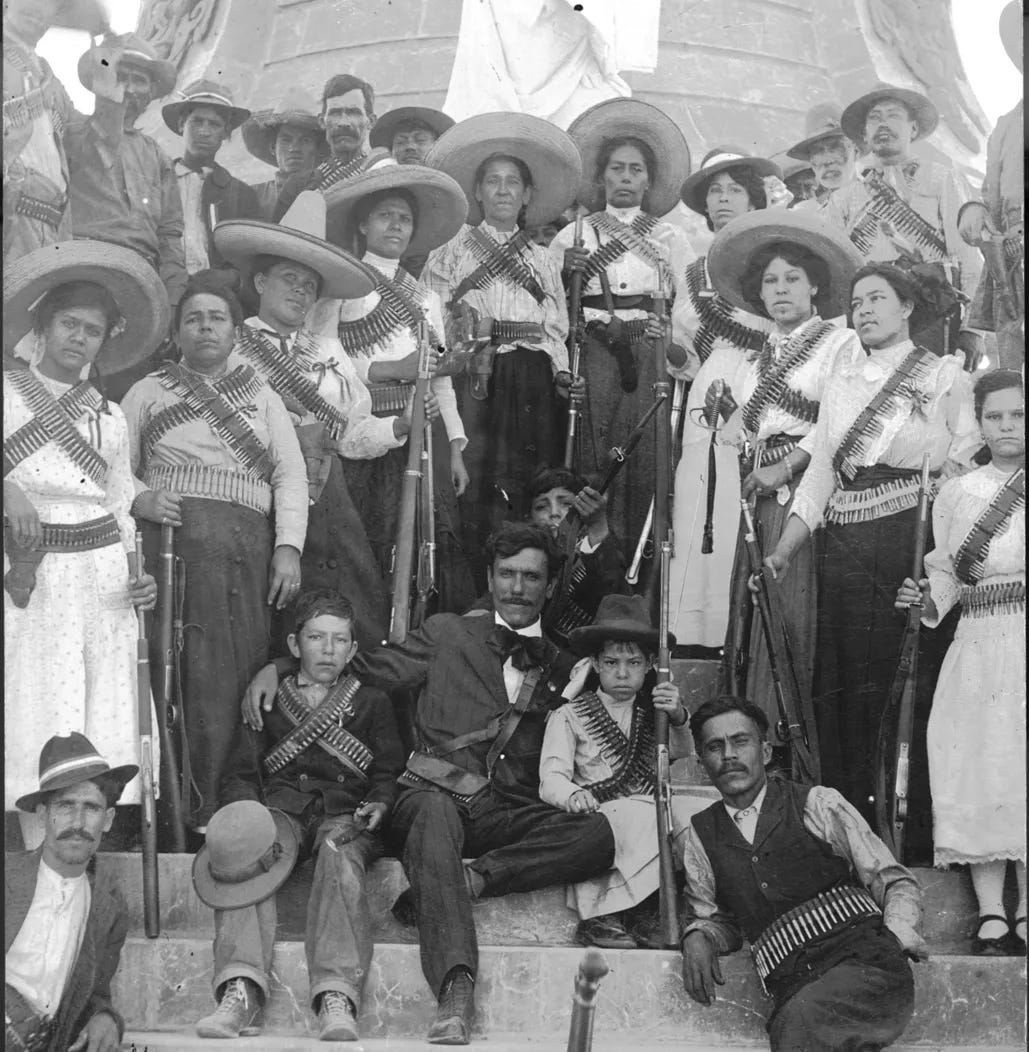
Among the most celebrated Soldaderas was Petra Herrera, often remembered as a real life Mexican Mulan. In her mid twenties, Petra cut her hair, dressed in men’s clothing, and enlisted in the forces of Pancho Villa, a notoriously misogynistic leader. Under the name Pedro Herrera, she quickly earned a formidable reputation. Petra was known for her command on the battlefield, her leadership abilities, her accuracy as a marksman, and her skill in demolitions, especially in blowing up bridges. According to some accounts, she even pretended to shave each morning before dawn to avoid suspicion.
Her performance was so exceptional that she was promoted to the rank of captain and permitted to lead a brigade of two hundred men. Eventually, Petra revealed herself as a woman. Although she had earned the rank of general, she was denied the promotion, which prompted her to leave Villa’s forces. She then formed her own all female military unit of four hundred women. They fought in the Second Battle of Torreón in May 1914, playing an essential role in capturing the city, a major federal stronghold. Despite proving her capability, Petra was not reinstated as a general. Instead, she was given the lesser rank of colonel, and her female militia was disbanded.
Petra later served as a spy for General Venustiano Carranza and remains a figure of bravery, strategy, and defiance in Mexican history.
Whether it was a nameless village woman picking up a fallen family member’s rifle, a renowned Soldaderas leading an ambush, or a nurse stitching wounds on the battlefield, the presence and leadership of women shaped the outcome of the Mexican Revolution. Their involvement and their management were integral to winning the conflict.
Mexico’s Revolution Day, one of the nation’s public holidays, is observed on the third Monday in November rather than on the twentieth. As Gestoras reflects on this year’s commemoration of the anniversary, we invite our audience to consider the leadership of women across the world and how often these contributions go unrecognized. Honoring their achievements allows us to imagine and inspire future generations of women leaders.
History1917. (2025, August 8). Women in the Mexican Revolution (1910–1920). Explaining History. https://explaininghistory.org/2025/08/08/women-in-the-mexican-revolution-1910-1920/
Toler, P. (2019, April 9). Petra Herrera wanted to be a general. History in the Margins. https://www.historyinthemargins.com/2019/04/09/petra-herrera-wanted-to-be-a-general/
Comments
Nothing yet. Say the first thing.
Sign in to join the conversation.