
You can now support GeoPolitiQ and upgrade your free subscription to paid at a 20% discount for 1 year. This Summer Special Offer is valid until Sunday 23rd August 2026 included. Redeem your offer here!
Today I am providing my English translation of a short article/novel (or is it a prophecy?) by Graciela Beattiz Oubiña, originally in Italian and published on ComeDonChisciotte.org on Friday 24th July 2026.
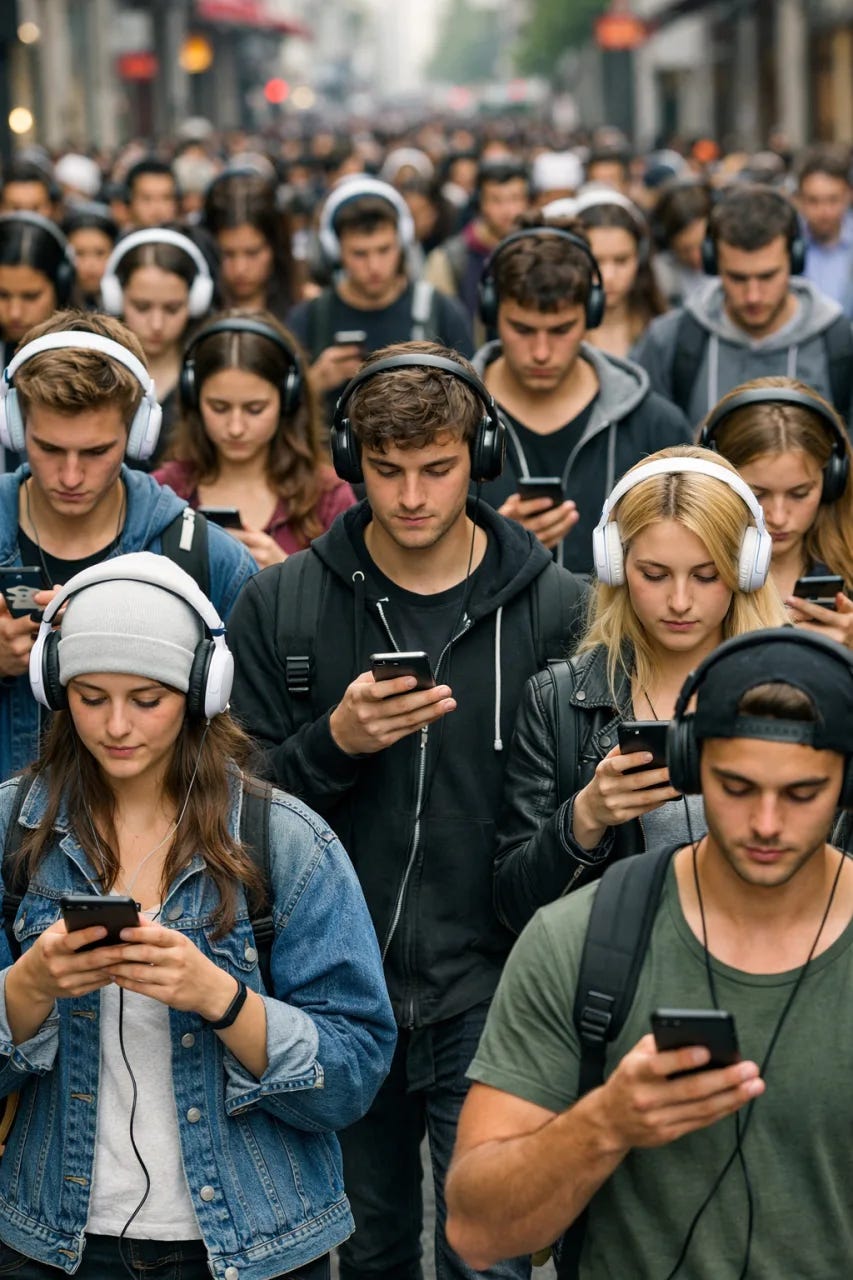
They were born in an age when almost everything had already been sorted out even before they arrived. Clean water flowed from the taps, food filled the supermarket shelves, electricity was a silent presence, and the State appeared as an invisible hand capable of cushioning every fall. Their parents had known scarcity, crises and sacrifice; they, on the other hand, had inherited a life of ease.
They were not strong. Nor were they independent. They struggled to make decisions without consulting a screen or turning to a specialist. Sustained effort seemed to them an injustice, and every frustration an act of aggression. Not because they were bad people, but because they had grown up in a world that had turned comfort into a right and discomfort into a failure.
When the great crisis began, no one recognised it straight away. There were no bombs or invasions. Just brief power cuts, hospitals running out of supplies, roads left unmaintained, lost harvests and public offices closing for a week, then for a month and, finally, forever.
The consumer society died a slow death.
First, the favourite brands disappeared. Then the apps stopped working. After that, money lost its value. Eventually, people realised that no algorithm could sow a field, repair a bridge or get a power station up and running again.
That generation found itself exposed to a reality for which it had never been prepared. It knew how to express opinions on everything, but knew how to do very little. It had learnt to consume, not to produce; to demand, not to build.
Among them was Giuliano. He was a fragile and impressionable man. Hard work left him with a weariness that seemed to belong more to the soul than to the body. The first time he tried to chop wood, he ended up with blisters all over his hands and a silent sense of shame.
The village elders, the last to remember another way of life, did not look down on them. They taught them to cultivate the land, to repair tools, to preserve food and to build a roof before a storm arrived. Every new skill required weeks of mistakes, hard work and frustration.
Many gave up. They waited for the old State to return, like a father who had simply been late coming home.
It never returned.
Those who persevered discovered something unexpected: character was not a gift received at birth, but the result of having faced difficulties, time and time again. Nor did independence mean not needing anyone, but being able to offer something to others.
Years passed. The children of that generation grew up watching their parents work with calloused hands and weary backs. They no longer inherited abundance, but hard work.
When asked how it had all begun, no one spoke of the economic collapse or the fall of the State. They simply said:
-The day we stopped believing that someone else would live our lives for us.
Because they realised too late that a society can pass on wealth for many generations, but if it stops passing on strength, responsibility and craftsmanship, sooner or later even that wealth will disappear.

Comments
Nothing yet. Say the first thing.
Sign in to join the conversation.