
by Jon Schmid
When a firm allocates resources to a particular R&D investment, it is, in part, attempting to shape a technological future. The firm can control how well-managed and well-resourced the investment is, increasing the odds that it will eventually yield a profitable application. Yet even the best managed R&D initiatives may fail if they are directed toward technical approaches that prove to be dead ends. That is, R&D investments are made under conditions of uncertainty about which technical approaches will eventually prevail. Choosing a given R&D strategy can thus be understood as making a bet on a given technological future. If a firm’s investments—or those of the set of firms within a country—are highly concentrated within a given technical approach, it is exposed to technological futures where the chosen approach turns out to be a dead end, or even just less effective than alternatives.
This logic sits behind a recent post on this Substack, Hedging Our Bets, which asks whether the United States is taking on unwarranted strategic risk by concentrating heavily on the hyperscaling paradigm. The post identifies three possible sources of concentration risk: limited investment in neuromorphic computing, embodied AI with real-world feedback loops, and brain-inspired cognitive architectures. Together, these raise an important question: how resilient is the broader U.S. innovation ecosystem if future breakthroughs depend on pathways beyond scaling ever-larger language models?
This concern motivates two empirical claims that we examine here and that, at least at first blush, appear to have some validity.
First, there is prima facie evidence that U.S. AI development is highly concentrated in a single technical approach—the hyperscaling paradigm—in which performance gains are achieved by training ever-larger LLMs using increasing amounts of data and compute. The major U.S. AI labs are investing tens of billions of dollars in hyperscale data centers and supporting energy infrastructure to enable frontier model training. At the same time, chief executives from leading AI developers—including OpenAI, Anthropic, and Google DeepMind—have publicly expressed confidence that continued scaling may be sufficient, or nearly sufficient, to achieve AGI. On its face, the U.S. commercial AI ecosystem looks like a single, very large bet on one technological future.
Second, China appears to be pursuing a more diversified portfolio of technical approaches. The government-funded China Brain Project invests in neuroscience-inspired computing, brain–machine interfaces, and AI, signaling state support for non-LLM-based approaches. Researchers at Zhejiang University have led development of the Darwin series of neuromorphic, brain-inspired chips—including the large-scale “Darwin Monkey” neuromorphic computer. Other research institutions, including Westlake University, Zhejiang Lab, and groups associated with the State Key Lab of Brain-Machine Intelligence, have published parallel work on neuromorphic hardware and brain-inspired computing. China’s recently released national AI strategy, AI Plus, is explicitly broad in its targeted applications, spanning manufacturing, smart cities, robots, vehicles, and scientific R&D.
We believe that, if real, this diversification gap warrants serious policy attention: a nation making one large bet on a single technological future bears more downside risk than a nation spreading bets across several. But most of the evidence used to support this claim is anecdotal, drawn from a handful of headline firms, government strategy documents, and university research programs. The aim of our new study, AI Development in the United States and China, is to move past anecdote and provide systematic, firm-level evidence to better characterize this topic.
To test these claims empirically, we built a new dataset of 1,181 commercial AI developer firms (743 in the United States and 438 in China) headquartered in the United States and China. We define AI developer firms as those that develop, train, or release their own AI models or AI-enabled systems, as opposed to firms that merely apply, integrate, or provide infrastructure for models built by others. We identified candidate firms by drawing on four independent sources of AI development activity—employment in AI-specific roles, AI research publications, AI patents, and placement on AI benchmark leaderboards—then filtered this candidate list down using a web-search-enabled LLM classification process. For each firm that survived this filtering, we used LLM search agents to populate a standardized set of variables spanning basic firm characteristics, commercial orientation, and technical approach, including model architecture, learning paradigm, data modality, physical form factor, and core functionality. The full report, along with the complete list of firms in our dataset, is available on rand.org.
A few caveats matter for interpretation. The dataset is a snapshot of each ecosystem as of January–February 2026, and given how quickly firms in this sector enter, exit, and reorient, some classifications may no longer hold. More importantly, public data sources are systematically less complete for Chinese firms than for U.S. firms—Chinese firms have higher “unknown” rates across nearly every technical variable—so Chinese counts for any named category should be read as lower bounds rather than precise measurements.
What, then, do the data show? On the model architecture dimension specifically, the concentration concern—that the United States pursues a single architectural approach while China pursues many—is not strongly supported by our data. Both ecosystems are transformer-led at nearly identical rates (28 percent of U.S. firms, 27 percent of Chinese firms), and the two countries show a similar distribution across every other architecture category we tracked—convolutional networks, diffusion models, graph neural networks, and even the more exotic neurosymbolic and post-transformer categories. Within the commercial AI developer firm population, we find no evidence that Chinese firms are pursuing alternative neural-network architectures to any meaningfully greater degree than their U.S. counterparts. To the extent that architectural diversification is occurring in China, it appears concentrated in universities and government-funded research centers rather than in commercial firms—a population outside the scope of our dataset. It’s worth noting that the model architecture category has one of the highest unknown rates in our dataset—56 percent for U.S. firms and 68 percent for Chinese firms—so this similarity should be read with appropriate caution.
Distribution of Firms by Model Architecture
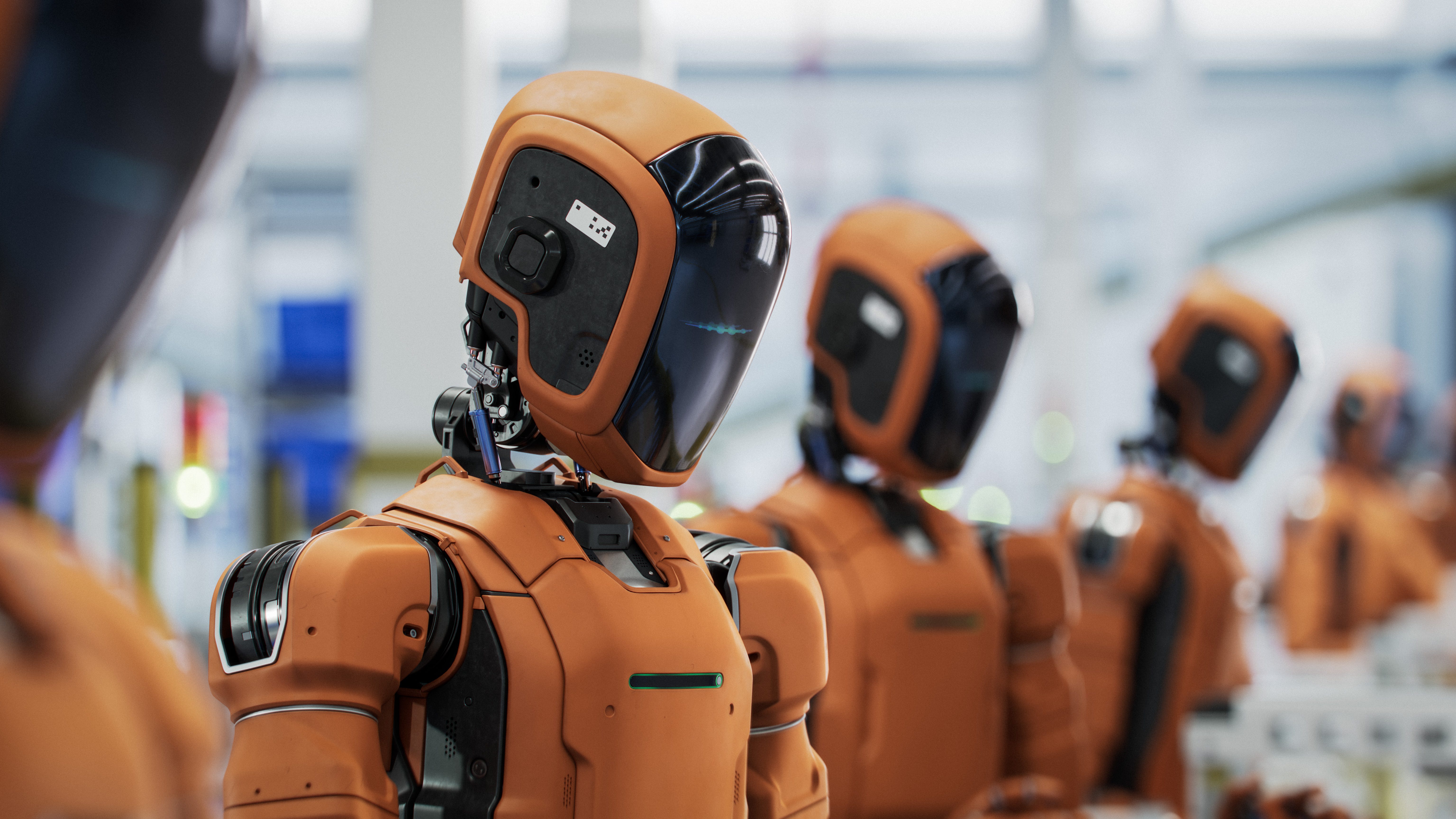
Architecture, however, tells only part of the story. The clearest divergence between the two ecosystems is physical—a finding that supports the original post’s hypothesis about embodied AI and real-world feedback loops. Sixty-one percent of U.S. firms in our sample are software-only, compared to just 26 percent of Chinese firms. Chinese firms are far more likely to deliver AI through humanoid robots, ground robots and quadrupeds, and autonomous vehicles, and they concentrate disproportionately in physical-economy verticals including manufacturing, transportation, and energy. In contrast, U.S. firms cluster in knowledge-intensive, software-delivered verticals like health care, scientific research, and cybersecurity. The contrast becomes clear once you look at physical form factor (see plot below), where the two countries’ distributions diverge sharply.
Distribution of Firms by Physical Form Factor
Our evidence both confirms and sharpens the original concentration concern. It complicates the hypothesis that the U.S. commercial ecosystem is under-diversified across neural architectures, while supporting the original hypothesis that it is under-diversified across the software–hardware boundary. Returning to the R&D-as-bets framing that opened this post, the United States has largely bet that intelligence can be developed and delivered as software—language models, agents, and applications that operate on text, code, and digital data. China’s commercial sector has hedged that bet more evenly, integrating AI into robots, vehicles, sensor networks, and industrial systems at a rate the U.S. ecosystem has not matched. These systems generate a different kind of training signal—embodied, spatial, environment-grounded—than the token-prediction paradigm dominating U.S. commercial AI.
If the path to transformative AI capabilities ultimately requires co-development with robotics, world models, and physical-environment learning—rather than continued scaling of text-based models alone—then this embodied portfolio represents a meaningful hedge that the U.S. commercial ecosystem currently lacks.
Whether that hedge turns out to matter depends entirely on the still-open question at the center of the original “Hedging Our Bets” post: whether the path to transformative AI runs through scaling alone, or through some combination of scaling and physical-world learning. Our data can’t resolve that question. What they can do is provide a systematic, firm-level empirical baseline—one that qualifies the hypothesis of architectural concentration while supporting the original hypothesis that the United States is under-diversified in embodied AI and real-world feedback loops.
Comments
Nothing yet. Say the first thing.
Sign in to join the conversation.