
There’s a simple recipe for musical irritation in popular song: excessive repetition, saccharine lyrics, earworm melodies.
What we have below, however, is next-level stuff.
I’m talking about the sort of musical punishment dished out by DJs to generations of radio listeners. At least up until digital media allowed some personal control over song selections.
Some of the “songs” below are still in rotation on the airwaves, playlist zombies that have inexplicably resisted gunblasts to the head. If you’re too young to recognize any, now you know why boomers are nails-tough compared to Gen Z. We walked to school, swam in polluted seas, ate toxic waste for breakfast, and lived in shoeboxes in the middle of the road — but we were truly hardened through bad tunes.
Sure, you young’uns have your own musical crap to deal with (if my ears don’t deceive me, it’s about 90 percent of your rap, emo and autotuned pop). But today we are focusing on some dreck from the Lower Cretaceous of popular music. These are personal horrors of mine.
Rock band Jefferson Airplane had two big sixty-era hits with “White Rabbit” and “Somebody To Love.” In a decision that didn’t bode well for their fan base, the band renamed themselves ‘Jefferson Starship,’ and their overreach was reflected in this lumbering, brain-dead monstrosity: a synthetic shout-out to their musical greatness, with all the subtlety of a train-spotting autistic teenager jacked up on Red bull hammering on a locomotive door for a peek inside.
The song originated as a critique of how commercial interests were squeezing live music venues. Ironically, after Starship ladled the lyrics with slick synthesizers and glossy production, it ended up being the very kind of FM-friendly, high-fructose corn syrup the band was lamenting in corporate rock. In 2011, a Rolling Stone readers’ poll identified it the “Worst Song of the Eighties.”
Almost a fact: in 1987, the Supreme Council of Iraq declared domestic broadcast of the Starship hit to be an “offense against public decency.”
I use the word ‘song’ advisedly here. A gooey slice of soft rock sentimentality that gives treacle a bad name, to say nothing of anthropomorphic muskrats.
It was originally written by Willis Alan Ramsey and recorded in 1972 under the title “Muskrat Candlelight” on the artist’s only studio album. In 1973, the band America changed the title to “Muskrat Love” and inexplicably had a modest hit with it. Newly emboldened, pop duo Captain & Toenail decided to record it themselves in 1976, and even more inexplicably, had a huge hit on their hands
What’s not to hate? Daryl Dragon’s synthesized squeaking sounds, intended to mimic the romantic conversation of the muskrats? Toni Toenail’s lullaby vocalization? Not that any of it stopped the song from climbing to Number 4 on Billboard Charts.
Almost a fact: To highlight the range of human cultural production, ‘Muskrat Love’ was among the sound clips chosen by astronomer Carl Sagan for inclusion on a 12-inch gold-plated phonograph disk containing sounds, music, and images from Earth, to accompany the 1977 launch of the Voyager space probe.
The disc was intended as a message to any extraterrestrial civilization that might chance upon it, but for that very reason critics have questioned Sagan’s inexplicable inclusion of ‘Muskrat Love” on the Voyager flight. They said it could potentially endanger humanity if intelligent beings discover the probe, and after decoding the disc decide the species responsible must be eliminated for the good of the galaxy.
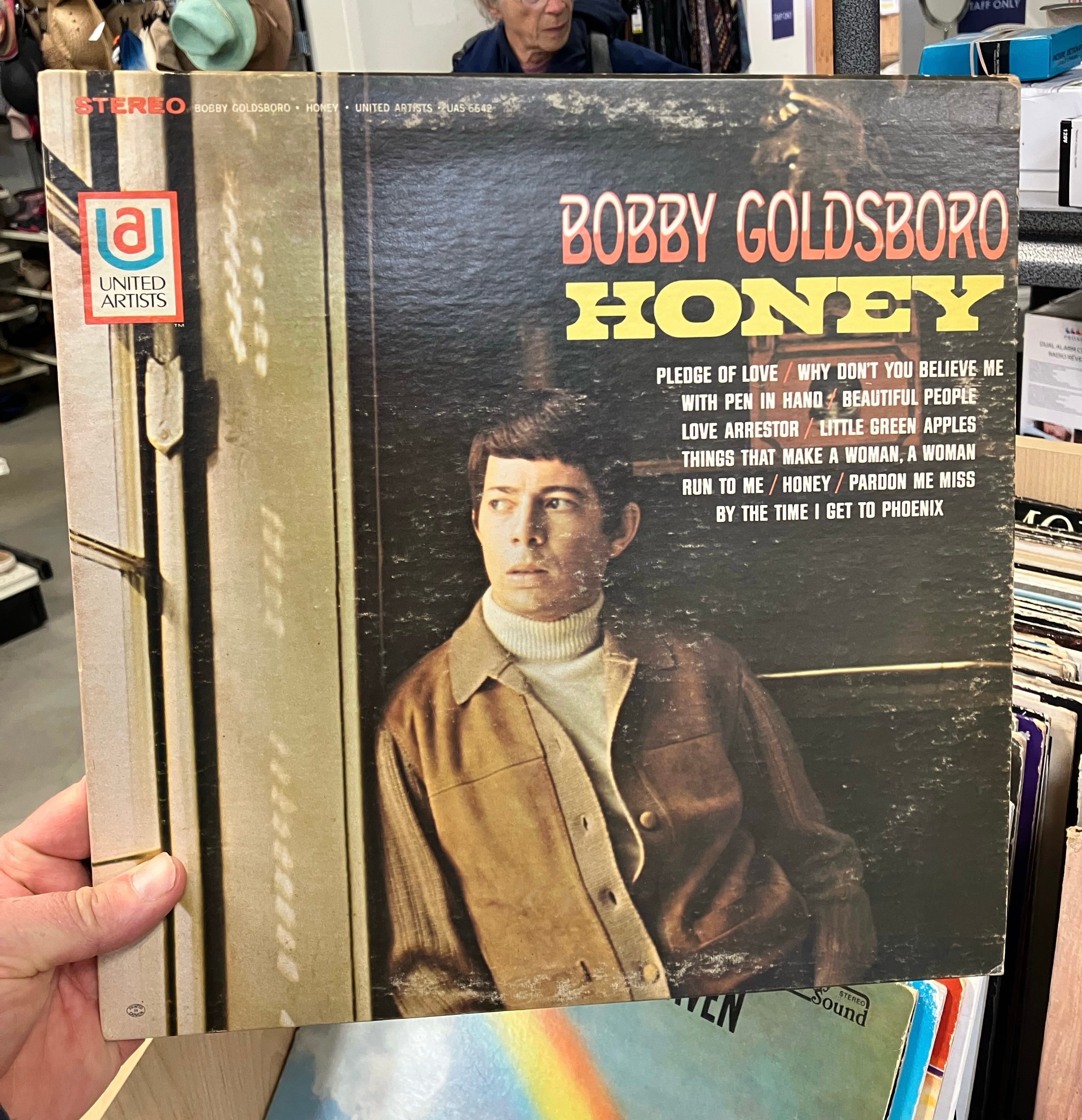
A horror from 1968. Goldsboro was sold on the song after the original composer, Bobby Russell, performed it for him alone with an acoustic guitar. Goldsboro then recorded it in Nashville, with the hit version reportedly captured on the first take, sparing studio engineers from serious aesthetic injury.
The lyrics tell the story of a husband reminiscing about his “kinda dumb, kinda smart” wife, Honey. Spoiler alert: only near the end does the listener learn that his “young at heart” bride has died, making the earlier memories all the more poignant. In theory. But also in practice: Bobby Goldsboro’s 1968 hit spent five weeks at No. 1 on the Billboard Hot 100 and became one of the year’s best-selling singles.
Almost a fact: scientists have speculated that the enormous popularity of the song in the US may have actually incrementally contributed to continental drift, by making the Old World retreat from the New World several inches more a year than can be explained by plate tectonics.
One helpful thing about hardcore country-western music: there is very often a brief warning in the form of a mosquito-like fiddle intro, which allows the listener a few seconds to change the dial, exit the room, or plug their ears before the hayseed howling begins.
No such warning comes with this Excederin headache from 1992. Country western singer Billy Ray Cyrus almost passed on this tune before deciding to include it on his debut album. Its enormous popularity helped launch the line-dancing craze of the early 1990s, a rather annoying trend on its own though more easily avoided than the song itself.
As one of the first sorry examples of rock-country floor-crossing, “Achy-Breaky Heart” was rained down on the radio-listening population like glyphosate from Monsanto cropdusters.
It was this tune that inspired comic Bill Hicks to imagine himself hosting a half-hour weekly show entitled 'Lets Hunt and Kill Billy Ray Cyrus.’ (A trifle excessive, perhaps. Kill the song, and only injure the singer.)
Almost a fact: “Achy-Breaky Heart” found a new life in the so-called war on terror during the Bush-Cheney years, where it was used as a tool of interrogation at Guantanamo Bay. It were also put in constant rotation at loud volumes to deter hunger-striking prisoners at Camp X-Ray.
Upon his election win in 2008, president Barak Obama put an end to the practice as “excessive.”
This brings us up to the near present.
There are plenty of seasonal musical misfires by big-name artists to choose from. Here is one of the most entertainingly gawd-awful, though it may not even be the worst track on Dylan’s 2009 album, Christmas In The Heart.
Nearly a fact: Dylan’s Noel nadir been found to be a remarkably effective adjunct to the buzzing acoustic deterrence device used at the 7-11 and other late-night convenience stores, for warding off partying teenagers and other loiterers. It is also now regularly broadcast on major international airport tarmacs to protect jet engines from gathering flocks of birds, ensuring the safety of the passengers and crew alike. This just goes to show how good can sometimes come from bad.
No posts
Comments
Nothing yet. Say the first thing.
Sign in to join the conversation.