
This edition of Strands of Genius is guest curated by Gustavo Mendes, Creative Director & Brand Strategist (Faris and Rosie will be back soon!)
LOCATION: São Paulo, Brazil
Hello Geniuses, I'm Gus, a Creative Director, Brand Strategist, and Cultural Producer from Rio de Janeiro, now based in São Paulo. I met Rosie and Faris while studying advertising at The Creative Circus in Atlanta, Georgia, in a building tucked behind strip clubs and André 3000's studio. A few years later, they came to visit me in Seattle while I was working at Publicis. Somewhere along the way, I also had the pleasure of showing Faris around Rio. Time flies. These days, I split my time between building brands and producing large-scale art exhibitions. My latest project opens this August at Farol Santander, where tons of recycled materials are transformed into illuminated, life-like ecosystems. Lately, I've been finding the same conversation in unexpected places. Paintings, pop songs, papal encyclicals. Different mediums, same question: what makes us human? If you're ever in Brazil and need a gallery recommendation, advice on where to eat, or a Creative Director, drop me a line.
Despite all our tech, tools, and tracking pixels, humans are still wired for wonder. We want the spark, the story, the synchronicity. We want to feel like something more is at play. Magic—whether literal, metaphorical, or marketing-based—still matters. For creatives, strategists, and brands, injecting meaning into moments is where real connection lives. Logic moves minds, but magic moves hearts. And in a data-driven world, that kind of enchantment might just be your competitive edge.
Do you believe in magic? In the creative process, in life, in marketing?
I believe in magic, but not as the opposite of logic. I think magic is what happens when logic has done all it can and something truly sensitive and human enters the room, often unannounced.
Human insight is still the driving force behind our work. And insight doesn't always emerge from logic or data. Sometimes the connections we make feel genuinely magical.
In advertising, I've always been suspicious of ideas that only make sense in a deck. Strategy matters. Data matters. The slide, the idea, the concept all have to hold themselves up. But the work only really starts to come to life when it creates a feeling people can't quite explain. A line, a song, a color, a strange image, a memory, an imperfection. That's usually where the meaning is hiding.
The same is true in art. For the last few years, I've been producing large-scale exhibitions in Brazil, and the best moments are never just technical. They happen when light, space, sound, material, and timing suddenly become more than the sum of their parts. You can plan for that moment, budget for it, draw it, schedule it, build it, create the spreadsheet to end all spreadsheets. But you can't fully control it.
What people bring to the work. Their reactions, emotions, and interpretations. The part that remains unsaid. That's where the magic is.
Maybe that's why I'm drawn to things that feel slightly haunted: Marina Lima's husky voice, an eerie keyboard, Jordan Sullivan's decadent neon America, or a Pope writing about AI with more human concern than half of Silicon Valley. They all seem to be asking the same question: what makes us human when everything around us is trying to optimize us?
So yes, I believe in magic. Not the kind that ignores reality or dismisses the data. The kind that makes you feel. The kind that makes reality feel charged with meaning.
IMPERFECTIONS ARE FINGERPRINTS
A couple of weeks ago, I caught myself admiring a coworker's emails and work messages. They were everything you'd want them to be: professional, clear, and concise. Admirable, without a doubt.
But what caught my attention were the occasional typos. Every time an imperfection appeared, it communicated something far more valuable than perfection ever could: humanity.
That's why this article resonated with me. For anyone working in advertising, design, or contemporary art, the most interesting takeaway is that craft itself is becoming a signal of value. The brushstroke, the scribble, the stop-motion puppet, the grain of film, and even mistakes are increasingly functioning as proof of human authorship.In a world flooded with AI-generated content, imperfections aren’t flaws. They're fingerprints.
[The Guardian]
WHEN THE POPE SOUNDS MORE SECULAR THAN SILICON VALLEY
Pope Leo XIV's first encyclical is a reflection on what it means to remain human in an age increasingly shaped by machines, algorithms, automation, and digital power.The Pope argues that technology is neither inherently good nor evil, but it is never neutral. It inevitably reflects the values and interests of those who design it. At its core, Magnifica Humanitas is a defense of human dignity in the age of AI, insisting that technology must remain a tool that serves people, rather than people becoming tools of technology.
The document reads less like a theological treatise and more like a 21st-century manifesto on AI ethics, work, power, democracy, war, and what makes human beings irreplaceably human.
While governments debate regulation and Silicon Valley races ahead, Pope Leo XIV has produced one of the most comprehensive moral critiques of AI yet offered by a major world leader.
Just a few months ago, PayPal and Palantir billionaire Peter Thiel argued that government regulation of
AI could hasten the rise of the Antichrist. Meanwhile, we find ourselves in the curious position of living in a world where the Vatican often sounds more secular, pragmatic, and human-centered than Silicon Valley.[Vatican & The Guardian]
WE’RE ALL EATING FROM THE SAME TRASH CAN
Jordan Sullivan's painting project American Psychosis is filled with the debris of twentieth-century optimism: highways, chain stores, muscle cars, fast food, cheap alcohol, endless suburbs, and consumer excess.
Using lurid neon colors, cinematic suburban landscapes, and deeply human characters, Sullivan transforms motels, parking lots, wildfires, convenience stores, and forgotten neighborhoods into haunting allegories of contemporary America. His paintings are simultaneously tender and brutal, revealing a nation caught between myth and collapse.
I can't help thinking about Sullivan's America as I write this, on the opening days of the World Cup in Mexico, just before the tournament moves north. A landscape of faded neon, empty promises, and strange beauty. An empire illuminated by the glow of its own decay.
[lampoon]
I’m convinced Marina Lima, Pope Leo XIV, and Jordan Sullivan are having the same conversation.
Game :: Buraco
City :: Tokyo. I grew up there, I'm dying to go back, and the Japanese seem determined to perfect absolutely everything they touch, starting with food. Onegaishimasu.
Book :: Eating the Dinosaur, by Chuck Klosterman. I gulped it down on a plane many years ago. One chapter is an elaborate, methodically argued case for why ABBA is the most authentic band to have ever existed. It's also one hell of a pitch.
Podcast :: Song Exploder
Song :: Não Sei Dançar, by Marina Lima. An eerie keyboard drifts in like waves at night, followed by her beautifully husky voice. Listen to it and suddenly you're alone, staring out at the vastness of the ocean. And if you have the profound misfortune of not speaking Portuguese, hit translate and read the lyrics
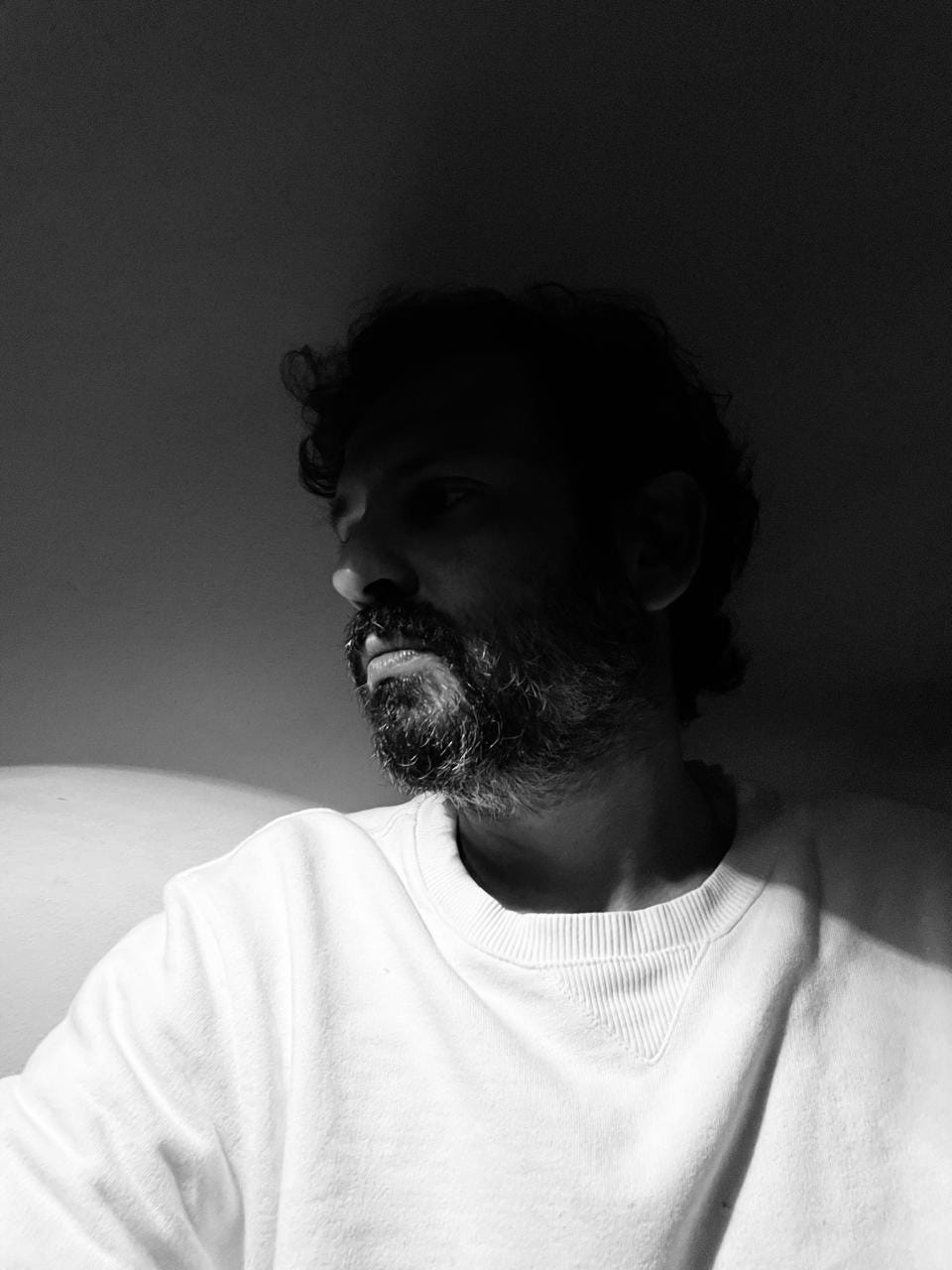
This edition was guest curated by Gustavo Mendes, who you can find on LinkedIn and on his website! Your regularly scheduled hosts, Rosie & Faris Yakob, will be back next week!

It's called Genius Steals because we believe ideas are new combinations and that nothing can come from nothing. But copying is lazy. We believe the best way to innovate is to look at the best of that which came before and combine those elements into new solutions.
Co-Founders Faris & Rosie are award-winning strategists and creative directors, writers, consultants and public speakers who have been living on the road/runway since March 2013, working with companies all over the world. We have a distributed team ourselves, an accounting team is based in Tennessee where our company is registered, our admin extraordinaire is based in Playa del Carmen, and our collaborators are all over the world. Being nomadic allows us to go wherever clients need us to be, and to be inspired by the world in between.
Hit reply and let’s talk about how we might be able to work together :)
No posts
Comments
Nothing yet. Say the first thing.
Sign in to join the conversation.