
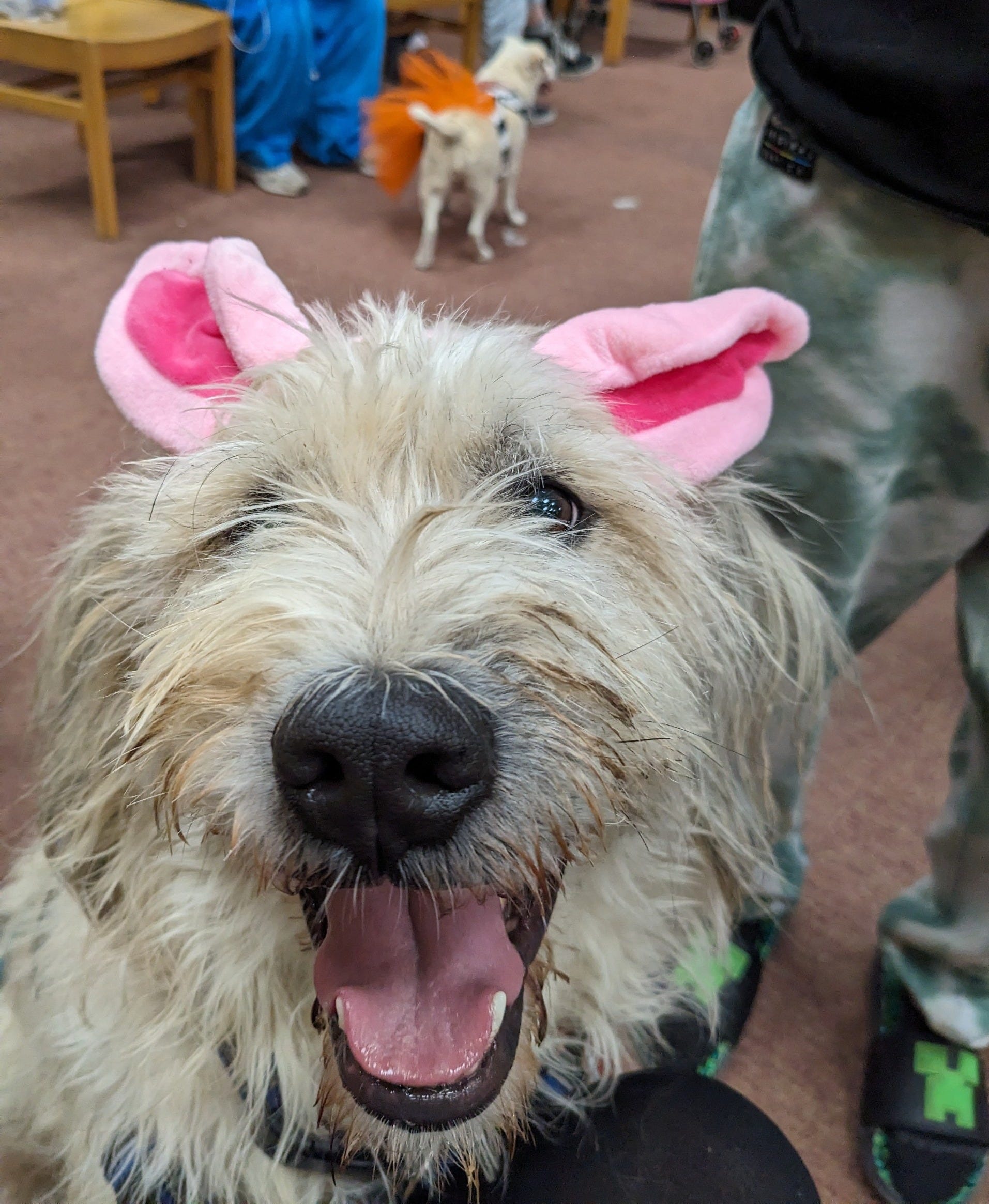
What Harry Knew
Before I adopted Harry, he had been living in a rural house with twelve other dogs. Eight adult dogs and four puppies. Harry’s mother was a Great Pyrenees -- and his father was a Shih Tzu. Harry was one of a kind! Harry and his mom were mostly “outside dogs,” and Harry was at the bottom of the pack order. Somehow, a nine-pound female set the rules. She was the littlest one, but she was the alpha!
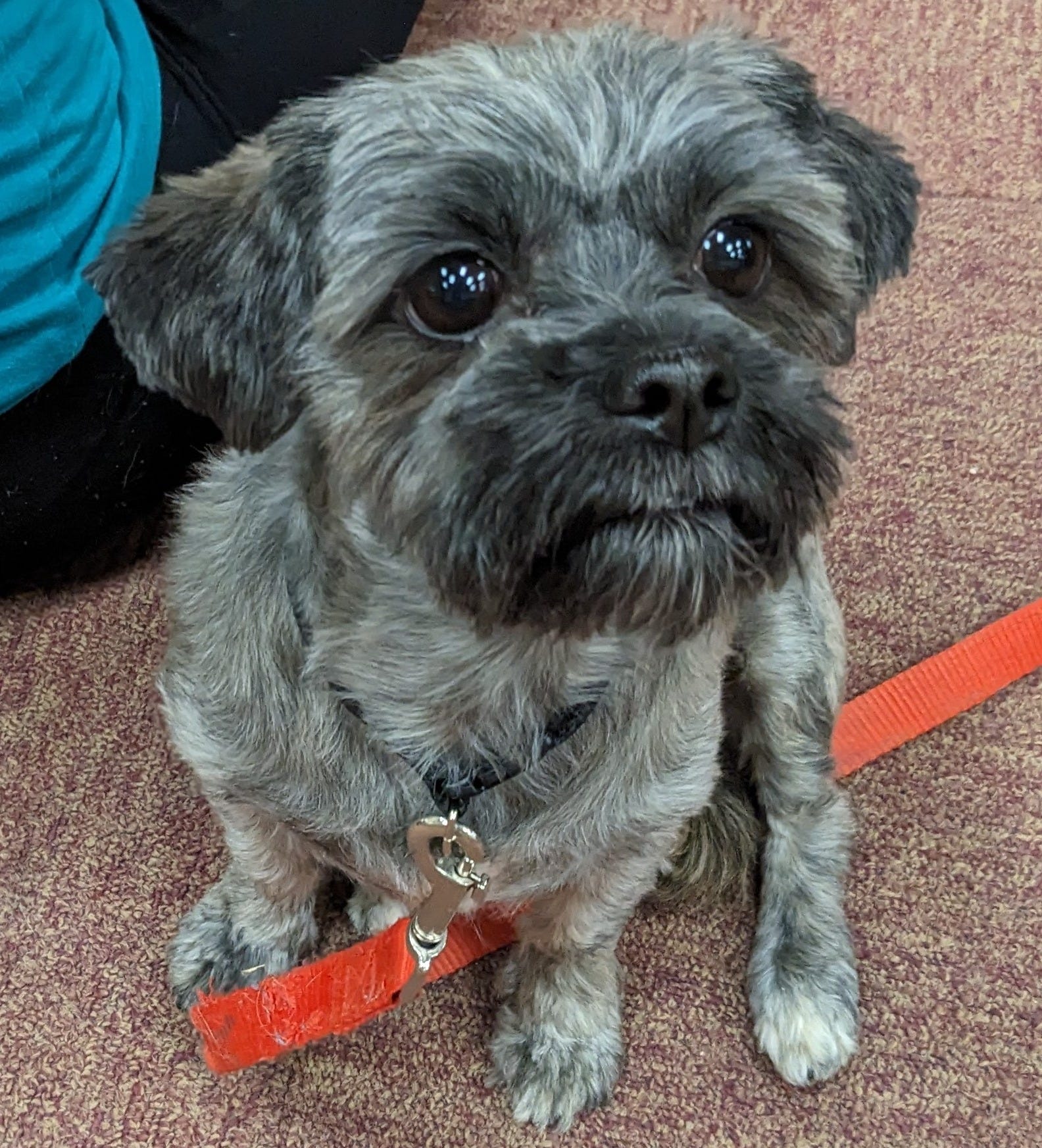
That many dogs means noise, competition, and very little individual attention. Yet when I first met Harry, what struck me wasn’t the chaos—it was his calm.
While the other dogs barked and pushed forward for attention, Harry sat quietly and watched.
He had a quiet presence about him.
The kind that makes you pause.
People often think therapy dogs are simply friendly dogs who like everyone. But the best therapy dogs have something deeper. They have an intuitive awareness of people. They notice things we often miss.
Even before Harry had any training, I sensed he might have that rare quality.
At the time, I was teaching students in my Human-Animal Connection high school program, Canines Teach Compassion, about what makes a good therapy dog. Instead of simply telling them what I thought about Harry, I decided to turn it into a learning experience.
So I brought Harry to class.
The students had been studying the qualities that matter in therapy work—calmness, emotional sensitivity, confidence, and gentleness. I asked them to observe him carefully and then, using the ten-point system I had taught them, evaluate his potential.
One by one, they shared their scores.
Ten.
Ten.
Ten.
Every student in the room gave him a perfect score.
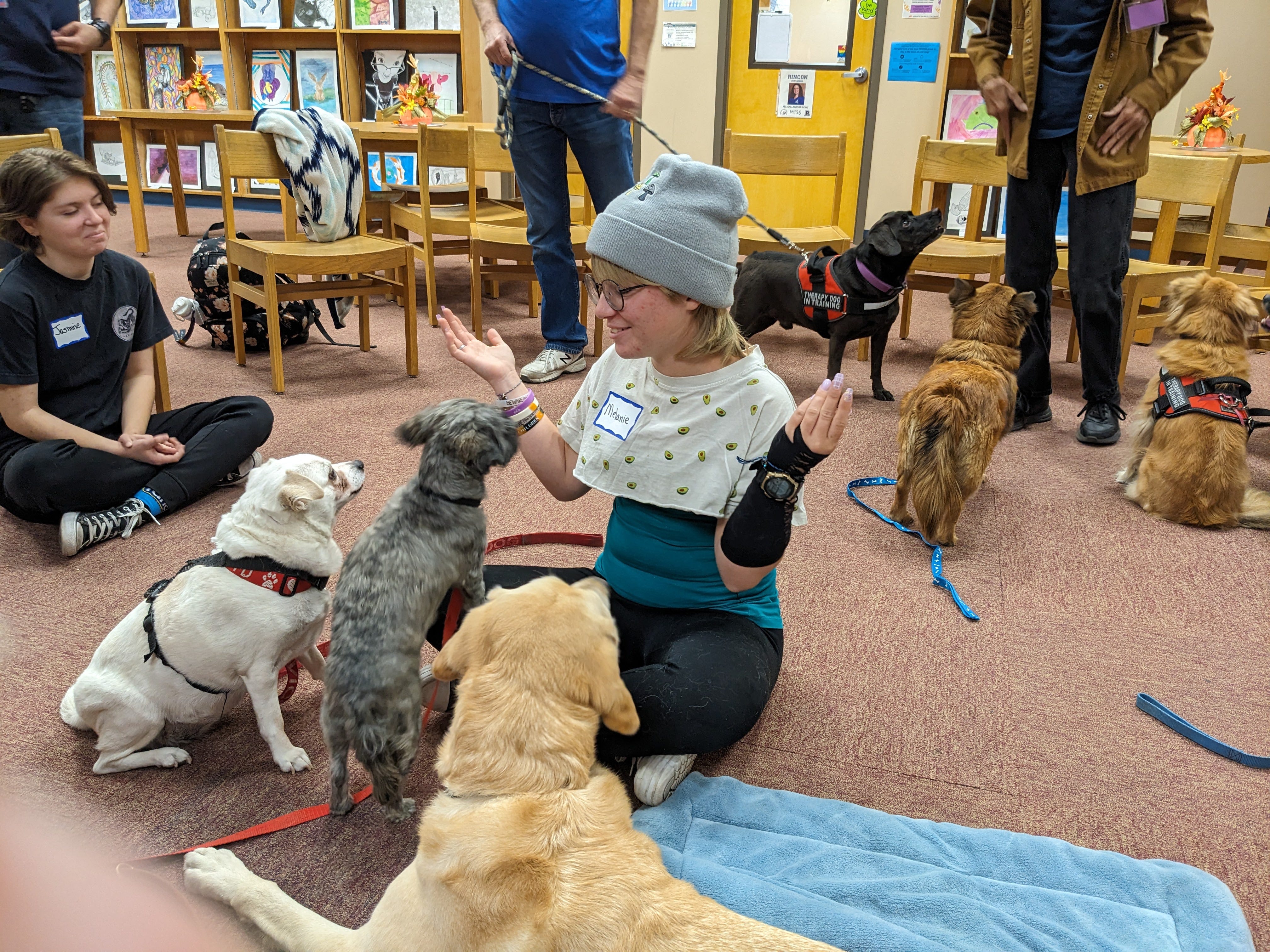
Harry seemed completely unaware that he had just passed his first test.
Soon after, I began his formal therapy dog training. Even with a wonderful temperament, training matters. Therapy dogs must remain calm in unpredictable environments—around wheelchairs, loud noises, sudden movements, and people experiencing intense emotions.
Harry passed his certification test on the first try—something that doesn’t always happen.
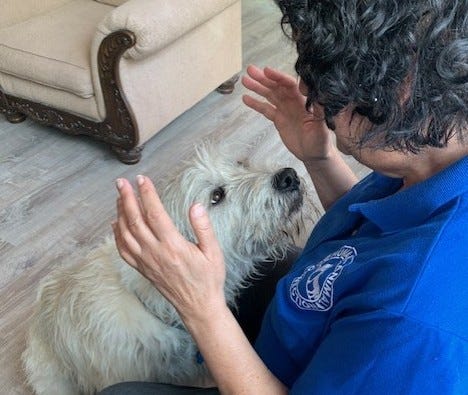
As soon as he had his credentials, he began joining me on therapy dog visits.
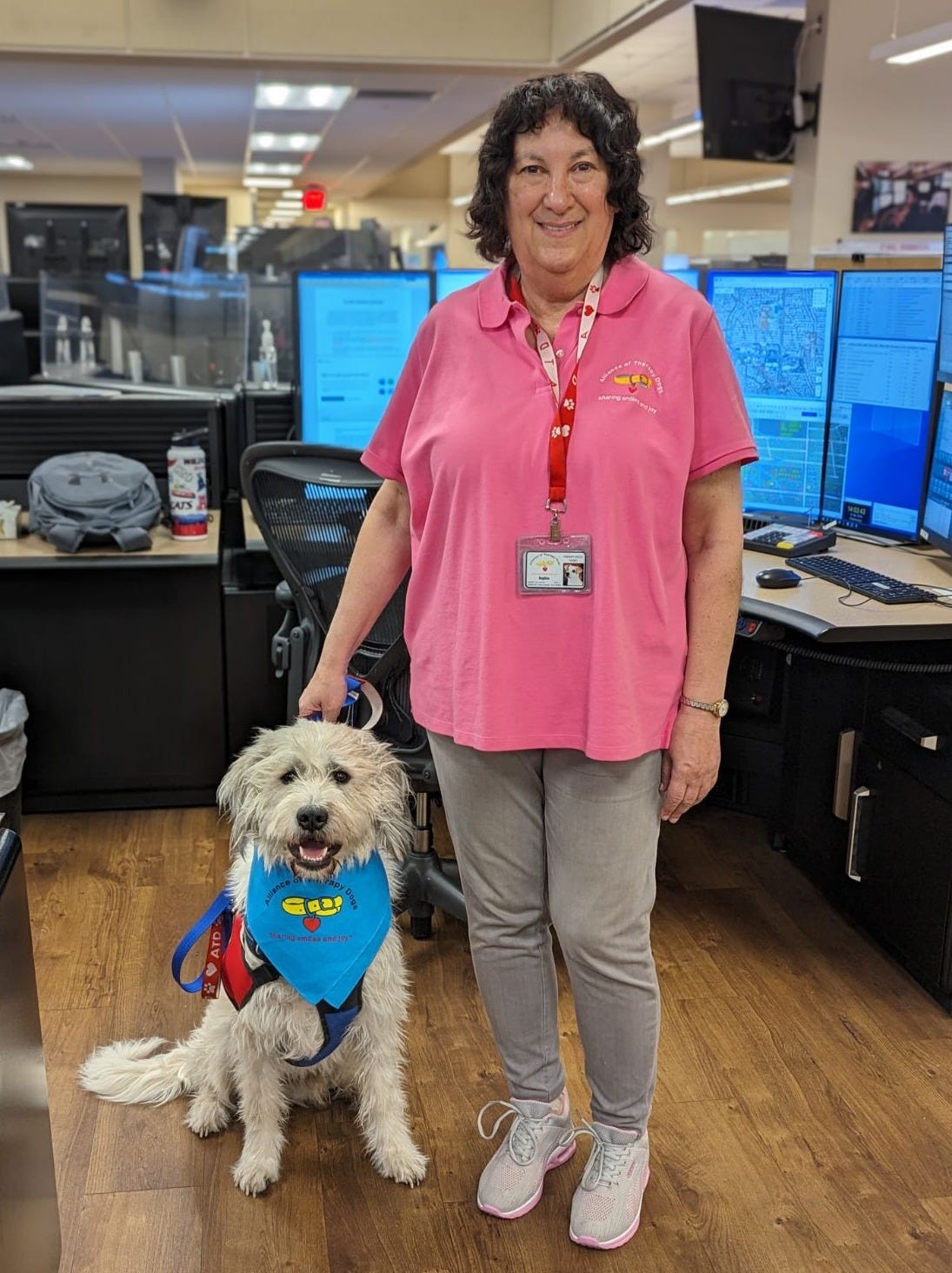
On his first visit to a 911 call center, a seasoned operator stepped away from a difficult call. Harry quietly walked over and stood beside him.
The man reached down and stroked Harry’s head.
“I try not to let them get under my skin,” he said softly. “But that was a rough one. I don’t know what I would have done if Harry wasn’t here.”
In that moment, I knew Harry was ready to meet people exactly where they were—however they showed up.
He didn’t judge.
Wherever we went, people loved him. His gentle eyes. His soft presence. The way he leaned quietly into people who needed comfort.
He had a gift.
In the Human-Animal Connection program, one of the principles we teach is simple but profound:
Animals Have Opinions.
We often assume animals will interact with whomever we direct them toward. But in the Human-Animal Connection program, whenever possible, we allow the therapy dog to choose.
Animals have their own perceptions about people.
And when therapy dogs are free to choose whom they approach, they often go exactly where they are most needed.
Harry was friendly with everyone.
But in this high school class, he had a favorite.
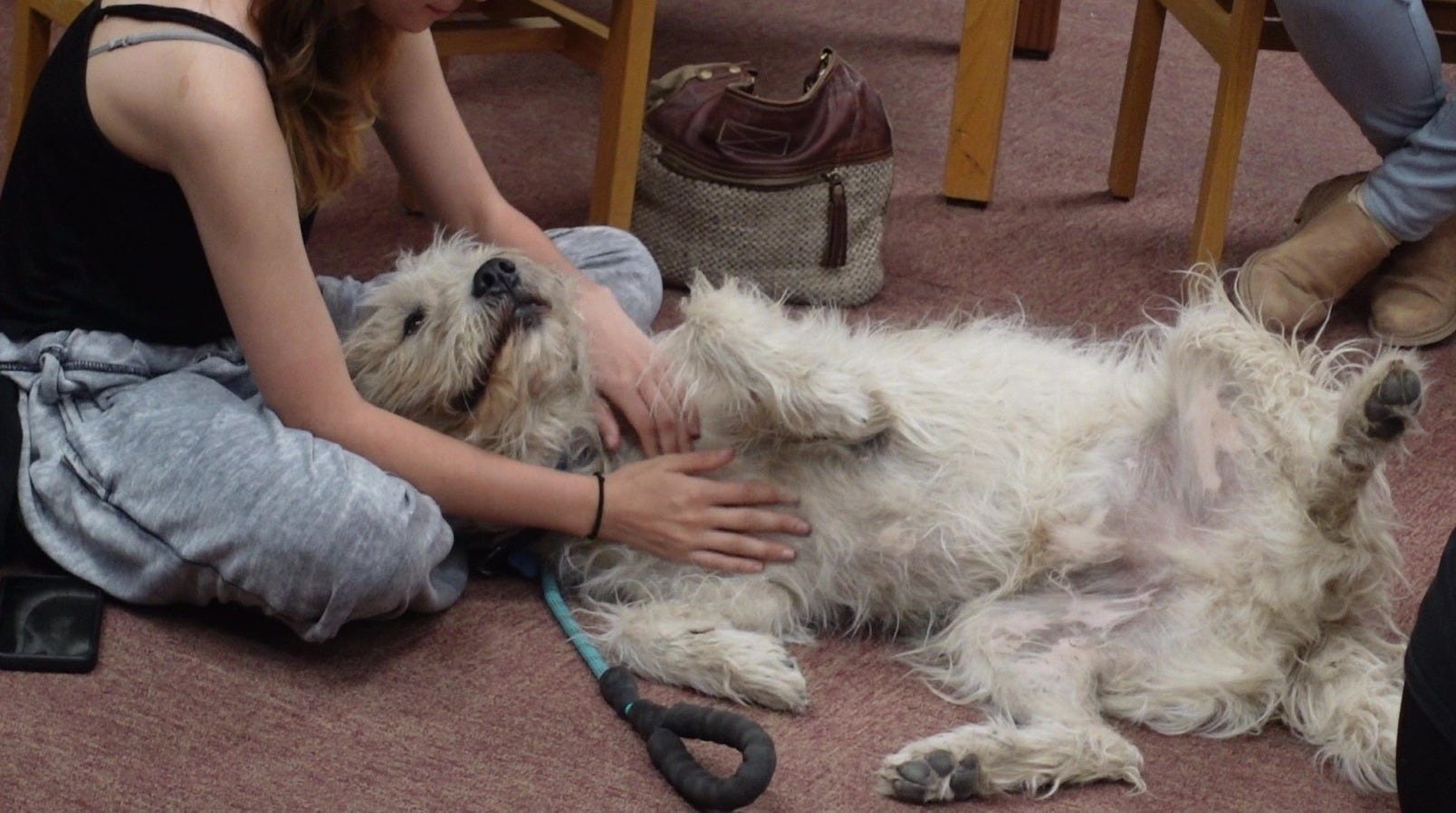
Each week when we entered the library, Harry would briefly greet the group. Then he would quietly walk past the other students and settle beside the same girl.
She was a teenager who never spoke in class.
While the other students talked, asked questions, and interacted, she remained silent. Many people might not even have noticed her.
But Harry noticed.
Every week he curled up beside her, and she would wrap her arms around him and hold him for the entire class.
It was a deep, quiet kind of connection.
No words.
Just presence.
And slowly, something began to change.
Week by week, the girl began to open up. First a few words. Then a sentence. Eventually she began speaking in class.
One day after class, she stayed behind and told me something about her life.
She was living in foster care.
And suddenly, Harry’s choice made perfect sense.
Of course, he didn’t know the details of her story. Dogs don’t understand our human systems of foster families and social services.
But animals are masters at sensing emotional need.
Harry knew she needed comfort.
Out of all the students in the room, he had chosen her.
And because of that simple act—being chosen by a dog who could have spent time with anyone—she began to feel something many foster children struggle to feel:
Safe.
Important.
Loved.
In that moment, I realized something important about Harry.
He wasn’t just a good therapy dog.
He was an exceptional one.
Because the very best therapy dogs don’t just respond to people.
They find the ones who need them most.
And somehow…
Harry knew.
*
To learn more about The Human-Animal Connection
Please visit
TheHumanAnimalConnection.org

No posts
Comments
Nothing yet. Say the first thing.
Sign in to join the conversation.