
Lithium for the brain?
Lithium is a trace mineral that we naturally consume through food and water at varying levels. On average, most people get about 3-4mg/day of lithium, but your levels depend a lot on your water source as well as where your food was grown.
Lithium is famous (infamous?) for being used at high doses for bipolar disorder, but at much lower doses, recent studies are showing some very interesting findings for both mood and the prevention of neurodegenerative diseases.
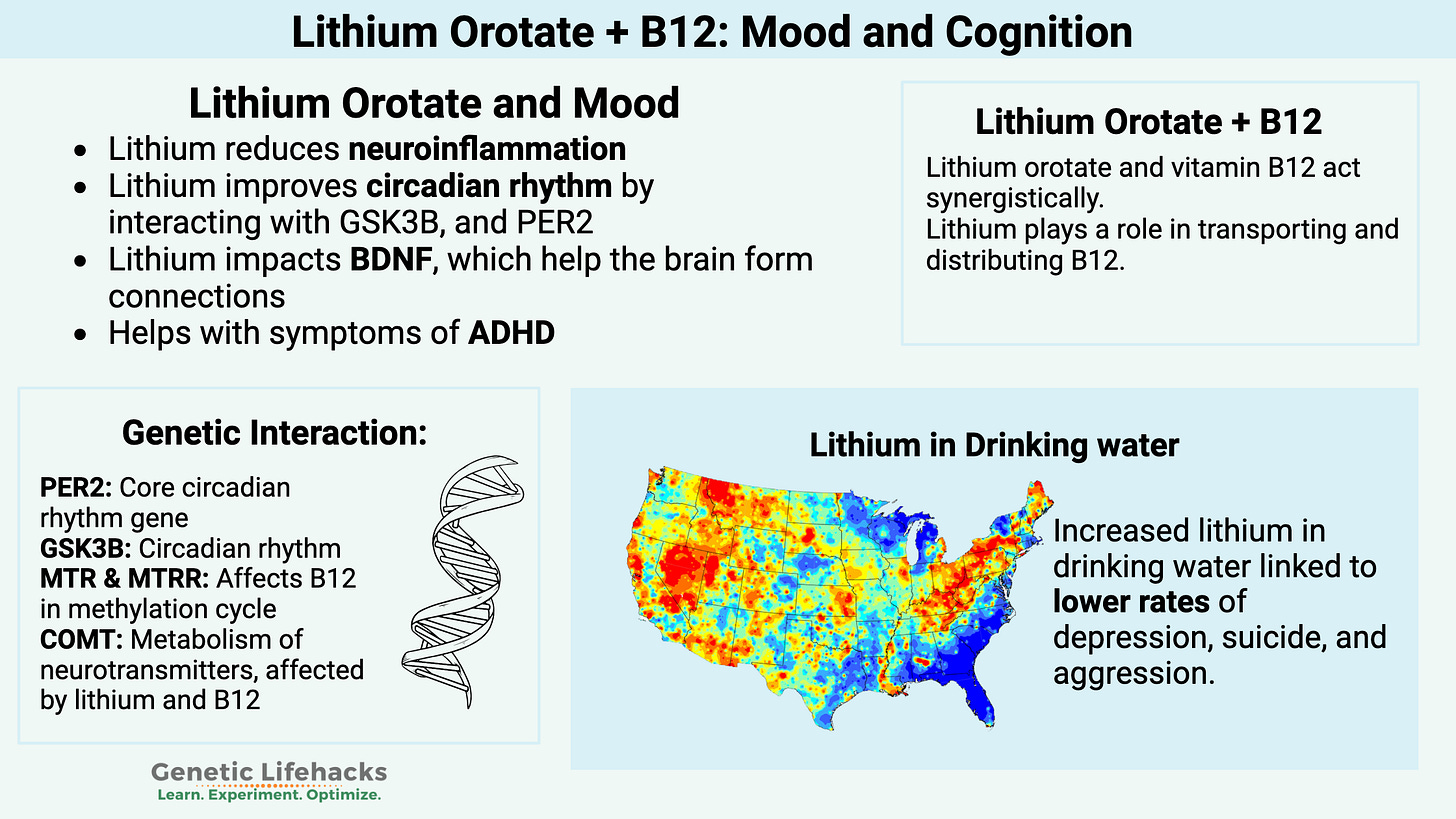
Epidemiological studies over the past couple of decades have shown that areas with higher naturally occurring lithium levels in the drinking water (and soil) have statistically lower levels of Alzheimer’s disease, suicide, and aggressive crimes.
You can read all about lithium, supplemental low-dose lithium orotate, and genetic connections here: Lithium Orotate and Vitamin B12: Benefits for Mood and Cognitive Support
Today, I wanted to highlight a Nature study that I just added to that article. The study builds upon more than two decades of studies on lithium and Alzheimer’s disease, and it answers some of the questions on mechanisms. Essentially, the researchers used a mouse model of Alzheimer’s and fed the mice a diet that was deficient in lithium. The low-lithium diet accelerated amyloid‑β deposition, tau phosphorylation, microglial activation, synapse and myelin loss. It did this through increasing the activation of GSK3β, which caused increased neuroinflammation (microglial activation, IL-6, IL-1B, and other inflammatory markers).
What is important about this study is that the researchers showed that low-dose lithium orotate was able to prevent the age-related brain changes almost completely (again, in mice).
Lithium orotate is readily available as an inexpensive supplement. The question that remains is: what is the exact right dose for Alzheimer’s prevention? The answer is likely highly personal — based on your genes (including GSK3B variants) and on your dietary intake of lithium. As you can see from this USGS map, lithium levels in the water vary a lot across the US.
Check out the full article on lithium orotate, genes, and all of the studies on mood, brain function, long covid, and even new studies on Parkinson’s. I also cover the safety concerns for higher doses of lithium, interactions with vitamin B12, and genes that may drive the benefits for depression or mood.
Every article on Genetic Lifehacks is getting updated with a new format for the genotype reports and genetic previews — hopefully making it easier to see and understand your data. You’ll see these changes rolling out across the whole site within the week.
If you’re up for helping out with some beta testing, I have a new format for the summary reports here. You can now filter out the SNPs that aren’t included in your raw data and see the notes specific to your genotype. Test them out, let me know what you think - and most importantly, if you spot any errors, please send me a screenshot!
I’m running a two-day sale on memberships - use the coupon code 1776 for 17.76% off any membership or upgrade. If you’re a monthly member, consider upgrading to the annual or lifetime membership. If you are already a lifetime member, consider sharing this coupon code with family or friends.
Happy 4th (a day early) and happy Canada Day (belated) to my friends to the north,
~ Debbie
Key takeaways:
For some people, supplementing with low-dose lithium orotate helps with anxiety, depression, and anger issues.
For others, lithium orotate supplements seem to have little or no noticeable effect on mood.
Research shows that small amounts of lithium (natural mineral) influence mood, aggression, neuroinflammation, and more.
Vitamin B12 comes into play here as well, and lithium orotate along with B12 may help with mood and cognition.
In this article, we will explore the potential lithium orotate benefits, backed by research studies, and discuss its impact on mood, anxiety, and cognition.
Thanks for reading Genetic Lifehacks! This post is public so feel free to share it.
Comments
Nothing yet. Say the first thing.
Sign in to join the conversation.