
In July of 2021, I signed up for my first ever ceramics class. It was a Zoom class, and I spent the week excitedly lugging home a 25lb block of clay and figuring out what my new desk setup would be. I remember joining the first class and hesitantly using the wire cutter to take out a chunk of clay, hoping I was “doing it right”.
Fast forward, it’s almost 4 years later and I’ve made so, so many ceramic objects – many that I’m proud of, many that were quietly placed in a box in the basement. Clay has taught me so many lessons about myself, community, and what it means to have a creative practice. Clay is an ongoing discovery, but I’d love to share some of what I’ve learned so far.
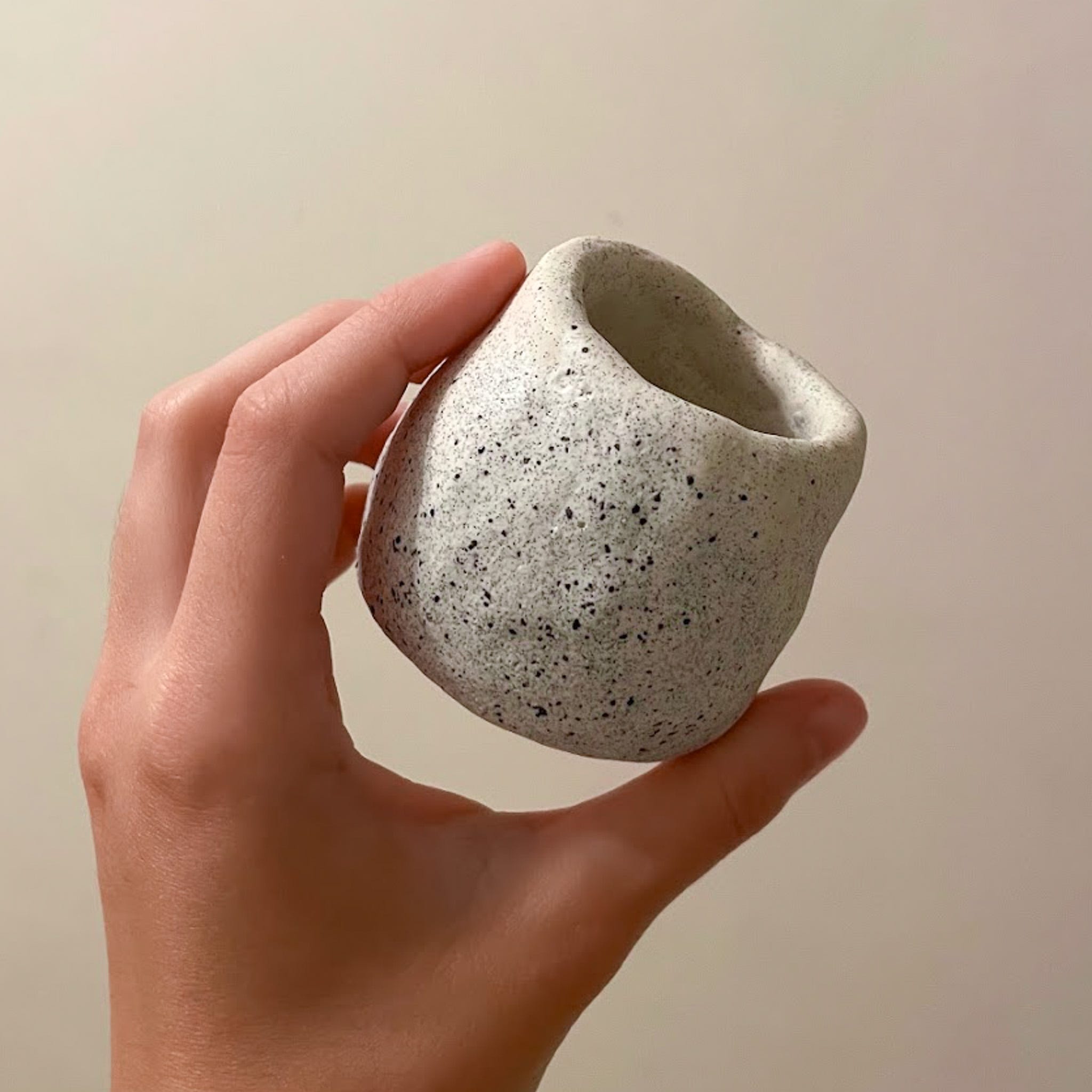
One of the first things my teacher told us was to remember that pottery is not an independent craft. Pottery is a collaboration with the elements and the kiln. You do your job of molding the object, decorating the surface, dunking it in glazes (which is essentially a blind sport – unfired glazes tend to just be muted shades of grey and beige). Then it’s in the hands of the kiln gods, and they will do their thing.
I’ve had pieces shrink to be smaller than intended, glazes that completely migrate, bubble, or run in ways I didn’t plan, mysterious cracks form, and things that just turned out plain ugly. I often hold my breath as I scan the shelves looking for my finished pieces, usually unsure of what they’ll even look like.
Here are some of my favorite mistakes!

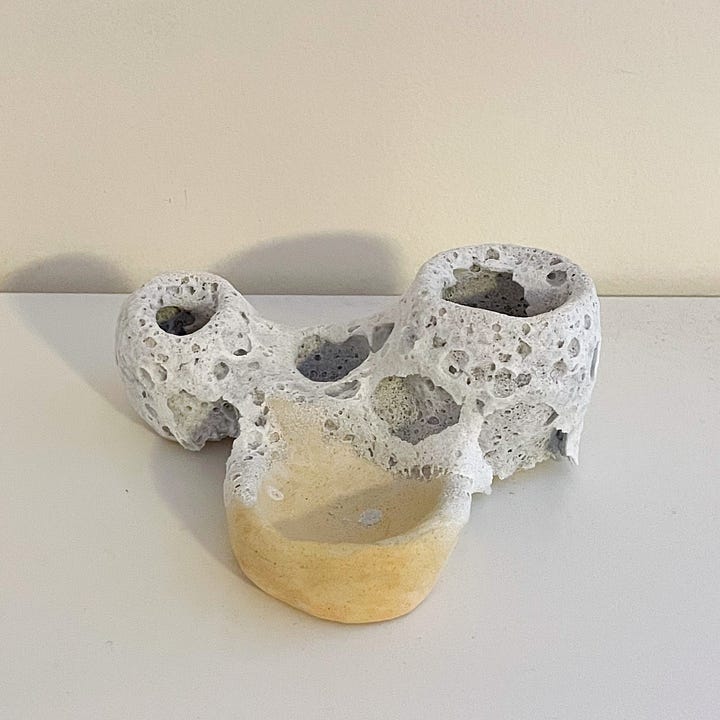


Ceramics are a long term commitment. At best, you could have a fully finished piece in about a month (at a community studio, at least). There were a lot of times where I didn’t love the form I made and wanted to just squish it back up, because going through the lengthy process of trimming, bisque firing, glazing, and firing again didn’t seem worth it. The times that I forced myself to do it anyway often brought a change of heart – I wound up being pretty happy with it in the end. Glaze can really bring a piece to life. It also clearly has the ability to make something so horrendous that it’s basically unrecognizable (see above), but at least it’s a learning experience (I guess).
Rarely can you start and finish a piece in one sitting. It’s a multistep process and requires lots of waiting time. The more you touch clay the more it dries out and becomes crumbly, and the more weight you add to something the more it’ll start to slump. If you push it to do too much at once, things will just sort of start to fall apart. Clay moves at its own pace. Its pace is slow.
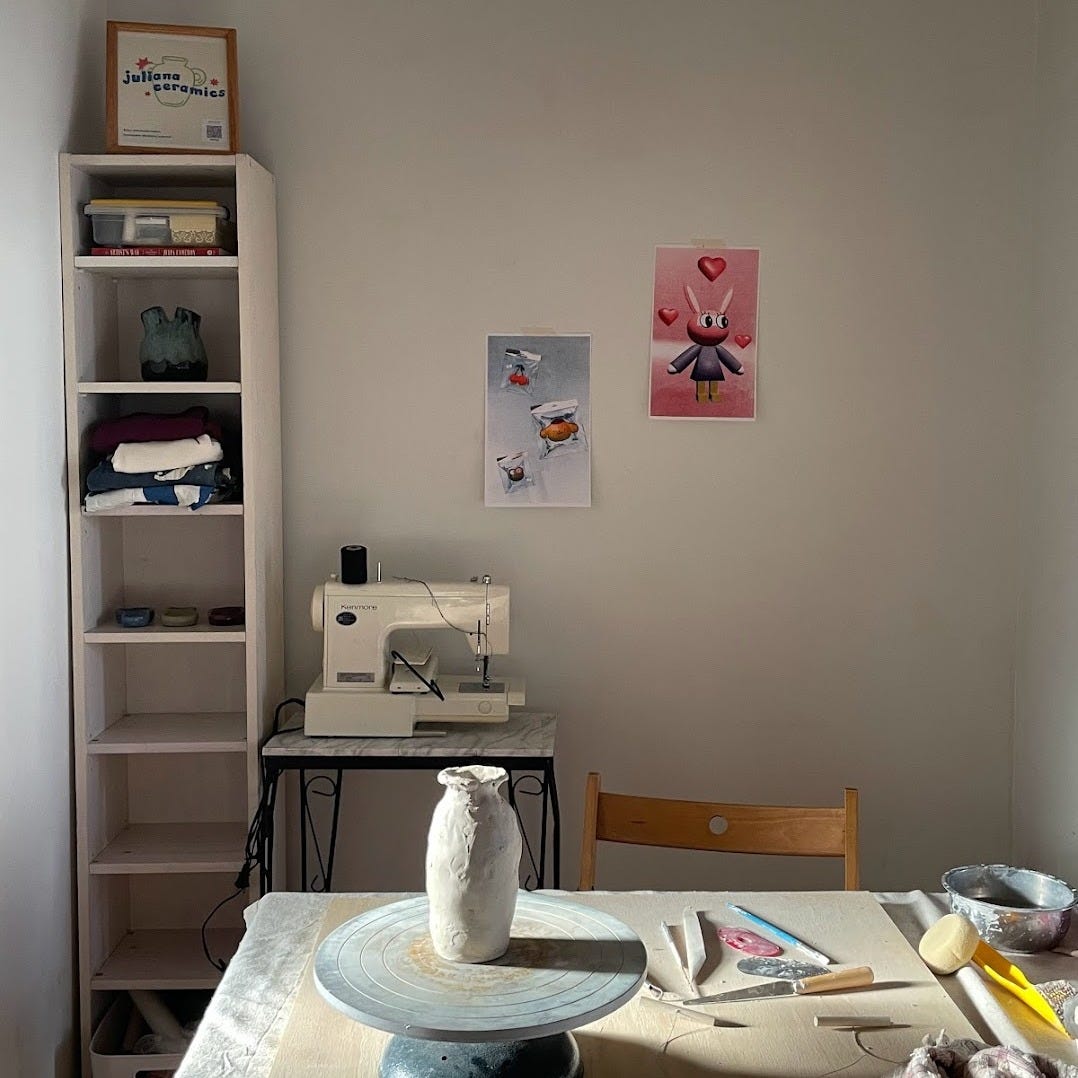
This goes for any art-making really, but I learned this the hard way with pottery. I made a bunch of trinket dishes for a holiday sale once and I’m still sifting through some that never sold. Turns out, the other one-off pieces that feel uniquely *me* garner a bigger audience. This should really come as no surprise…and yet…


I’ve noticed these lessons take shape in all of my creative projects. Pottery has taught me to push through the ugly phase of art, to step back and take a break when I (or the medium) need it, to make things that I enjoy, and to accept that not everything can be controlled. It’s also given me an incredible community. I’m so grateful for the people I’ve met and learned from at the studio. I’m also grateful for the friends who have let me host craft nights, to sit around my table and make pieces of their own – it’s so nice to see others explore clay. The pride on their faces when their finished pieces are returned fills me with so much joy. Thank you thank you thank you!
Until next time,
Juliana
No posts
Comments
Nothing yet. Say the first thing.
Sign in to join the conversation.