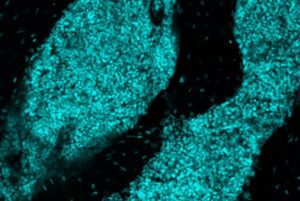
Researchers kept human brain organoids developing for over five years, revealing prolonged maturation that mirrors human brain development and creating new opportunities to study disorders and test drugs. The post Five-Year Brain Organoids Reveal New Insights Into Human Development appeared first on GEN - Genetic Engineering and Biotechnology News .
Researchers developed a computational tool that could help to finding genes most directly related to disease, and which in a reported study identified 21 genes related to asthma, most of which hadn’t been discovered by other methods. The post DANDELION Computational Tool Identifies Previously Unknown Asthma-Related Genes and Pathway appeared first on GEN - Genetic Engineering and Biotechnology…
By using chemical signals to guide cells to adopt distinct regional identities, scientists created lab-grown human organoids that mimic early brain development and could illuminate how specialized brain areas emerge. The post Lab-Grown Neocortex Models Mimic Early Brain Organization appeared first on GEN - Genetic Engineering and Biotechnology News .
Despite advances, AI applications in scientific research have not experienced their “Claude Code” moment. The compute power exists. The models exist. What’s missing is a system that coordinates them. The post From Models to Agents: The Next Phase of AI Adoption in Molecular Discovery appeared first on GEN - Genetic Engineering and Biotechnology News .
Rather than generating new wet-lab data for every compound, DeepCyte trains a foundation model that is capable of predicting toxicity mechanisms for compounds that it has never measured. The post DeepCyte Launches Single-Cell Metabolomic Reference Atlas of Drug Toxicity Mechanisms appeared first on GEN - Genetic Engineering and Biotechnology News .
Researchers analyzing antibody profiles in thousands of individuals have discovered that pre-existing antibodies to common microbes can predict the strength of new vaccine responses. The post AI Identifies Pre-existing Antimicrobial Antibody Profile That May Predict Immune Response to Vaccination appeared first on GEN - Genetic Engineering and Biotechnology News .
In this webinar, The post Is Targeted Protein Degradation the “Break” Neurology Needs? appeared first on GEN - Genetic Engineering and Biotechnology News .
Researchers discovered lymph node-like structures in the skull bone marrow of mice for the first time and demonstrated that they act as rapid first responders against brain cancer, in advance of distant lymph nodes. The post Skull Immune Structures May Provide First Response Against Brain Cancer appeared first on GEN - Genetic Engineering and Biotechnology News .
Cells constantly control the fate of their proteins. They remove proteins that are worn out or no longer needed, but can also alter their activity, localization, or interactions with other molecules. The post Scientists Analyze 267 Receptors That Control Protein Fate in Rare Diseases appeared first on GEN - Genetic Engineering and Biotechnology News .
Scientists see a positive trend toward using AI in a way that’s human, rather than as a self-driving lab. AI is simply a tool—albeit a powerful, adaptive one. The post Protecting Scientific Intent in AI-Enabled Labs by Not Letting AI Set the Mission appeared first on GEN - Genetic Engineering and Biotechnology News .
In this GEN webinar, speakers from Flock Bio and Ribbon Bio will explore how bench-based, cell-free DNA production can complement expertise in custom DNA design and manufacturing. The post Built Without Bacteria: Bringing Cell-Free Synthesis to the Bench appeared first on GEN - Genetic Engineering and Biotechnology News .
A human multi-organ chip models how breast cancer spreads from blood vessels to bone and lung, offering a patient-specific tool to study metastasis and potential treatments. The post Human Multi-Organ Chip Offers New Insight Into Cancer Metastasis appeared first on GEN - Genetic Engineering and Biotechnology News .
Researchers studying immune cells in Japanese supercentenarians have found that normally rare, CD4 cytotoxic T lymphocytes become increasingly abundant with extreme age, and may help to stave off cancer. The post Rare Immune Cell Type in Supercentenarians May Help Maintain Healthy Aging appeared first on GEN - Genetic Engineering and Biotechnology News .
Advances in manufacturing, automation, and lentiviral vector technologies are reshaping the future of CAR T therapies. Ex vivo and in vivo approaches will evolve together, helping improve scalability, lower costs, and expand patient access worldwide. The post CAR T Manufacturing Innovation Expands Patient Access appeared first on GEN - Genetic Engineering and Biotechnology News .
Reusing spent culture media in an L. lactis cell fermentation model streamlines continuous bioprocessing and cuts costs for FGF2 production, making serum-free production increasingly cost-effective and productive. The post Cutting Costs in Serum-Free FGF2 Processing With Recycled Media appeared first on GEN - Genetic Engineering and Biotechnology News .