
I write The Compass to help you navigate the interior journey toward a deeper life with Jesus. There are lots of options available to you here: just keep showing up an read, or sign up for a free subscription to get The Compass in your email whenever I publish a new resource about the that deeper life.
I’m not a big fan of predictions. They are often so wrong they’re laughable. Here’s a classic example: In 1930, the British economist, John Maynard Keynes, predicted that technological advances would allow his grandchildren’s generation to work only 15 hours per week. A century later, that world he predicted was arriving by 1970 is nowhere to be found. There is no doubt technology has offered many positive advances. I’m writing and publishing this article with the help of new technology; you’re reading it with some of those same advances. But no one would think today that technology has led to a slower, simpler, more restful life. The opposite has become so normal that, in our lifetime, new terminology has been needed because of what technology has done to the normal workday. Researchers now call our average day of work the “infinite workday.” Because our work follows us home in that smartphone in our pocket. 75% of employees check work email after work when at home. Amid the many positive benefits given us by technological advances, when it comes to work and rest, that infinite workday means that we are expected to be available with no real beginning or end.
I also don’t like predictions because I’m usually so bad at them, especially when it comes to estimating how long a project will take to complete. I constantly underestimate how long something will take. I tell myself I just need another hour and I’ll have this wrapped up. Once completed, there will be time for rest. But more times than I can count, that one-hour project stretched out to three hours, bumping into something else. And I’d often find myself rushing through the rest of the day, trying to get everything done. Combined with needs of congregants I served as a pastor, in earlier years of how I lived and worked as a pastor, I can now see I was living out my own version of that infinite workday. Rest might have been a value, but often it was almost impossible to practice.
But in the middle of this kind of “normal day” chaos, I noticed something. At almost any gathering, if you say outloud, “I’m so busy,” what happens tells you all you need to know about our culture. No one pities you. Instead, people are impressed. The impossibly full calendar for most Americans is now the new status symbol. Hurry and overworking is how we prove we matter. And then, we wonder why so many of us are coming apart!
There is growing pushback everywhere against the always-on culture that now surrounds us and infects us with dangerous levels of the hurry virus. Even though I didn’t always know what to do, I could feel pushback against hurry growing in my heart. I imagine you have felt it as well. And there is a flood of content out there telling us to slow down. Wellness blogs. Sleep apps. Five-step guides to a calmer morning. Often, for me, that content reads like fingerprints left at the scene of a crime because what hurry has done to us is criminal. Our emotional health, mental health, physical health, and spiritual health is now all at risk because of our inability to slow down the pace of life in any meaningful, sustainable way.
What I’m saying here is not just another wellness-blog speculation. There is serious science backing this up and it deserves more attention than it gets. Chronic, unrelieved stress that comes from always being “on” changes the brain. Self-control, judgment, and clear thinking is jeopardized due to the way hurry reduces activity in our prefrontal cortex. Further, it causes the brain’s threat-detection system to get stuck in the on position long after the threat has passed, which is why it is hard for exhausted people to relax even when they get time off. The nervous system never gets the signal that it’s now safe to stand down. These findings from modern-day brain science should worry us more than it does.
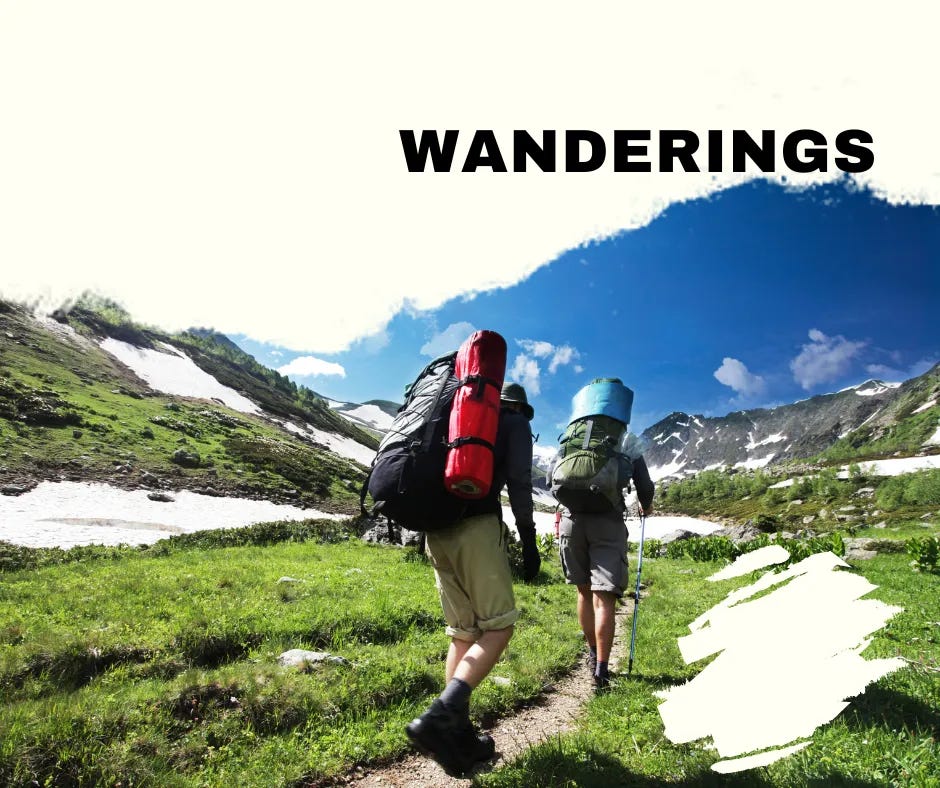
Another thing that isn’t just wellness-blog speculation is how central rest is to scripture and Christian spirituality. This week I’ve spent valuable space showing how rest is woven into the story we read in the Bible, from Genesis to the very end. And in particular, I highlighted how Jesus, carrying a mission that demanded everything from him, still made room for rest. If the thread of rest is pulled out of scripture, the whole story reads differently. When I think of how challenging it was for me to slow down and rest in earlier years as a pastor, I finally began to see that it was one of the most dangerous anti-Jesus, anti-biblical things I could have ever done. As I saw this, things slowly began to change. I started taking real sabbaths. I picked up backpacking and hiking, something I had no margin to do in the first half of ministry. Steadily, breathable space began to enter into my calendar instead of hoping I could fit it in after the next emergency. The back half of those decades of ministry looked little like the first half.
The more I’m digging into this, the more I’m seeing that building a rhythm of doing nothing, another way of describing a sabbath, is one of the more countercultural things a person can do. More, for followers of Jesus, and leaders of ministry, it is one of the most Jesus-like things you can do. In a culture where hurry has become the new currency, choosing rest and a slower life in favor of the ways of Jesus is an act of cultural defiance.
Back in 1994, the Trends Research Institute named voluntary simplicity one of the top lifestyle trends in the country. This was about a decade before “slow living” became a familiar phrase. It wasn’t long before a simpler, slower life began traveling together. People began walking away from noise and rush to live smaller, quieter lives on purpose. As I see it, they are merely doing what Jesus did two thousand years ago. The unhurried Jesus was not a Jesus without a mission. The life he lived was not a life without a mission. He healed, taught, confronted, and eventually gave his life for a redemptive mission, all within three decades. But he was never in a hurry, never late, never out-of-breath. He withdrew from crowds, demands, and pressure. He slept through storms. He stopped in the middle of crowds jostling for his favor to give attention to one single person. When I think of this, I can see I spent the first half of ministry treating rest as something I would promise to do when the real work was finally done. With the grace of God, I’ve spent the second half learning that rest isn’t optional. I may have fallen far short of the way Jesus incorporated rest into his life, but I was heading in a different direction than when I started. I can see better than ever that the unhurried Jesus is a model that driven followers, driven churches, driven missions, and driven leaders have largely ignored at our own peril.
When I think of this, which is often, I’m thrilled to be part of the Oasis Rest mission. Hurried culture tells us our worth is measured by our busyness. A frenzied version of discipleship tells us our effectiveness is measured by our output. Oasis Rest for two decades, long before I ever heard about it, has offered a different message and a different way to hurried, exhausted leaders: Drop the work of ministry for a few days. Lay in a hammock. Sit at a firepit and do nothing but look at mountains. Walk on a trail and do nothing more than be there. And to make that possible, Oasis Rest says it will provide a place to rest at no cost to you. It’s not a lifestyle hack or a trick. It is just what it claims to be: a straightforward attempt to give leaders back the very thing hurry and frenzied versions of ministry have taken from them. And the feedback we’re receiving from pastors and missionaries who have taken advantage of an Oasis Rest retreat at The Stillpoint is confirming what Oasis Rest set out to do: Rest is all it promises to be. Rest works. Rest transforms.
Each Oasis Rest site across the United States, Europe, and Central America offer this transformative rest in unique ways. You’ll find a place to rest and a way to rest that fits you perfectly. Here at The Stillpoint, that mostly looks like the old ways given us by the contemplative stream of Christian spirituality. Stillness. Prayer walks on trails that wind for miles without another soul in sight. Eyes soaking up beauty. Tea at ten. Scripture read the old way, slowly. And as the hurriedness subsides, a chance to become aware again of the Presence of God who been waiting for your eyes to open and see Him with you.
Gratefully,
— Gene
If you want more information about how an Oasis Rest might be exactly what your soul, marriage, and ministry needs, you can find out more here. If you want to find out how you can reserve space at The Stillpoint in 2027, you can find out more here.
No posts
Comments
Nothing yet. Say the first thing.
Sign in to join the conversation.