
Welcome to a newsletter themed at the intersection of longevity and wine history. 🍷
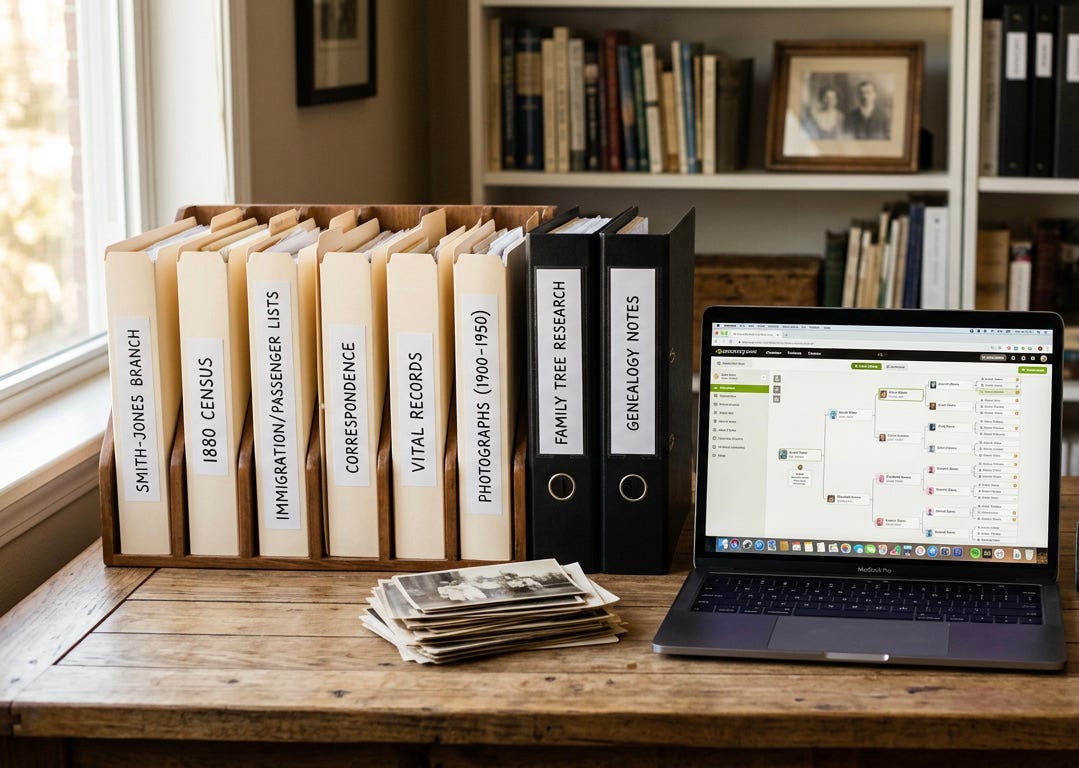
Without a filing system, you can spend endless wasted hours revisiting steps in your family research.
A high-value way to minimize this issue is to consider how each document (or photo) should be labeled in a way that answers three questions:
Who is this document (or photo) about?
What type of record is it?
Where can I find it again?
This is a practice I started with photos about a decade ago when I started using Adobe Lightroom for my video production business. It helped me organize client videos and photos. Some tools, like Lightroom, allow you to easily star, keyword-tag and label images. Instead of having a photo labeled as IMG_0360_JPG, I would rename a digitized old photo of my great-grandfather as “1925_John Gemello_Winery Barrel Room.” Simply put: Year_Name_Location.
I became obsessed with using similar techniques for other documents. Family research is a great example. Below is one approach I found useful, but it’s not the only way to do it.
Create a main folder for each major family line:
Gemello
Ferguson
Mahoney
Inside each surname folder, create subfolders:
00 Master Summary
01 Birth Records
02 Marriage Records
03 Death Records
04 Census Records
05 Military Records
06 Photos*
07 Newspapers
08 Stories & Interviews
This structure scales easily from 100 records to 10,000. The 2-digit number labeling system helps me prioritize the folders.
* Photos can get unwieldy in a hurry. If you have a lot, I recommend keeping them on an external hard drive, and use a tool like Lightroom to keyword tag them as well.
Keep a one-page summary containing:
Birth
Marriage
Death
Parents
Children
Occupation
Residences
Outstanding questions
When you return to a person after six months, you’ll know exactly where you left off.
A research log helps prevent duplicate searches and tracks what you’ve already found. Use a spreadsheet with columns for:

This keeps research focused and prevents rabbit holes.
For each ancestor, record:
Records found
Records missing
Next research step
Create two categories:
Evidence
Records, certificates, census entries, newspaper articles.
Stories
Family memories, interviews, letters, oral histories.
Always note the source of each story. Memories are valuable but should be distinguished from documented evidence.
I’m the author of 🍷 Rain on the Monte Bello Ridge,🍷 my forthcoming memoir about health, aging and winemaking. (Read the origin story of the book.) 🍇
The Centenarian Playbook is my newsletter, which features:
Healthy aging/longevity tips and stories from Grandma Kay’s long life.
Wine history & stories of the Gemello Winery
Ancestry & family research tips
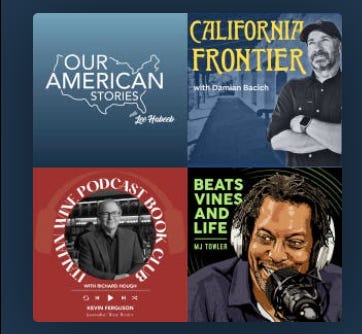
If you’ve missed any of my podcast appearances, you’re in luck. I’ve created a Spotify Podcast Playlist. Enjoy!
No posts
Comments
Nothing yet. Say the first thing.
Sign in to join the conversation.