
Introducing “Find the Next Percent”, a new monthly column on #GeeksonFeet. As part of this, we explore how altitude training helps runners and what are the things to consider while training.
Side planks with hip dips strengthen the obliques, deep core muscles, and glutes, helping runners improve core stability. More on this at #WoW
Josh Kerr breaks mile world record at London Diamond League; this and more at #RunSHORTS
Happy Reading!
Are you regular with strength training? If yes, how did strength training help you? #geekspoll

Answer Live Poll Here.
The results of last week’s poll on how much running do runners do solo vs. with a group are now out.
Side planks with hip dips strengthen the obliques, deep core muscles, glutes, and shoulders, helping runners improve core stability and maintain better posture while running. It also helps with pelvic control and reduces unnecessary movement through the hips.
How to do it?
Start in a side plank with the elbow directly under the shoulder and body in a straight line.
Lower your hip gently toward the floor, then lift it back up to the starting position, keeping the core tight and avoiding rotation.
Do 2 sets of 8 to 10 reps
We are excited to introduce “Find the Next Percent”, a new monthly column on Geeks on Feet. Written by Satish, the column will explore the science, stories, and training practices that can help amateur runners become better athletes. Each month, it will take one idea and examine how it can improve the way we train, race, recover and think about running.
Because meaningful progress rarely comes from one dramatic breakthrough. It usually comes from consistently finding the next percent. The first article, "Into Thin Air," examines altitude.
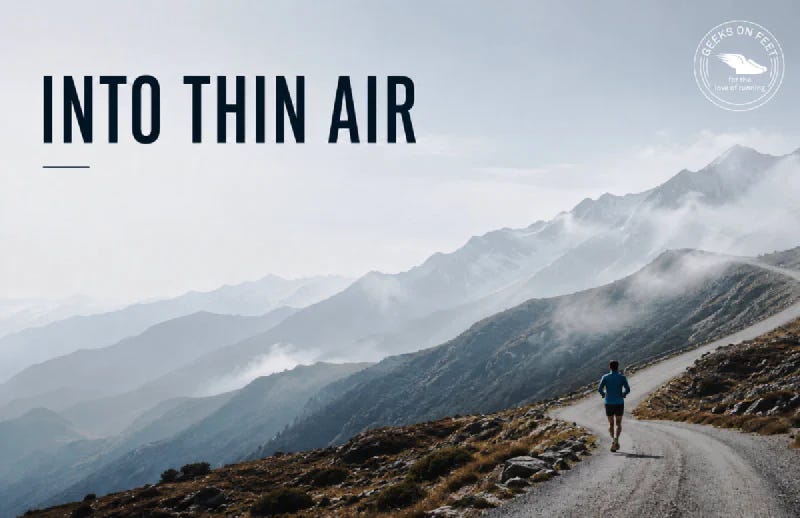
Why do the world’s best runners choose to train in places where running becomes slower, harder, and more uncomfortable?
At altitude, the oxygen percentage in the air remains almost the same, but lower atmospheric pressure means fewer oxygen molecules enter the body with each breath. Heart rate rises, pace drops, and even easy running can feel unusually demanding. Over time, however, the body adapts by improving its ability to transport and use oxygen.
The article looks at why elite runners spend weeks training in places such as Flagstaff, Iten and Albuquerque, and why many follow the “live high, train low” approach. It also examines what altitude means for amateur runners.
Altitude is neither a shortcut nor a magic performance enhancer. Used intelligently, it can support a strong training programme. Read the full article here.
Personalised training plans designed to make your run efficient, pacier, and get you race-ready. Whether you’re chasing a PB or training for your first race, we’ve got your plan and support!
Access the plans now at https://runstrong.geeksonfeet.com/training-plans/
If you are new to running or a pro runner. This one is for you. The training plan offers:
Personalised mileage and flexibility with training days per week
Pace calculator
Strength training, supported by workout videos
Got Running Questions? We’ve Got Answers. Hit a training plateau or need advice on your next race? Join the new RunStrong Community Forum to ask questions, share tips, and connect with fellow runners.
👉Join the Conversation
Josh Kerr breaks mile world record at London Diamond League
Great Britain’s Josh Kerr has broken the long-standing mile world record with a 3:42.66s run at the London Diamond League on Saturday. This performance was the result of an eight-month build which the Scot branded Project 222, as he wanted to better the 3:43.13s record which Hicham El Guerrouj had held since 1999. Led by pacemakers Brandon Kidder (his Brooks Beasts teammate) through to 800m, and then Zan Rudolf to 1,000m, he ticked off laps at a metronomic pace: 54.75s, 55.88s and 55.76s to hit the bell. U.S. record-holder Yared Nuguse was chasing behind him over the final lap, as was Jake Heyward, but Kerr showed supreme speed to win by three seconds and take 0.47s off the world record. “That was not me, that was my team every single step,” Kerr said in an on-track interview, a reference to the support that Brooks had given him in developing a bespoke spike and speed suit for this race. Read more here
Asics launches the Novablast 6 in India
Asics, the Japanese sportswear brand, launched the sixth edition of its popular daily trainer, the Novablast 6, in India. The launch was part of Asics’s renewed partnership as the Official Sports Goods Partner for the 15th edition of the NMDC Hyderabad Marathon, marking its second consecutive year of association with the event. The Novablast gets some big updates, especially in its midsole, with the introduction of the FF Turbo² pod, along with FF Blast Max, the latter of which is borrowed from its predecessor. The FF Turbo² pod is used in the forefoot, which reminds us of the Air Zoom pocket in the Nike Pegasus series. It’s the same foam used in Asics’s super shoe series like the Megablast and the Sonicblast, and its introduction in the Novablast is to make the trainer a bit more energetic, yet lighter. The Novablast 6 drop remains in line with its predecessors, featuring the 8mm drop (41.5mm/33.5mm). The upper and the tongue also see a change to make the trainer more breathable, while continuing with its durable AsicsGrip outsole. The shoe is priced at ₹14,999. (Input from GeeksonFeet team)
Garmin has entered the screenless fitness tracker market with Cirqa, a US$199 wearable designed for those who want 24/7 health tracking without wearing a sports watch all day. It offers up to 10 days of battery life, tracks nearly all the health and training metrics found on Garmin’s watches, integrates seamlessly with the Garmin ecosystem, and works without a mandatory subscription, unlike Whoop. A dedicated biceps band is also available for those who prefer not to wear it on the wrist.
Early impressions are positive, especially for existing Garmin users, though the reviewers note some rough edges, including limited live workout data in the app and a few software bugs that might improve over time. For runners already invested in Garmin, Cirqa could be an attractive alternative to subscription-based wearables. Read more here.
Search and find races using our Race Finder at geeksonfeet.com/races.

Training at altitude does not automatically mean your body will produce more red blood cells. That process needs iron.
When iron stores are low, the body may struggle to increase haemoglobin and red-cell mass, reducing the benefit of an altitude camp. There is no single ferritin level below which adaptation becomes impossible, but levels below 30 to 35 ng/mL are a concern. Many sports-medicine programmes prefer athletes to begin altitude training with ferritin above 50 ng/mL.
If you are planning an altitude camp or a high-altitude race? Get an iron panel done 8 to 12 weeks beforehand.
Complete Blood Count or Complete Haemogram
Serum Ferritin
Iron Profile or Iron Studies, including Serum Iron, TIBC and Transferrin Saturation
Quantitative CRP, to help interpret ferritin accurately
Do not start iron supplements based on ferritin alone. Excess iron can also be harmful, so supplementation should be guided by a doctor or sports dietitian.
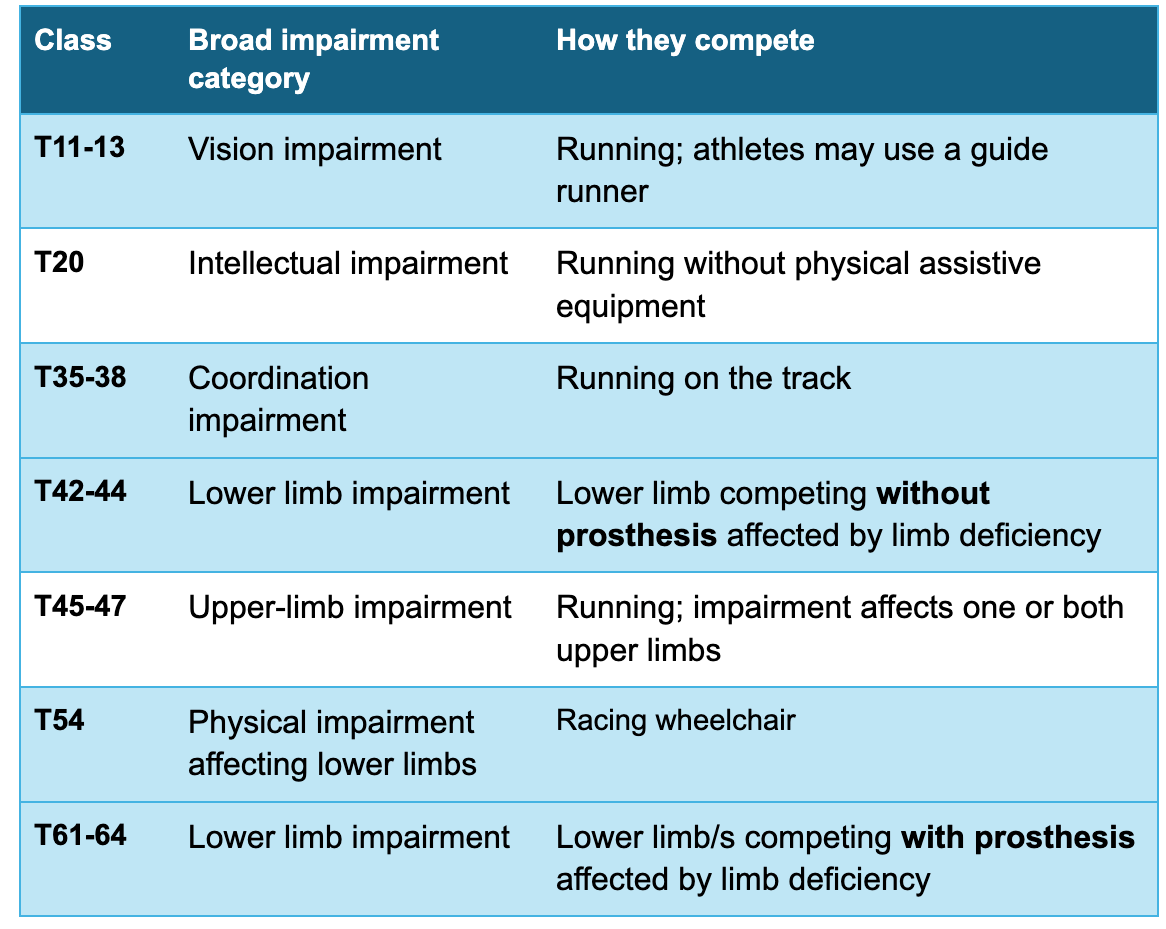
Glasgow 2026, starting on 23 July 2026, will feature 47 Para sport medal events. These games will have 10 Para track medal events. Para track events will feature multiple events over the same distance. For example: 100mts will have Men’s 100m T12 , Men’s 100m T38. “T’’ stands for Track and the number is for type of impairment. The following are the different impairment classifications for the track events.
This edition of the Commonwealth Games will feature 125 Indian athletes and Para athletes competing across 13 sports (eight Olympic and five Paralympic sports). Several sports that have traditionally contributed to India’s medal tally, including wrestling, shooting, badminton, table tennis, hockey and squash, have been dropped from the programme.
Contributors to this edition: Aditi Pandya, Karthik Nadar, RameshBabu PV, & Aravind Yarra
No posts
Comments
Nothing yet. Say the first thing.
Sign in to join the conversation.