
As I walked away from my friend Takako’s house Thursday morning, wending my way through the back streets of Shukugawa, I glimpsed an older man and his wife out in their yard, preparing the garbage to be taken out—it was garbage day. They were working together, the husband filling up the garbage bag, while the wife held an umbrella over his head as he did so—it was raining. Glimpses of everyday life like this reveal as much or more about a culture than do their national treasures. Visiting Himeji-jō was amazing, a revelation of Japanese ingenuity in wood and war at a level that matched anything made of stone in the West at the time. Sitting in front of the television with Takako and Hiroshi-san, watching a news piece on Japan’s attempt to farm eels, and one on a new flavour of soda-pop candy, and one on a ceremony in which Japanese parents put their terrified children in a dragon’s mouth was equally, if not more revealing.
I never found out what the latter news item was about, but I did ask about the eels. After she explained to me what the news-piece was about, I observed, “The Japanese people like science.”
Takako: “はい。そうでしょう。” (Hai. Sō deshō. = Yes, that’s true.)
Me: “ちょっとへんでしょう。” (Chotto hen, deshō. = That’s a little strange.) “The Japanese people worship nature, but science is about controlling nature.”
Takako: “そうです、ね!” (Sō desu, ne! = That’s so, isn’t it.) “でも、business だよ。” (Demo, business, da yo. = But it’s business.) “Business はとっても大切です、ね。” (Business wa tottemo taisetsu desu, ne. = Business is extremely important.)
Me: “そうです、ね!” (Sō desu, ne! = That’s so, isn’t it.) “Maybe for the Japanese people, business is more important than the gods?”
Takako: “へー。そうだ、ね!” (Hē. Sō da, ne? = Eh? That’s so! …with “ne” here being indicative of strong assent by inviting agreement.)
This is why I feel so deeply blessed to have lived in Japan. While the highlights and treasures which a culture preserves and presents are, of course, significant and revealing of that culture, to an extent, so much of a culture is apparent only in the little details that one encounters only by engaging with it in everyday life. Not all of my Japanese television viewing revealed such significant insights into Japanese culture, of course, but that’s kind of the point.
This principle has informed how Justin and Simon and Nikolai and I have approached our tour of Japan. It’s as long as we could afford to make it and has included as many “ordinary” encounters as we can manage, including attending Sunday Liturgy at Nikolai-Do, shopping at Japanese convenience stores, connecting (and re-connecting) with my friend Takako, hiking into the mountains above Shukugawa, and, on arriving in Kyoto, visiting a lesser-known shrine that we encountered a bit off the beaten path and going out to eat at a tiny, very Japanese local restaurant.
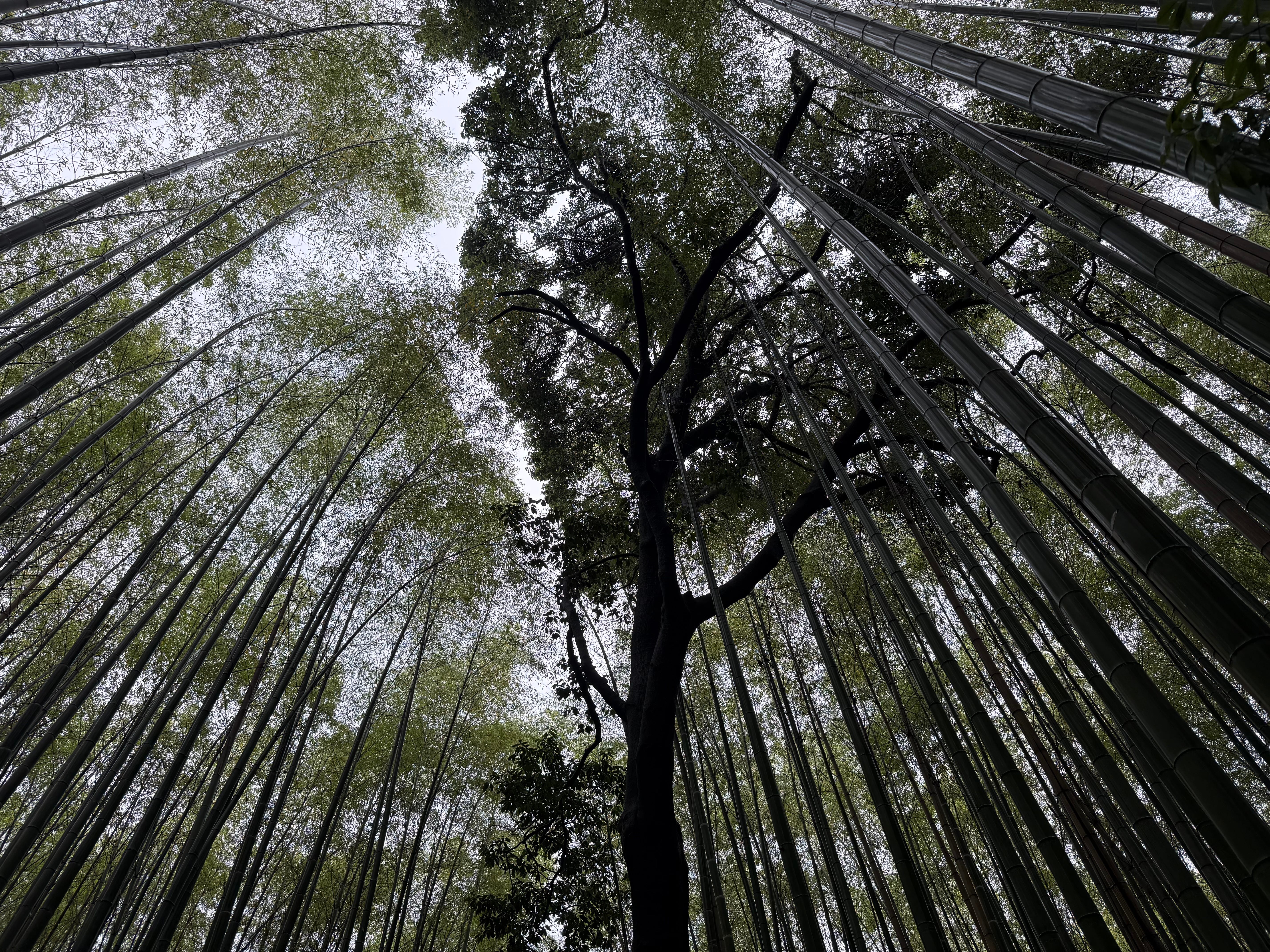
The shrine, Jojakku-ji, was one I’d never heard of, which we happened upon after deciding not to pay to enter the famous Tenryu-ji gardens and walking away from the throng of tourists that we’d been necessarily been a part of as we walked the “Path of Bamboo” through Arashiyama’s famous bamboo forest.
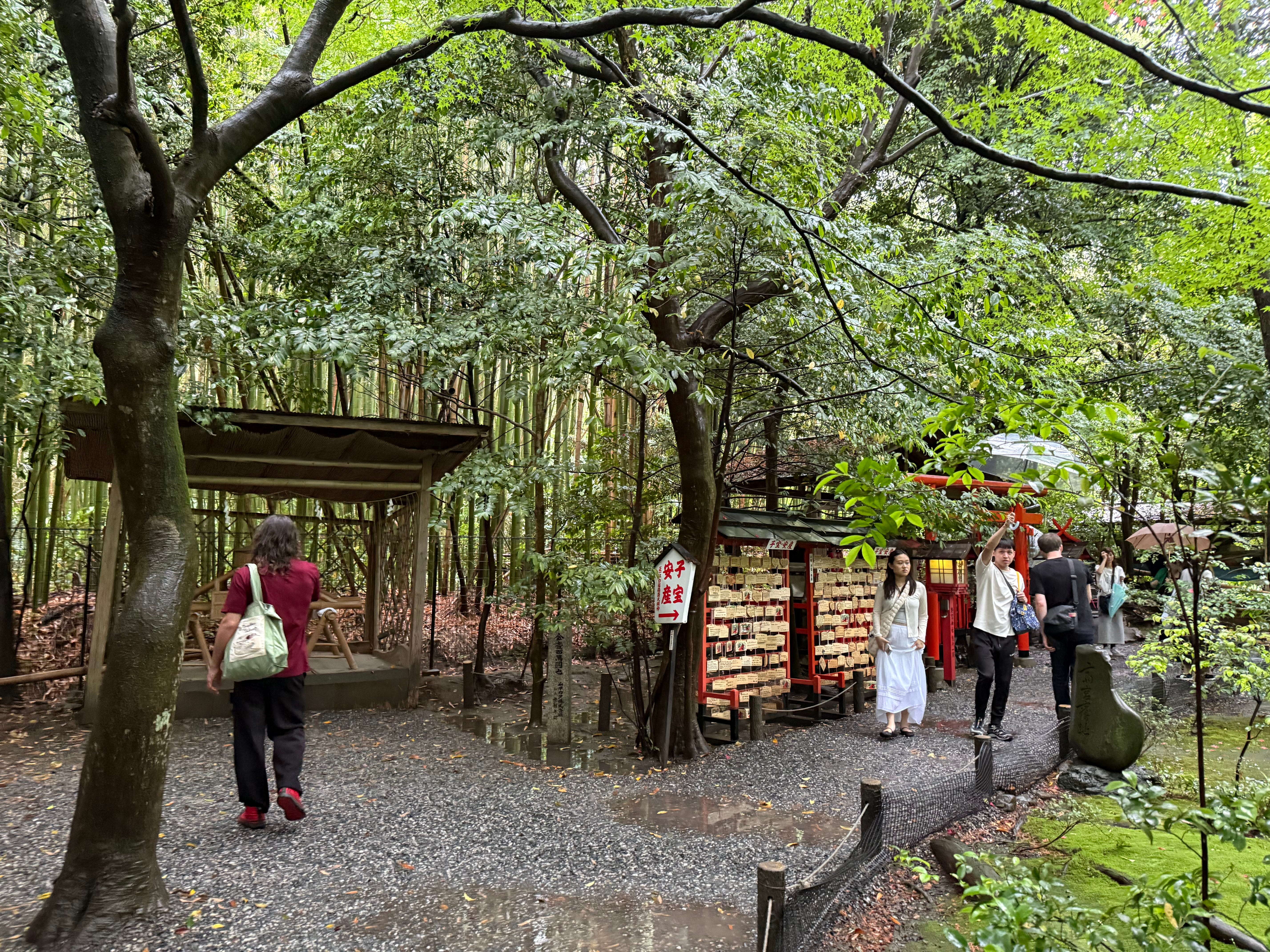
As the crowds were starting to die down, we happened upon a small shrine in very active use, Nonomiya-jinja, famous for its beautiful moss garden and as a place to pray for blessings in love, marriage, and childbirth.
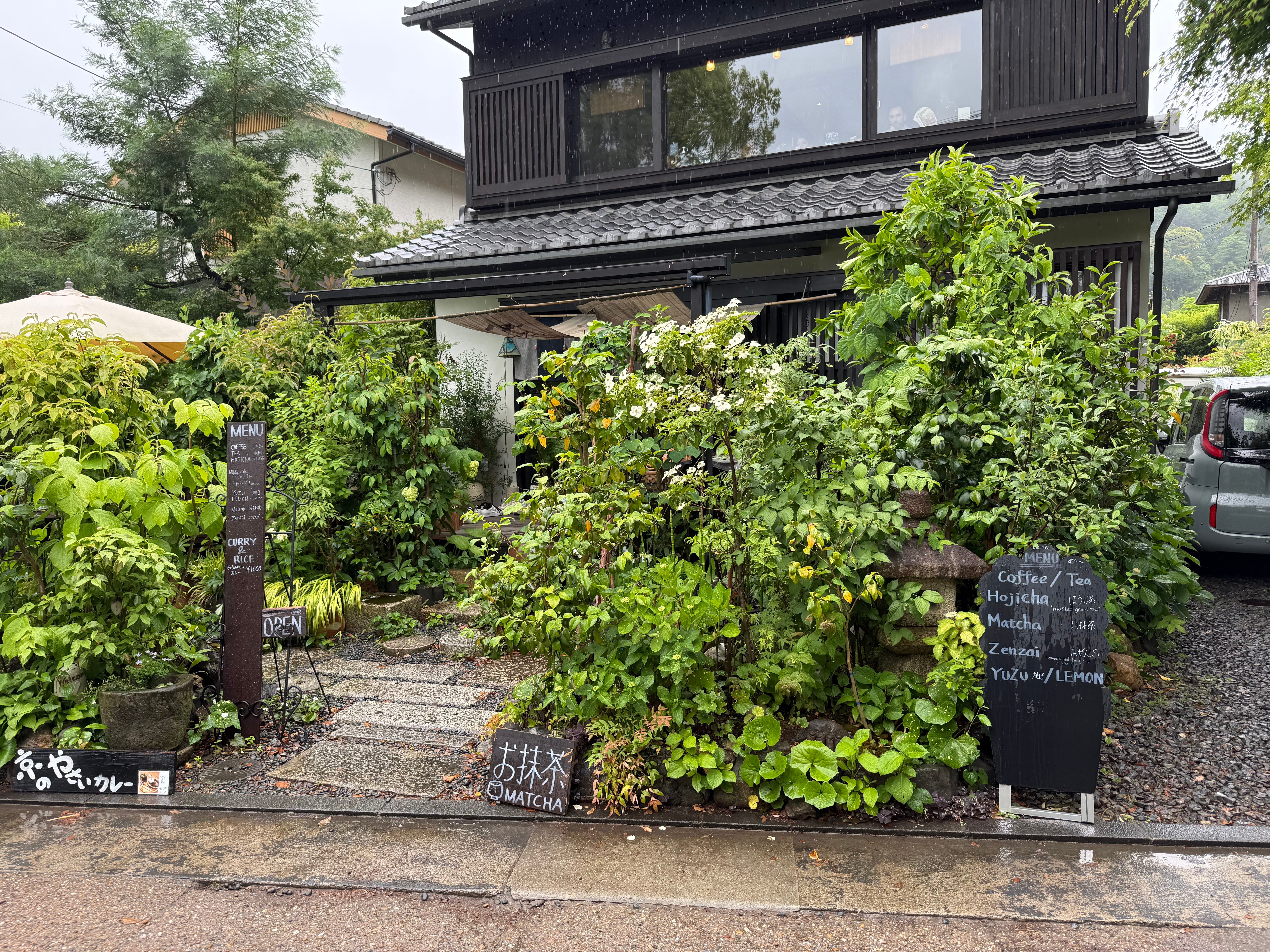
Then, emerging back into Kyoto’s back-streets, we made our way past various opportunistic (and often very beautiful) home-based cafes, catering to the throngs of tourists, ultimately stumbling upon Jojakku-ji just before closing time.
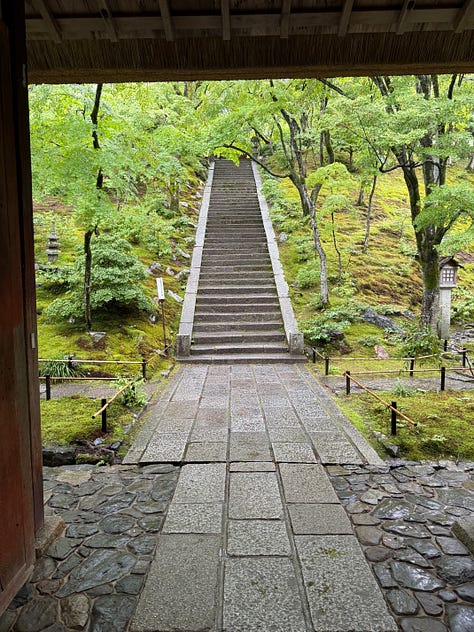
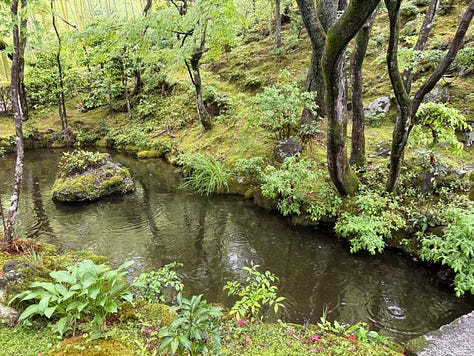
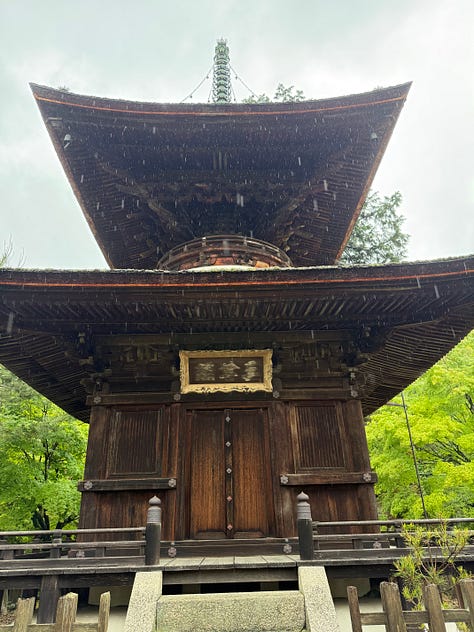
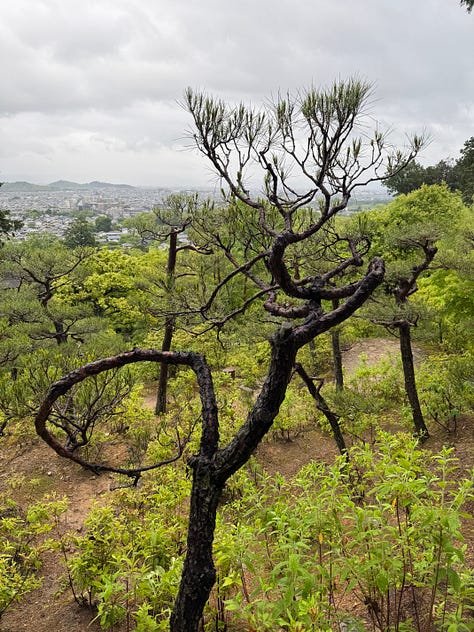
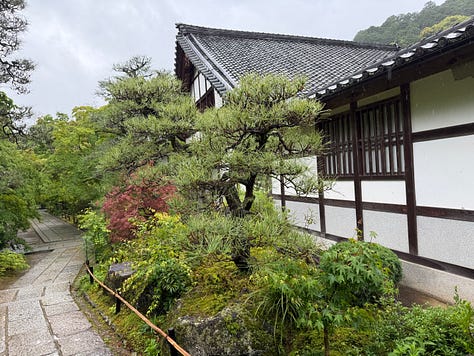
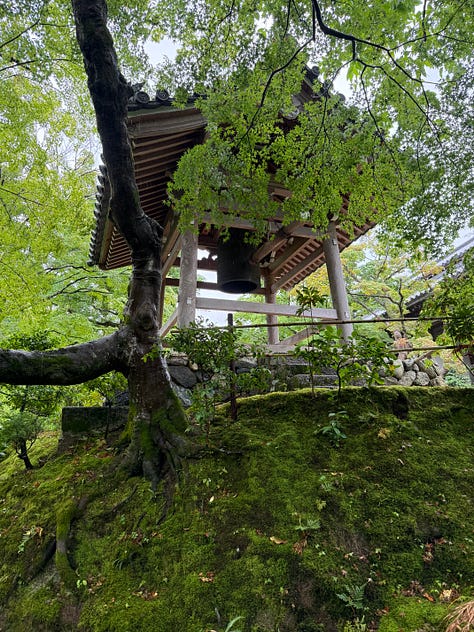
Jojakku-ji was incredibly beautiful and peaceful, even—perhaps especially—in the rain, as we encountered it. A wide variety of carefully tended paths wend their way up the mountainside, leading to and around multiple sacred buildings, with an impressive view of Kyoto available right at the top. While we weren’t alone in our appreciation of the place, our fellow-tourists were few and far between, speaking in hushed tones (when they spoke at all)—perhaps in awe, like us, of the beauty of the place. We came away delighted and refreshed as we took the bus home.
After catching our breath and changing into somewhat more dry clothing in our hotel room, Simon found a local restaurant that offered “obanzai”, a traditional style of Japanese cuisine native to Kyoto. So we went out and braved the rain once again (which was falling in torrents now), and made our way, via a seven-minute walk that seemed interminable, to what turned out to be a truly tiny restaurant, with just enough space for the four of us, plus a Japanese man who seemed to be a regular there.
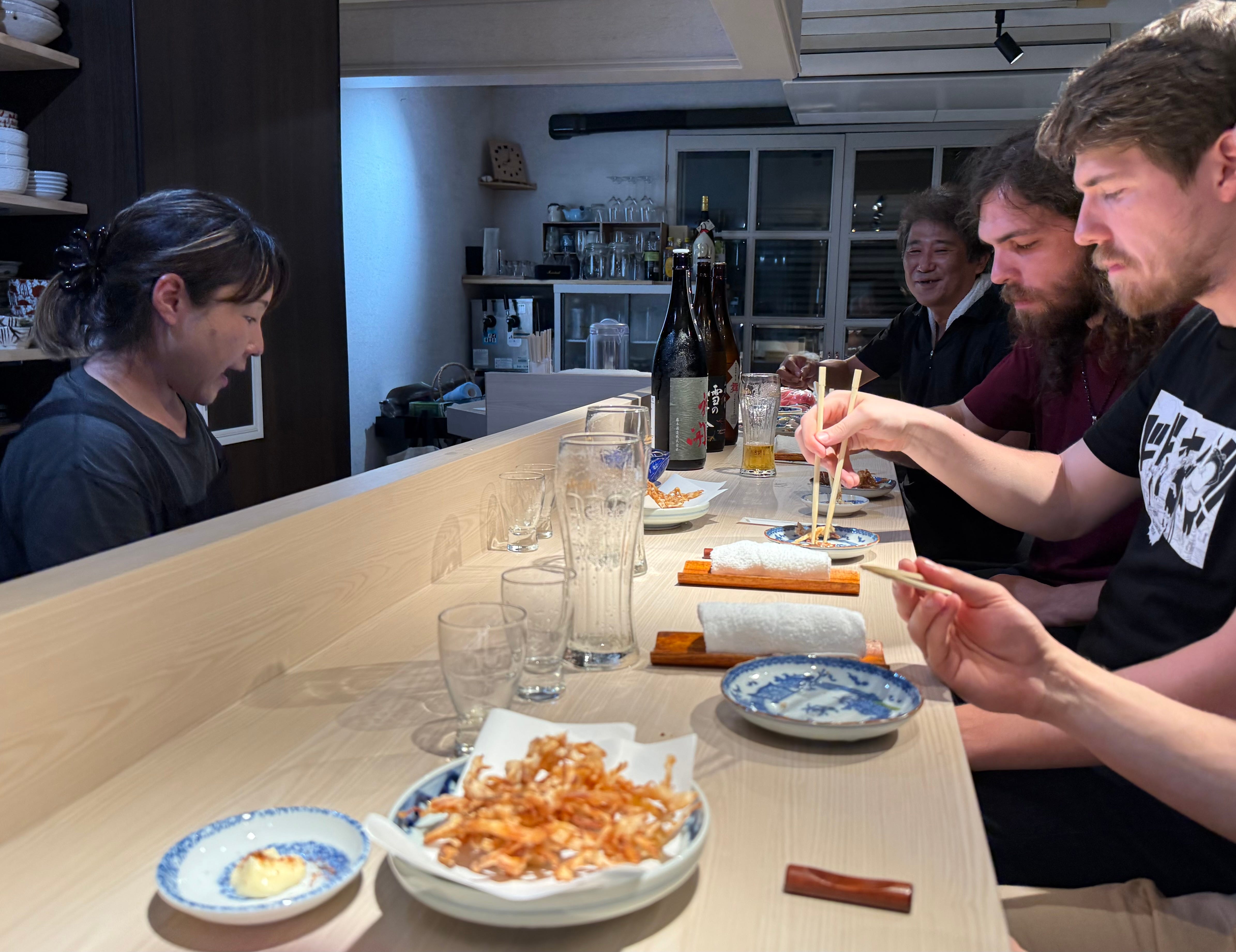
As we took our seats at the bar, the young woman behind the counter asked the regular to help her communicate with us. He promptly took out his phone and, between his help, Justin and my broken Japanese, and their limited English, a truly delicious evening ensued, in which we were encouraged to try everything, with dishes prepared before us and served to us in seemingly unending succession, and with and various versions of sake offered to us to sample.
As we became more comfortable in one another’s presence (and partook of some of the excellent Japanese beer and sampled the sake), we managed to chat about the weather, where we’d come from, how long we’d been in and how long we were going to stay in Kyoto, what we’d seen so far, what the various foods were and which ones we liked the most, the efficient layout of the kitchen, and how often English-speakers visited this restaurant (not that often, apparently, although a Spanish man had visited just the day before). Eventually the boys discovered that they and the Japanese man and the young woman whose restaurant it was all shared a love of anime, and much discussion of and comparison of favourites ensued. The food was as fascinating as the conversation: a dish of green peppers which used the centre of the pepper as well as the outside, deep-fried squid which we dipped like French-fries into slightly spicy mayonnaise, breaded pork served with a bit of mustard, and much more, ending with natto (fermented soy-beans) with kimchi. By the end of the evening, we stepped out into the no-longer-rainy night fully satiated in both body and spirit.
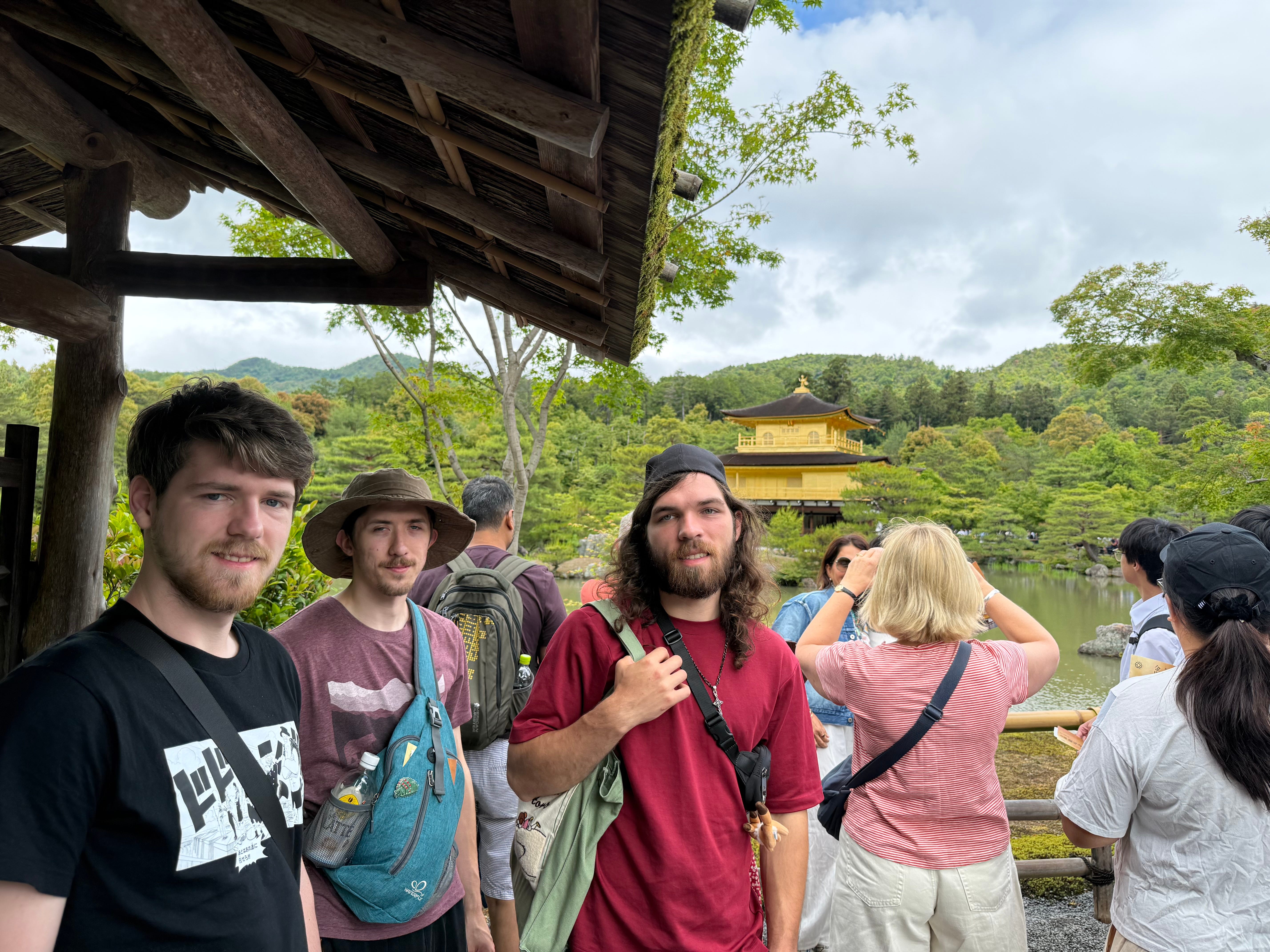
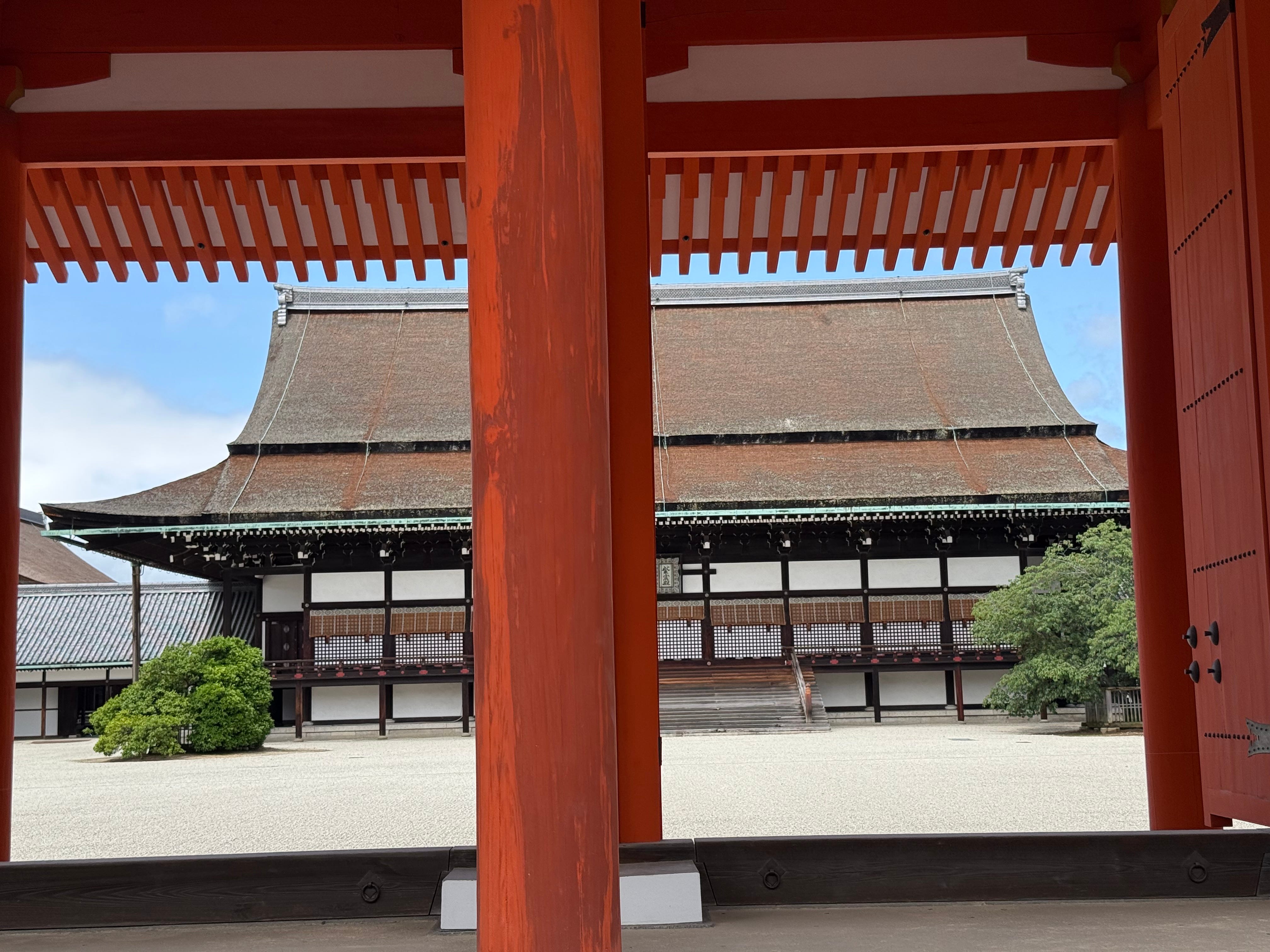
The contrast with our second day in Kyoto could hardly have been more extreme. As already noted, the places which a culture chooses to highlight and treasure and the way in which the culture does so are also revealing, and on the second day we went to Kinkakuji, the temple of the“Golden Pavilion”, which features a beautifully situated pavilion which is literally covered with gold—and which is visited by tens of thousands a day, the hordes being composed of both foreign and Japanese tourists, including busloads of Japanese schoolchildren. It was impressive, both as a display of wealth and beauty, and as a display of Japanese proficiency in crowd-control. The Kyoto Imperial Palace was larger and quieter, surrounded by what is now a large urban park—much less impressive than Kinkakuji, in some ways, in terms of what was on display for public view, but astounding in terms of its scale as the park and the grounds provided a breadth in which to wander dramatically from the maze of twisty back-streets, all narrow and none quite alike, that led to it and that make up so much of urban Japan.
We finished our second day in Kyoto with a shopping trip, selecting typically convenient Japanese foods that would be easy enough to prepare with our hotel room’s limited cooking facilities. I had a dramatically uninspiring $1.50 microwaveable cheeseburger with a dessert of “choco-pie” (much like Wagon Wheels), while Nikolai (easily the best cook of the bunch) prepared himself (and shared with me) some delicious gyoza.
Perhaps one of the dangers a foreigner faces as we encounter a culture that, compared to our own, is so consciously and deliberately unified, is to mistake the people, or even the synthesis of such a wide variety of histories and sub-cultures that is Japanese culture, as being therefore uniform. In fact, the variety of beliefs and practices and divergent emphases and interests are stunning and, as always, often contradictory. The same culture that celebrates the peace and natural beauty of the bamboo forests and preserves places like Jojakko-ji also applies that beauty to war in Himeji-jō and crowds together to photograph Kinkakuji. The same culture that deliberately works portions of food that would otherwise be wasted into their traditional cuisine also produces $1.50 microwaveable cheeseburgers. The same people who honour the mountains by putting their hands together and giving thanks towards them also pay ¥50 for candles to place in a shrine as a prayer for “success for love” or for “traffic safety”.
Japan is dramatically different, irreconcilably “other”—and, at the same time, exactly the same as we are.
No posts
Comments
Nothing yet. Say the first thing.
Sign in to join the conversation.