
I‘m working with a small team on a new project to produce independent population and GDP estimates for African countries. Published figures for many countries are outdated, modelled from sparse data, or rely on censuses that are decades old1. These numbers underpin many development metrics and funding decisions, and we think there’s good reason to assume some are significantly off.
The plan is to combine satellite imagery, administrative data and other sources to produce estimates with explicit uncertainty ranges, published on a public website with full methodology.
We already have a few interested funders and advisors, but we’re looking for more people to get involved (paid or volunteer). If any of the below sounds like you, fill out this short form.
Research
Satellite/geodata experience, population estimation, economics, or your own ideas about how to estimate these figures
Project management
Coordinating across researchers, funders and comms
Comms/marketing
Helping the output reach the people who could find it useful
Funding
We have early donor interest but are open to more
Just want updates
Happy to keep you in the loop
Reviews of How Africa Works by Joe Studwell
Compelling but incomplete application of the East Asian development playbook
The inverse farm size-yield relationship may not be universal
Africa’s manufacturing prospects face headwinds (automation, Asian competition) that Studwell underweights
Saarthak Gupta for Works in Progress
Agricultural case is the book’s strongest element, but manufacturing pillar is thin, none of the four case studies validate it convincingly
Global conditions that enabled East Asian industrialisation (US absorbing exports, large wage differentials, labour intensive manufacturing) no longer hold
Feyi Fawehinmi and Tobi Lawson
Studwell’s demographic determinism is overstretched, arguing his low population density thesis underweights agency, wage dynamics and policy choices
Studwell underweights education as a driver of development and is overly bullish on Ethiopia/Rwanda’s industrialisation prospects
Berke - Effective charity ≠ effective development (global health edition)
I may be biased but I think this is a great post
Joey Savoie - I wrote a book about philanthropy: Twice As Good!
Karthik Tadepalli - AI could give everyone a 40% raise by reducing the cost of living
Gavi - After a year of challenges, Gavi delivered a record 300 million vaccine doses in 2025
Exceeded HPV vaccine targets and expanded malaria vaccine coverage to 24 countries, despite a $2b funding shortfall
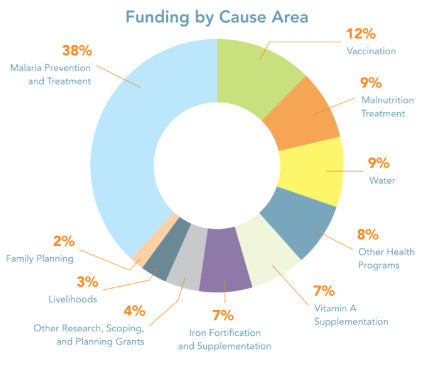
GiveWell’s 2025 Grantmaking
Approved a record $418m across 131 grants, with $53m addressing USAID cuts
They are targeting $500m+ in 2026
Charity Entrepreneurship - Incubation Program
You can find out more about the program from these virtual events on the 9th and 16th of March
Weiss Asset Management Foundation - Program Director (Boston)
Evidence Action - The AI Access Initiative, Program Lead
Against Malaria Foundation - Software Engineer
Talent Acquisition Partner
Senior Associate, Philanthropy
Manager, Philanthropy
GiveWell
Probably Good Job Board
CGD - How African governments responded to the 2025 aid shock
The Gates effect: funding shifts in global health
The study reveals a ‘crowding-in’ effect, where donors increase their funding for the same disease areas within the same countries
The US launched the Sudan Humanitarian Fund with raised pledges of $1.5b ($200m from the US)
The Guardian - UK to cut climate finance to poor countries by a fifth
Devex - the problem with ‘zombie funds’
Nearly a year after its launch, the Cali Fund has raised just $1,000, highlighting how global funds can linger for years without delivering results
CGD - BII’s problem isn’t ambition, it’s capital - and here’s how to fix it
DIV Fund - Testing bright ideas, scaling what works
With $48m in philanthropic backing, a division of USAID relaunches as a nonprofit
Unlock Aid - Building a Food Security and Nutrition Solutions Index
Seeking organisations that can absorb $5m-$50m+ in capital across agricultural productivity, nutrition, supply chains and market access
Zimbabwe withdrew from a $367m bilateral health deal with the US over data-sharing concerns
Zambia also renegotiating a $1b+ deal
Economic anxiety is the top concern in sub-Saharan Africa
Joe Studwell in conversation with Tyler Cowen
Laos on track to graduate from Least Developed Country status in 2026 (along with Nepal and Bangladesh)
Bangladesh has asked to defer graduating from LDC for 3 more years
Nigerian stock market adds $21b, outpacing peers
Egypt - Inflation fell from 38% in late 2023 to ~12% in January 2026
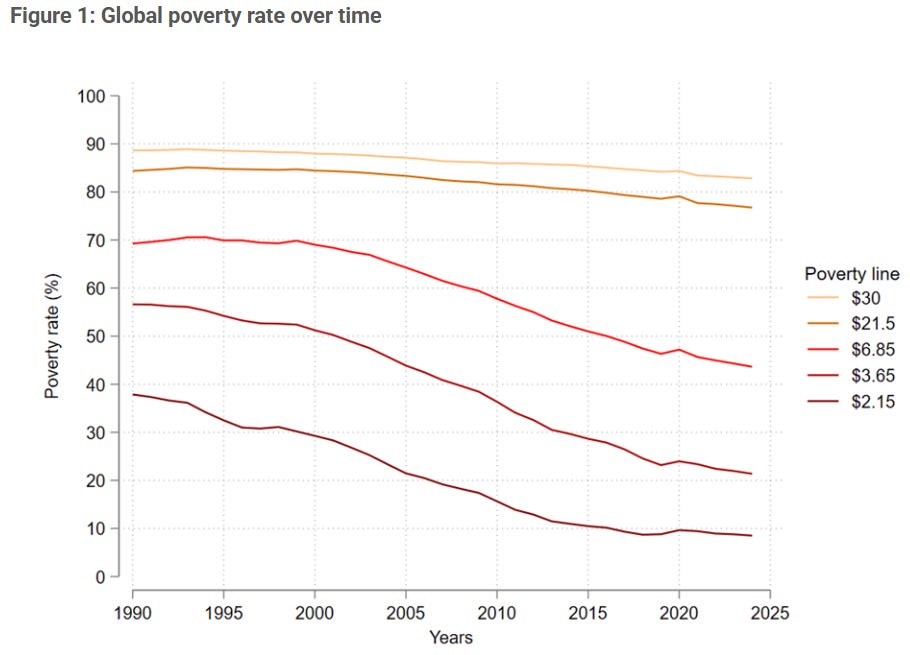
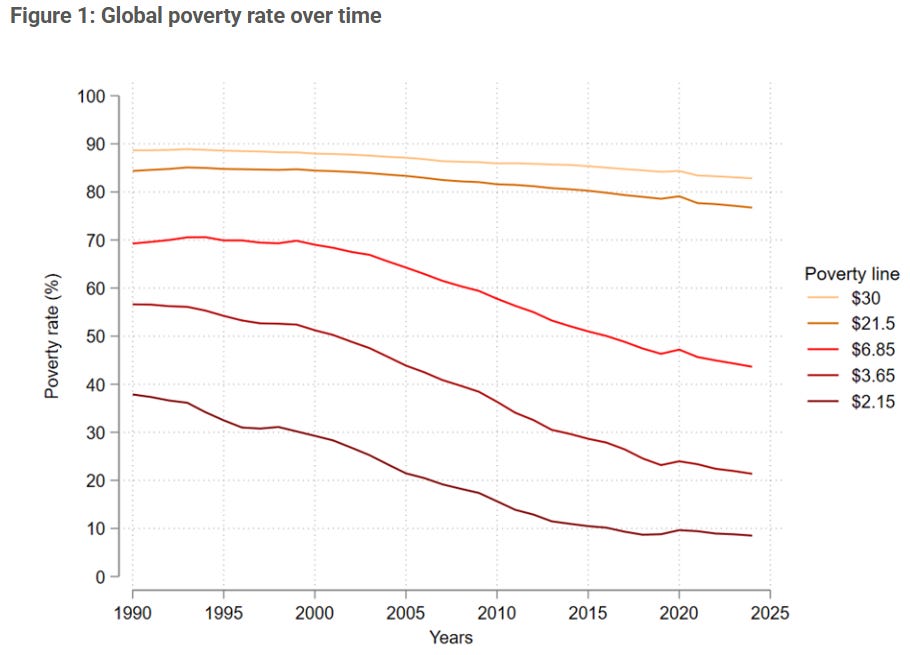
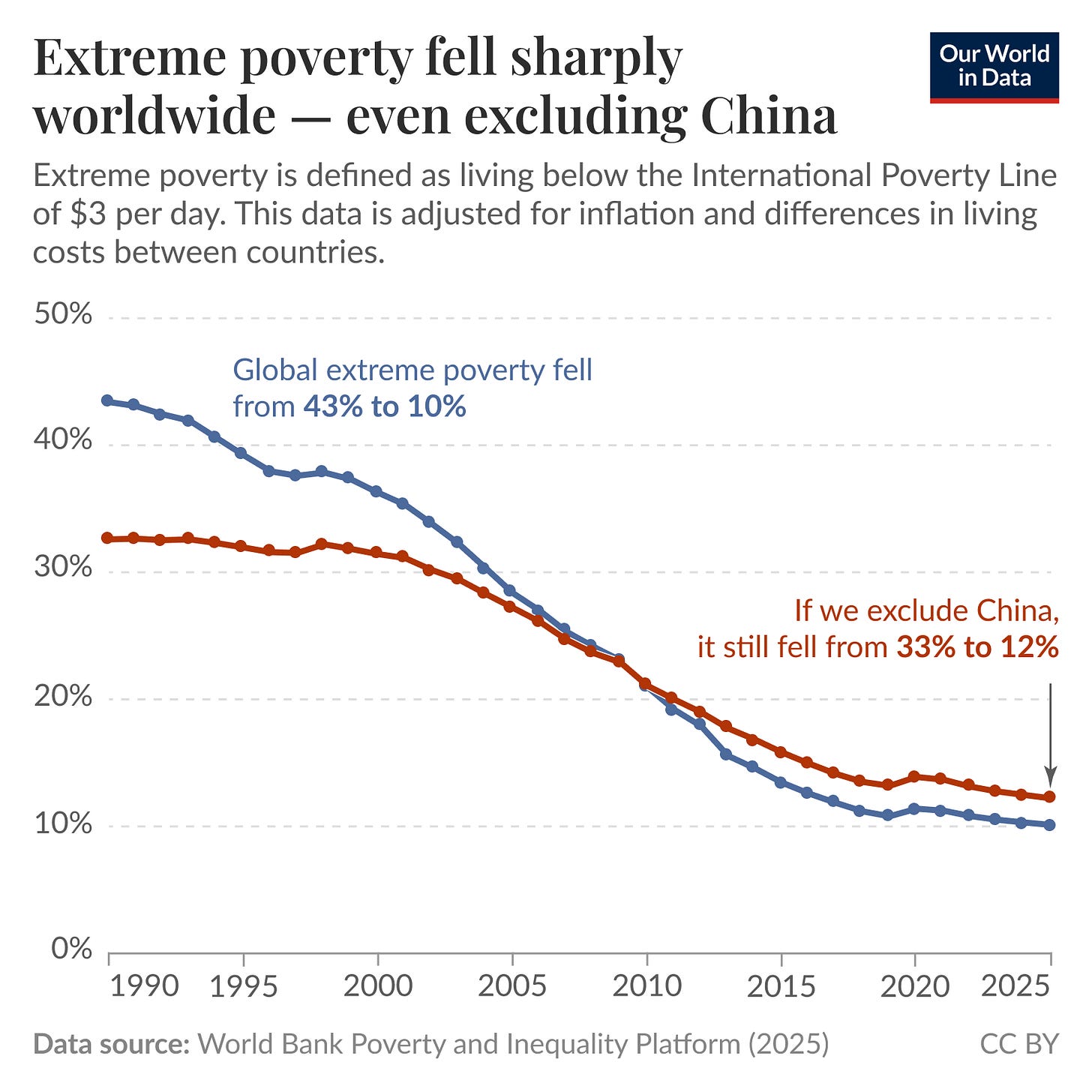
VoxDev - Global poverty trends from a new lens
Rest of World - How cheap Chinese phones catapulted Kenya into the global digital economy
World Bank - Sector-targeted skills development as industrial policy - Costa Rica’s coordinated training with Intel grew semiconductor exports to 17-20% of total exports
Brian Albrecht - Price controls cause chaos
During the 1970s US price freeze, farmers destroyed livestock because it was cheaper than raising them at controlled prices
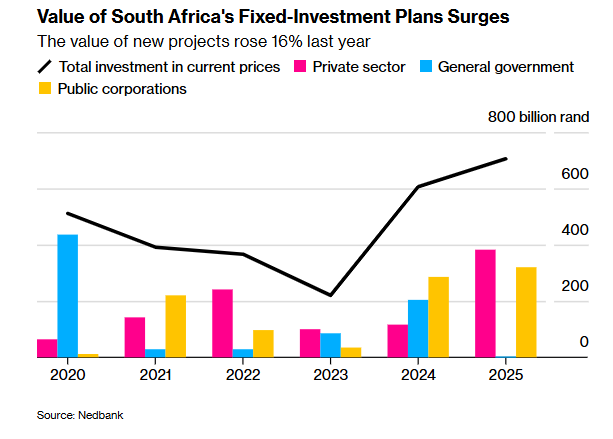
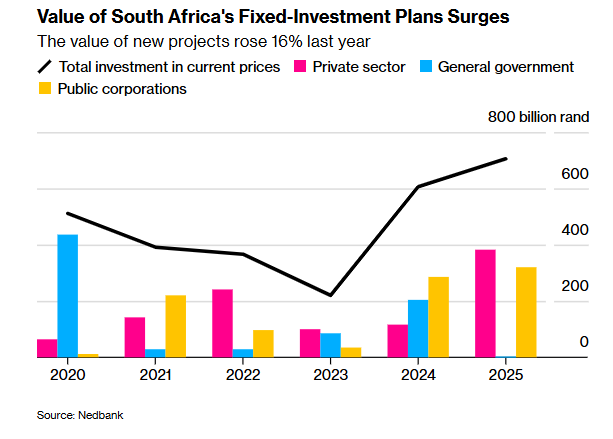
South Africa private investment plans triple as reforms advance
Ideas in Development - The economics of AI as a tool vs AGI as a worker
Even if economies as a whole become richer under AGI, workers can lose badly, making distribution the decisive question
Matthew Yglesias - We may miss the sweatshops
Argues AI automation could destroy the manufacturing led development pathway poorer countries have traditionally relied on
David Oks - Why I’m not worried about AI job loss
Clay Wren - Why I’m worried about AI job loss
Adam Ozimek - AI and the economics of the human touch
Argues demand for human provided services persists despite automation (live musicians outcompeted player pianos)
Jan Kulveit - Post-AGI economics as if nothing ever happens
Argues most post-AGI economic modelling is misleading because it assumes away the hardest questions
Anthropic and Rwanda have signed a Memorandum of Understanding to bring AI to Rwanda’s education, health and public sector systems
India to invest $200b in AI infrastructure
Rethink Priorities - Where can frontier AI make a difference in global health
Oliver Hanney - Three ways India is using AI for development
In courts, education and agriculture
The state of the self-driving car in 2026
80,000 Hours - Using AI to enhance societal decision making
Joseph Levine - Millions of people are using LLMs who have never Googled anything
Ideas in Development - Can AI take off in Africa?
Windfall Trust - The case for a global push on pro-development AI
Wealth redistribution alone is insufficient
Shruti Rajagopalan - India’s AI Summit promises a revolution. The electricity grid, the tax code and the literal ground beneath the chip fab have other plans
Magatte Wade - How Africa imported Europe’s worst idea (labour codes)
World Bank - 1.2 billion young people will enter the workforce over the next 10-15 years, but only 400 million jobs are projected - an 800 million jobs gap
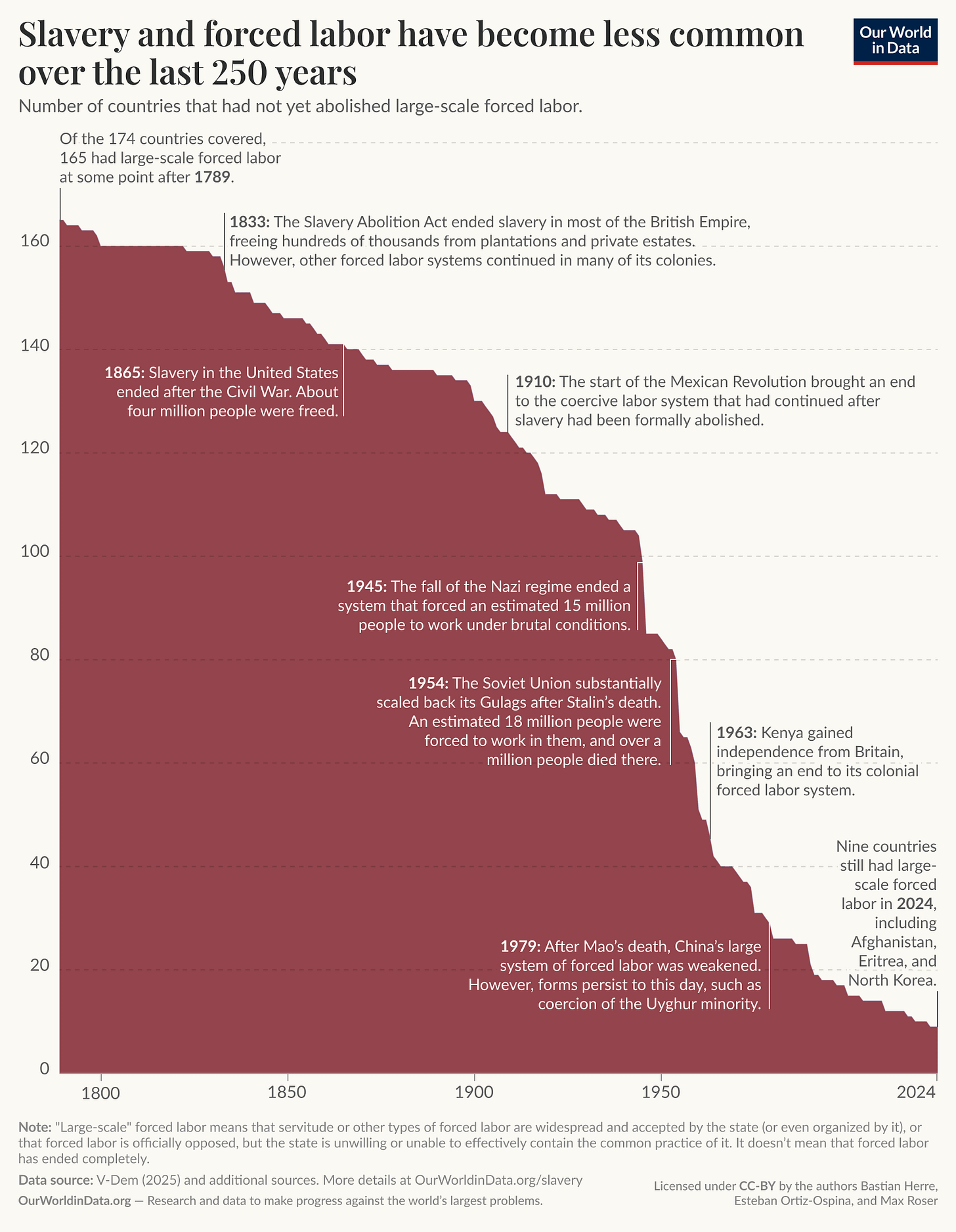
Tracking historical progress against slavery and forced labour
GiveWell podcast
Testing new strategies to increase vaccination coverage
Generating evidence for the future of malaria prevention
Effective Mental Health is a new group doing field-building in global mental health and is running a fellowship program
Wolbachia mosquitoes achieved a 71% reduction in dengue infections in a Singapore RCT
Positivity rates fell from 21% to 6%
How LEEP is eliminating lead paint one country at a time
In Malawi, lead paint manufacturers dropped from 89% to ~10% in four years
7.5 million children protected across 40+ countries at under $2 per child
WHO - Measles cases dropped 75% in Europe and Central Asia in 2025
India cuts healthcare burden as out-of-pocket costs drop sharply
From roughly 64% of total health expenditure in 2014 to about 39% in 2022, a drop of nearly 25 percentage points
Rowena Luk
Big Tech is in the room - OpenAI, Anthropic and Google are aggressively entering healthcare with AI tools
How the fight against breast cancer is changing in Africa
Works in Progress - Should everyone be taking statins?
Heart disease is the leading cause of death worldwide, but also one of medicine’s biggest success stories
India’s Ministry of Statistics have built an official server that lets AI platforms directly query India’s statistical databases
UNU-WIDER
The Panopticon taxman – How digital surveillance is impacting tax compliance in Uganda
Why digital taxes struggle to raise revenues – and what can be done about it
Prosperiti - The warehouse next door
India’s restrictive land use regulations force quick commerce dark stores away from customers. Argues reclassifying them as retail would enable a denser network and safer deliveries
Rohit Shinde - A solution to the freebie problem in Indian politics
Proposes replacing in kind subsidies (free electricity, fertiliser, MSP guarantees) with direct cash transfers via a negative income tax
Transparency International - Corruption Perceptions Index 2025
Global average drops to a record low
US signs one year AGOA extension preserving US-Africa trade program, but they want more US benefits longer term
Ken Opalo - African policymakers should prepare for the coming commodity boom
Indonesia and US firms sign $38.4b in trade and investment deals
US and India seal trade deal - US reduced tariffs on Indian goods from 25% to 18%, India agreed to eliminate tariffs on American imports
Devex
DFC board approves new Africa deals, but keeps details private
US looks to pilot next African trade corridor project
Ghana’s cocoa buyers owe banks up to $750m
South Africa recalibrates after US tariff ruling
China scrapping tariffs on imports from 53 African countries (all except Eswatini) from May, expanding from a deal with the previous 33 countries
South Africa won its first credit upgrade in two decades
Reuters - Afreximbank lines up $8b of financing for new member South Africa
S&P Global - Africa credit rating trends 2025 in review
Seven of the sovereign upgrades in Africa in 2025 were driven primarily by improving growth prospects and reform momentum
Semafor - South Africa’s debt projected to peak this fiscal year
Cato Institute - COVID-19 slowed but couldn’t stop the fall in global inequality
WorldPop
Refuting claims of systematic rural underrepresentation in population data
Transforming social media signals into accurate population maps for crisis response
Alice Evans - Can women walk home safely?
98% of Singaporean women report feeling safe walking alone at night vs just 24% in South Africa
Argues that analyses of gender equality focus too much on employment and politics while omitting violence
ScienceDirect - Measuring the intrinsic value of choice
Separate from outcome based utility
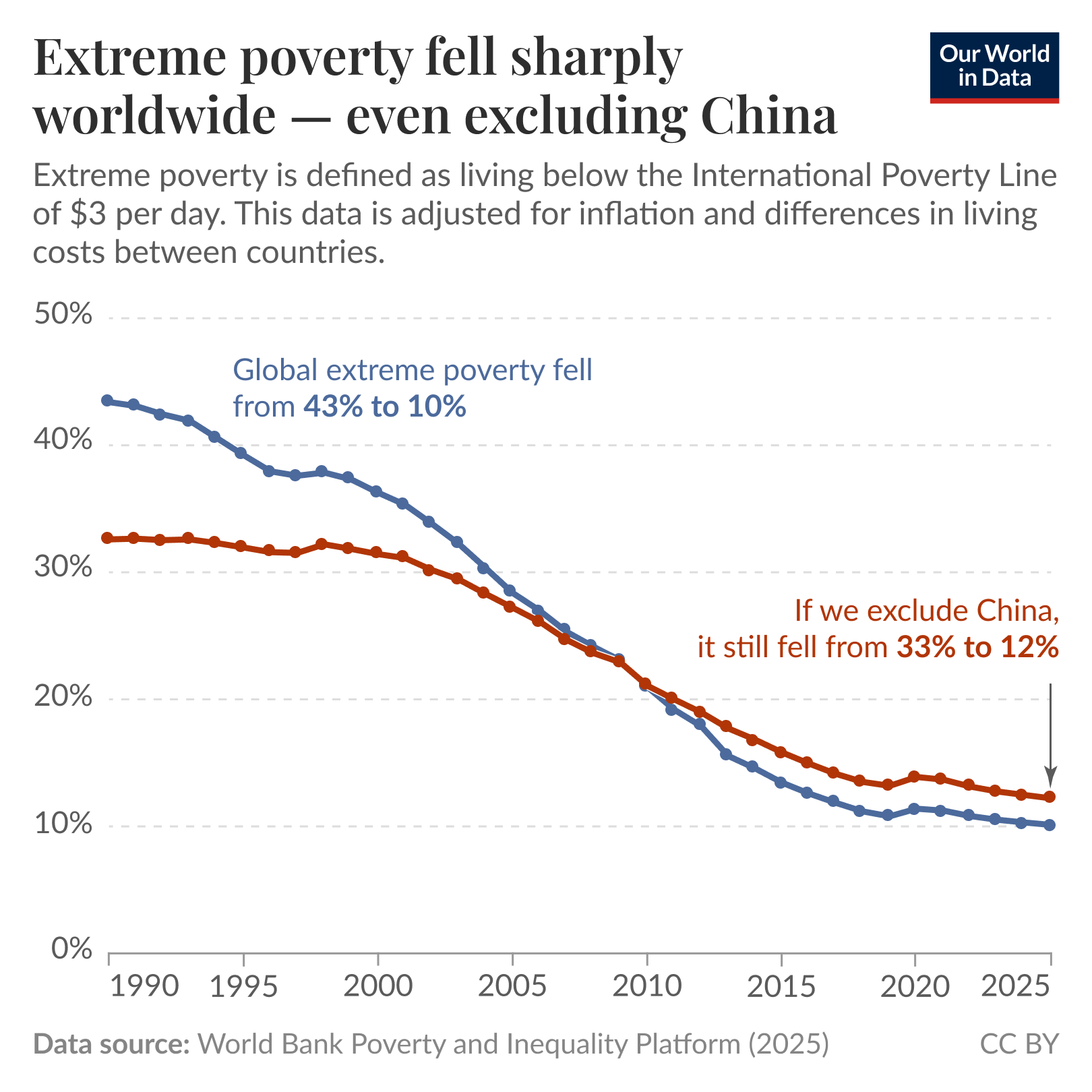
Was the global decline of extreme poverty only due to China?
Techpoint Africa - 20 African startups to watch in 2026
Realistic Optimist - The “mess” as the moat
Emerging market startups that build the missing infrastructure their product depends on (logistics, payments, installation) turn operational burden into a defensible competitive advantage
MTN doubled investment in Nigeria to $737m in 2025, subscribers up 8% to 87.3m
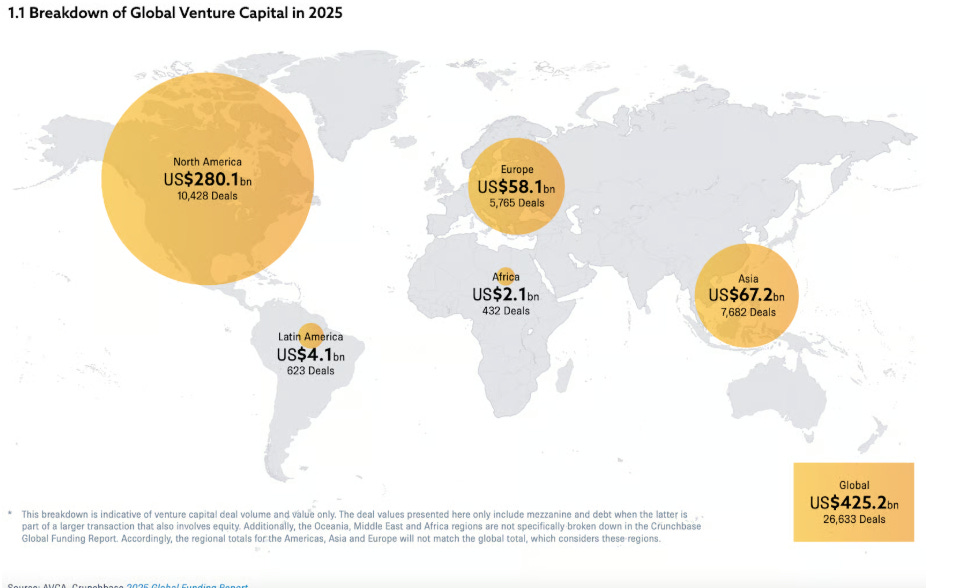
2025 Venture Capital in Africa Report (via Africa in Brief)
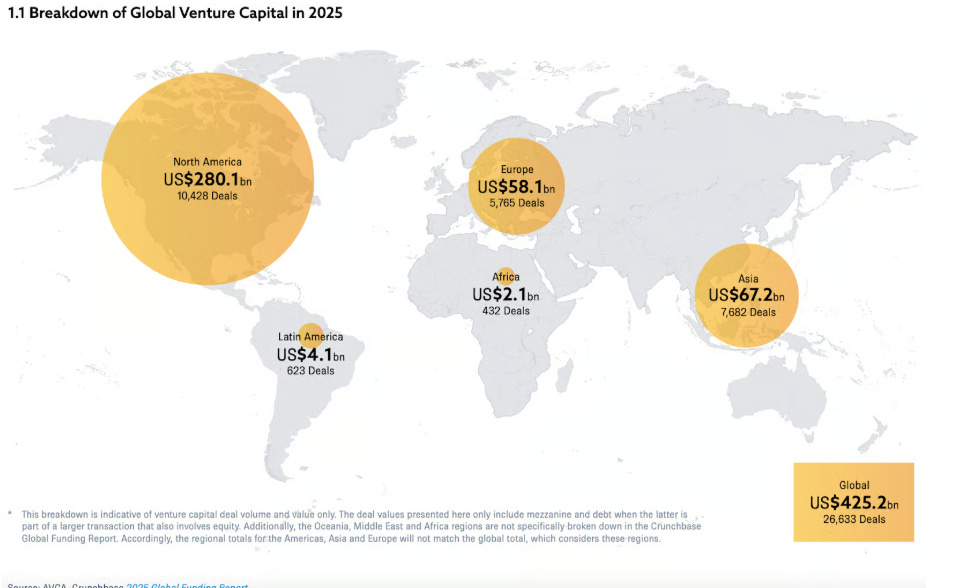
Africa attracted $2.1b in 2025, 0.5% of the $425b deployed globally
India’s Jal Jeevan Mission increased rural household tap water connections from 17% to 82% in six years
Vizier - A new corridor in the Middle East
Turkish-Saudi bilateral trade went from near zero to $8b annually
Gulf committed $28b to Syrian reconstruction
VoxDev - Rural electrification a decade on
Rural electrification had limited effects on incomes and employment
Semafor - Nigeria’s energy sector revamp begins reaping returns
Companies now control assets producing over 50% of oil output
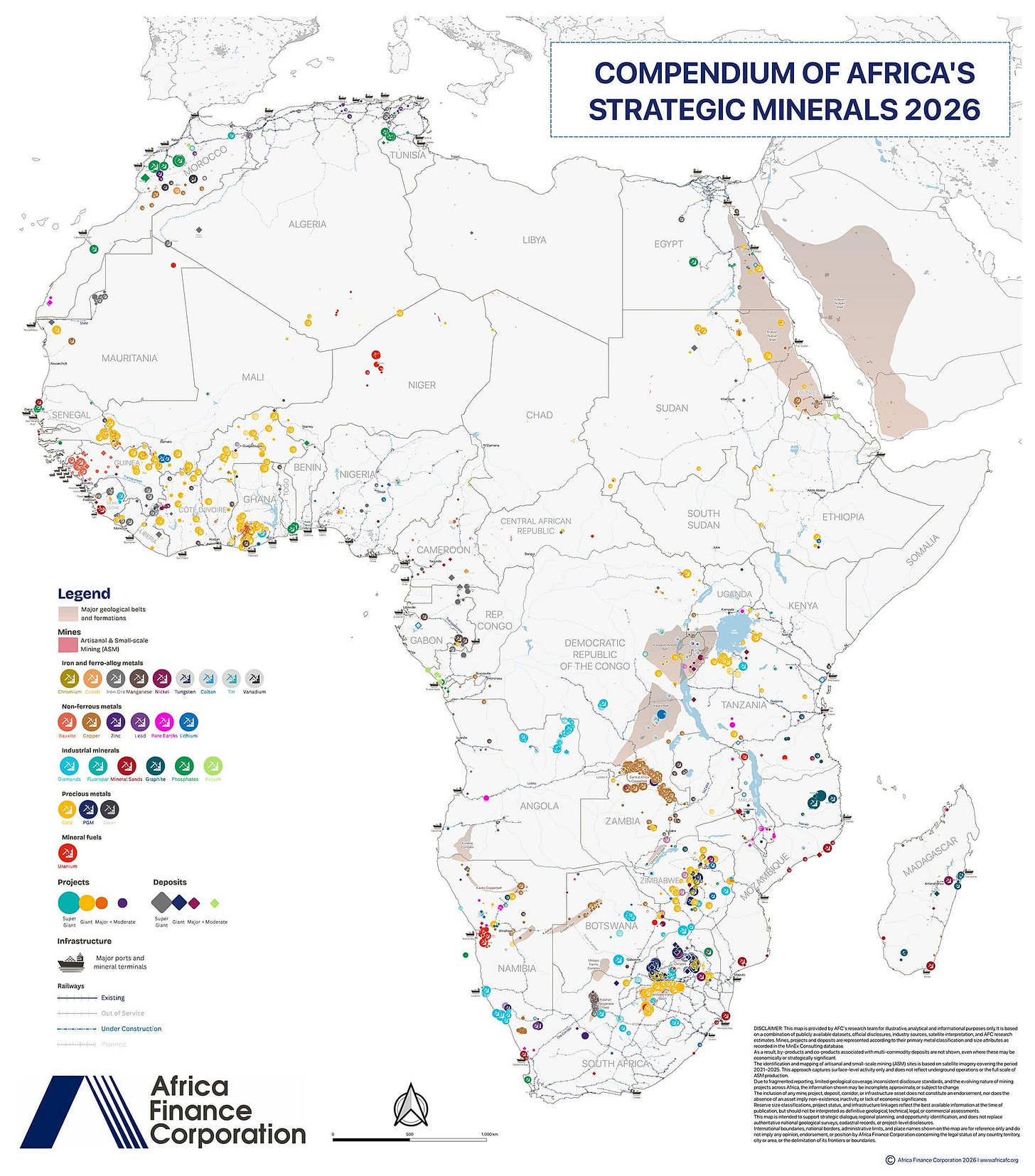
Madagascar lifts 16-year ban on new mining permits, excludes gold
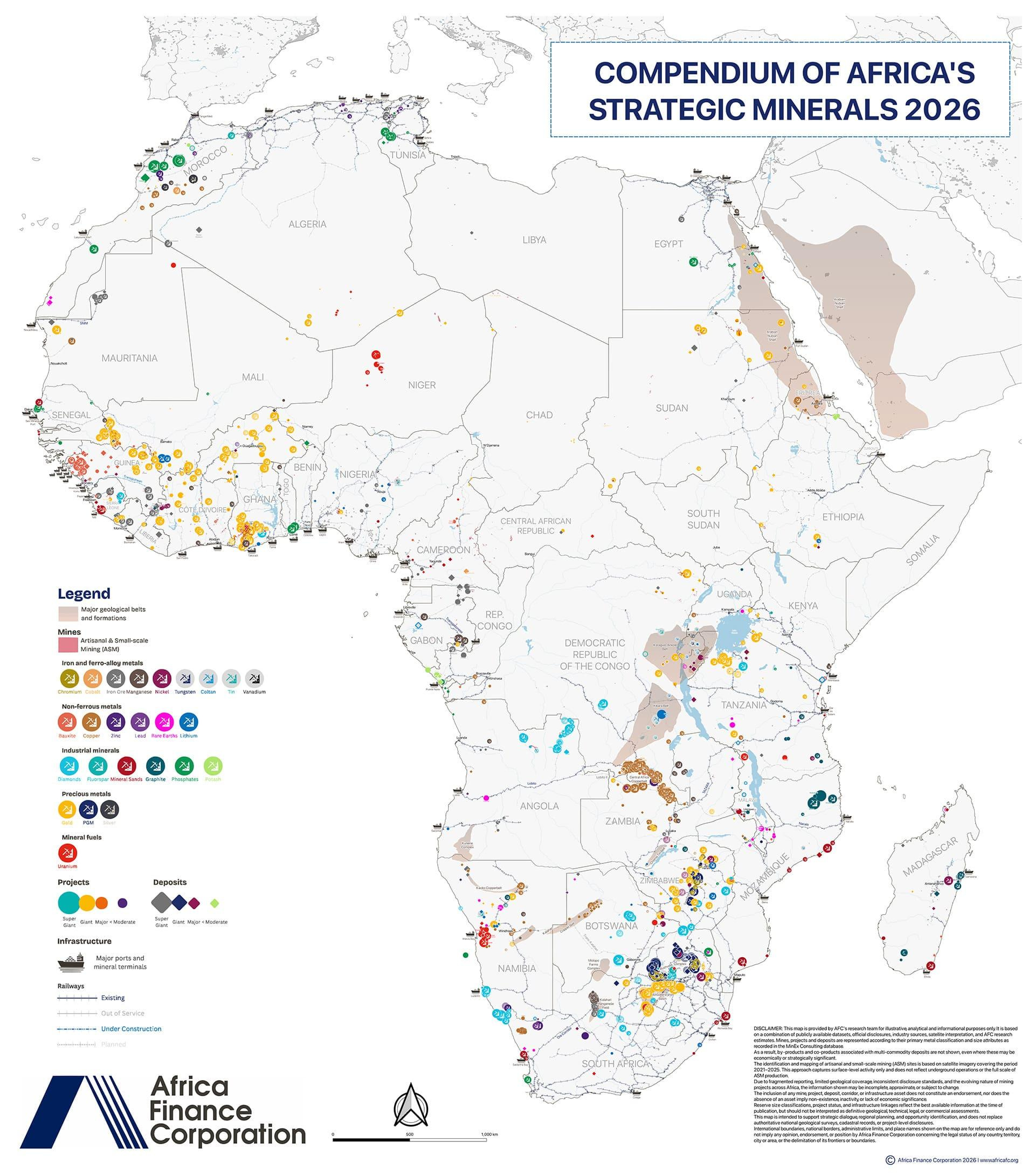
Compendium of Africa’s strategic minerals 2026
The USDA is investing $100m in innovation for screwworm control and eradication
Nigeria launches largest agricultural mechanisation programme in Africa, targeting 1.2m farmers
Devex - How a global cold-chain revolution can boost food security
Sustainable cooling market projected to double to $600b by 2050
Chasing counter seasonality - How Peru went from minimal blueberry exports to the world’s leading exporter in ~15 years
Ghana’s unpaid cocoa farmers are forced to go hungry
West Africa unveils $345m regional plan to combat livestock theft
Nigeria extends ban on raw shea nut exports to spur domestic production
For more African agriculture news check out Ag Safari by Hannatu Asheolge
Italy will offer African countries the chance to suspend debt repayments when hit by extreme climate events
Tomas Pueyo
Peak oil is coming - If solar, wind, batteries and EVs continue current exponential growth, global oil demand could peak in the early 2030s
The resource cliff - As demand for oil and gas dries up, the countries that most depend on their sale will have to reinvent themselves. But how successful have countries been in doing this?
World Bank - Which protects against climate change better, experience or income?
Ethiopia’s new GERD dam more than doubled the country’s installed generation capacity
A new crypto mining industry now absorbs 30% of national electricity demand (via Justin Sandefur)
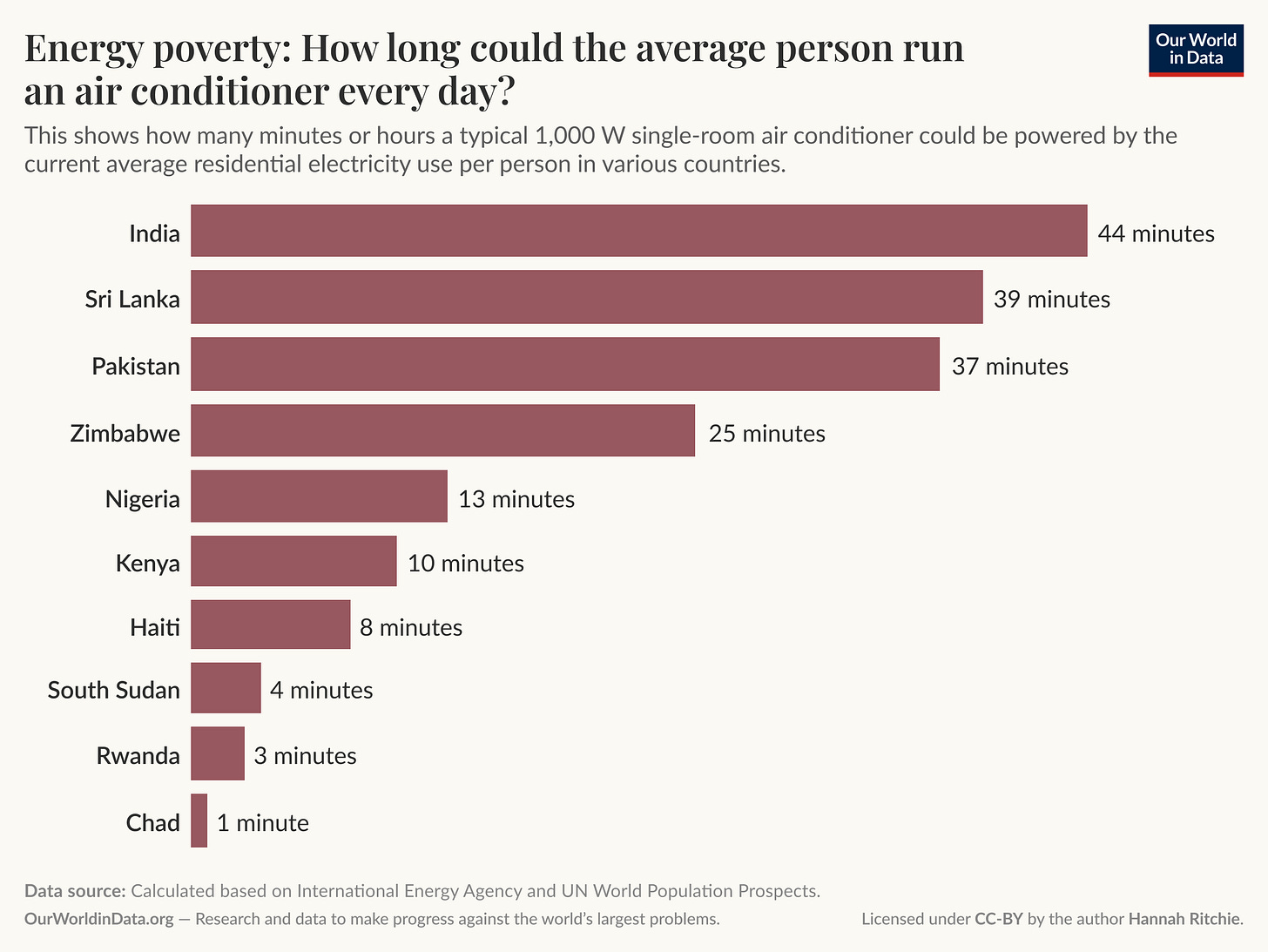
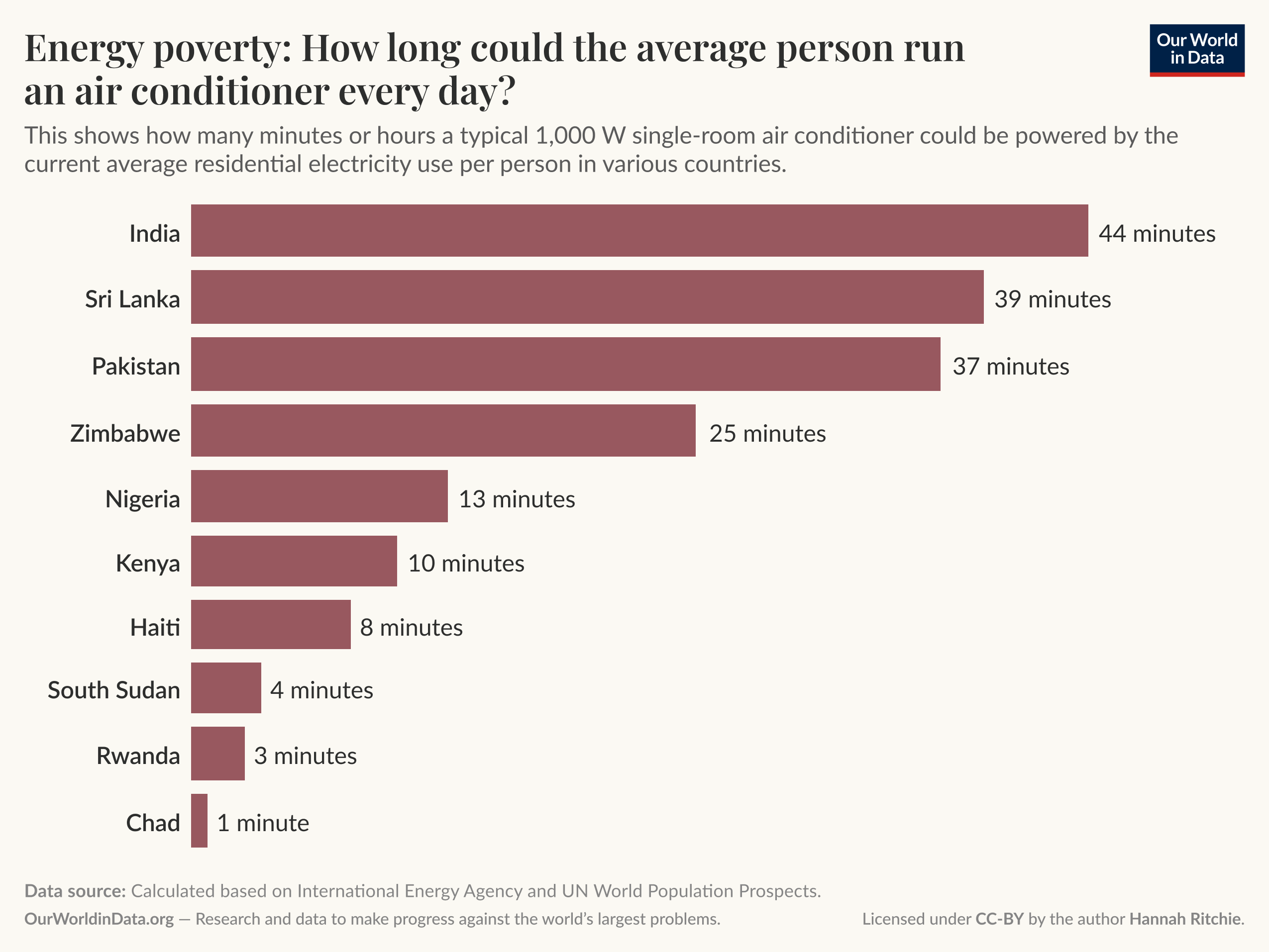
Hannah Ritchie - Four minutes of air conditioning
Chad shuts border with Sudan
Murder rates drop in Brazil for the fifth year in a row - down 11% in 2025
Crime Forecast - Everyone is wrong about the crime decline
Argues the decline is primarily driven by youth behavioural changes away from unsupervised peer interaction (smartphones) rather than policing or policy
Ken Opalo - Conflict in the Horn of Africa isn’t inevitable
Dan Lewis - 5 top successes of foreign intervention
Can India reset ties with a BNP led government in Bangladesh?
Vizier - Syria moves towards a political settlement
Damascus consolidated control over Kurdish held northeast by combining military pressure with concessions like citizenship rights and Kurdish language recognition
Most Syrian cities saw a clear increase in night time lights in 2025
Venezuela is left in a dangerous in-between state
Burkina Faso’s junta dissolves all of country’s political parties
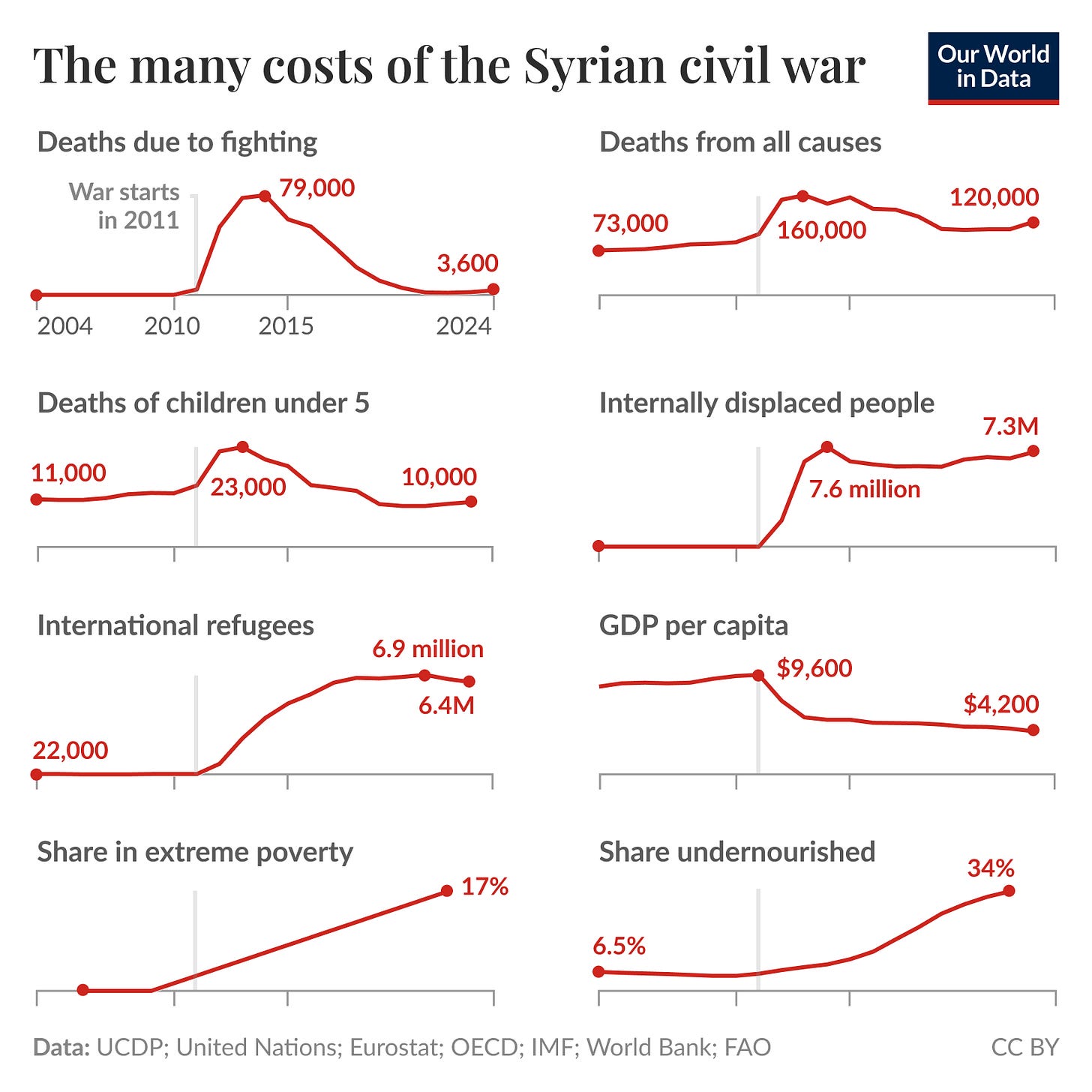
The Syrian civil war has killed hundreds of thousands, displaced millions and caused poor health and widespread poverty
The Research on Research Institute has a new Substack - Diagnosing wasted effort in research funding is harder than it looks
Works in Progress - Europe’s cutting edge firms are falling far behind the American frontier because of restrictive labour laws
Good Science - Venture Capital has lessons for government and philanthropy
Funding should adopt VC’s approach of backing people over rigid proposals, enabling faster decisions and tolerating higher failure rates
Good Science - A reality-based view of government funding of science
Learning Health - Introducing the Clinical Trials Efficiency project
Samy Sekar - What I learned trying to find the most effective democracy charities
Measured Life - Diversifying grantmaking: ten regrantors or two staff?
ACTRA - First-year learnings
Max Ghenis - Interactive replication of GiveWell’s cost-effectiveness model
GiveDirectly has launched an evidence-backed Zakat fund in Mozambique
AIM have announced four new charity ideas for the next incubation cohort
Sugar tax advocacy
Palliative care opioid access in LMICs
Digital guided self-help for depression
Mobile contraceptive clinics
DevEx - DevEx Power 50 - Who is shaping this historic new era of development?
Coming in at number 4 is Alexander Berger, CEO of Coefficient Giving
I don’t know if there is anyone else tangentially related as I don’t have a DevEx pro account
Oliver Hanney - The future of communicating science
Science communicators must master curation and build personal platforms as Google search declines and AI proliferates research output
David Oks - Africa doesn’t have large firms because it doesn’t have social trust
Argues African societies have intense kinship ties but rank among the lowest for impersonal trust, preventing firm scale up
People requiring preventive chemotherapy for neglected tropical diseases fell to 1.4b, down 92m from 2023
Libya eliminates trachoma as a public health threat
Nepal poised to eliminate kala-azar this year
Fix the News - 99 stories of progress
For more good news check out Fix The News & Human Progress
Nigeria’s last census was 2006, DRC’s was 1984
Comments
Nothing yet. Say the first thing.
Sign in to join the conversation.