
You keep ending up in situations that don’t feel like you. Plans you said yes to without fully knowing why. Relationships that made sense from the outside but left you feeling slightly less yourself every time. Choices that looked fine on paper and felt hollow the moment you committed to them.
Been there, done that.
I spent a long time assuming the problem was something I needed to think my way out of, that if I journaled more carefully, took the right personality test, or stared at the right Notion page long enough, the answer would eventually appear. It didn’t. The problem wasn’t that I lacked self-awareness. The problem was that I’d never actually been alone with myself long enough, in an unfamiliar enough context, to find out what I actually wanted when nobody was watching, and nobody was asking.
That’s what this post is about.
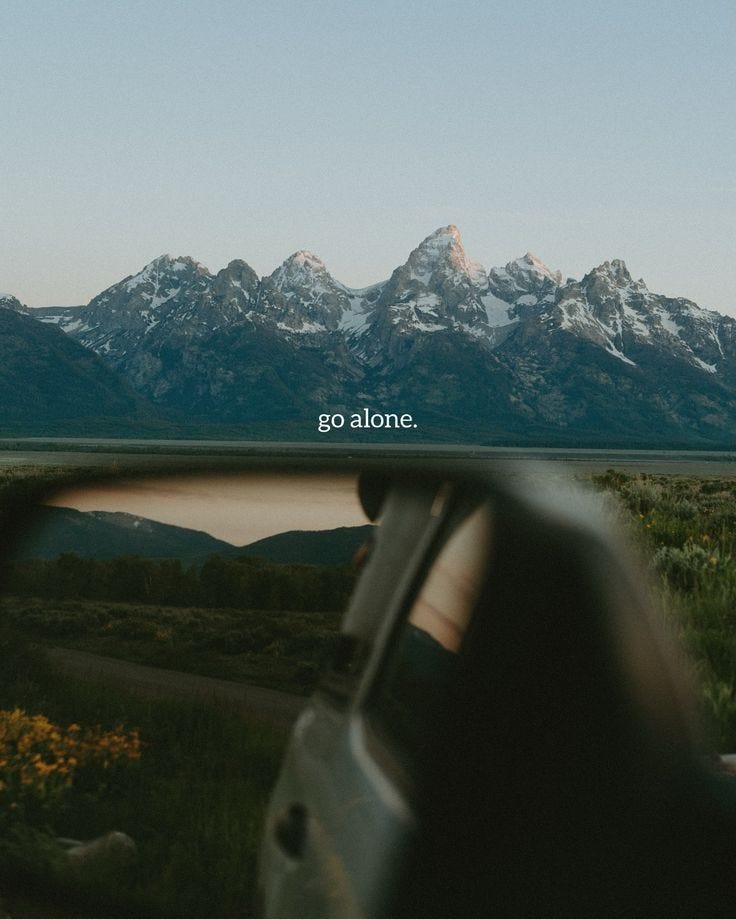
When you travel with other people, you’re still inside a social performance, still deferring and compromising and picking the restaurant that works for everyone, still staying out later than you want because the group isn’t tired yet. You’re navigating other people’s preferences, and the result is that you come home having seen a new place without having learned anything particularly new about yourself.
When you’re alone somewhere unfamiliar, that whole layer drops. There’s nobody to calibrate yourself against, nobody whose reaction you’re monitoring, nobody to perform for. You eat when you’re hungry. You leave when you’ve had enough. You follow the thing that actually interests you instead of the thing that sounds good to say out loud.
And in that space, which is quiet, a little uncomfortable, and completely unwatched, you start to find out what you actually are underneath the version you’ve been presenting.
Winnicott called the thing we carry into social situations the false self: the adaptive version of you that formed early, under pressure from other people’s expectations, until you started mistaking it for your real personality. Most of us walk around in that version all the time without noticing, because the social context that created it is always present, always reinforcing it. It only becomes visible when you remove the context entirely. A solo trip does that, not overnight and not perfectly, but enough to start seeing the outline of something more honest.
This isn’t a vacation, though!! A vacation is rest, and rest is good, but it isn’t the same thing as information about oneself. What you’re running here is an experiment, and the question you’re asking is: Who am I when nobody is making decisions for me, and nobody is watching how I respond?
More on life experiments and how to run them:
what you stop forcing. The things you’ve been doing because of FOMO, social pressure, or an old idea of what you’re supposed to enjoy. They become very obvious when there’s nobody to feel FOMO in front of, and the relief of stopping them is usually proportional to how long you’ve been forcing them.
what you do at 7am without prompting. Morning is when the performance hasn’t fully switched on yet, before you’ve checked anyone else’s opinion or calibrated yourself to the day’s social demands. What do you do in that window, left alone, in a place you don’t know?
whose voice is in your head when you talk yourself out of something. Because it is usually not yours.
what gives you energy and what drains it. Not in theory, not as an abstract self-assessment, but in the actual texture of a specific day in a specific place, when the novelty has worn off, and ordinary life is just happening.
These are not small things to find out. They compound. Every decision you make in your real life, every relationship you choose and every one you stay in too long, every career path you pursue and every one you can’t bring yourself to commit to, runs on some version of this data. If the data is wrong because you’ve been optimizing for someone else’s preferences for years, the decisions will keep feeling off, and you won’t be able to explain why.
Three rules that separate an experiment from a holiday:
minimum two weeks. The first week is novelty, and you will be excited and adjusting, and everything will feel like a highlight reel. Week two is when ordinary life sets in, when you have a boring afternoon in a foreign city and find out whether the place, and yourself in it, still feels okay.
build a routine, not an itinerary. Find one café you return to more than once. Buy groceries from a local market rather than convenience stores. Figure out how you’d get to a pharmacy if you needed one. The tourist brain is always optimizing for highlights, and it will give you nothing useful here. You want to know what a regular day feels like, not which is the best attraction in the city.
keep a note on your phone. Three bullet points every few days: energy, mood, and one thing that surprised me about myself. No need for a fancy journal or a structured reflection exercise, just a quick record so that at the end you’re not trying to reconstruct everything from a blur of impressions.
I’m organizing these not by aesthetic (though some of them are genuinely beautiful) but by what each place gives you structurally for this specific experiment. Solo travel for self-discovery has particular requirements: affordable enough that financial stress doesn’t contaminate your results, socially accessible enough that you’re not completely isolated if you want human contact, and different enough from your default environment that it actually produces reactions worth paying attention to.
cost: $800–1,200/month all in | solo-friendliness: very high | visa: 90+ nationalities get a full year visa-free
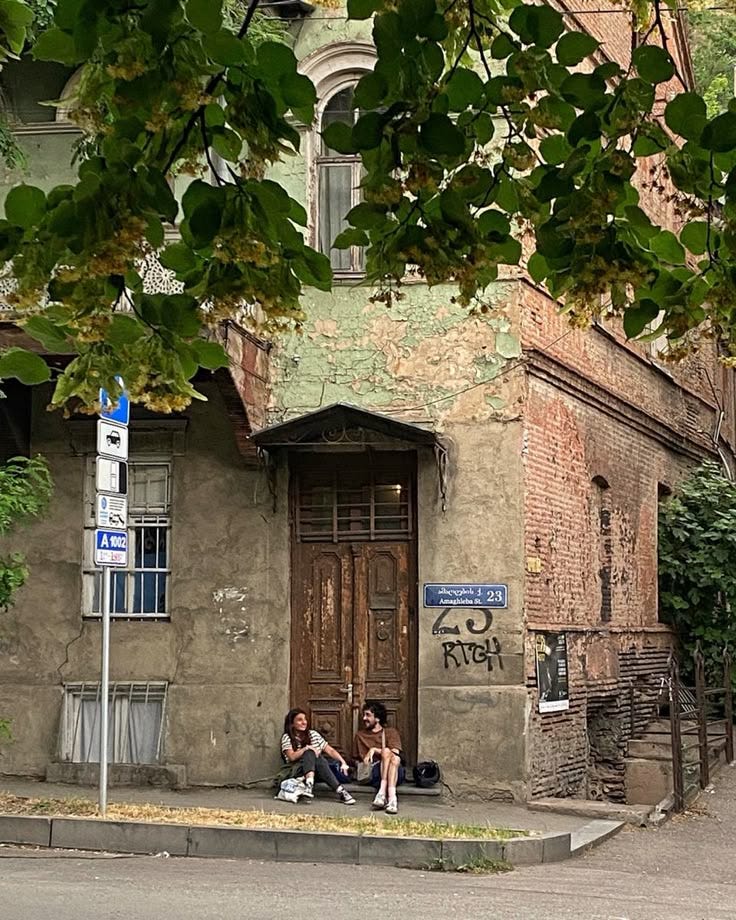
The most consistently recommended city for this kind of experiment, and for good reason. Tbilisi is warm in both the literal and social sense: Georgians are famously hospitable, the food culture is extraordinary in a way that will reorganize your understanding of what a meal is supposed to feel like, and the city has accumulated a large population of international people who chose to be there intentionally rather than landing there by circumstance, which creates the kind of selection filter that produces interesting conversations fast.
What the city does specifically for this experiment is give you a pace slow enough to actually be with yourself, a culture different enough from most Western defaults to produce real reactions (Georgians have a completely different relationship to time, to hospitality, and to the obligations of friendship than most Westerners, and watching your own reactions to those differences will tell you something), and a cost of living low enough that you’re not stressed about money, which is a more significant contaminating variable in self-knowledge than most people account for.
⚠️ Honest note: Tbilisi has become popular, and the international bubble is real. Stay in a local neighborhood like Vera, Saburtalo, or Vake rather than the tourist center if you want a less curated version of the city.
cost: $700–1,000/month | solo-friendliness: very high | visa: 30–60 days on arrival for most passports, extendable
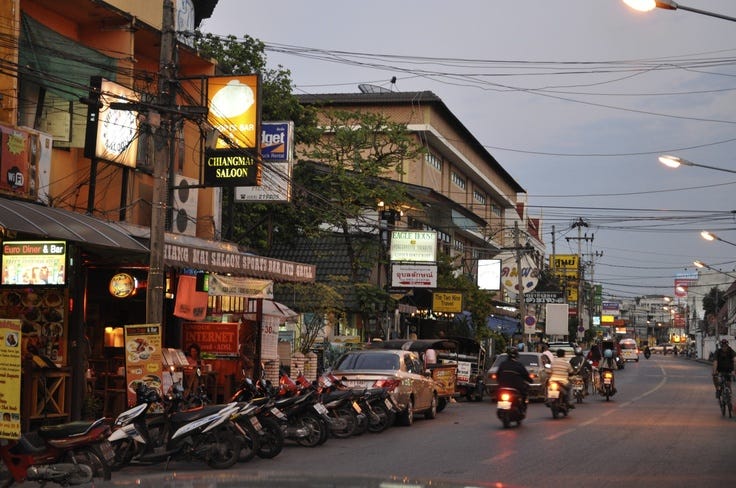
The classic recommendation for a reason. Chiang Mai has extraordinary infrastructure for people who are there to think and work and exist quietly rather than holiday, with good wifi everywhere, a genuine density of cafés and spaces that make it easy to establish a daily routine, and a surrounding environment of mountains, temples, and markets that doesn’t require much effort to engage with.
The specific thing it gives you for this experiment is an encounter with a genuinely different pace of life. It takes about a week to stop feeling like you’re doing something wrong by moving slowly, by sitting somewhere for two hours without producing anything, by letting a morning unfold without optimizing it. Once that settles, you’ll find out fairly quickly whether slowness suits you or drives you quietly insane, and both are useful answers that will follow you home.
⚠️ Honest note: Chiang Mai has a large expat community, which means you can accidentally spend your entire time inside a foreigner bubble and not actually encounter a different culture at all. Deliberately seek out local spaces, go to the morning market, and find a temple that isn’t on the tourist circuit.
cost: $600–900/month | solo-friendliness: high | visa: 45 days visa-free for many passports
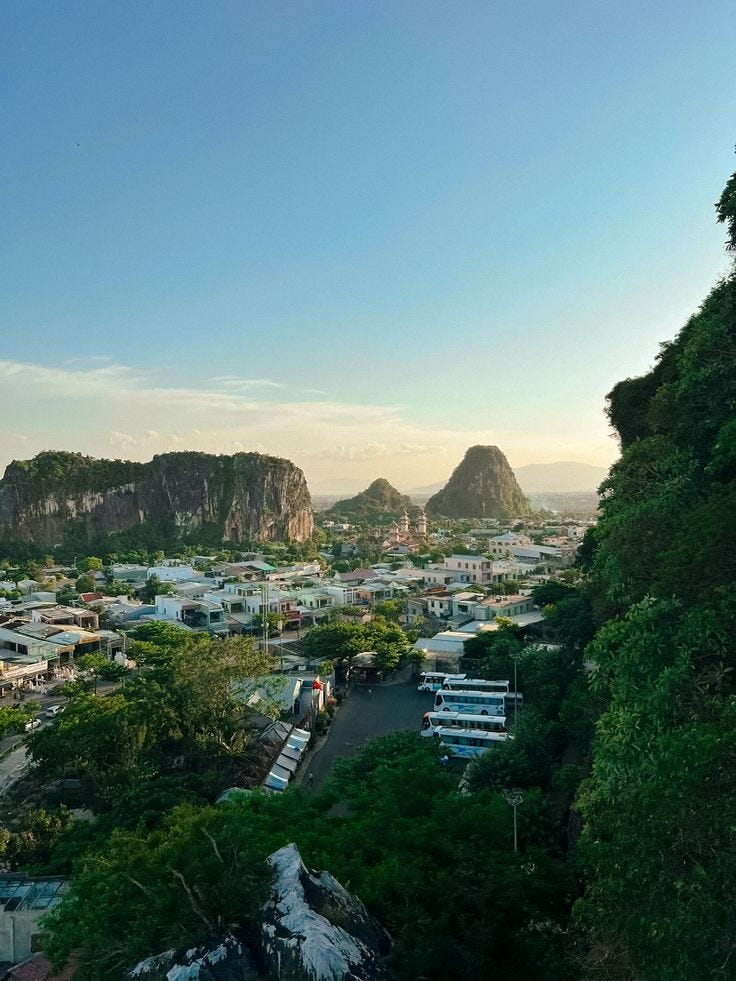
I’m writing this from Vietnam, and I’ll say plainly that I came here expecting to stay a few weeks, but 2 months later, I’m still here, expecting to leave for a bit and come back soon. The combination of beach and mountains, food, and genuine affordability is hard to match, and Da Nang specifically has solid infrastructure without the tourist saturation that makes Hoi An feel like a theme park and Hanoi feel relentless.
What Vietnam gives you in particular is data about your own rhythms that you might not have known you were missing. The Vietnamese day starts early, and the best part happens before 9am: the markets, the light, the street-food culture, the pace of the morning before the heat sets in. I found out, in a way I’d never fully registered before, that I’m a morning person, not because someone told me or because I identified with the aesthetic of early rising, but because I kept waking up at 6am genuinely looking forward to the day, which had never happened to me quite like that before.
⚠️ Honest note: Vietnamese is genuinely difficult, and English isn’t universally spoken the way it is in some other Southeast Asian cities. This is actually useful for the experiment because it creates a low-level productive friction that keeps you paying attention to your surroundings, but go in prepared for some navigation challenges.
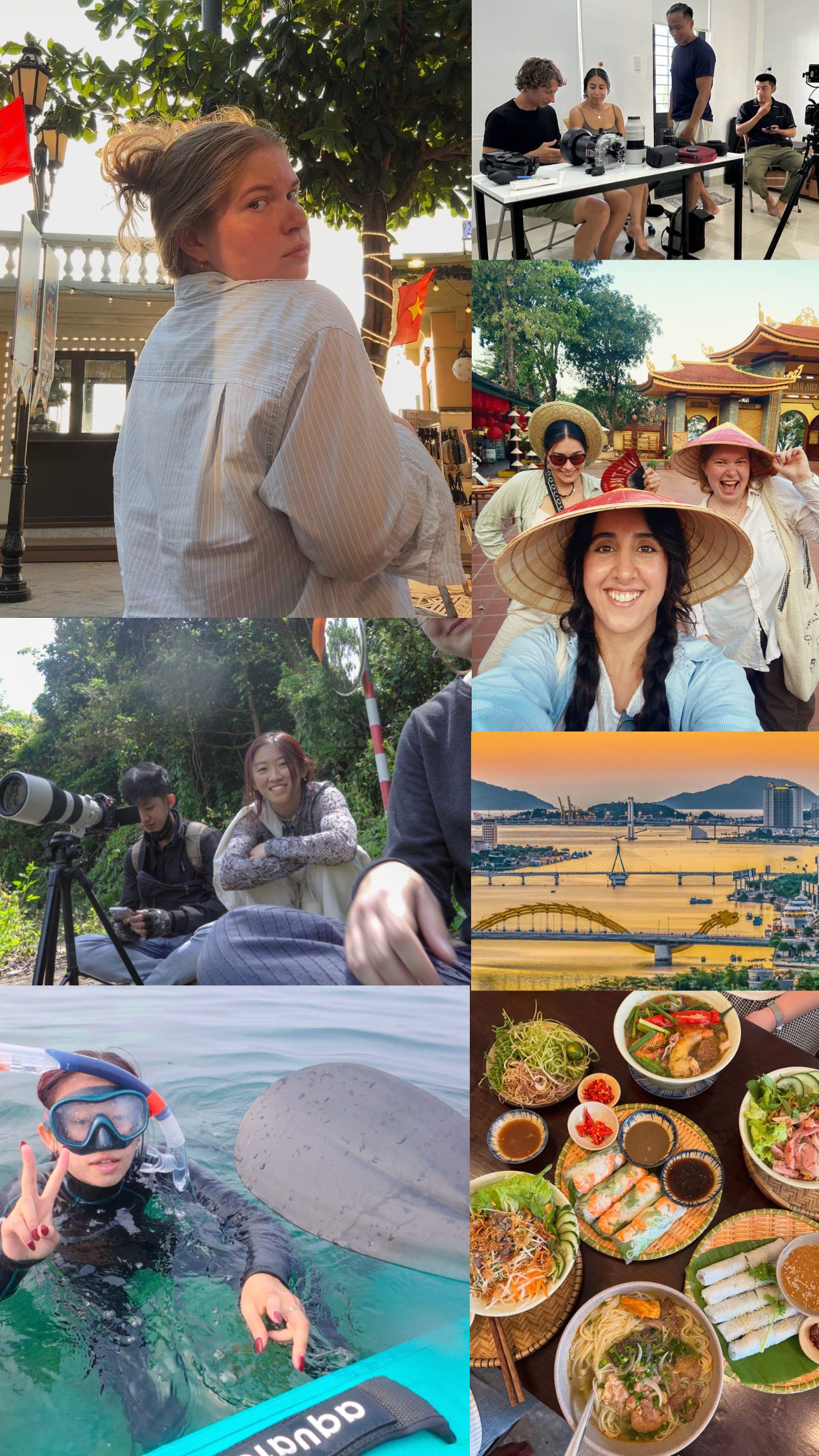
I said I would come back to Vietnam, and I meant it literally: I’m running a small group trip there this July 30–August 5, and I’m mentioning it here because it came directly out of everything I’ve written above.
This whole post is about solo travel, and now I’m inviting you to come with other people??? But I think it still fits: for some people, the barrier to doing this experiment at all isn’t motivation, it’s the specific anxiety of landing somewhere completely alone for the first time. A structured first trip with a home base near the beach, real Vietnamese food cooked together, morning light at the sea, a night walk through the forest, a cooking class, people around you can be the thing that breaks the seal. You still have your unstructured time. You still find out who you are at 6am when the market is waking up. You just have a soft landing and a travel buddy who knows the terrain.
It’s $1,148 all in (accommodation in a shared home near the beach, three meals a day, airport transfers, field trips, storytelling training, a Worldpackers membership, and me). You secure your spot with $336.
If that sounds like your entry point into this kind of travel, the details are on the website and there’s a WhatsApp group where you can ask questions and meet the people who are already coming before you land.
→ JOIN OUR GROUP CHAT | LEARN MORE
cost: $900–1,300/month | solo-friendliness: high | visa: 90 days on arrival, extendable
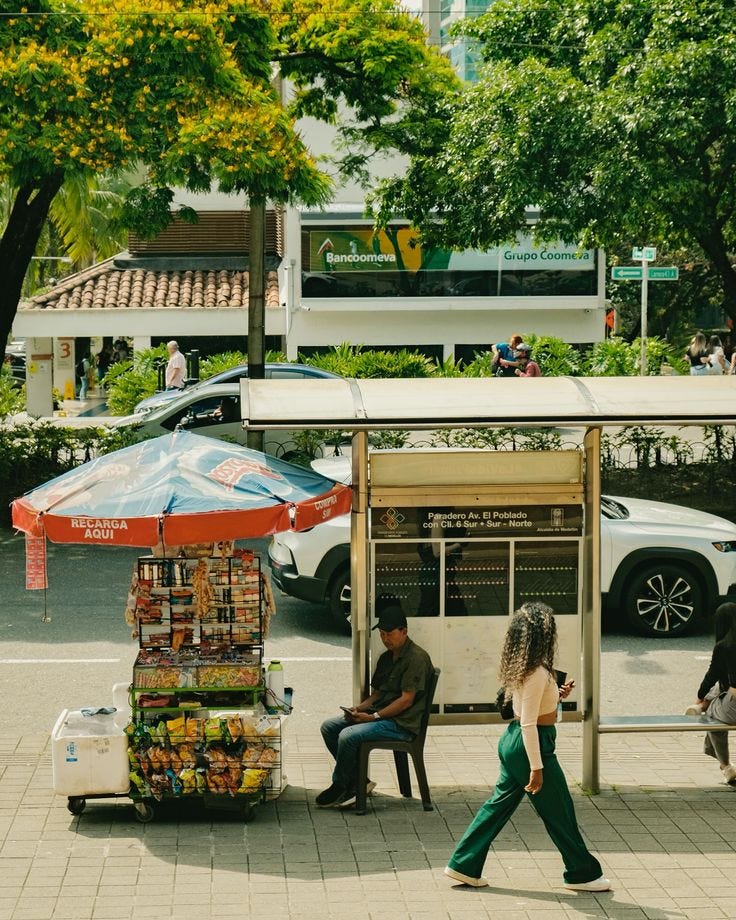
Medellín has a strong creative community, a genuinely interesting local culture that rewards engagement, and a spring-like climate year-round that makes it easy to spend time outside and in contact with the city rather than retreating indoors. It’s also the most socially active city on this list, in that Colombians are expressive and socially warm, making accidental community significantly easier to build than in most places.
What it gives you specifically: if you’ve spent your life in a context where social norms are reserved and closed, and people don’t make direct eye contact with strangers on the street, Medellín will feel like a different organism. The directness, the warmth, the physical expressiveness of how people relate to each other here will almost certainly produce a reaction in you. Pay attention to whether that reaction is relief or overwhelm, because both are honest information about what kind of social environment you actually need.
⚠️ Honest note: read r/medellin for the current safety context, and be honest with yourself about whether you’re actually drawn to the city or to the heavily curated version of it that exists in digital nomad content. Week two will answer that question for you.
cost: €1,200–1,600/month in Lisbon, €900–1,200 in Porto | solo-friendliness: very high | visa: Schengen rules for non-EU, 90 days
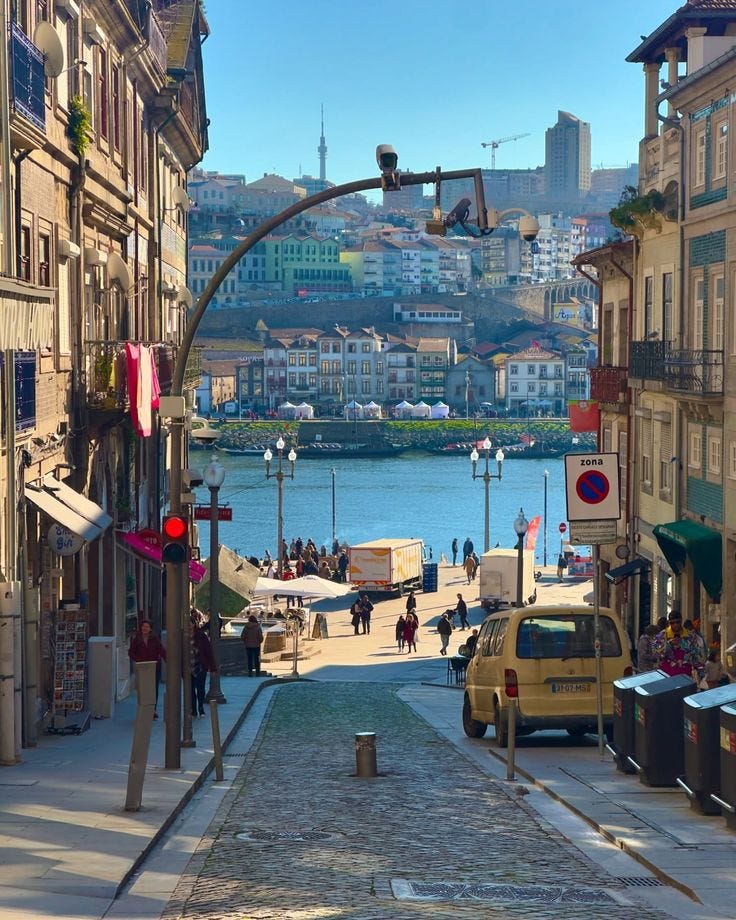
More expensive than the rest of this list, but worth including because people based in Europe often assume they need to go somewhere far away for this experiment to count, and they don’t. Porto, especially, is walkable and human-scaled, with extraordinary food and coffee culture and a pace that’s significantly slower than Lisbon, which suits the experiment better than a city that’s actively accelerating.
What Southern European culture offers is an encounter with a completely different relationship to time, meals, and the texture of an ordinary day. Lunch is two hours, and it’s not a productivity hack; it’s just what lunch is. Afternoons slow down. Nobody is in a visible rush, as Northern European and North American cities seem to treat as a baseline virtue. This will either feel like profound relief or like a kind of torture you can’t quite name, and finding out which it is will tell you something worth knowing.
cost: €1,000–1,400/month | solo-friendliness: medium-high | visa: Schengen rules
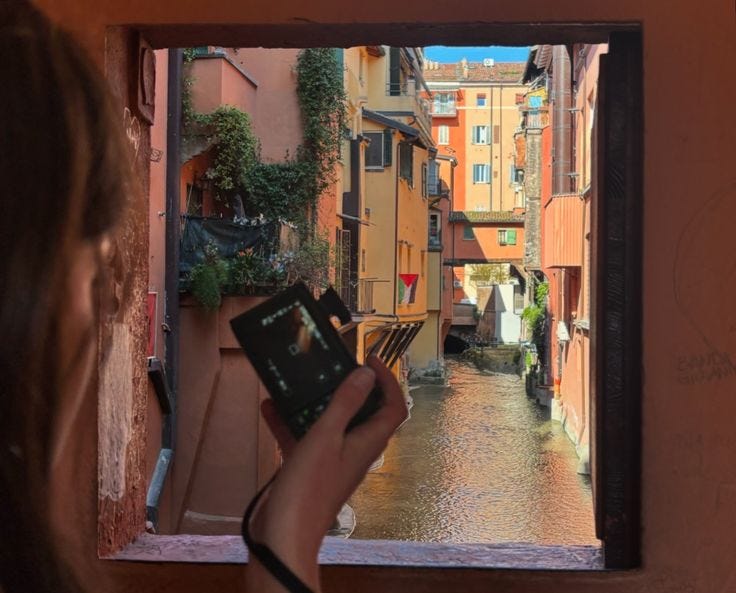
Underrated and genuinely wonderful. Bologna is a university city, home to the oldest university in the world, which means it has a young and intellectually active population, extraordinary food (it is, by any honest assessment, the best food city in Italy), and a culture that takes both pleasure and ideas seriously rather than treating them as opposites. It’s also significantly less touristy than Florence or Rome, which means you’ll be living in a real Italian city rather than a stage set built around foreign visitors.
Italy’s relationship to slowness, beauty, and the quality of ordinary life is worth encountering directly. I find that people who spend time in Italian cities come away with different priorities than when they arrived, not because Italy is perfect or because the infrastructure is easy, but because the culture insists on certain things including good coffee and long meals and aesthetic attention to your surroundings, and being around that insistence for a few weeks makes you re-examine what you’ve been treating as optional in your own life.
Everything above assumes you’re dropping yourself into a city with minimal scaffolding and letting ordinary life speak to you. That’s the version I recommend most because the unstructured nature of it is actually the point — you can’t fake your choices when nobody is designing the options for you.
But some people genuinely need more containers than that, either because they don’t yet trust themselves to not just retreat into comfort, or because they want the experiment to feel more intentional and defined from the start. For those people, some experiences come up constantly in the “going to find myself” conversation, and they’re worth being honest about — including about what they actually give you and what they don’t.
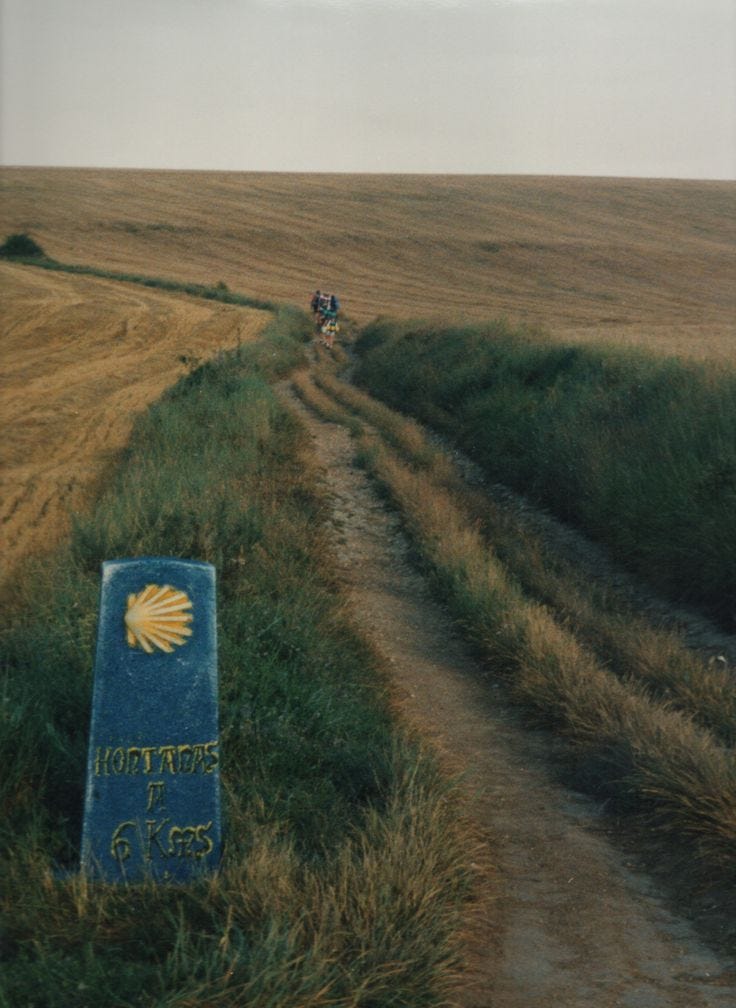
The one people mention first, and for understandable reasons. Walking 800km across northern Spain over roughly 30 days, sleeping in pilgrim hostels, carrying everything you need on your back, arriving in Santiago de Compostela having done something genuinely difficult — it is a meaningful experience, and I’m not going to pretend otherwise.
The honest thing to say about the Camino, though, is that it is one of the least alone experiences on this list. You are walking with hundreds of other people who are all having the same transformation narrative at the same time, and the pilgrim community is so established and so well-worn that the meaning-making is almost pre-installed into the infrastructure before you arrive. There is a Camino identity, a Camino culture, a Camino mythology, and it will wrap around you whether you want it to or not. This is not necessarily a bad thing — the shared challenge and the community it creates are genuinely powerful — but it means you are finding yourself within a very specific container that has been occupied by millions of people before you, which is a different experiment from being alone in a city in Vietnam where nobody is performing anything.
The Camino is the right choice if you need a physical challenge to break something open in you, if you process through movement and exhaustion rather than stillness and observation, and if you want the solidarity of other people going through the same thing at the same time. It is probably not the right choice if what you actually need is to be alone, to make small, quiet decisions without an audience, and to find out what you do when there is no shared narrative to participate in.
Practical note: the Frances route (St Jean Pied de Port to Santiago) is the most popular and takes about 30 days at a comfortable pace. The Portuguese route from Porto is shorter at around 12 days and significantly less crowded, which makes it a more honest experiment if the solo element actually matters to you.
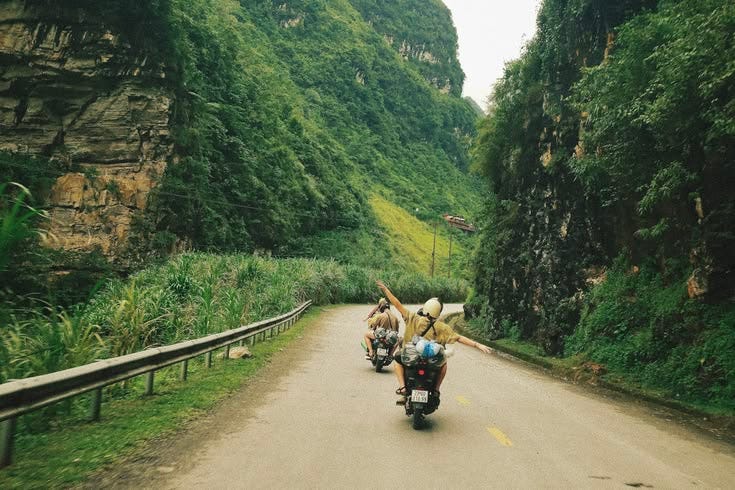
A 350km motorbike route through the mountains of northern Vietnam along the Chinese border, taking 3 to 5 days depending on your pace, passing through some of the most dramatic and genuinely untouched landscapes in Southeast Asia. The Ma Pi Leng Pass, the Dong Van Karst Plateau, the ethnic minority villages, the river canyons — it is, by most accounts of people who have done it, one of those experiences that makes you question how somewhere that looks like this can exist on the same planet you’ve always lived on.
This one is genuinely solo in a way the Camino isn’t. You’re on a motorbike on narrow mountain roads, navigating by feel and by instinct, often without cell service, making decisions in real time about whether to push on or stop, how to handle the road conditions, and whether the weather is going to cooperate. The data it gives you is specific: how you handle physical challenge and uncertainty, and the particular clarity that comes from being slightly scared in a beautiful place and choosing to keep going anyway.
What it won’t give you is the slow accumulation of ordinary days that reveals your baseline self. It’s intense and compressed, and the landscape is so extraordinary that it dominates everything else. You’ll come back knowing something about your relationship to fear and to beauty and to challenge, which is real and worth knowing — but it’s a different experiment from spending three weeks in Tbilisi finding out whether you’re a morning person or what you actually want to eat for lunch when nobody is watching.
Practical note: you can rent a motorbike in Ha Giang City and do the loop independently if you’re a confident rider, or hire a local Easy Rider guide if you’re not, which most people recommend because the roads are genuinely technical and having someone who knows the terrain matters—budget around $15-$30 per day, all in, including accommodation at homestays. Start from Hanoi, take the overnight bus to Ha Giang City, and allow at least 4 days for the loop itself.
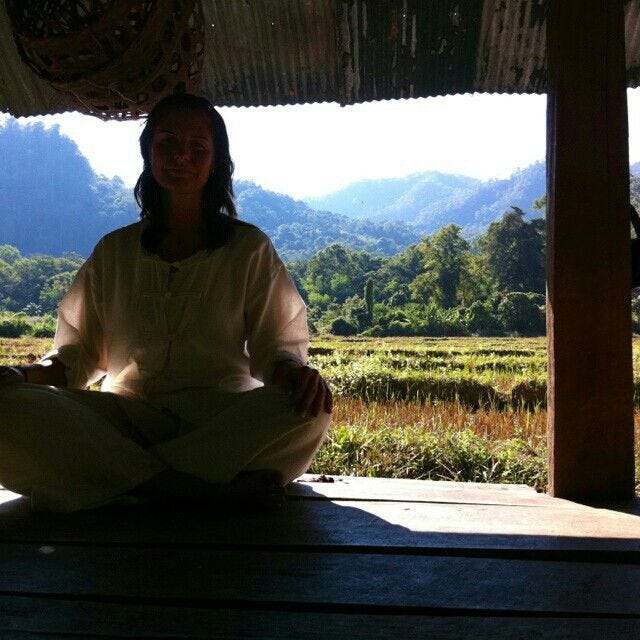
The most radical version of this experiment and, for some people, the most useful one. You arrive at a monastery, hand over your phone, stop speaking, wake up at 4 or 5am, meditate for several hours a day, eat two simple vegetarian meals, and sit with your own mind for anywhere from 3 to 10 days with no external stimulation, no entertainment, no way of avoiding whatever is actually in there.
Vipassana, which translates roughly as “seeing things as they really are,” is the most widely practiced technique at these retreats, and the premise is straightforward enough: when you remove every distraction, every habit, every social obligation, every screen and conversation and external input, you find out what’s actually running in the background. Most people discover that what’s running is considerably noisier and more uncomfortable than they expected, which is the point.
The honest caveat about monastery retreats is that people often go looking for answers and come back with more questions, which is accurate but tends to get left out of the romantic version of this experience. The retreat doesn’t tell you what to do with your life. It gives you a very clear view of your own mind, and what you do with that clarity afterward is entirely up to you, which requires its own kind of work that doesn’t happen at the monastery.
The most accessible options for English-speaking foreigners are Suan Mokkh International Dharma Hermitage in Surat Thani, which runs structured 10-day retreats starting on the first of every month with no booking possible (you show up on the last day of the prior month to register), and Wat Pa Tam Wua Forest Monastery in Mae Hong Son, which is more flexible, accepts shorter stays, and is genuinely beautiful in a way that helps. Both are free of charge, though donations are appreciated and genuinely help keep them running.
This is the right choice if you want to be completely alone with yourself in a way that a city trip doesn’t quite achieve, if stillness rather than movement is how you process, and if you’re willing to be uncomfortable in a structured and supported way rather than a chaotic one. It is probably not the right choice if you’re in a fragile moment, if you haven’t meditated before, and you want to start gently, or if you’re hoping the experience will hand you an answer rather than just a very clear view of the question.
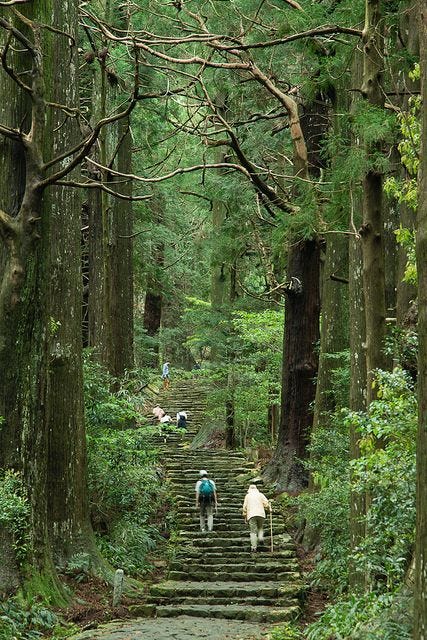
This is the one I genuinely don’t understand why more people don’t talk about, because it is extraordinary and almost completely absent from the western “find yourself through travel” conversation. The Kumano Kodo is a network of ancient pilgrimage trails winding through the mountain forests of Japan’s Kii Peninsula, and it is one of only two pilgrimage routes in the world to hold UNESCO World Heritage status. The other one is the Camino de Santiago. The Camino gets roughly 500,000 pilgrims a year. The Kumano Kodo, which has been walked by Japanese emperors, samurai, and monks for over a thousand years, gets a fraction of that, meaning you are walking through one of the most spiritually significant landscapes in East Asia in something close to solitude.
The trail passes through dense cedar and cypress forests, through mountain villages that have barely changed in centuries, past cascading waterfalls and moss-covered stone steps, and eventually arrives at the three Kumano Grand Shrines that mark the sacred heart of the region. The whole area operates on what Japanese Shinto calls satoyama — the idea that the boundary between human settlement and the natural world is not a hard line but a gradual, sacred transition. You feel that on the trail in a way that is difficult to describe and fairly easy to experience.
The most accessible route for first-timers is the Nakahechi, which connects the western coast to the Kumano Hongu Taisha shrine and can be walked in 3 to 5 days, depending on which sections you choose. If you want to extend it into something more substantial, you can continue from Hongu to Koyasan, the sacred mountain town of Japanese Buddhism, via the Kohechi route, which adds another 3 to 4 days of harder, more remote mountain walking and is one of the most complete spiritual journeys you can do in Japan.
One thing nobody mentions in the practical guides: if you have already completed the Camino de Santiago and hold a Compostela certificate, you qualify for dual pilgrim status on the Kumano Kodo — an official recognition of the link between the two UNESCO routes that is genuinely moving and also a useful conversation starter with the locals who run the trail guesthouses.
Practical note: book accommodation well in advance, especially for spring and autumn. The Tanabe City Kumano Tourism Bureau runs the best planning resource for non-Japanese speakers at kumanokodo.com, including an accommodation booking service specifically designed for foreign visitors. Getting there from Osaka takes about 2.5 hours on the Kuroshio express train to Kii-Tanabe. Budget around $80 to $120 per day, including traditional guesthouse accommodation and meals, which are often included in the room price and are worth every yen.
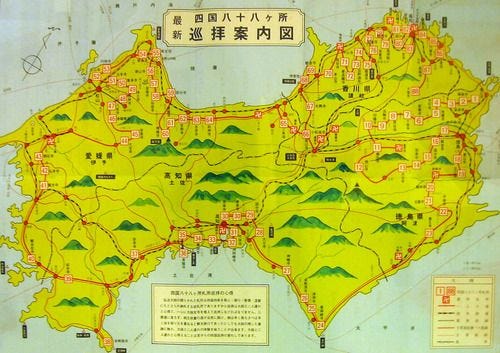
The most unknown and probably the most radical walking pilgrimage in the world for people who aren’t already deep in the pilgrim travel subculture. A 1,200km circuit of 88 Buddhist temples across the island of Shikoku, associated with the monk Kobo Daishi, who is said to have walked it in the 9th century, and which takes roughly 45 to 50 days to complete on foot. The full walk costs around $2,500 to $3,500 all in, depending on your accommodation choices, which works out to roughly $55 to $75 a day, including food, guesthouses, and the small ritual fees at each temple.
What makes the Shikoku pilgrimage different from everything else on this list is a concept called osettai, the tradition of locals giving gifts freely to pilgrims passing through: food left on doorsteps, strangers pressing money into your hand at petrol stations, and older women offering you rice balls on mountain paths. It is not charity in the way we understand it in the West — it is a form of accumulated spiritual merit that benefits the giver, rooted in the belief that the spirit of Kobo Daishi walks alongside every pilgrim. The result is that you spend 45 days being received as something sacred by people you have never met, which does something to you that is almost impossible to explain in advance and which several people I have read about describe as the thing that changed them most fundamentally about the experience.
You wear white for the duration, carry a walking staff, and collect red stamps in a pilgrim book at each of the 88 temples. In the smaller villages in rural Shikoku, which have been losing population for decades, you are sometimes the only traveler for days at a time. The infrastructure is not built for tourism the way the Camino is — it is built for practice, for the actual act of pilgrimage — and that distinction significantly changes the quality of the experience.
This is for people who have a lot of time, a genuine tolerance for physical hardship, and an interest in being inside a living spiritual tradition rather than visiting one from the outside. It is not a casual option, and I would not frame it as one. But if it sounds like yours, it probably is.
Practical note: the henro.org website has the most comprehensive English-language planning resource, including a cost calculator and accommodation guide. Spring (March to May) and Fall (September to November) are the best seasons; avoid Golden Week at the end of April when accommodation books out entirely. Start at Temple 1 in Tokushima, accessible by overnight bus from Tokyo or Osaka.
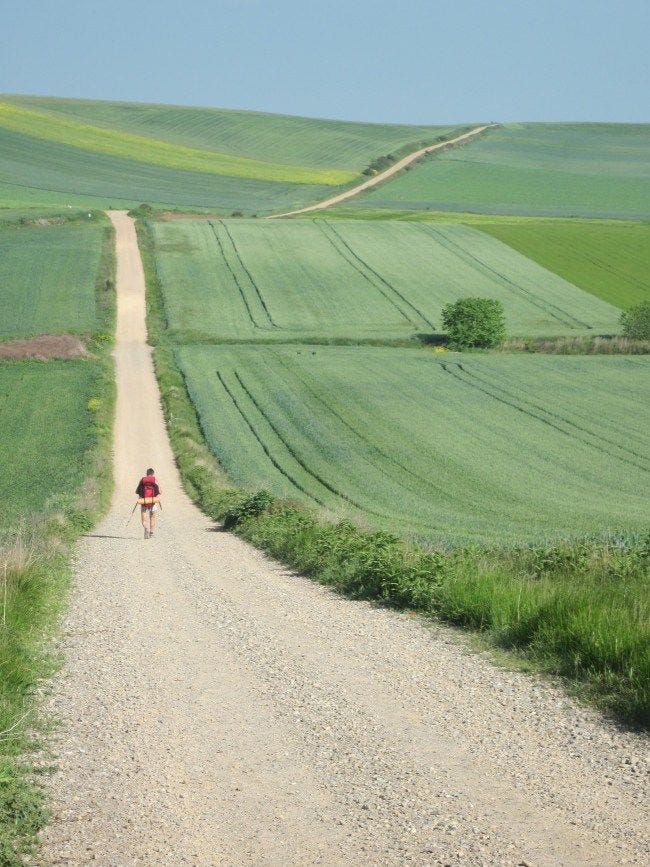
The Camino’s Italian counterpart and, depending on who you ask, its more beautiful and more honest older sibling. The full Via Francigena runs 2,000km from Canterbury Cathedral to St Peter’s Square in Rome, tracing the route walked by Archbishop Sigeric in the year 990 AD. Almost nobody does the whole thing, and you don’t need to, because the Tuscan section from Lucca to Siena is an 8 to 10-day walk through some of the most quietly extraordinary landscapes in Europe — medieval hilltop towns, Romanesque churches, cypress-lined dirt roads, vineyards, and the kind of stone villages where lunch takes two hours because that is simply what lunch is. It stands completely on its own as an experience.
What the Via Francigena gives you that the Camino doesn’t is solitude and the sensation of actually being part of Italian daily life, rather than a pilgrim-tourism infrastructure built around you. In 2024, roughly 6,000 people received the completion certificate in Rome, which is the entire annual number compared to the Camino’s 500,000. You will walk for hours on some sections without seeing another pilgrim. The accommodation is a mix of monastery guesthouses, family-run agriturismi, and small hotels, and the food is Tuscan, which means it is almost offensively good.
The Lucca to Siena section costs roughly €50 to €80 per day, all in, including accommodation and meals, covers around 200km, and ends in one of the most beautiful medieval cities in Italy, which is a satisfying conclusion to a walk in a way that matters more than it sounds. The waymarking is less comprehensive than the Camino, so you’ll want a dedicated app or guidebook. Unlike the Camino, accommodation doesn’t self-organize along the pilgrim route — you need to book ahead.
For people who want something even more off the map: the Magna Via Francigena in Sicily runs 185km from Palermo to Agrigento through the Sicilian interior, ending at the ancient Greek temples of the Valley of the Temples, and almost nobody outside specialist walking circles has heard of it. The combination of Arab-Norman architecture in Palermo, the empty interior landscape of central Sicily, and the Greek ruins at the end is one of the most layered historical and cultural journeys available in Europe, and the near-total absence of other foreign walkers means the experience is genuinely yours in a way that increasingly few things are.
Practical note: viefrancigene.org is the official association resource with stage-by-stage maps and accommodation listings. For Sicily specifically, the Magna Via Francigena has its own dedicated website, magnaviafrancigena.com, with full route information in English. Both routes are best walked in spring (April to June) or early autumn (September to October).
At the end of the trip, whether two weeks or two months, sit with these questions before your brain starts constructing a narrative that fits the story you wanted to be true:
did you wake up differently there? Not in week one when everything was novelty and excitement, but in week two when ordinary days started happening. Did your body feel different in the morning? Did you dread getting up, or was there something that actually pulled you toward the day?
what did you stop forcing? The things you do at home out of social momentum that you simply didn’t do here, and didn’t miss. Those are the things you’ve been carrying that aren’t actually yours.
what did you do in unstructured time that you hadn’t planned? Not the things you scheduled because they seemed like what you should do in this city, but the things you wandered into because something pulled you there.
You don’t need a large budget. You need a flight, a place to sleep for the first night, and enough money to cover a month without financial stress, which in most of the cities above means somewhere between $1,000 and $1,500 depending on how you eat and move around.
For the first few nights, hostels with private rooms are genuinely the best structure for this experiment. You get a social option available when you want it and private space when you don’t, and the built-in community of people who also chose to be somewhere intentional is worth more than people expect. The person you meet at hostel breakfast on day three might be the most interesting conversation you have all month, and they also might become one of the people you’d call at 2am, which is not a small thing.
For a longer stay, Flatio and local Facebook housing groups are your best options for medium-term furnished rentals that don’t require you to commit to a lease. Numbeo for honest cost-of-living data before you build a budget for a specific city. Nomad List for wifi reliability and general infrastructure quality if you’re working remotely while you’re there.
If your immediate question is “okay, but which of these actually makes sense for me, specifically, given my passport and my budget and what’s still accessible this summer,” that’s exactly the conversation I have in strategy calls. We look at your real situation and figure out what the right experiment is for you right now, not a list of generic options.
hugs,
Daria 🤍🌏
ps. if you’ve done a solo trip and it taught you something about yourself you genuinely didn’t expect, drop it in the comments. I love learning from you <3
No posts
Comments
Nothing yet. Say the first thing.
Sign in to join the conversation.