
I left our home in Gaza during the first five days of the war. About a week later, it was bombed.
We had nowhere to go but south, so we ended up in Rafah and started another life there, one we never chose.
We stayed in Rafah for around four months. Then eastern Rafah was ordered to evacuate, and as time passed, Israeli forces moved closer and closer to the centre of the city, where we were living.
In the middle of all of this, my university announced that registration was opening so students could continue studying online.
I went and registered.
People around me were surprised. Some would say to me, “Look at where we are, and you’re thinking about university?”
It was as if they were saying, We are being killed. We are trying to survive, and you are thinking about classes and exams?
I understood why they said it. At that point, none of us even knew where we would be the next day.
But I didn’t want to stop.
I felt that if I gave up on my education too, the war wouldn’t only have taken my home. It would take my future with it.
So I registered.
Two weeks later, exactly what we feared happened.
Israeli tanks suddenly advanced towards central and western Rafah, and we had to flee again.
There was no time to pack our belongings. I took almost one thing with me.
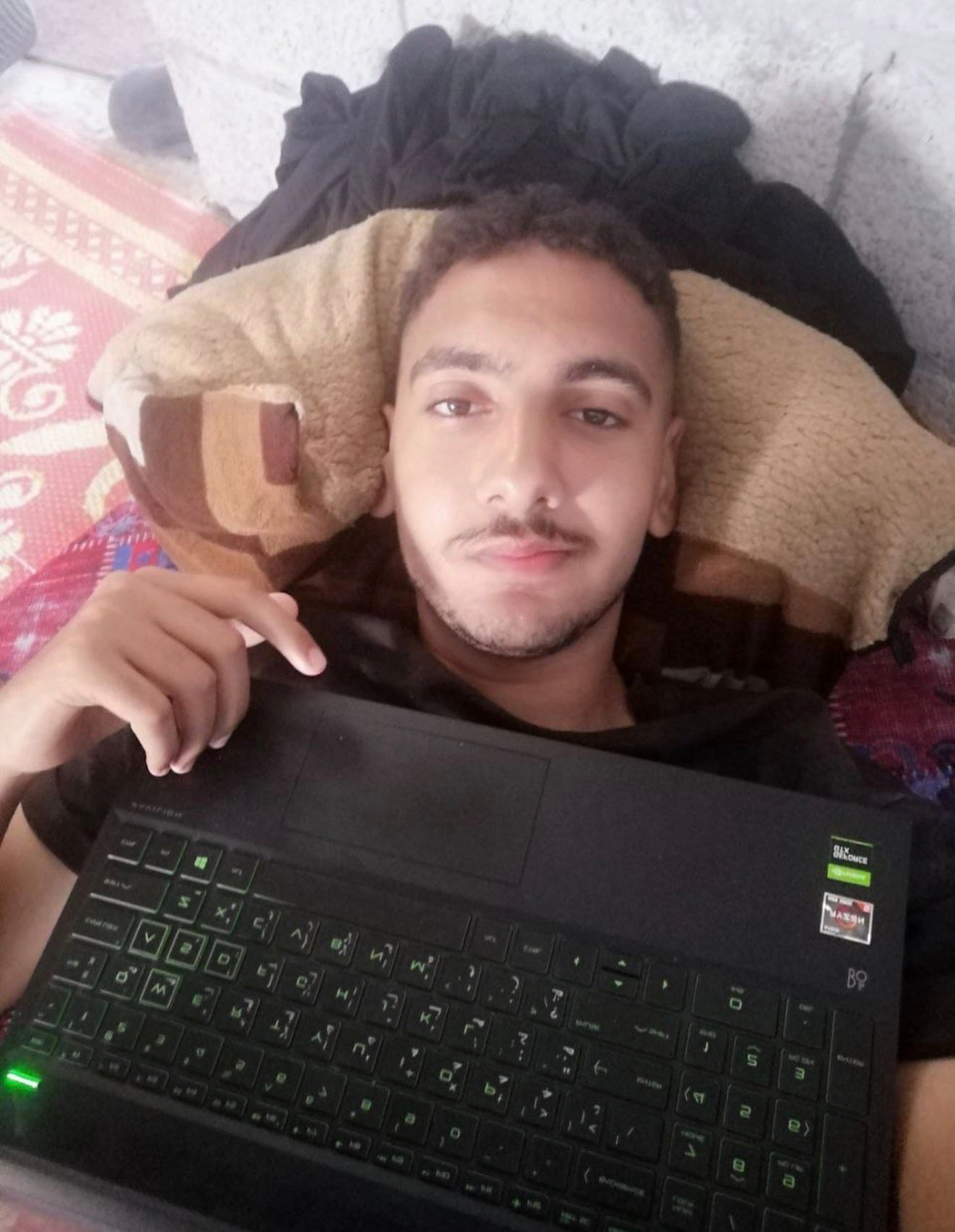
My laptop.
I didn’t even have my own phone anymore. I had left it at our house in Gaza when we fled at the beginning of the war, and later the house was bombed. So I was using my mother’s phone.
But I couldn’t leave my laptop behind.
At that point, it was more than just a device to me. It was my university, my books, my studies, almost everything that remained of the life I was desperately trying to hold on to.
I carried it with me and left Rafah under shelling and gunfire.
Eventually, we reached Khan Younis.
But reaching Khan Younis didn’t mean the struggle was over.
The place we found wasn’t even ready to live in. I spent around two weeks cleaning and preparing it just so my family could stay there.
At that time, Khan Younis was almost completely devastated. There was barely any internet. Water was extremely difficult to access. Transportation was almost nonexistent, and markets and basic services had largely disappeared.
Even getting something simple could mean walking kilometres.
Then, after spending two weeks cleaning and trying to create some kind of place to live, I suddenly found out that my midterm exams were starting in one week.
That was another problem entirely.
How was I supposed to study when I could barely find an internet connection?
Where was I supposed to study?
And how was I supposed to sit an online exam in a city where getting online was itself a challenge?
But I had already made my decision when I registered.
I would continue in any way I could.
I started searching everywhere for internet access. I studied whenever and however I could. I used my mother’s phone when I needed it and took advantage of every opportunity I found.
When exam time came, I would go to eastern Khan Younis to meet my friends. From there, we could sometimes connect to an Israeli mobile network and use it to take our exams.
I had to travel all that way just to press “Start Exam.”
Something a university student anywhere else in the world might do while sitting comfortably in their bedroom, I had to search for a signal in the middle of a devastated city to do.
But I took my midterms.
Then I kept studying until the final exams came.
Over time, the neighbourhood where we were staying slowly began coming back to life. Some of the young men from the area and I started cleaning the streets and clearing what debris we could. Eventually, some families began returning, and small parts of daily life slowly started to reappear.
Life was trying to return.
And so was I.
When I think now about the people who told me, “Look at where we are, and you’re thinking about university?” I don’t blame them.
We were all trying to survive.
But for me, continuing my education became part of surviving.
I didn’t want my entire existence to become war, bombing and displacement. I needed there to be one part of me that was still thinking about what might come after the war, even when we didn’t know whether we would live long enough to see it.
I lost my home. I lost my phone when the house was bombed. I was displaced to Rafah, then fled Rafah under fire. I reached Khan Younis, cleaned a place so my family could live there, searched through devastated areas for internet access, and travelled to eastern Khan Younis just to take my exams.
And every time my life was forced to start again from zero, I opened my laptop and continued from where I had left off.
This is only one part of my story of trying to continue my education during the war.
There is another part I haven’t written about yet.
What happened when starvation began, and finding food itself became a daily battle while I was still trying to study.
If you want me to, I’ll write that part next.
And after everything it took just to remain a student, I now have a real opportunity to leave Gaza, reach safety, and continue my education with a Master’s degree in Computer Science.
I don’t want to lose this opportunity after fighting this hard to keep my education alive.
I still need to raise £5,800 to make it possible. That sounds like a huge amount for one person, but it is only 232 people giving £25 each.
If you’ve read my story and want to help me reach the next chapter of it, please consider donating or simply sharing my campaign.
For years, I studied because I believed there would be a future worth studying for.
Now I finally have a chance to reach that future and pursue my Master’s in Computer Science.
https://chuffed.org/project/urgenthelp-amir-reachsafety-and-university
No posts
Comments
Nothing yet. Say the first thing.
Sign in to join the conversation.