
A dozen weeks from today is the day my new commentary on Ezra-Nehemiah comes out. In its preface I look back on what has changed in my thinking and what has not changed based on the fourteen years of research that went into writing the commentary. The present feature offers a preview of what changed.
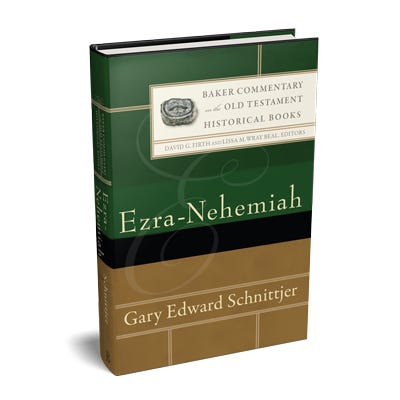
If you’ve known me in the classroom since the 1990’s, you know of my pursuit of the Bible’s use of the Bible and figuring out how biblical stories work. So when I had a chance to select a direction to pursue serious research on a biblical narrative, the choice was clear. Easy-peasy. No biblical narrative is more challenging than Ezra-Nehemiah. And it’s loaded with a wide variety of uses of Torah and other scriptures.
I wanted a challenge. I got one in Ezra-Nehemiah. I picked it for many reasons but especially because it has a messy narrative.
Ezra-Nehemiah is loaded down with lists. Lots of bumpy seams. More lists. Passages out of chronological sequence. Letters and official Persian memos. More lists. More letters. A mass divorce to get right with God. (Really!) More lists. A colorful personal(?) journal. More lists. A remarkable covenant renewal including another mass divorce. A lottery. A parade. Another mass divorce trying once more to get right with God. Return to Jerusalem only to find that the mass divorce didn’t work—again! And, of course, lots more lists.
What’s not to love?!
I was excited to try to make sense of the artless mismatch of materials compiled together in this one narrative. This was an opportunity to roll up my exegetical sleeves and dig in. It was wonderful to explore seeming endless obscurities in this story of a backwater province of the Persian empire—no place at that time was less important politically, socially, economically. I loved getting deep into the weeds.
The further I got into my research the more I realized something.
I was wrong. I had misjudged the author of Ezra-Nehemiah.
Ezra-Nehemiah is made up of a little more than 680 verses. Of these, scholars debate how many of these verses are literary artifacts (letters, edicts, lists, and so on) and how many are narration (the author’s editorial materials to stitch it all together). The proposals range from 67 to 86 verses of narration that connect together about 600 verses’ worth of literary artifacts.
The dramatic ratio of literary artifact versus narration is incredible. Narratives like Genesis, Judges, Ruth, and Luke are smooth because of their abundance of narration. Ezra-Nehemiah offers readers a very different experience. Pondering this difference is when I started to change my mind.
That’s how I realized I had been mistaken about Ezra-Nehemiah.
What if an author wanted to tell a story with the literary artifacts themselves? What if readers didn’t experience this story mediated by narration? What would it look like for an author to bring forward the historical-literary artifacts themselves? That’s what the author of Ezra-Nehemiah does. The author tells us a little. But mostly the author of Ezra-Nehemiah lets us see for ourselves by letting the literary artifacts speak.
It’s an incredible move. This book transcends its moment and brings the tiny, insignificant Judean province of Judah forward to readers across the ages. No one needs to tell us. We experience it for ourselves when we study Ezra-Nehemiah.
I have come full circle. I now see the author of Ezra-Nehemiah as a brilliant artist. The author arranges in just the correct manner and edits in just the right way the literary artifacts so they can tell their own story. All of us who take the time to read and study this book can be grateful that the Holy Spirit used exactly the correct author to speak God’s word in Ezra-Nehemiah.
The lists in Nehemiah 11‒12 are exceptionally difficult. With the barest framing, often none, the lists put on display the faithfulness of Yahweh to his people. The author brings these lists, these ancient literary artifacts to us. It takes some getting used to—and months and months of research.
What would it take to separate those who are in the people of God that make a solemn oath to serve him in Nehemiah 10 from those that do not?
One letter.
The Hebrew letter vav (ו) is similar to the English letter w that is a consonant but can sometimes function as sort of a vowel, like in the word “vowel.” The letter vav is used as the conjunctive particle “and” or the same letter can be used as a disjunctive particle when affixed to a noun, in which case it could be translated “but” or “now” or “as well as” or the like depending on the context.
In Nehemiah 12:6, I have translated the disjunctive vav by “as well as” because it attaches and yet separates the second part of the list from the first part. The first part of the list includes those priests who signed the solemn oath in Nehemiah 10. The second half of the list are those who did not sign the solemn oath beginning in Nehemiah 12:6b.
Nehemiah 12:1These are the priests . . . who came up with Zerubbabel son of Shealtiel, and Joshua: Seraiah [10:2], Jeremiah [10:2], Ezra [10:2*], 12:2Amariah [10:3], Malluch [10:4], Hattush [10:4], 12:3Shecaniah [10:4*], Rehum [10:5*], Meremoth[10:5], 12:4Iddo, Ginnethon [10:6], Abijah [10:7], 12:5Mijamin [10:7], Maadiah [10:8*], Bilgah [10:8*], 12:6Shemaiah [10:8], (ו) as well as Joiarib, Jedaiah, 12:7Sallu, Amok, Hilkiah, Jedaiah. These were the heads of the priests and of their fellows in the days of Joshua. (translation mine; the asterisk signifies spelling variations between the lists in Neh 10 and Neh 12)
What an incredible move. The author sequesters with a single letter the priests who did not commit to the solemn oath of obeying Torah. Can you imagine being forever banished from God’s people of the covenant renewal by one letter? The author of Ezra-Nehemiah pushes them outside forever, excluded by a single stroke of the reed. If they’re before the vav, they’re in. If they’re after the vav, they’re out. It’s scary. It’s efficient. It’s incredibly subtle. It’s brilliant. But what changed my mind is that . . .
It’s artistic theological narrative!
If you are a subscriber to Carpenter’s Student watch your inbox later this month for an invitation to join the launch team for the Ezra-Nehemiah commentary.
Here’s an article I did several years into my research on Ezra-Nehemiah way back in 2016. The article provides a sense of my different approach to this narrative, to help you see if you’d be interested in the commentary. The article is available free courtesy of the journal: “The Bad Ending of Ezra-Nehemiah”
Warning: This commentary is not one of my books for grandma’s stocking. This is an exegetical commentary aimed at students and ministers of the word. If you are serious about the Bible and you want to dig into the important and challenging book of Ezra-Nehemiah consider pre-ordering a copy.
In next month’s second-Tuesday feature we’ll return to the countdown leading up to the release of Old Testament Use of Old Testament in Parallel Layout.
Where nothing is more important than Christ and his word

Comments
Nothing yet. Say the first thing.
Sign in to join the conversation.