
Make your research accessible to general audiences and to other disciplines. Learn to create plain-language summaries, visual abstracts, short videos, and more. Join us for essential training on expanding your audience and increasing your impact!

In this practical webinar, Dr Gareth Dyke will guide participants through the standard IMRaD structure used in scholarly publishing: Introduction, Methods, Results, and Discussion.
The session will explore what editors and reviewers expect from each section of a manuscript, common writing issues that lead to rejection, and strategies for presenting research clearly and logically. Participants will also learn why experienced authors often write sections in a different order from the way readers encounter them, and how a stronger manuscript structure can improve both readability and publication success.
This webinar includes practical examples, common pitfalls to avoid, and actionable advice that participants can immediately apply to their own writing projects.
In the realm of academic publishing, a revolutionary concept is gaining momentum and reshaping the way scholarly articles are evaluated and disseminated: Open Peer Review. Traditionally, the peer review process has been veiled in secrecy, with reviewers providing feedback to authors behind closed doors. However, open peer review flips this paradigm, promoting transparency, accountability, and collaboration within the academic community.
Historically, the peer review system has been essential in ensuring the quality and credibility of academic publications. Experts in the field review manuscripts, providing constructive criticism, suggestions, and recommendations to authors. While this process is vital, it has long been criticized for its lack of transparency. The anonymity of reviewers and closed-door evaluations have raised concerns about potential biases and hidden conflicts of interest. Additionally, authors often find themselves in the dark about the identity and expertise of their reviewers, making it challenging to engage in meaningful discussions about their work.
ReviewerCredits Training Course
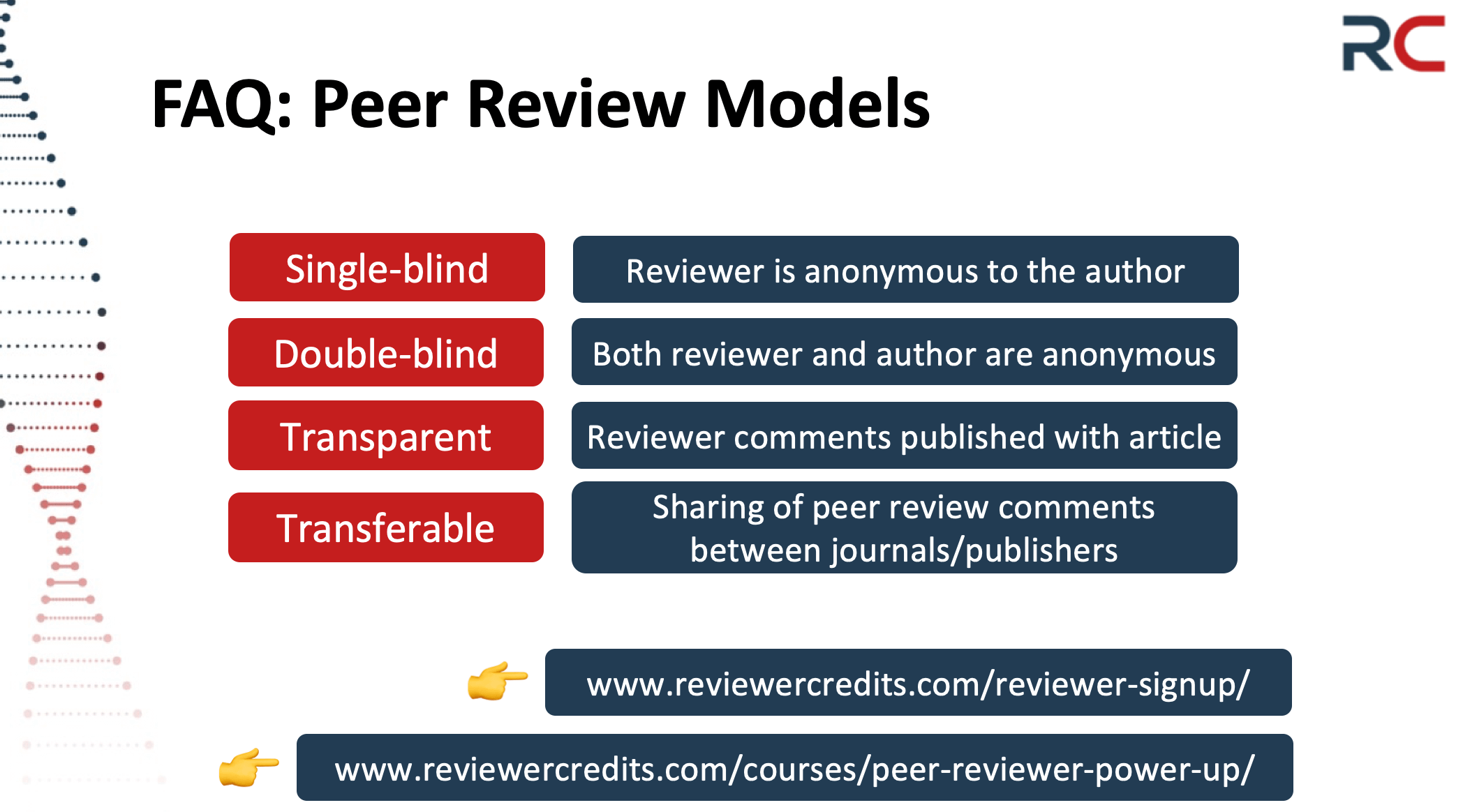
Open Peer Review addresses these concerns by promoting transparency and openness throughout the review process. In this model, the identities of both authors and reviewers are disclosed, fostering a sense of accountability and trust. Reviewers are acknowledged publicly for their contributions, enhancing their academic recognition. This transparency not only diminishes potential biases but also encourages reviewers to provide fair, thoughtful, and constructive feedback.
Benefits of Open Peer Review: For Authors, Reviewers, and Readers
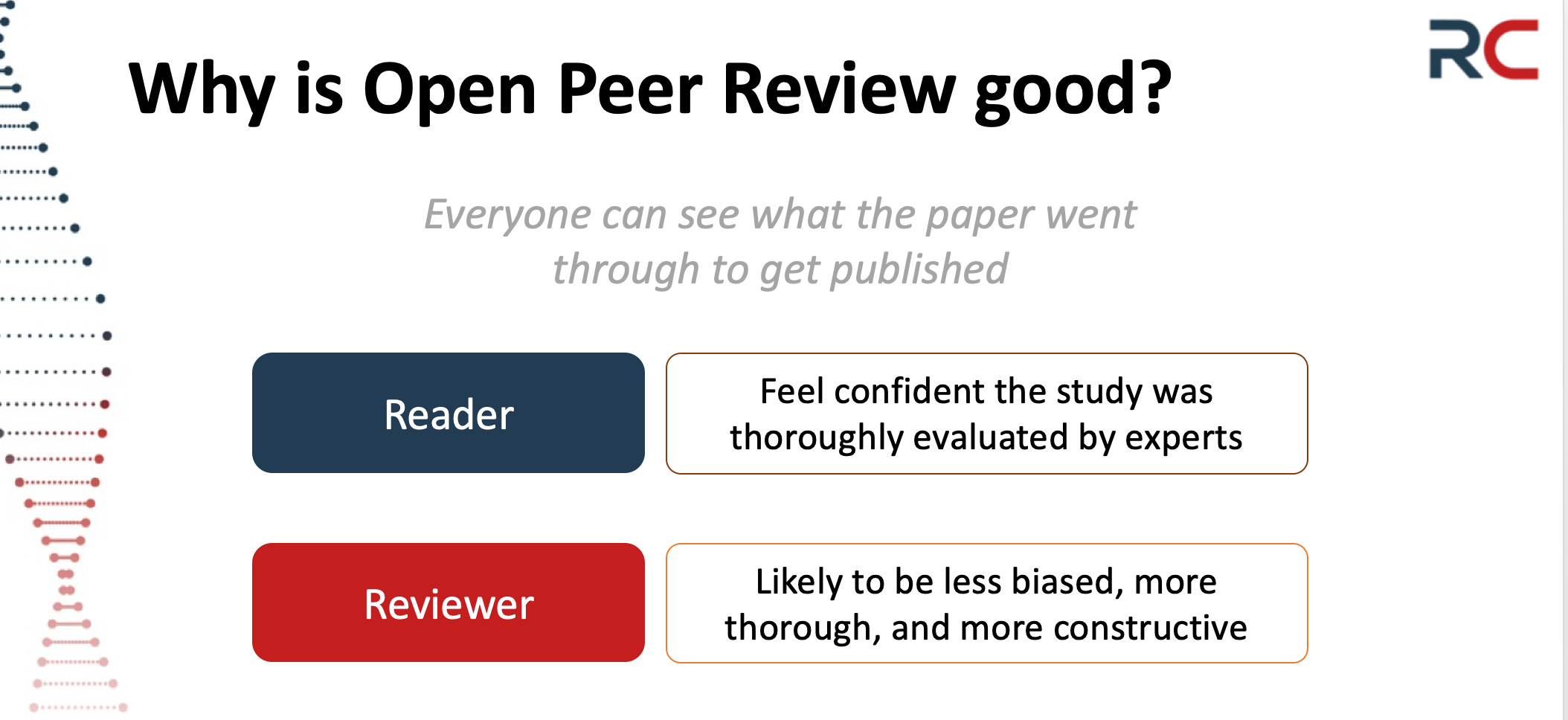
1. Enhanced Accountability: Open Peer Review holds reviewers accountable for their comments and critiques. Knowing that their feedback will be attributed to them encourages reviewers to be more constructive and fair, promoting a higher quality of reviews.
2. Increased Transparency: For authors, knowing who reviewed their work and understanding the feedback in context fosters a more transparent and constructive dialogue. It also helps in acknowledging and addressing potential biases that might arise during the review process.
3. Academic Recognition: Reviewers often invest significant time and effort in evaluating manuscripts. Open Peer Review allows their contributions to be recognized publicly, contributing to their academic reputation and standing in the scholarly community.
4. Engaging the Readers: Open Peer Review allows readers to follow the evolution of a manuscript. They can observe how authors respond to reviewers' comments and witness the collaborative effort that goes into improving the quality of the research, providing valuable insights into the scientific process.
While the benefits of Open Peer Review are evident, challenges and concerns persist. One major concern is the fear of retaliation, where reviewers might hesitate to critique the work of influential authors openly. Another challenge is the potential for biases based on authors' demographics, institutional affiliations, or other factors, even with open identities. Addressing these challenges requires careful consideration and thoughtful implementation of Open Peer Review models.
The Evolution of Open Peer Review: Various Approaches
Open Peer Review is not a one-size-fits-all concept. There are various approaches, each with its unique characteristics:
1. Transparent Peer Review: In this model, reviewers' identities are revealed to authors, fostering open dialogue and constructive criticism while maintaining reviewer anonymity to readers. This approach strikes a balance between transparency and confidentiality.
2. Collaborative Peer Review: Collaborative Peer Review allows ongoing interaction between authors, reviewers, and editors. Authors can revise their manuscripts based on initial feedback and resubmit for further evaluation, creating a dynamic and iterative review process.
3. Post-Publication Peer Review: Post-Publication Peer Review focuses on evaluating articles after they have been published. Readers and experts in the field can provide comments and ratings, creating a continuous feedback loop that enhances the quality of published work over time.
The Future of Academic Publishing: Embracing Open Peer Review
As Open Peer Review gains traction, it is essential for the academic community, publishers, and institutions to embrace this transformative approach. By promoting transparency, accountability, and collaboration, Open Peer Review has the potential to enhance the quality and integrity of scholarly publications significantly. Researchers, reviewers, and readers can collectively contribute to the advancement of knowledge, fostering a culture of openness and mutual respect within the academic world.
In conclusion, Open Peer Review represents a paradigm shift in scholarly communication, promoting transparency, collaboration, and integrity. While challenges exist, the benefits far outweigh the concerns. By embracing Open Peer Review, the academic community can pave the way for a more inclusive, transparent, and collaborative future in academic publishing, ensuring the quality and credibility of research for generations to come.
No posts
Comments
Nothing yet. Say the first thing.
Sign in to join the conversation.