
Hello friend,
Twenty years ago, I couldn’t believe how much time, money, and effort it took me to grow my garden. I thought it was truly bananas, especially when the plants were growing wild everywhere outside of my fence.
So, I found permaculture and never turned back. I much more enjoy the path that closely follows nature.
Now, I often hear people complaining about gardening, similar to how I used to think:
It’s so much work.
I just kill everything I grow.
In my eyes, those are the same problem. Better yet, they have the same prescription.
When you change your gardening process to be more regenerative and allow the plants to do the work, you stop trying to manage nature and be a part of it instead. You build an ecosystem and let it run.
I love talking about permaculture, so I wanted to go deeper into the topic this week. Whether you’re also a permaculture nut or have never heard of it, this one’s for you.
More ideas for garden therapy this week, based on What’s in Season.
Fall Planter Ideas + Simple Container Care and Maintenance
Fall Gardening Made Simple: Quick Cleaning Tips for Busy Gardeners
Create a Secret Garden as a Therapeutic Outdoor Space
Hardy Fall Bulbs to Plant For Long-Lasting Spring Colour
How to Save Seeds & Improve Your Vegetable Garden
Healing Lemon Balm Lip Balm for Cold Sores
Planting Perennials in Your Fall Garden for a Budget-Friendly Design
Seeds to Plant in the Fall for Next Season’s Blooms
Paid subscribers can read this post below ad-free. They also get exclusive access to my Membership Library, including my seed starting ebook, Garden Alchemy workbook, seed starting journal, and more!
Free members can access this week’s article on understanding permaculture principles by clicking the button below.
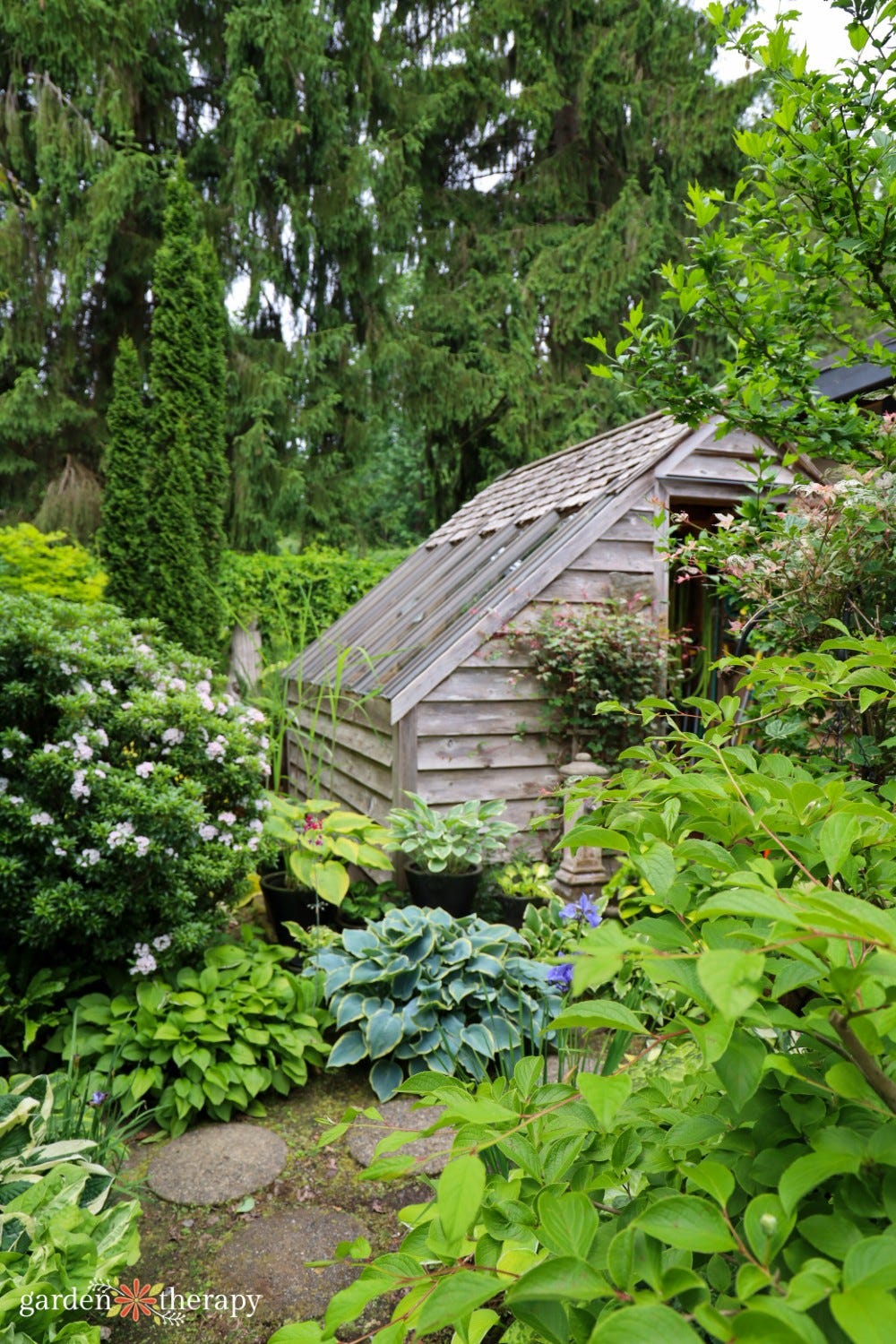
The way we commonly garden is based on industrialized agriculture practices. We bring in resources, do heavy labour, and create a very neat and fruitful production.
Once the plant has given us what we need, we remove it, replace it, and repeat the cycle over and over again.
When you think about the process, it’s high on energy resources. It costs us human labour, time, water, money, plants, soil, nutrients, pest and disease management, and more and more.
But permaculture designs the garden space as a regenerative ecosystem that reduces energetic output to maximize the results by following a path more closely related to how nature grows a garden.
Think of a forest or a meadow, both beautiful spaces, that operate entirely on their own.
Permaculture can be applied to all gardens. I’ve been weaving permaculture throughout every project and practice I share here on Garden Therapy, so chances are, you’re already implementing parts of it in your own gardens.
Today, I’m going to show you how you can intentionally bring permaculture into your space.
Comments
Nothing yet. Say the first thing.
Sign in to join the conversation.