
Note: This is Part 2 of a two-part tale. You can find Part 1 here.
Note 2: This post has been edited since first release, for the sake of general improvement. I might edit it again, who knows. I do this frequently because I do not work with an editor, and my time is limited. This isn’t journalism — it’s a personal journal. And I prefer to give you my best thoughts, even if a little late.
So, yeah, it’s been a while. I promised Part 2 of this piece in “a week or so” …six weeks ago. Let’s just say that the “or so” did some serious heavy lifting. Oooops. My humblest apologies. In my defense, the gardening bug hit hard in February, so I was busy doing rather than writing. My basement horticultural corner transformed from the winter lettuce experiment outlined in Part 1 of this piece to an expanded seedling operation. It is now teeming with onion and pepper starts, with spring lettuce and greens just about germinating. It’s becoming a jungle down there.
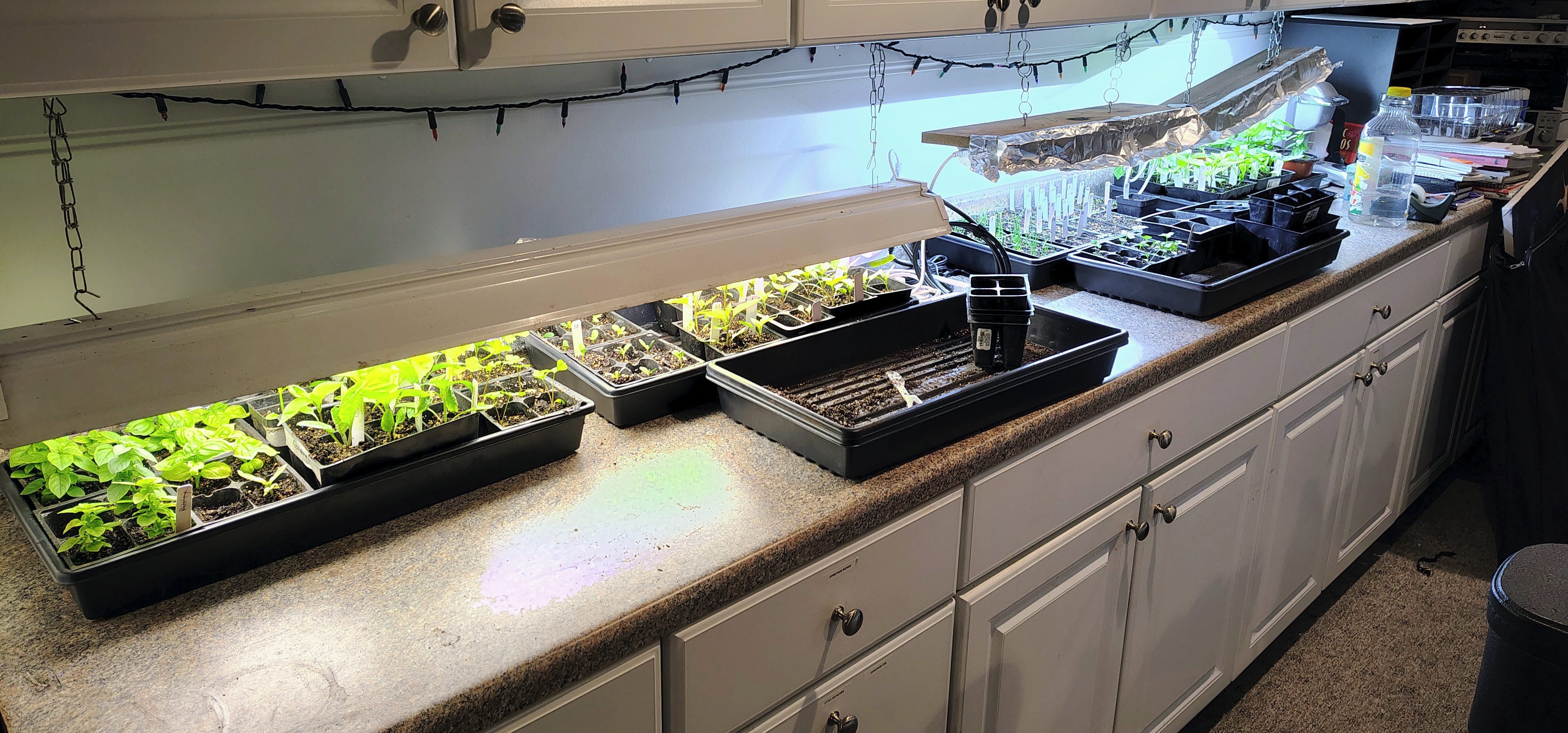
As an aside, the fluorescent shop light on the left of the photo is well over thirty years old. I think I’ve changed one bulb in all that time. The lighting to the right is new. Those are two-foot LED strip lights, courtesy of Amazon. I mounted them to boards, which in turn are hanging from hooks and chains. The aluminum foil skirt on the boards reflects light back toward the plants, but it also blocks glare — these are seriously bright lights that are difficult to look at directly. The plants do seem to like them so far. My eyes… not so much.
And the Christmas lights on the wall? They have nothing to do with anything. I hung those maybe fifteen years ago or so. My kids liked them, so they stuck. Probably time to recycle them. And those cabinets? I installed those almost twenty-five years ago, figuring that I would have all sorts of personal storage for my gardening and music habits, and general hoarding disorders. In reality, they are storage for various kids who don’t live here anymore. Sigh. Nobody tells you about these things when you sign up for this life. Not that I needed to be told, since I did the same thing back in the day. What goes around…
So. Enough of the delay tactics, obfuscation and me trying to change the subject. I was a very lax substacker in February. The past is gone. Let us move forward.
In Part 1 of this gripping tale of subterranean horticultural exploration, I described my foray into the world of growing lettuce in my basement over the winter. The idea occurred to me after inheriting (or reclaiming, depending on whom you ask) some largish rectangular planters from my brother. When we left our story, I had sown some seeds, thusly:
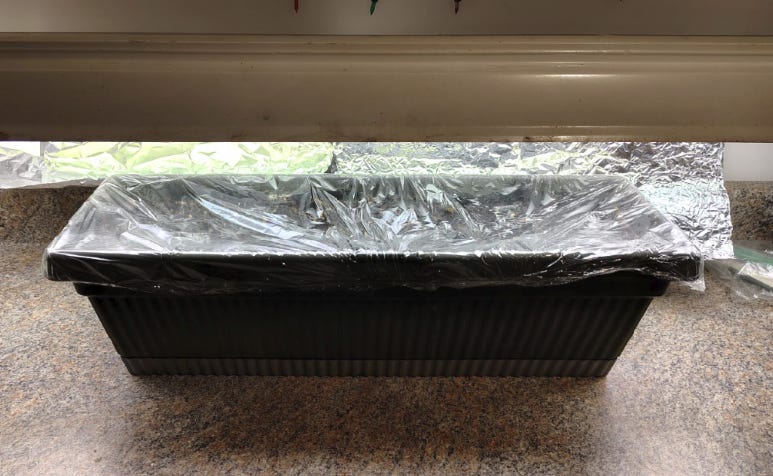
As you might recall, the soil in this planter came directly from my container garden, the soil of which is more or less 100% compost that I generate onsite. This will become important in a moment. By ten days after sowing the seeds, everything had germinated and I needed to re-space all the tiny seedlings across two containers:
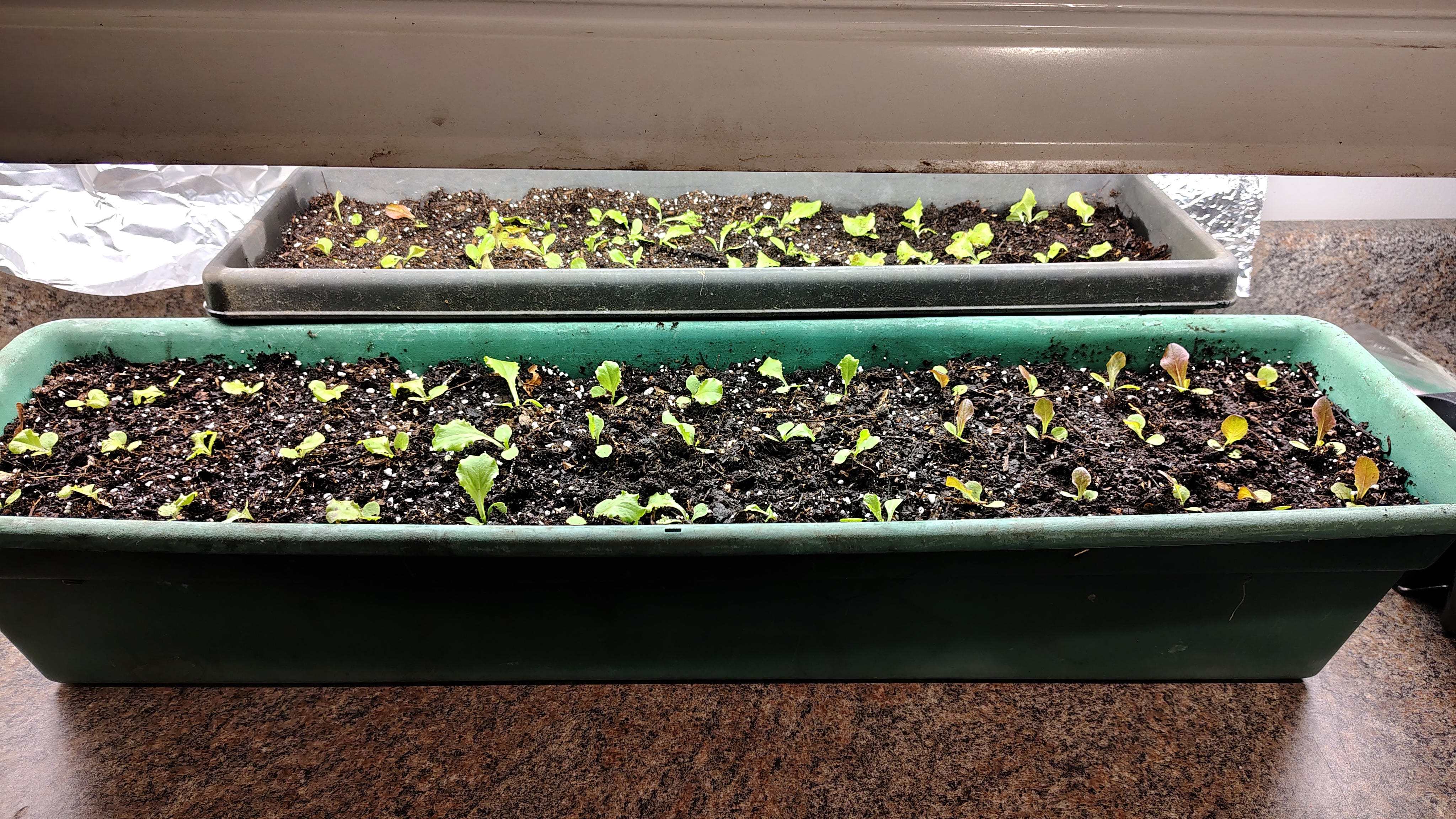
The larger green container in the foreground is the new kid on the block. But all the plants came from the first planter — same seeds, same plants, same everything. Well, except for one seemingly minor difference. Rather than steal more soil from my garden, which had frozen by this time, I tapped my potting soil inventory in the garage.
Some background: I make my own potting soil every year, typically from the best, finished compost on hand in August. I screen the compost into a wheel barrow, and then mix it with a generous proportion of perlite and a little sand. At this stage the compost is still teeming with life, from worms to centipedes to pill bugs, and all manner of microorganism, all cooperating to create the best soil environment imaginable. The screening process tamps down some of the macro activity, but not all of it.
I then commit soil genocide by partially drying and then storing the newly minted soil in five-gallon buckets with lids. I leave the buckets on the driveway for a few days to bake in the sun (this is why I wait for particularly hot weather in August). Afterwards, the buckets move to the garage, where they go through freeze cycles as summer turns to fall and winter. They typically remain undisturbed until February and March, when seed-starting operations begin. When I open the buckets, the soil is all but sterile. I then rehydrate it, and get on with the business of the new season.
That is, unless I decide to grow winter lettuce in the basement.
Needing some soil in November rather than March, I raided the potting soil stash and filled the planter in the foreground of the photo. Structurally, the only difference between this soil and the soil in the first planter is that the potting soil has some perlite and sand — and, as I described, it was solarized and dried out a bit to kill all the creepy crawlies. Otherwise, it is mostly the same high-quality compost that I use in the garden boxes.
Comments
Nothing yet. Say the first thing.
Sign in to join the conversation.