
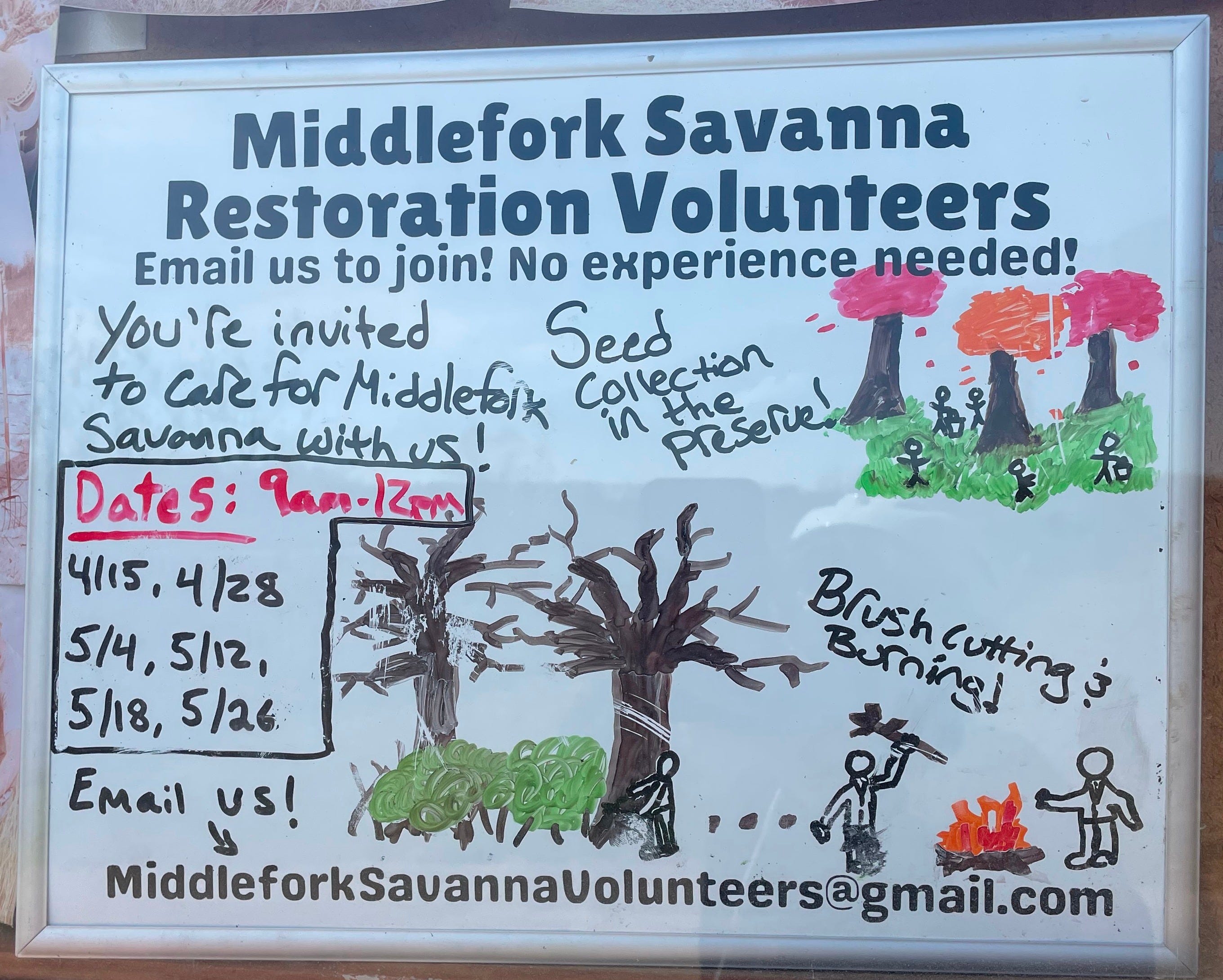
Volunteers meet regularly in the Elowa Farm parking lot to complete various tasks in service of the Middlefork Savannah Forest Preserve. The last weekend of this April involved burning brush piles and scouting for invasive weeds.
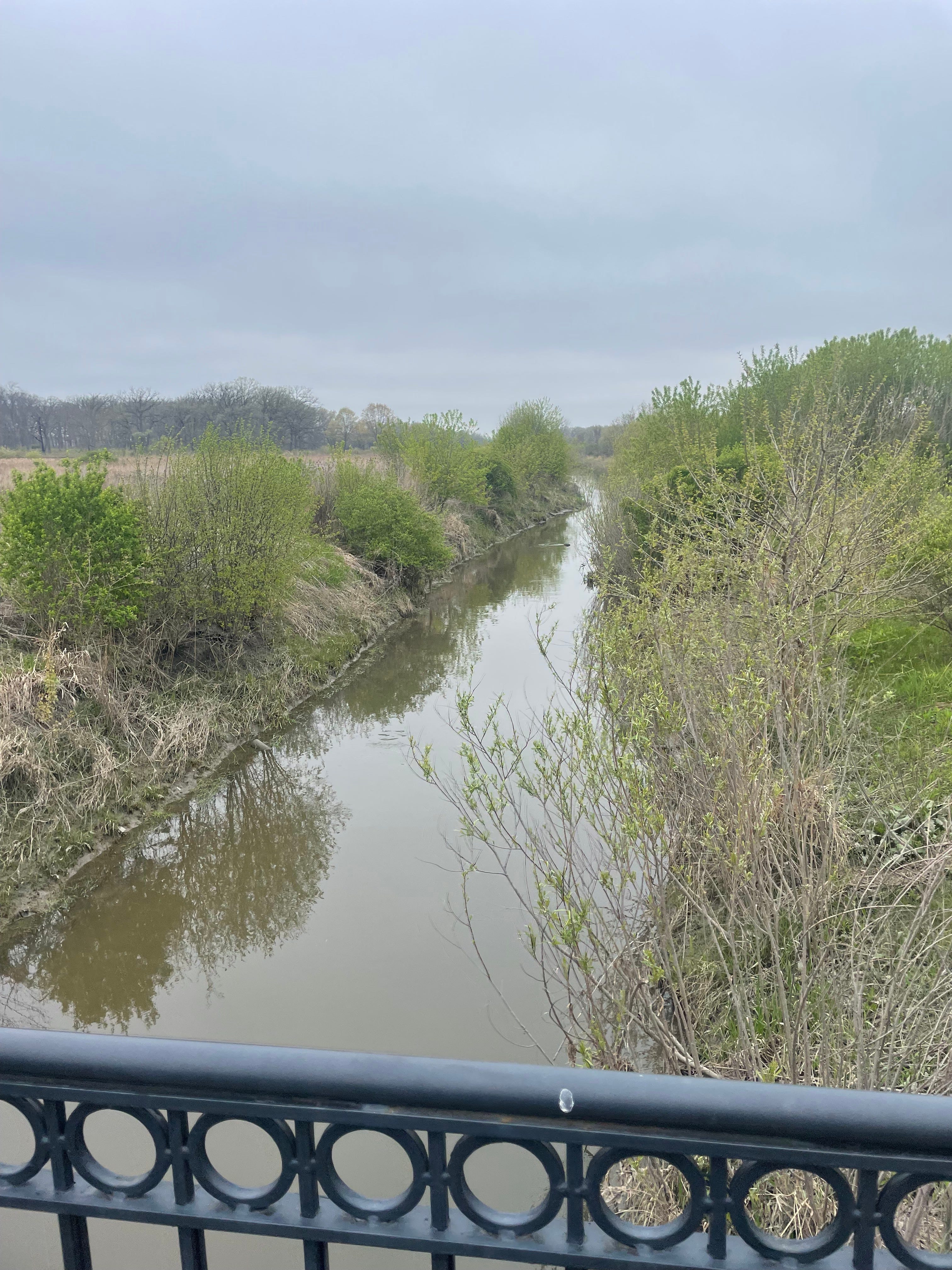
The Preserve is named after the river that flows through it. The Middlefork River is one of three neighboring tributaries to the Chicago River. As its name suggests, this river is located between the other two. Like many rivers in the region, the Middlefork River was straightened to make the surrounding land more farmable. There have been talks of remeandering it, but that is an intense process.
In addition to the river, the preserve contains a variety of ecosystems, including revitalized prairies and ancient groves of trees. One ecosystem that volunteers are particularly proud of is the Black Soil Savannah. Plants like Purple Milkweed, Purple Giant Hyssop, a variety of sedges, Bastard Toad Flax, and Cinqfoil indicated that the area was neither forest nor prairie.

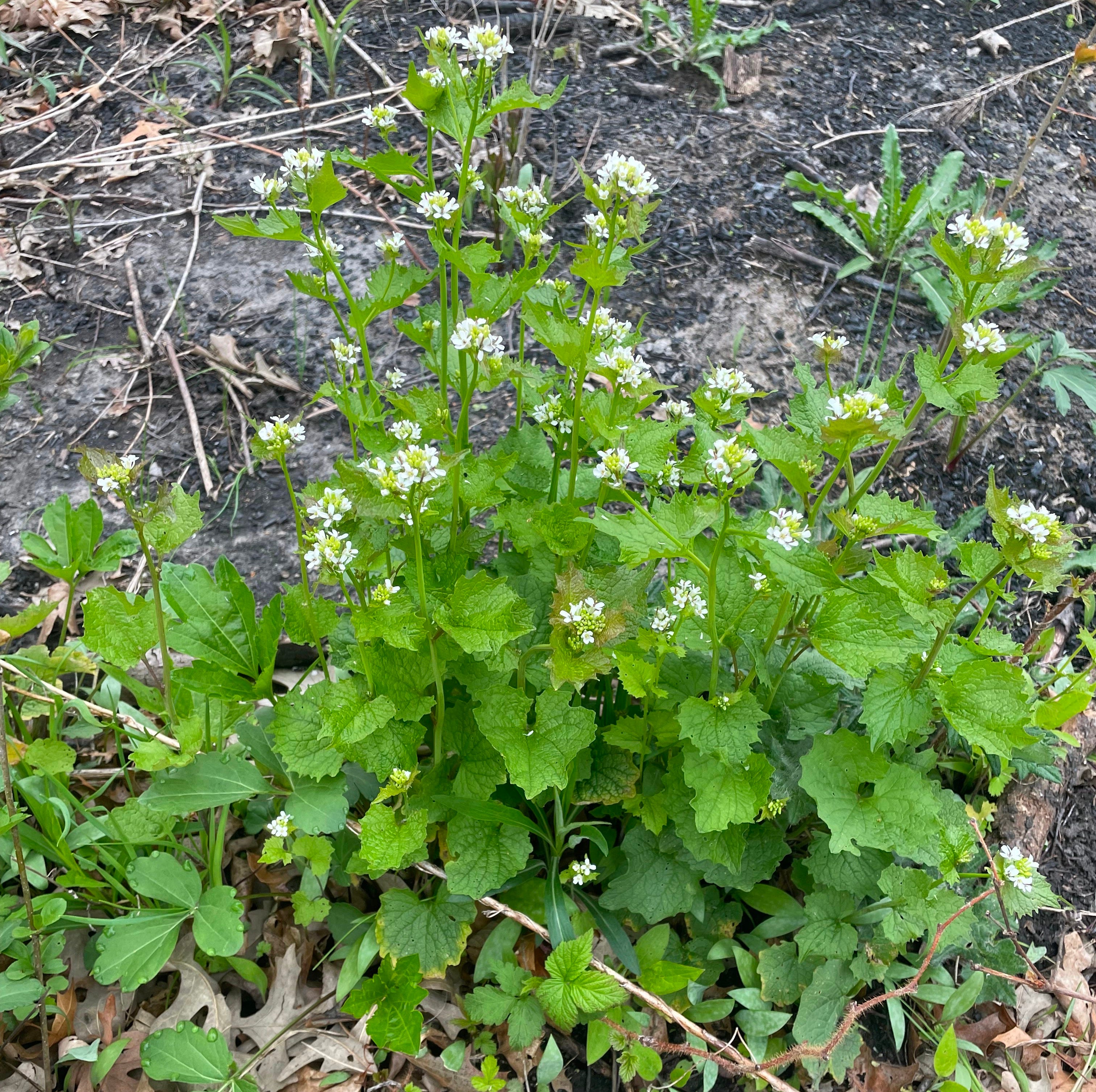
Best described as a transition between a grassland and a forest, savannas are a rare ecosystem. Two percent of the world’s savannas remain, and the Black Soil Savanna of Middlefork is one of two remnants in Illinois. Volunteers named the pair of savannas after another iconic duo: Bert and Ernie. That weekend, scouts walked through Bert looking for patches of invasive Garlic Mustard.
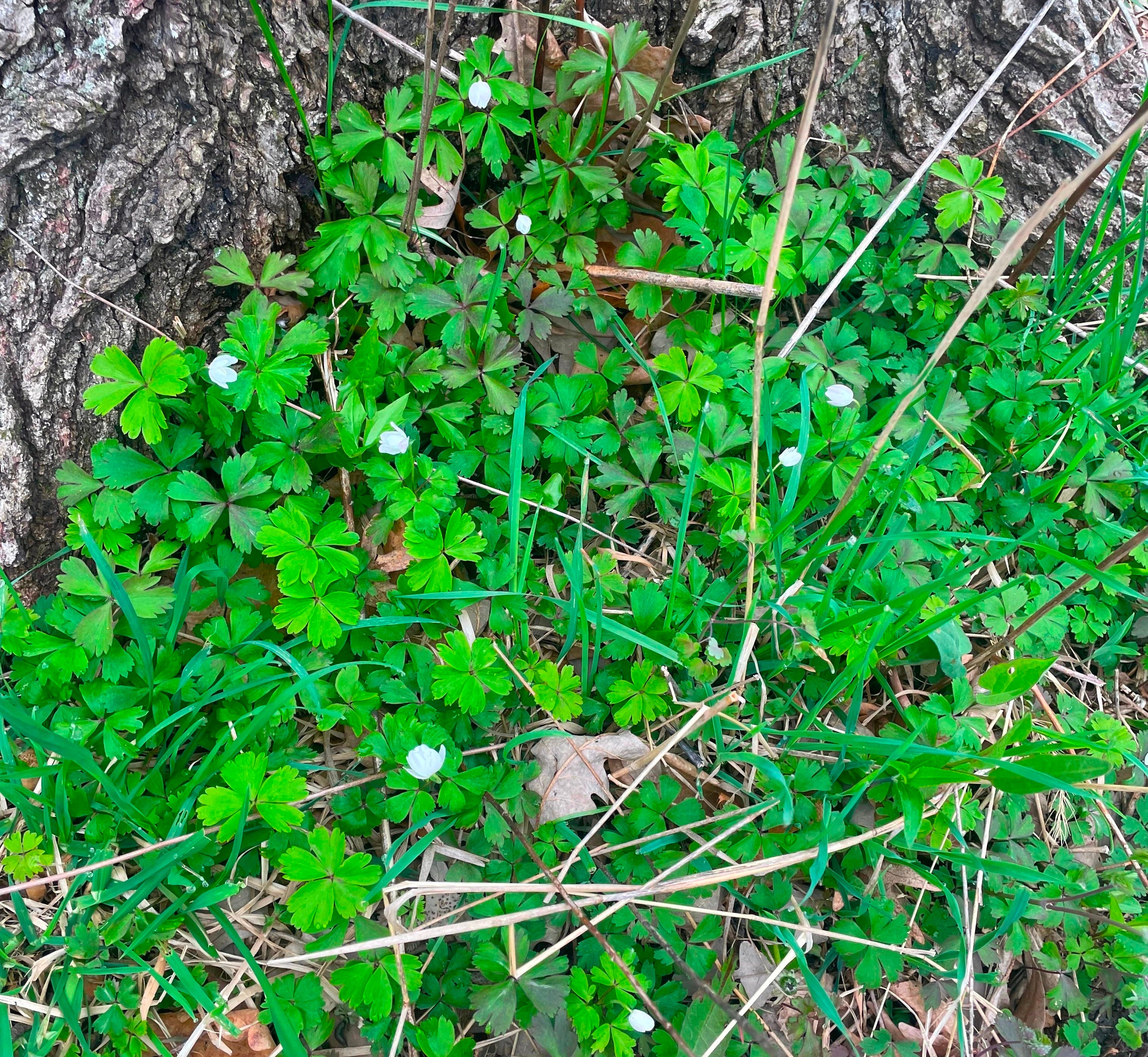
The Middlefork Savanna Forest Preserve is large, and the needs of each region within the Preserve vary greatly. So the Preserve has been split into zones and assigned to Volunteer Stewards. Zones are often named after inside jokes, like Bert, or after notable plants and features, like Bert’s neighbor Rue, who is named after Rue Anemone, a plant that grows abundantly there. This approach fosters a sense of responsibility and community among all the people who volunteer to care for these spaces.
Scouts saw other strategies of coordinating care as they walked through Bert. New plant populations were marked with flags and stakes. This is an important practice for plants like the Yellow Lady Slipper Orchid, which is federally endangered. While they walked, scouts protected the rest of the ecosystem by avoiding single file lines to prevent over trampling the ground plants.
Bert was mostly free of Garlic Mustard, but a few small patches were noted. Invasive weeds are a greater presence in other zones of the preserve, but healthy remnants like Bert are the priority. Volunteer time is limited, so it is best spent on the most important tasks. Areas that are healthy require maintenance to stay that way. They are crucial seed sources for recovering ecosystems, and crucial habitats for endangered animals like Sandhill Cranes which were extinct in Illinois until recently.
Bert is an example of a remnant, or an area where the soil hasn’t suffered plowing, development, or other catastrophic disruptions. These areas are also more receptive to efforts to re-seed plants that were once abundant. Some plants won’t take in areas that have been disturbed too much over time. Remnants may even contain ancient plants that sprouted before colonial settlement and thrive again with a little care.
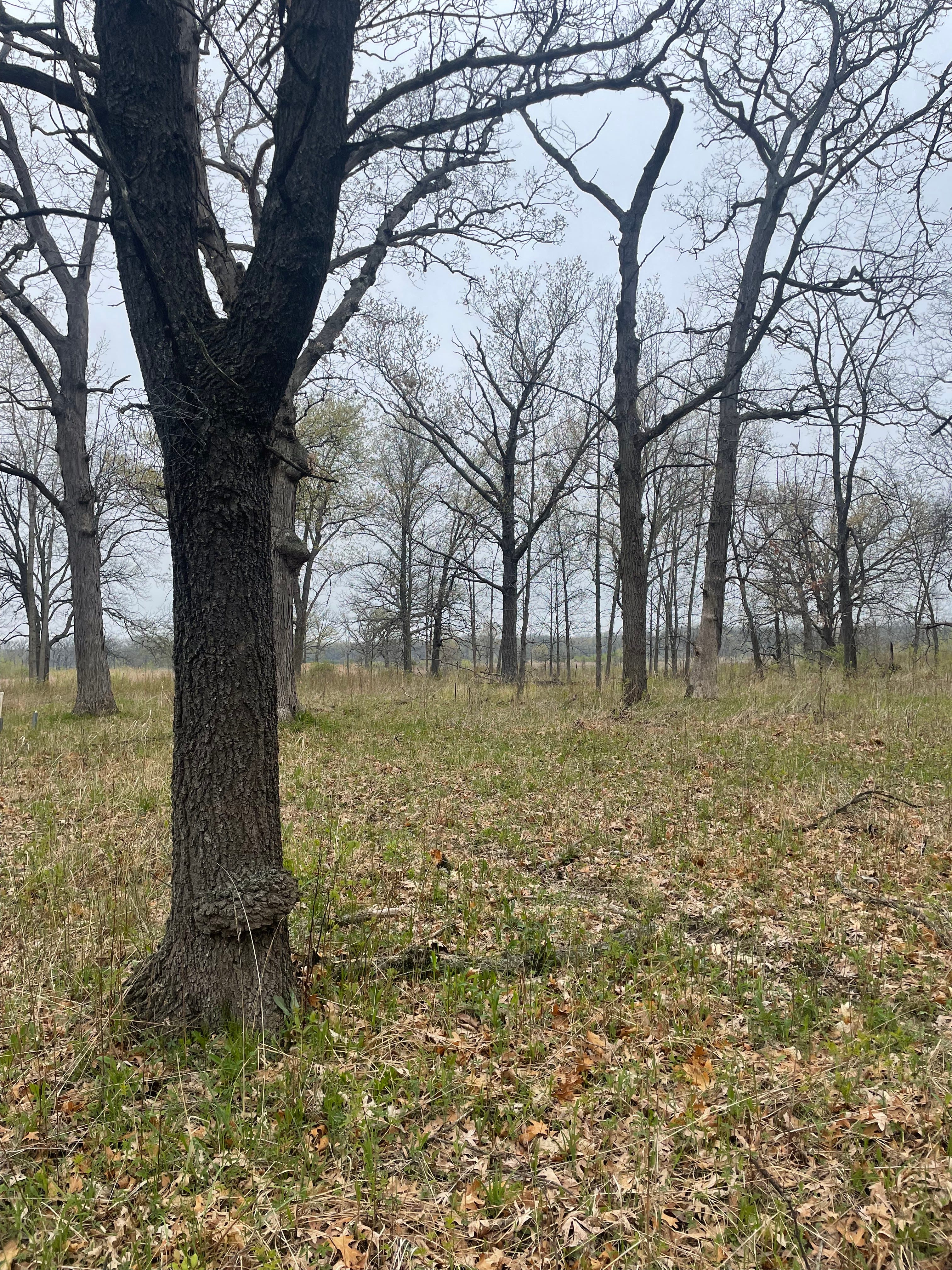
Plants are not the only ancient things to be found in Bert. Volunteers admired an ant hill that is at least 200 years old. The unassuming mound is easily recognized by those who can identify the plants growing in it because most have a mutually beneficial relationship with the ants. The plants grow seeds with a lipid filled structure called Ant Candy. Ants carry these seeds back to the hill, where the seeds germinate. Ants get a nutritious food source, and plants rely on them to disperse their seeds.
Like many preserves, much of the Middlefork Savanna and Forest Preserves was once farmland. Land near rivers tends to be difficult to manage due to flooding, so it is the first to be abandoned or donated. Bert is healthy enough to preserve ancient features because the Armor family who owned the land used the area to graze cattle instead of plowing it to grow field crops like they did in the neighboring spaces. Grazing left the soil intact, and luckily did not deplete the flora either. The Armor family also burned the underbrush once a year, which is notable because the best remnants are the ones that got burned.
Fire is why many of the best remnants are near railroads. When railroads were laid in the early 1800s, they were bordered by a quarter mile right of way on either side. Chucking hot coals onto these stretches burned any trees that tried to grow. If trees had a chance to grow, they could fall onto the tracks and interfere with train operations. Though it was not a consideration at the time, the fire adapted terrain benefited from these burnings.
Despite the lessons most internalized from Smoky the Bear, fire is a vital part of land stewardship in North America, where prairies and other ecosystems evolved to depend on it. Introducing nuance to education about fire in wild places is difficult, especially in regions where fires are understood strictly as natural disasters. But the catastrophic wildfires of recent years are a direct result of ignoring this relationship. Nearly a century and a half of built up fuel allows wildfires to grow larger and faster, and building luxury homes in fire prone locations exacerbates the loss.
In addition to returning fuel like fallen branches and dead plants to the soil, fire is what prairie plants need. Without it plant distribution changes. Fire can also help suppress some invasive weeds. People can serve the land and prevent larger, uncontrollable fires by strategically burning spaces that benefit in the spring and fall when plants aren’t actively growing.
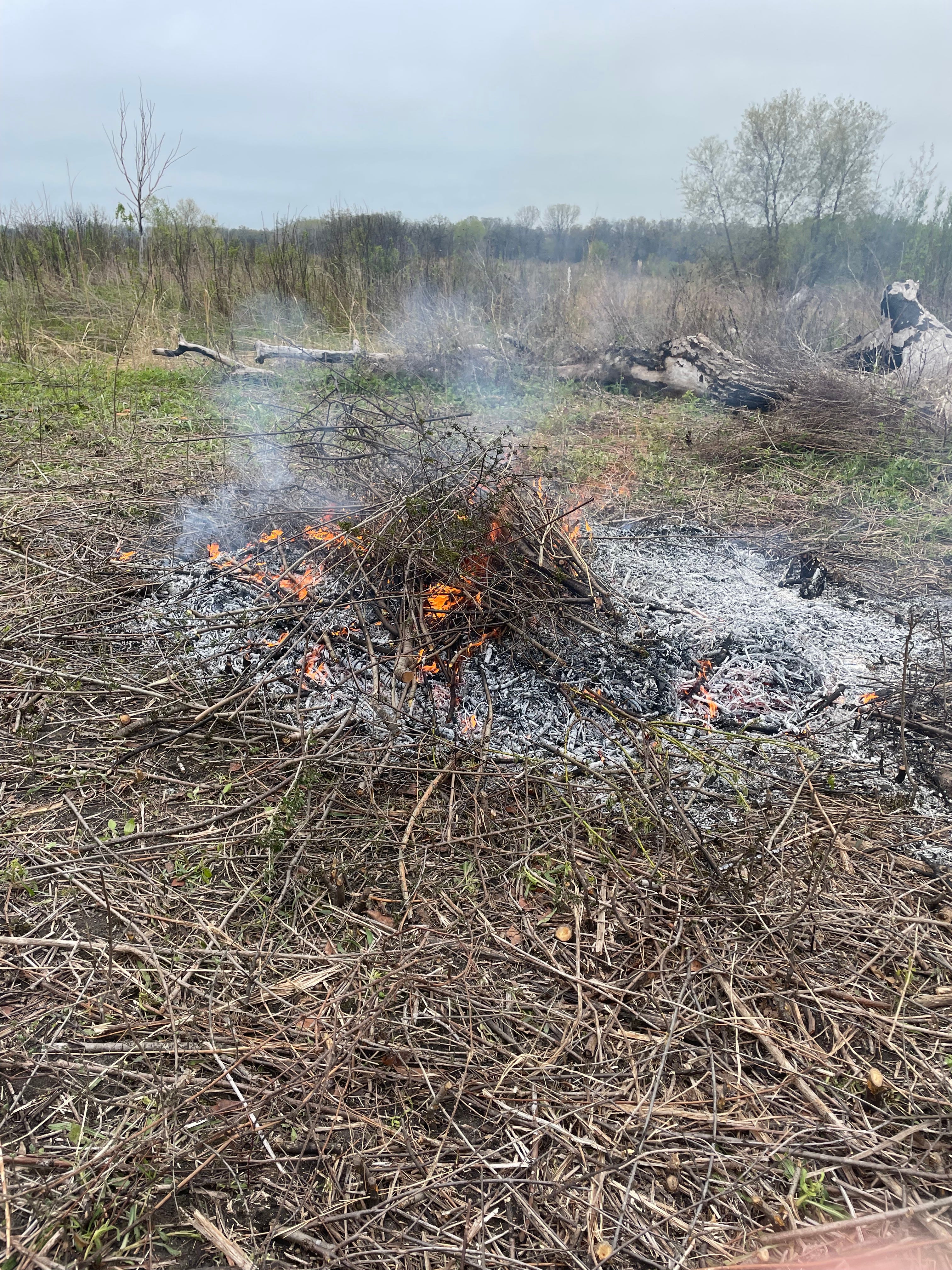
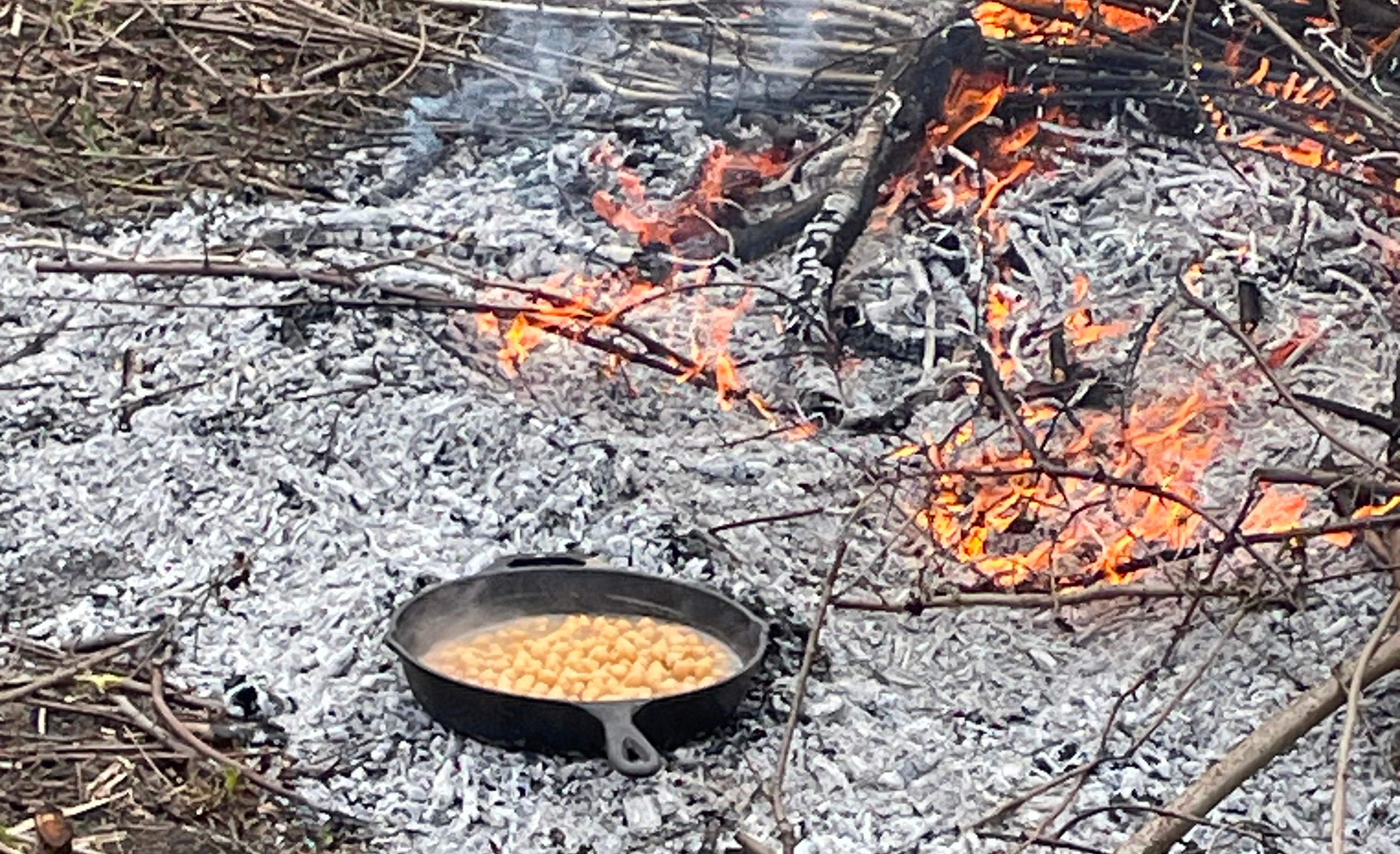
Prescribed fires are controlled by first setting black lines, or burning all the fuel where the fire should stop to prevent it from spreading beyond the determined area. Then a drip torch is used to light the rest of the space. All of this is done with careful attention to the direction of the wind. It requires a lot of knowledge and strategy to execute prescribed fires safely, so only Wild Land Fire Trained Volunteers execute this task.
For added safety, as well as to mitigate the concerns of neighbors, the Fire Department is always notified about prescribed burns. If a concerned citizen calls about a fire in the preserves, the department will know not to expend resources on it. This is an important but challenging conversation. The Middlefork Savannah and Forest Preserve sits between several different fire districts, so coordinating with the correct Department can be delicate. Attitudes of the Battalion Chief can also be an obstacle depending on how they were trained.
Plows, railroads, and fire suppression are not the only ways colonial settlers changed the landscape. Even if soil and fire cycles can be restored, some of the plants they brought with them will linger in spite of efforts by volunteers. Some plants carried dietary or cultural value, like Garlic Mustard which found one path to the Prairie through the Beer and Garlic Mustard Soup Festival German immigrants would hold in spring. Others, like lawn grass and honeysuckle were brought to North America for their ornamental value.
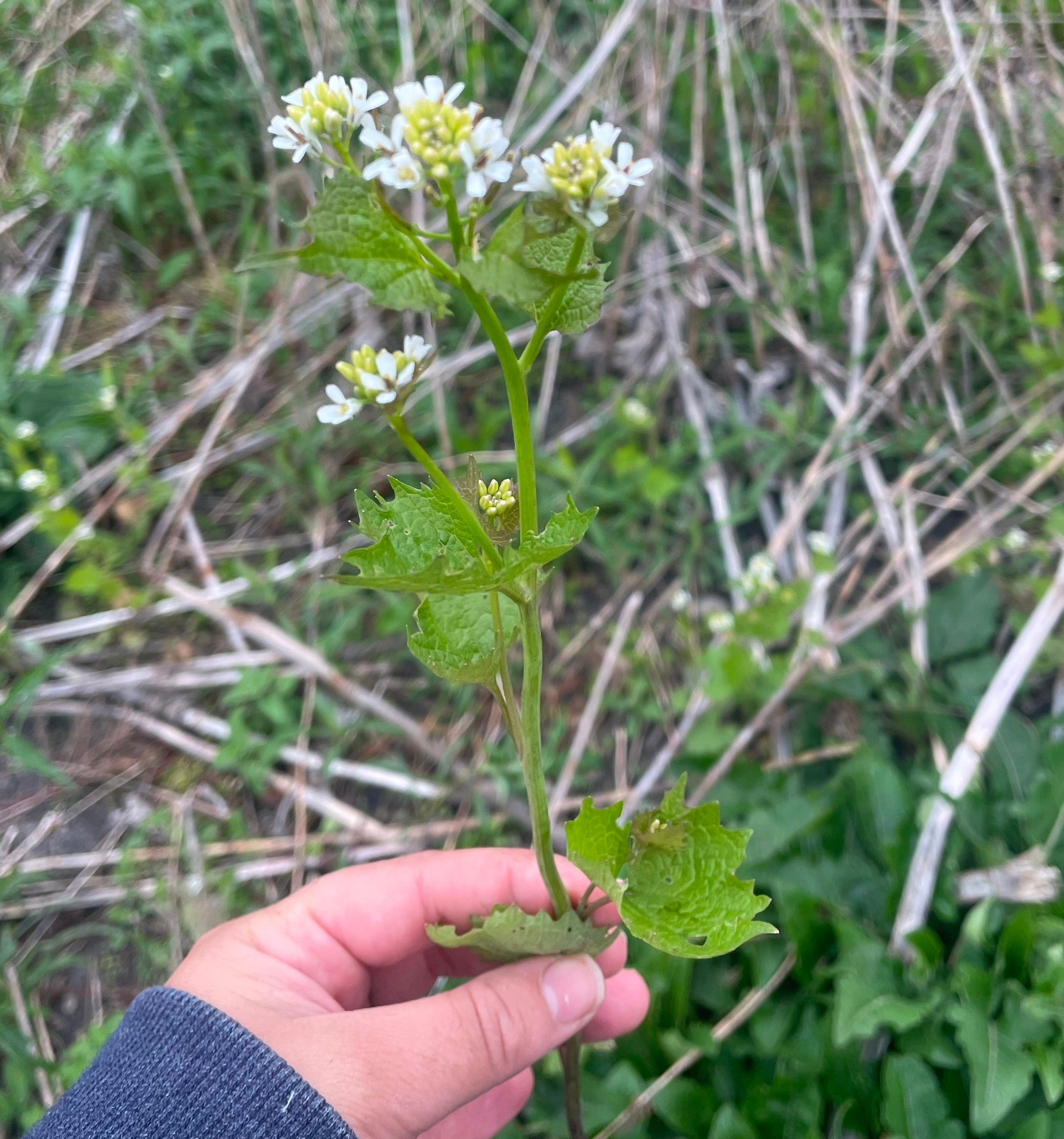
Each invasive plant requires a different removal strategy. Scouting for populations is an important step that is followed by planning. Large patches of Garlic Mustard require a large group and careful disposal for intervention to be meaningful. Honeysuckle is particularly vigorous and grows several new shoots for every one that is cut. Hacking it down does more harm than good unless followed by a selectively applied herbicide. Reed Canary Grass is really aggressive, and grows in a range of soil conditions. Volunteers pull what they can, but understand that it is one of the invasive plants that they are unlikely to ever fully eradicate.
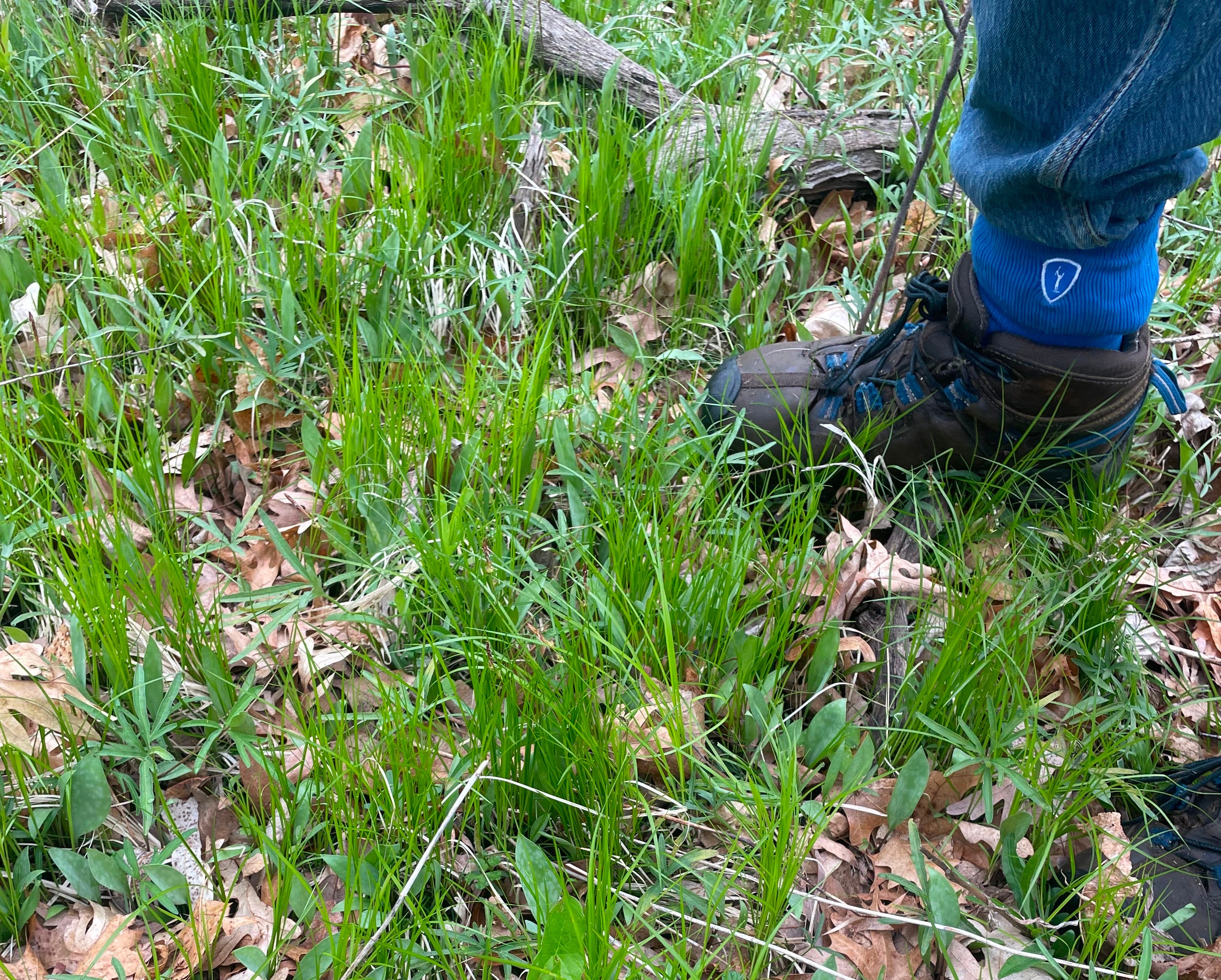
But total eradication is not the only worthwhile goal. Removing invasive plants makes room for the plants that are suited to the ecosystem. For instance, fire dependent trees like Burr and White Oaks have struggled to compete with Red Oak. Identifying the appropriate oak trees and thinning all the trees growing nearby is one way to support them. It is also a step towards bringing light back to the savannah. Too many trees plunge the ground into dense shade by summer. After five years of work, volunteers expect it to take another fifteen to restore ideal light levels.
A few eighty degree days have expedited spring emergences. Volunteers greeted many exciting plants as they scouted for invasive ones.
Female Pussy Willow Trees were already in full flower, providing crucial nectar for early bees. They also offered a perfect example for a lesson about plant reproduction. The stigma, analogous to birth canal, was easily visible. That is where pollen germinates, then races to the ovary to create a seed.
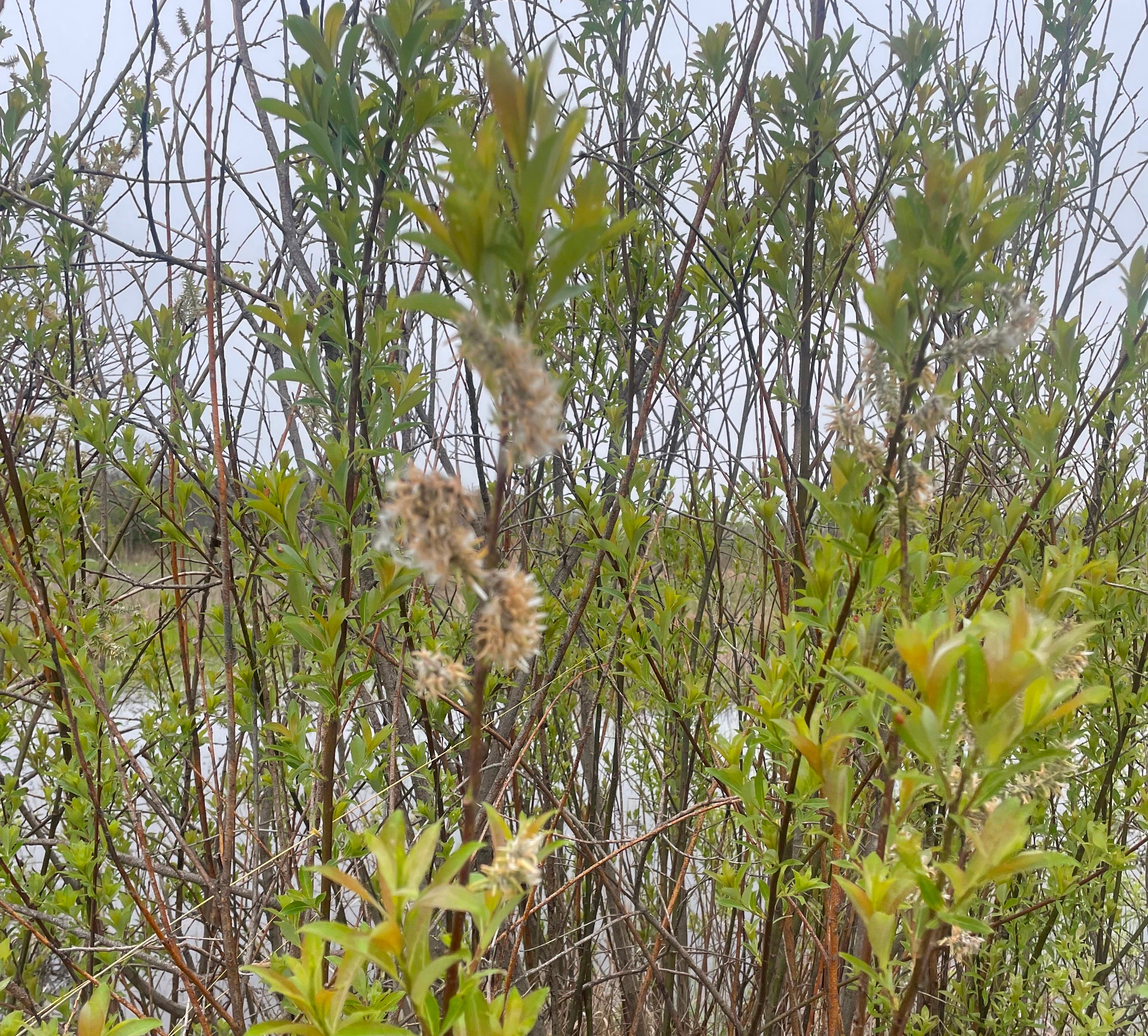
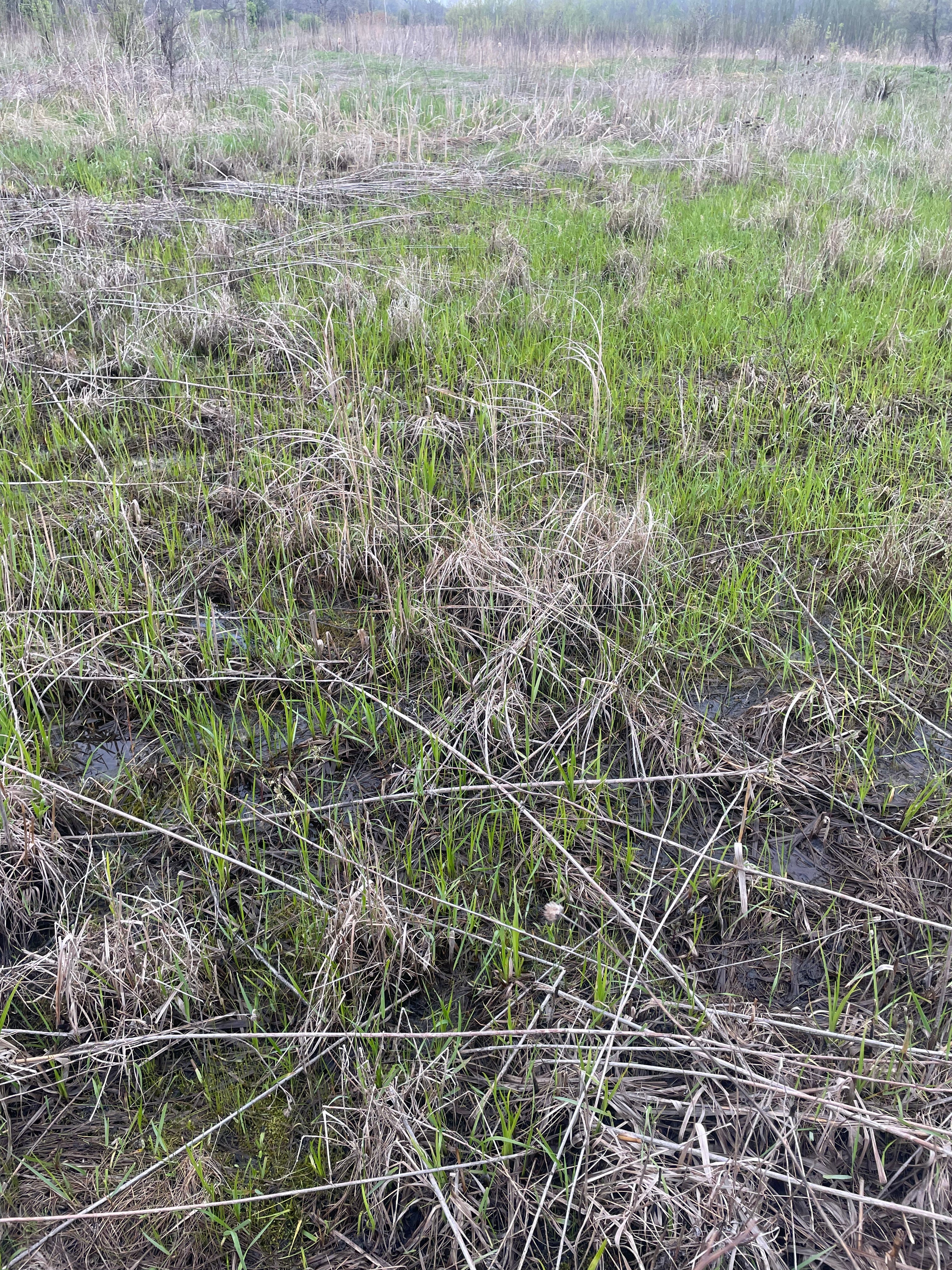
Verdant green patches of Sweet Grass, which are original, grow in ephemeral ponds. They enjoy the wet ground in the spring, but not all year round.
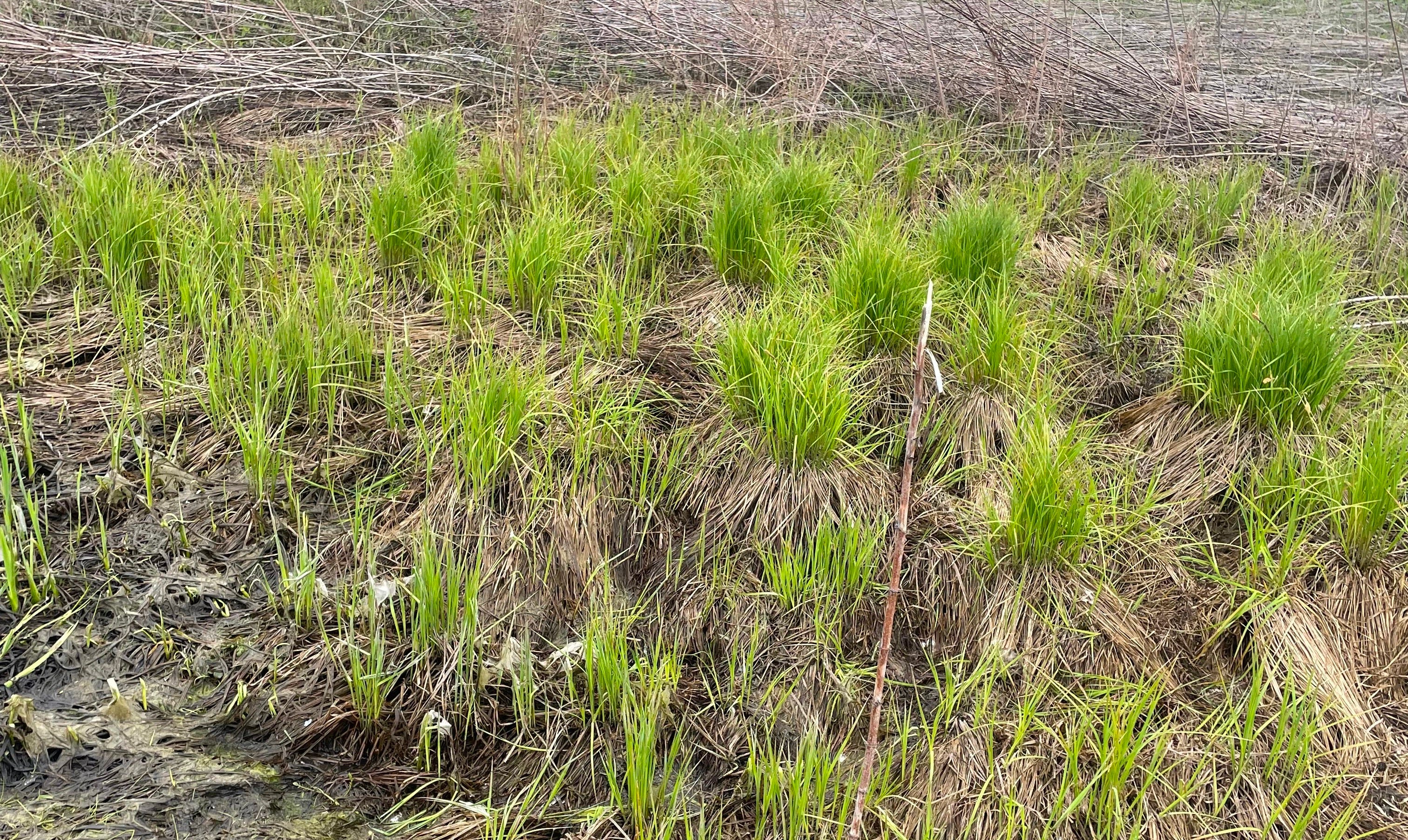
Sedges look like grasses, but are easily distinguished by their triangular leaves, or as the saying goes: “sedges have edges”. They tend to be some of the first plants to reestablish in preserves because their seeds have evolved a thick seed coat to survive in water, where other materials break down quickly. Many are also rhizomal. What looks like a large community of plants is actually a single, ancient individual.
Trout Lilies are an example of a plant that benefited from grazing. When undisturbed, it grows in clumps, but when animals eat its leaves, it spreads with rhizomenous roots and forms a carpet.
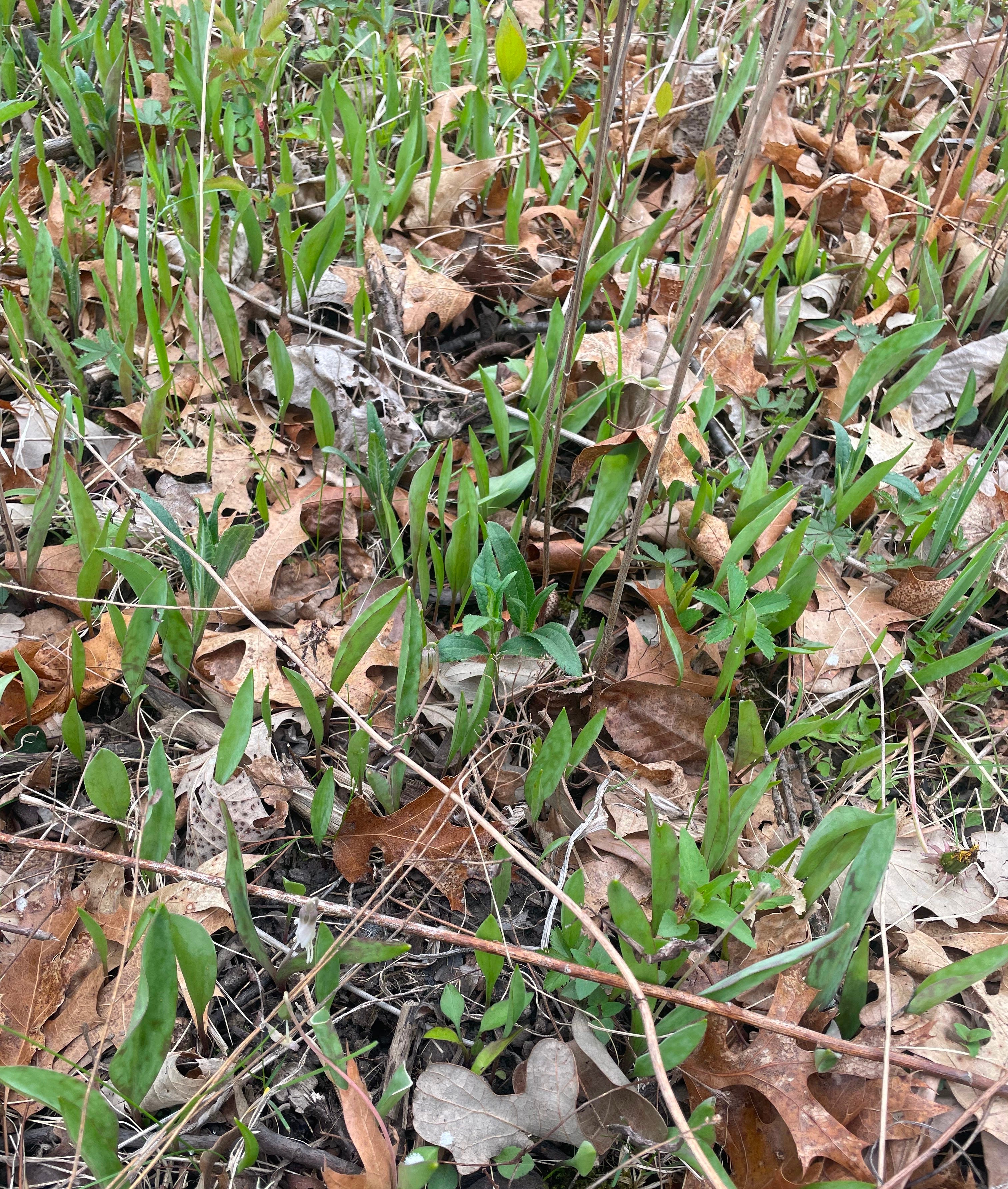
Volunteers were happy to see Wild Hyacinth, which was seeded in and protected last year.
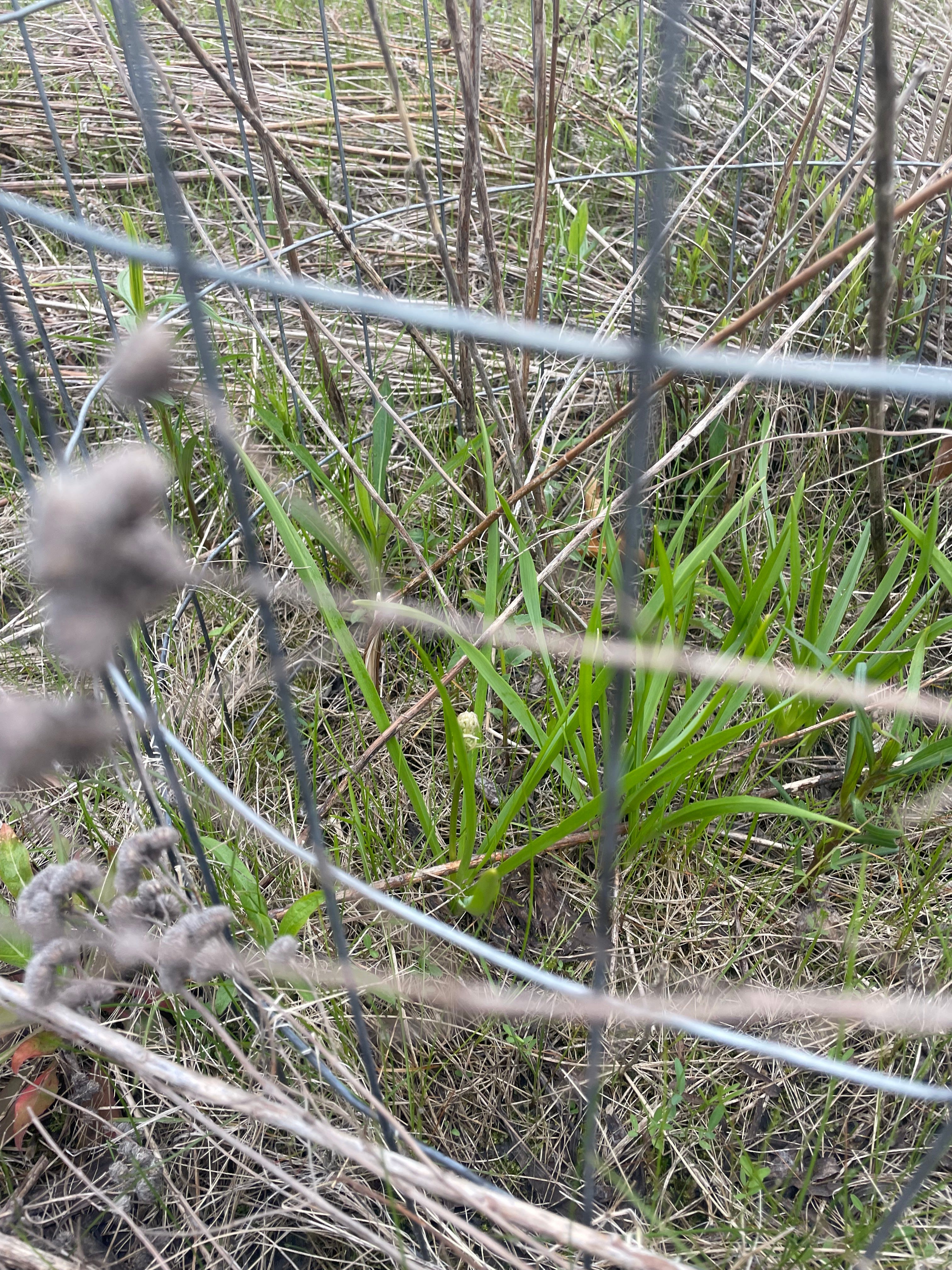
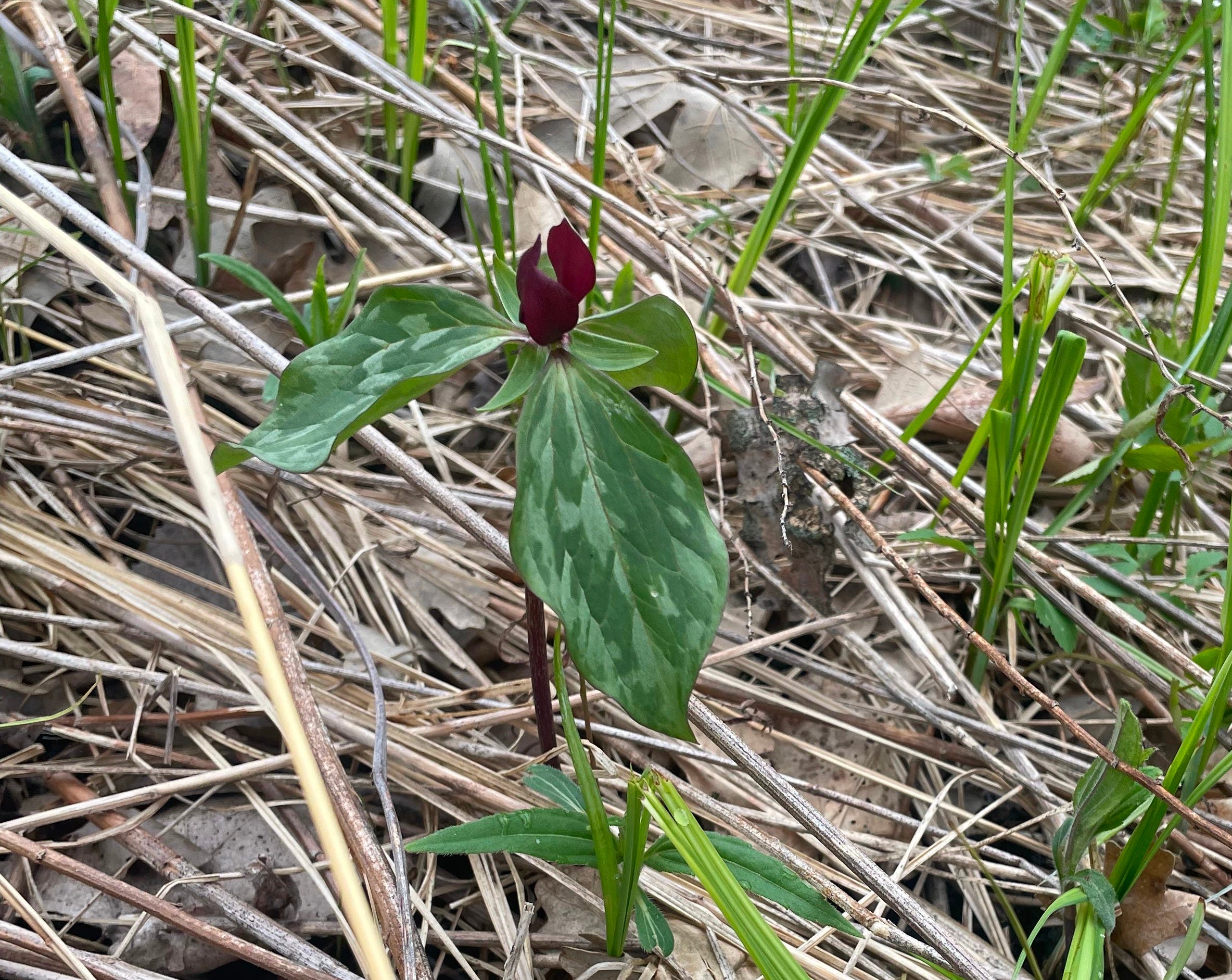
Other emerging plants included American Hazelnut, American Plum, Wood Anemone, and Prairie Trillium which might be a better candidate for the state flower of Illinois.
Volunteering in the Middlefork Savanna Forest Preserves is fun and educational. Traditions like making coffee and cooking chickpeas in the brush fire augment the community building aspect of the experience. The work of caring for the land brings people together.
We can feed each other by caring for our environments. The Gardener’s Grimoire provides comprehensive gardening guides as well as local food, community gardening, farming, and stewardship profiles to build a network and shared body of knowledge. Use the collection to inform your gardening practice and research.
The Gardener’s Grimoire will always be free to read, but it isn’t always free to produce. Paid subscriptions would help cover expenses like travel for tours and interviews, and materials for experiments. Your monthly contribution will help the Gardener’s Grimoire grow into a more valuable resource for all its readers.
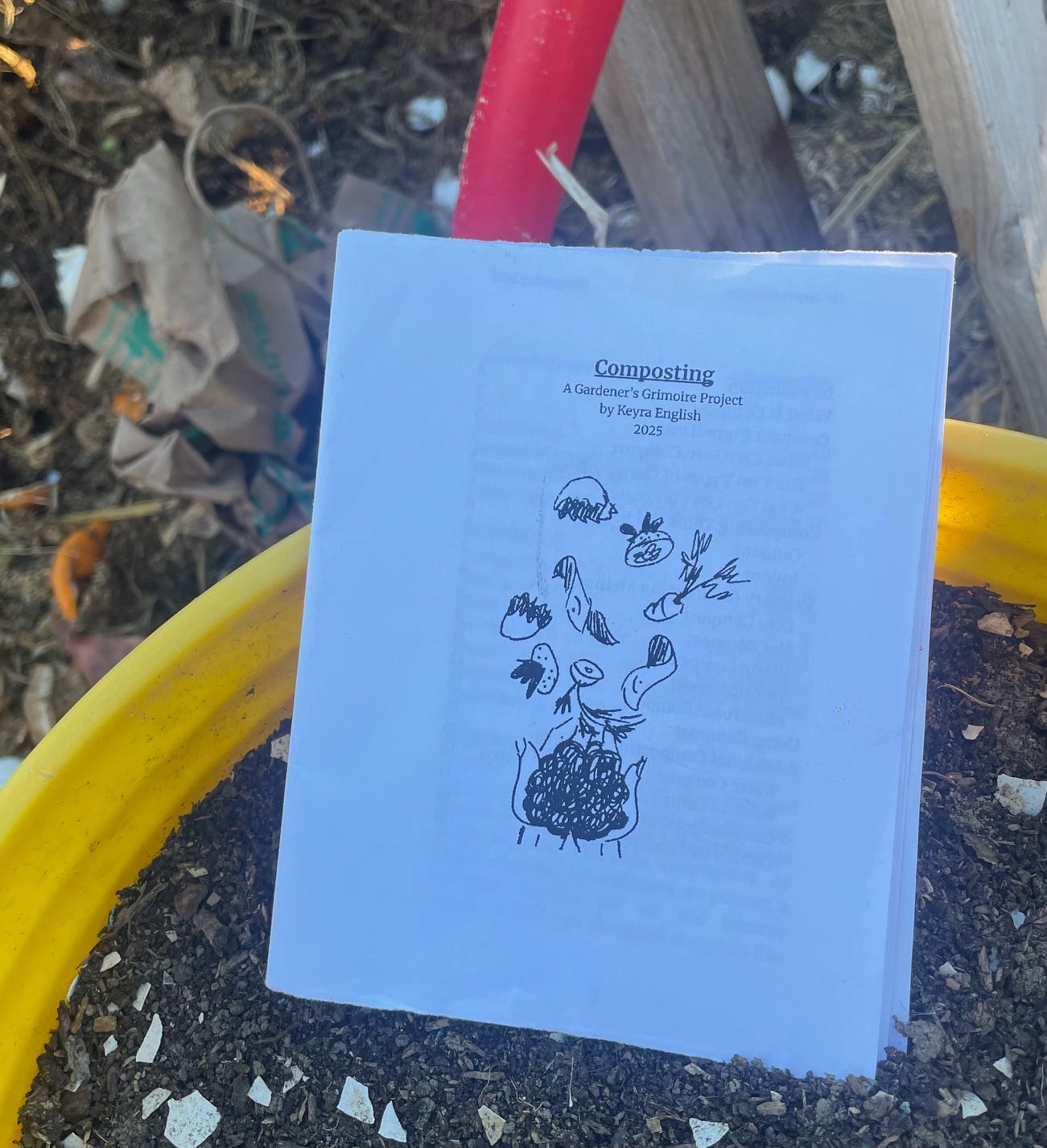
The field book zines from the Gardener’s Grimoire are easy to reference, easy to annotate, and easy share.
If you enjoyed this article, please consider leaving a like. If you know someone who would enjoy it as well, please pass it along!
Comments? Questions? Suggestions? Please join the conversations!
No posts
Comments
Nothing yet. Say the first thing.
Sign in to join the conversation.