
Container gardening is perhaps the most accessible way to grow something. Whether growing in a small pot on a windowsill, or in a large raised bed, the fundamentals are the same. This overview of the fundamentals will hopefully instill the confidence to grow anything anywhere.
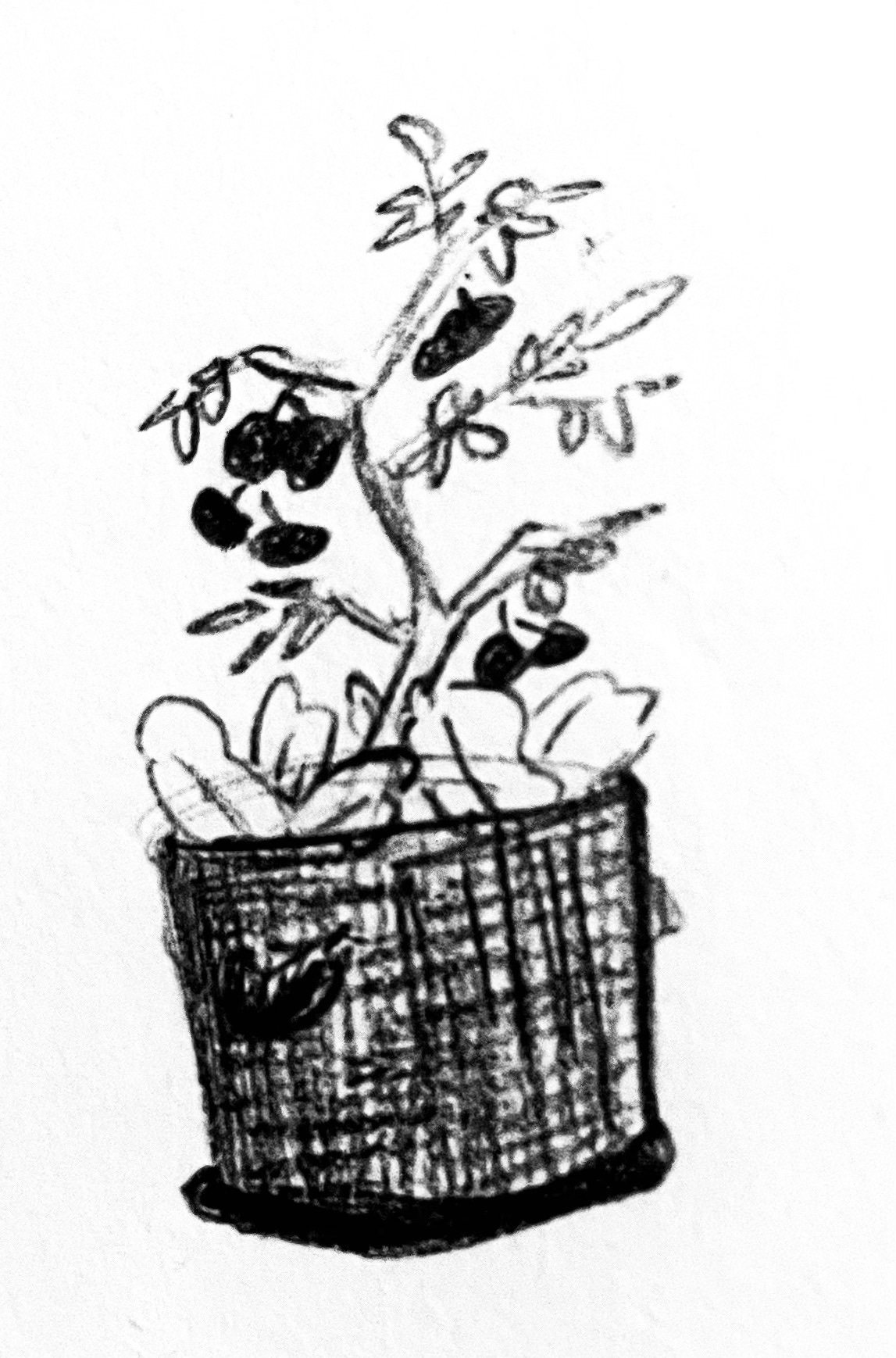
There are several potential benefits to gardening in containers as opposed to the ground. One advantage that is easy to overlook is the ability to customize the soil. When cultivating in-ground beds, the quality of the native soil takes years to improve if it is not, by some miracle, already ideal. Container gardens start with soil that has the perfect texture and nutrient content, and they also make it possible to adjust the soil to the preferences of the plants growing in them.
Container gardening also makes it possible to garden anywhere. Areas where the soil is poor, poisoned, or covered in concrete can still be cultivated by using containers. Gardens can even grow indoors.
This flexibility also allows gardeners to make the most of space. Arrange and rearrange pots to fit many plants in one location.
Plants that wise gardeners avoid growing in the ground because they tend to spread beyond control can safely grow in containers.
With containers, it is also possible to grow plants in regions they typically would not. For instance, perennials from tropical regions can grow in temperate regions if they are moved inside during cold seasons.
This portability is another benefit of container gardening. Gardeners who are renting or living somewhere temporarily can still garden. Not only that, but when they move, the garden can move with them.
Containers can be a wonderful opportunity to incorporate beauty into a space. Many styles are available to suit the tastes of any gardener. Stately containers are investments. The best containers can be reused for many years with care.
Though every garden center will offer a variety of options, the most economical container is a repurposed one. As long as it has room for the intended plant and holes for drainage, any container can work. A container should be about the same height as its occupant.
Fabric grow bags are an excellent choice if containers must be purchased. They are light weight, easy to store when not in use, have great drainage, work well indoors and out, and come in a variety of sizes.
Stacked containers and garden towers are great for maximizing space. They turn a few square feet into a much larger garden. Careful planning may be necessary to ensure each plant in a tower can access adequate light.
Soil from the ground tends to be too dense to work well in a container garden. Buying potting soil from a garden center is a good way to get started, but this strategy gets expensive very quickly.
Homemade compost or leaf mould are wonderful mediums that can be made at home for free. Mixing in biochar, which can also be made at home, will help with water retention. Make sure to soak bio char in water or liquid fertilizer beforehand or it will pull water from the soil instead.
Any medium used to fill containers can stretch further if the first third of the container is filled with something else. Leaves, woodchips, twigs, partially decomposed food scraps, whatever takes up space and will eventually break down to feed the soil will work well. This technique is best used for larger, deeper containers.
To support a garden season after season, soil will require refreshing from time to time. If it has mold or a diseased plant has grown in it, sanitizing the soil is essential. Baking the soil at a low temperature or pouring boiling water over it will kill pathogens that could harm plants. Mix old soil with fresh compost and it’s ready to reuse.
Otherwise, keeping the soil covered with growing plants or a layer of mulch will keep the soil healthy and productive. Decaying roots from previous plants will go a long way to keeping the soil aerated. Over the years the bottom of the pot will become compacted, so eventually the pot must be emptied and the soil must be mixed up and aerated.
Unlike plants growing in the ground, plants in containers cannot send their roots deep to find the nutrients and water that they need. They are confined, and reliant on what the gardener gives them. Not only do they need more watering, but they also need fertilizer as they grow.
Any garden center will have endless fertilizers to choose from. Despite this variety, most commercial fertilizers have the same three components: nitrogen, phosphate, and potassium (NPK). Balanced blends (like a 1-1-1) are ideal for general use, but any fertilizer will get the job done. While variations in the ratio of these three nutrients can support different stages of plant growth, feel confident purchasing the cheapest available formula.
The two forms of fertilizer that are useful to distinguish are granular and liquid fertilizers. Granular fertilizer is grainy or powdered and releases nutrients over time when mixed with or sprinkled over the soil. Liquid fertilizer is usually mixed with water and provides nutrients that are immediately available to plants when applied.
Always follow the directions when using store bought fertilizers. Over fertilizing can be more damaging than under fertilizing. In general, a dose of granular fertilizer mixed into the soil before planting, and a dose of liquid fertilizer once or twice a month is a good place to start. As the needs of the plants become more familiar, adjust the fertilizer schedule accordingly.
Homemade fertilizers are far cheaper and just as effective. Many sources and methods are also renewable and environmentally friendly. Fresh compost and worm castings are effective alternatives to synthetic, granular fertilizers. Soaking them in water also makes effective liquid fertilizers.
Fermented liquid fertilizers made by rotting food scraps and plant waste in water are as unbelievably effective as they are smelly. This is an excellent option for outdoor plants.
For indoor plants, consider making a pressed concentrated feed by taking fresh leaves and pressing out the juices. Growing a few plants in the ground for this purpose is an excellent way to collect nutrients. Green manure crops, also known as dynamic accumulators, are ideal for this purpose. Their ability to pull nutrients from deep underground means they’ll provide fairly balanced nutrition, including trace minerals. Dynamic accumulators can also take up heavy metals, so do not use any that grow in contaminated soil. Comfrey, Mexican sunflowers, and more are popular options.
Regardless of the type of fertilizer, it is important to apply it carefully to prevent any from leeching out of the container garden and into the ecosystem. Fertilizer runoff can harm the surrounding watershed. If possible, avoid fertilizing outdoor container gardens before rain fall, which can wash the nutrients away.
Plants need light to grow, and different plants need different amounts of light to thrive. In general, plants grown for fruits and seeds require full sun or around 6 hours of direct light, and plants grown for leaves prefer partial sun.
Consider the light the container garden receives when selecting plants, and the preferences of the plants when selecting a location. With this strategy, it’s possible to grow food anywhere whether there’s full sun or full shade.
Sometimes moving containers to optimal lighting conditions is not an option. In this case it may be necessary to adjust the lighting to grow certain plants. Shade cloths can prevent plants from getting sunburned in sunny areas. Incorporating a canopy layer into the garden plan is a plastic free strategy to provide shade. Mirrors and white walls reflect what little light reaches shady areas making more of it available to plants. Never use magnifying or convex mirrors: they concentrate light and could start a fire.
Where sunlight simply does not reach, artificial light makes gardening possible. Specialty lights work well but can be costly. Cheap LEDS work just as well as long as they meet certain specifications. Look for bulbs with a temperature between 4000 and 6500 kelvin. Full spectrum bulbs are ideal, but red and blue lights can save on energy costs.
If the container is large enough, anything can grow in a container garden. However, dwarf varieties tend to be more successful, and fit in typical container sizes.
There are several ways to get plants. Seeds are usually the cheapest and most accessible, and many varieties are only available in that form. Plant-starts produce harvests earlier, which is a great benefit with perennials which can take years to produce. Some plants are only propagated by tubers, crowns, and cuttings.
Seeds, plants, tubers, crowns, and cuttings can all be found at garden centers or online, though the secret to finding interesting varieties and saving money is to befriend fellow gardeners. Not only do most gardeners love to trade and share their plants, they tend to have a lot of varieties that are suited to the area and lots of advice on how to grow them successfully. Free seeds may also be available at local seed libraries.
Plants use water to distribute nutrients and to photosynthesize. In order to take up water, the plant’s roots must stand in damp soil. Soil that is too wet will drown or rot the plant. Soil that is too dry will halt the processes that keep the plant alive.
Plants have different needs at different stages of growth. To avoid over or underwatering, it’s best to offer water based on the state of the soil instead of a set schedule or routine. Check the soil with a finger. If it feels dry, water it. Another method is to lift the container to feel its weight. If the container feels light, it probably needs water.
There are a few methods of delivering water to plants. Top watering, or pouring water at the top of the container around the roots, is the most straightforward. The moist top layer of soil this method creates could foster fungus gnats, an annoying but usually harmless pest. Allowing the surface to dry between waterings can alleviate this risk. Bottom watering allows soil and roots to absorb what they need from the bottom of the pot. Usually this prevents gnats. To bottom water, pour water into a dish sitting under the container. Water globes or spikes maintain moisture longer term. Simply fill them and insert them in the soil by the roots. Make sure to monitor the soil in case this moisture needs supplementation via top or bottom watering.
Water also carries nutrients throughout the plant. Adding liquid fertilizer to the water will deliver nutrients almost immediately. Though plants growing in containers are reliant on liquid fertilizer to thrive, over fertilizing can harm them. Adding fertilizer to water once or twice a month is usually plenty. Fertilizer leaching out of containers and into surrounding environments can be damaging. Avoid fertilizing right before rainstorms to prevent this.
Over time, plants may outgrow their containers, and soil will settle and compact. When roots have nowhere to grow or are suffocated by dense soil, the plant will fail to thrive. At this point, it’s past time to repot.
Gently tip the plant out of its container and assess the roots. Prune any damaged or diseased roots, as well as any that have started to circle the pot. This minimizes root problems in the new pot or soil. If a third of the root ball is cut off, the plant can return to its original pot. Don’t be surprised if outer leaves die as the plant adjusts.
Carefully arrange the plant with fresh or refreshed soil in the pot, making sure that the soil level is the same as it was before. The plant may go into shock if the soil sits higher or lower on its stem than it did before. Water thoroughly. It may take several days for the plant to bounce back after repotting, but it will live for much longer than it would have if left alone.
Container gardening is not the easiest way to grow plants, but it is the most flexible. Use these fundamentals to tuck a garden into every corner of your life.
We can feed each other by caring for our environments. The Gardener’s Grimoire provides comprehensive gardening guides as well as local food, community gardening, farming, and stewardship profiles to build a network and shared body of knowledge. Use the collection to inform your gardening practice and research.
The field book zines from the Gardener’s Grimoire are easy to reference, easy to annotate, and easy share.
Questions? Suggestions? Concerns? Join the conversation!
No posts
Comments
Nothing yet. Say the first thing.
Sign in to join the conversation.